Moose country can make one of North America’s largest animals surprisingly difficult to see.
Spruce stands crowd the uplands.
Willows fill the low ground.
Black water sits between grass hummocks.
Beaver ponds flood old timber.
A trail disappears into brush higher than a hunter’s shoulders.
Then a branch moves.
A dark body appears for only a few seconds.
One step.
Two steps.
And the animal disappears behind willow cover again.
That is moose hunting.
The landscape may look wet, tangled, and impossible to read.
To a moose, it is organized.
Food grows in one flat.
A beaver pond creates another feeding zone.
A slightly elevated ridge provides dry bedding.
A muddy trail connects them.
Successful hunters learn to recognize those connections.
Moose Are Strongly Connected to Wet Habitat
Moose use many northern habitat types.
Depending on region and season, productive country may include:
- Boreal forest
- Willow flats
- Beaver ponds
- Wet meadows
- Lake edges
- Creek bottoms
- Regenerating cuts
- Burned forest
Moose do not need to stand in water all day.
But productive wet habitat often supplies the vegetation they use heavily.
Start With Willow
Willow is one of the most useful habitat clues in many moose landscapes.
Productive areas may include:
- Willow flats
- Creek edges
- Beaver pond margins
- Wet meadow borders
where browse is abundant.
Not Every Willow Patch Holds Moose
A huge willow flat can still be empty.
Look for evidence of current use such as:
- Browsed stems
- Tracks
- Droppings
- Trails
Fresh sign matters.
Fresh Browse Can Be Easy to Miss
Moose may clip young shoots and leaves.
Look closely at branch ends.
Repeated feeding creates patterns.
Track Systems Can Be Obvious
A moose walking repeatedly through wet ground creates deep tracks.
Mud can preserve:
- Hoof shape
- Direction
- Trail width
Large Tracks Are Not Automatically Fresh
Moose tracks remain visible for long periods in wet soil.
Check for:
- Sharp edges
- Fresh mud displacement
- Water condition inside the print
Rain Can Reset Tracking Conditions
A heavy rain may soften or partially erase older tracks.
Fresh tracks afterward become more meaningful.
Moose Hunting After Rain Can Improve Sign Reading
Wet roads, creek banks, and marsh margins can reveal current travel.
Look closely at:
- Muddy roads
- Stream crossings
- Pond edges
- Wet trails
Beaver Ponds Can Transform Habitat
Beavers change northern landscapes dramatically.
A dam can create:
- Shallow water
- Wet meadow
- Regenerating willow
- New travel edges
These areas can become excellent moose habitat.
Old Beaver Ponds Can Be Especially Interesting
When water levels drop, former pond areas may convert into:
- Meadow
- Shrub growth
- Mud flats
that provide feeding opportunities.
Hunt the Pond Edge, Not Just the Water
Moose often feed around:
- Willow
- Aquatic vegetation
- Marsh edges
rather than standing in the center of the pond.
Beaver Dams Can Create Travel Corridors
Animals may use firm sections around dam systems.
But hunters should never assume dams are safe walking routes.
Dams Can Be Unstable
Rotten wood and moving water create risk.
Use safer crossings.
Wet Meadows Can Be Productive
Open wet areas offer:
- Feeding visibility
- Green vegetation
while remaining close to timber.
Morning and Evening Are Good Times to Watch Openings
Moose may enter wet meadows during lower-light periods.
Glass from a distance where possible.
Midday Moose May Move Into Cover
As temperature rises, animals may use:
- Spruce shade
- Thick willow
- Cooler drainages
Heat Matters More Than Hunters Expect
Moose are adapted to cold environments.
Warm weather may reduce daylight activity.
Cool Conditions Can Increase Movement
Lower temperatures may bring animals into more open feeding habitat.
Frost Can Change the Hunt
A cold morning may freeze:
- Mud
- Grass
- Shallow water
making access easier temporarily.
Thawing Can Make the Return Harder
A route firm at sunrise may become:
- Soft
- Muddy
- Slippery
by afternoon.
Wetland Terrain Is Often Deceptive
Grass can hide:
- Deep mud
- Water channels
- Beaver runs
- Holes
Never assume the next step is firm.
Hummocks Can Help and Hurt
Raised grass clumps offer dry footing.
But stepping between them can put a foot into deep mud.
Use a Walking Stick
A sturdy stick can help test:
- Bottom firmness
- Water depth
- Hidden channels
before committing body weight.
Mud Can Be Extremely Deep
Northern wetlands may contain soft organic soil.
A hunter can sink far deeper than expected.
Do Not Follow Moose Tracks Blindly
A moose can cross terrain that is difficult or unsafe for a person.
Choose your own route.
Moose Are Much Better at Wetland Travel
Their long legs and large bodies allow them to move across:
- Deep mud
- Marsh
- Snow
that can exhaust hunters.
Dry Islands Matter
A slightly elevated spruce or birch ridge inside wet habitat can provide:
- Bedding
- Rest
- Dry travel
Look for Bedding Near Food
Moose often benefit from having browse and secure cover relatively close together.
Forest-Wetland Transitions Are High-Value Areas
Whenever:
- Spruce forest
- Willow flat
- Wet meadow
meet, slow down.
These transitions can concentrate travel.
Creek Bottoms Connect Habitat
Small waterways may link:
- Beaver ponds
- Willow patches
- Lakes
- Feeding flats
Stream Crossings Reveal Current Movement
Fresh tracks in mud can show where animals cross repeatedly.
Do Not Ignore Higher Creek Banks
Moose may walk along slightly elevated ground beside water instead of staying in the bottom.
Lake Edges Can Hold Moose
Quiet bays and marshy lake margins may provide:
- Aquatic vegetation
- Willow
- Secure shoreline
Small Bays Can Be Better Than Huge Shorelines
Protected pockets may contain better food.
Aquatic Feeding Can Occur
Moose may feed on aquatic plants in suitable waters.
This makes shallow ponds and lake edges worth observing.
Water Visibility Can Help
A large moose standing in shallow water may be much easier to detect than one inside brush.
Wind Can Change Lake Use
Strong wind may move animals toward:
- Protected bays
- Timber edges
Burned Forest Can Become Valuable Habitat
Wildfire removes mature cover but can later create:
- Young shrubs
- Regeneration
- New browse
Burn Age Matters
A recent burn may have little food.
Several years later, new vegetation may make it more attractive.
Hunt the Burn Edge
Transitions between:
- Burned
- Unburned
forest can provide both feeding and security.
Logging Cuts Can Create Similar Habitat
Young regeneration may provide browse.
Moose may feed in openings and bed in adjacent forest.
Old Logging Roads Are Useful
They provide:
- Easier walking
- Tracking surfaces
- Access to cuts
Muddy Roads Preserve Tracks
Fresh moose tracks can stand out clearly after rain.
Road Crossings Reveal Travel Direction
Study which side of the road animals are entering.
Do Not Hunt Only the Road
Use it as a clue.
The actual animals may be several hundred yards inside:
- Willow
- Timber
- Wetland
Rut Behavior Can Change Movement
During breeding periods, bulls may travel more and become more vocal.
Seasonal behavior can greatly influence hunting strategy.
Vocal Activity Can Reveal Location
Where legal and appropriate, listening for moose vocalizations can help locate animals.
Thick Habitat Distorts Sound
A bull may sound:
- Closer
- Farther
- Off to one side
than expected.
Use Terrain to Confirm Direction
Move carefully between listening points.
Do Not Rush Straight Toward Sound
First consider:
- Wind
- Water
- Thick cover
- Safe access
Bulls May Travel Through Difficult Ground
Do not assume their route is the best hunter route.
Rutting Animals Can Be Unpredictable
Maintain appropriate distance and safety awareness.
Large Animals Still Require Positive Identification
Dense brush can hide important details.
Always confirm:
- Species
- Legal sex
- Tag requirements
before taking an opportunity.
Moose Can Be Difficult to Judge in Brush
A partial view may show only:
- Shoulder
- Head
- Antler section
Wait for a clear identification.
Do Not Shoot at Movement
Wetland brush can hide:
- Other hunters
- Non-target animals
Know the entire target and background.
Thick Willow Creates Close Encounters
Visibility may be extremely limited.
Move slowly.
Stop Often
Listen for:
- Branches breaking
- Water movement
- Feeding sounds
But sound is only a locating clue.
Look for Horizontal Shapes
Moose bodies create large horizontal lines inside vertical willow stems.
That contrast can help.
Antlers Can Disappear in Brush
A bull may be visible only when it turns its head.
Binoculars Still Matter
Use optics around:
- Meadows
- Pond edges
- Burns
- Cuts
to reduce unnecessary walking.
Glass Openings Before Entering
Walking directly into a feeding meadow may push animals out.
Observe first.
Elevated Ground Can Reveal Hidden Wetlands
A small ridge may allow hunters to see:
- Willow openings
- Pond margins
- travel corridors
Topographic Maps Help
Maps can reveal:
- Wetlands
- Lakes
- creek systems
- benches
- ridges
Satellite Imagery Adds Vegetation Context
Aerial imagery may help identify:
- Open willow
- Burns
- Cuts
- Beaver pond complexes
Recent Imagery Is Better
Wetland systems can change.
Beaver activity can create new water quickly.
Navigation Is Critical
Northern wetlands can feel repetitive.
One spruce island may resemble another.
Offline Maps Are Essential
Download:
- Property boundaries
- Waterways
- Roads
- Topography
before hunting.
Mark the Vehicle
Following tracks can lead hunters far into wetland complexes.
Carry a Headlamp
Recovery or return travel may continue after dark.
Darkness Makes Wetlands Much Harder
Water channels and holes become difficult to see.
Carry Backup Lighting
Cold and moisture can reduce battery performance.
Waterproof Important Gear
Protect:
- Phone
- Batteries
- Maps
- Emergency supplies
Moose Hunting Is Extremely Hard on Footwear
A typical hunt may involve:
- Marsh mud
- Shallow water
- Wet grass
- Willow
- Creek crossings
- Moss
- Long-distance walking
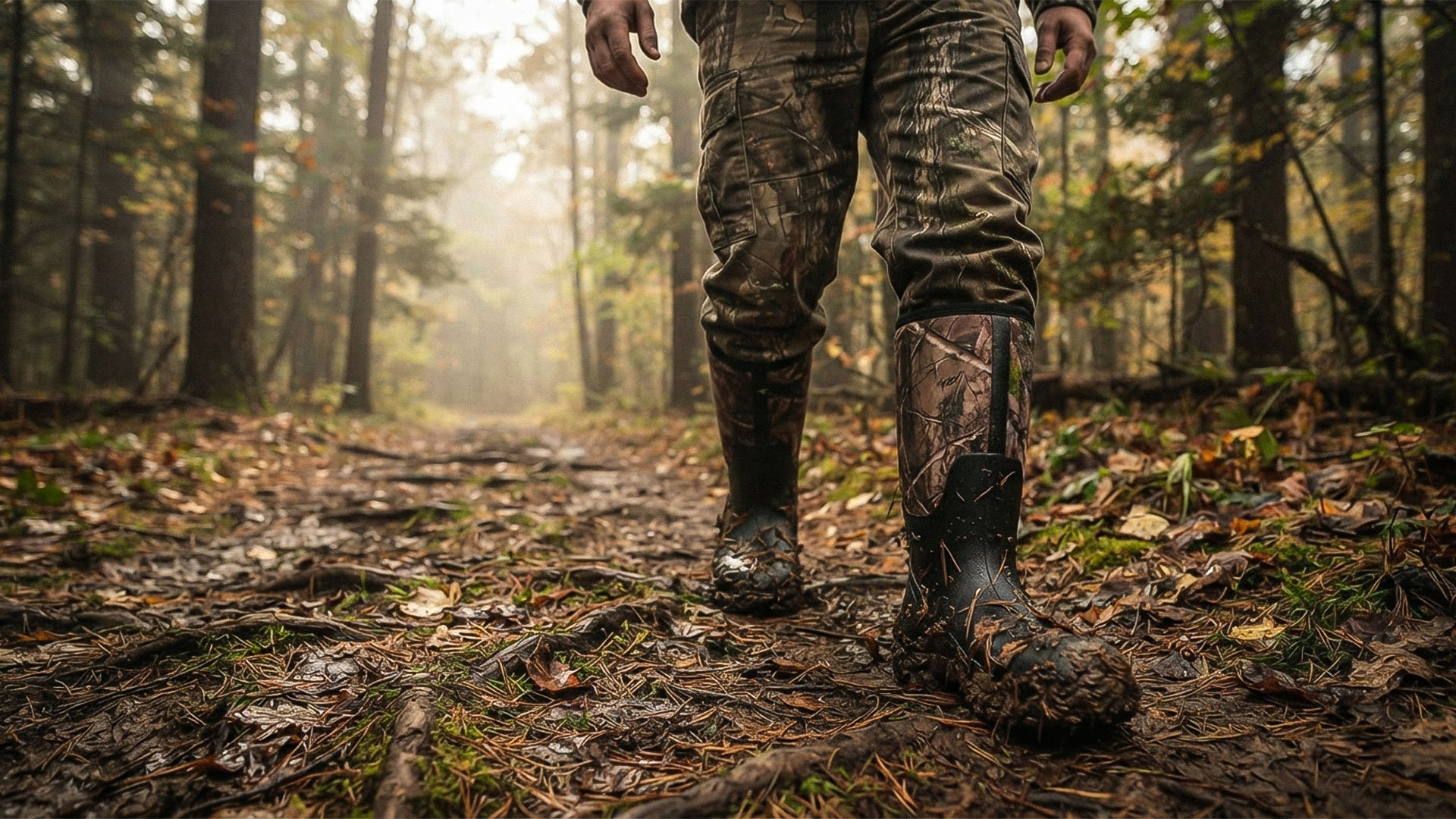
Hunters may benefit from waterproof hunting boots for moose hunting that provide secure heel retention, aggressive mud traction, and enough waterproof protection for northern wet-country travel.
Tall Rubber Boots Can Be Excellent
Where terrain is relatively flat and wet, rubber hunting boots provide strong protection from:
- Mud
- Water
- Wet vegetation
Height Matters
A shallow-looking marsh may suddenly contain a deeper channel.
Scout routes.
Secure Fit Is Critical
Mud suction can pull loose boots off the heel.
Long Walking Comfort Still Matters
Moose country can involve many miles.
A waterproof boot that fits poorly becomes exhausting.
Lace-Up Waterproof Boots Can Be Better on Firmer Terrain
Where hunts include:
- Rocky ridges
- Long road walks
- Rolling forest
supportive lace-up boots may improve comfort.
Choose Boots for the Entire Route
One wet crossing should not determine footwear for the whole day.
Consider:
- Water depth
- Distance
- mud
- temperature
- terrain
Waders May Be Useful in Deep Wetland Habitat
Where water consistently exceeds boot height, properly fitted hunting waders may provide better protection.
Waders Do Not Make Swamps Safe
They do not remove:
- Deep mud
- Hidden channels
- Unstable footing
Never Wade Unknown Water Blindly
A beaver channel can drop suddenly.
Test depth.
Chest-Deep Water Is Not Normal Foot Travel
Find another route.
Cold Water Increases Risk
Northern wetlands can remain cold even when air temperatures are mild.
Wet Feet Become a Serious Problem
Long exposure can create:
- Blisters
- Cold injury
- Reduced mobility
Spare Socks Are Useful
If water enters from above, changing socks can restore comfort.
Gaiters Can Help
On routes with wet brush rather than deep water, gaiters reduce:
- Dew
- mud
- debris
entering boots.
Willow Can Soak Hunters From the Waist Down
Wet branches transfer water constantly.
Durable waterproof lower-leg protection helps.
Rain Gear Matters
Northern hunts may involve prolonged:
- Rain
- Mist
- Wet vegetation
Breathability Still Matters
Active hunters generate heat.
Vent before sweating excessively.
Cold Rain Is Especially Difficult
Water and wind together increase heat loss.
Carry a Dry Insulating Layer
Protect it inside waterproof storage.
Gloves Get Wet Quickly
Handling:
- wet brush
- boats
- equipment
can soak hands.
Carry Backup Gloves
Dry hands improve both comfort and dexterity.
Mosquitoes Can Be Severe Earlier in the Season
Boreal wetlands can produce heavy insect pressure.
Use appropriate prevention.
Blackflies Can Be Worse
Small biting insects can make stationary glassing difficult.
Head Nets Can Be Useful
Where conditions are severe, insect protection can improve patience.
Ticks May Occur Depending on Region
Perform appropriate checks.
Bears May Share Moose Habitat
Northern moose country can overlap with:
- Black bears
- Other large wildlife
Follow regional wildlife-safety guidance.
Do Not Leave Food Carelessly
Remote camps should follow local food-storage regulations.
Water Sources Are Not Automatically Safe to Drink
Carry or properly treat drinking water.
Wetland Water Can Contain Pathogens
Do not drink directly without appropriate treatment.
Cold Weather Changes Moose Habitat
As temperatures fall, activity patterns can shift.
Frost Can Improve Access
Frozen wetland edges may temporarily become firmer.
Early Ice Is Dangerous
A thin frozen surface over marsh or pond water is not safe simply because an animal crossed it.
Never Trust Moose Tracks as Proof of Safe Ice
Large animals distribute weight differently.
And conditions vary by location.
Snow Can Reveal Tracks
Fresh snow makes travel routes obvious.
Snow Also Changes Walking Difficulty
Deep snow can exhaust hunters quickly.
Moose Handle Snow Better Than Humans
Do not assume you can follow every track efficiently.
Windblown Areas May Remain Easier
Ridges and open flats can hold less snow.
Deep Snow Can Concentrate Travel
Animals may use packed routes or lower terrain.
Cold Temperatures Increase Energy Demands
Feeding may become more important.
Weather Can Change Rapidly
Northern fall conditions may bring:
- Rain
- Snow
- Wind
- freezing temperatures
within the same day.
Carry Layers
Prepare for a wider range than the morning forecast alone suggests.
Remote Moose Hunting Requires Conditioning
Travel can involve:
- mud
- brush
- water
- uneven forest
Mileage Underestimates Difficulty
Two miles through marsh can feel much harder than five miles on a road.
Train With Load
A successful moose hunt can create a very difficult recovery.
Moose Recovery Is a Major Operation
A harvested moose represents substantial weight.
Plan before going deep.
Ask the Recovery Question Before the Hunt
If successful in that swamp:
How will the meat reach the road?
Water Can Make Recovery Easier or Harder
Boats may provide access in some landscapes.
In others, marsh makes every step harder.
Boat Use Requires Its Own Safety Plan
Where legal and appropriate, boats may help navigate:
- Lakes
- rivers
- wetland systems
Do Not Overload Boats
Moose recovery can add enormous weight.
Respect boat capacity.
Multiple Trips Are Often Necessary
Do not exceed safe load limits.
Cold-Water Flotation Matters
Wear appropriate flotation equipment.
Weather Can Trap Boats
Wind on large lakes may create rough conditions.
Plan alternate return options.
Portages Can Be Difficult
Wet banks and heavy loads increase injury risk.
Pack-Outs Across Mud Are Extremely Demanding
Each step under weight becomes harder.
Use Manageable Loads
Do not overload yourself.
Trekking Poles Can Improve Stability
They may help with:
- Mud
- creek crossings
- pack-outs
Game Care Must Be Planned in Advance
A moose is too large to improvise after the harvest.
Cooling Is Critical
Even cool northern weather does not automatically cool a large carcass quickly.
Follow Current Wildlife-Agency Guidance
Proper processing and cooling methods vary with:
- weather
- terrain
- regulations
Clean Game Bags Are Important
Protect meat from:
- mud
- insects
- vegetation
Airflow Matters
Large cuts of meat need effective cooling.
Warm Weather Increases Urgency
Early-season moose hunts can be surprisingly warm.
Insects Can Complicate Meat Care
Have a plan ready.
Do Not Leave Meat Sitting in Wet Mud
Use clean handling practices.
Recovery Routes Should Be Scouted
Know:
- water depth
- road condition
- boat access
- terrain
before the hunt becomes a packing problem.
Property Boundaries Matter
Moose habitat may cross:
- public land
- private timber
- tribal land
- other managed areas
Open Forest Does Not Mean Open Access
Use accurate current ownership information.
Water Routes Can Cross Boundaries Too
A creek or lake may pass through multiple jurisdictions.
Private Access Requires Permission
Clarify:
- roads
- boat launches
- retrieval
- parking
before hunting.
Gates and Timber Roads Need Respect
Do not block working roads.
Regulations Can Be Highly Specific
Moose hunting is often managed through limited permits and hunt areas.
Rules can vary by:
- unit
- tag type
- legal sex
- season
Do Not Assume a Moose Is Legal Because You Have a Moose Tag
Tag restrictions may specify:
- bull
- cow
- antler configuration
- hunt area
Verify Current Official Regulations
Before hunting, confirm:
- season dates
- tag validity
- legal animal
- hunt-unit boundaries
- weapon rules
- shooting hours
- reporting requirements
Antler Restrictions May Apply
Some jurisdictions use specific legal definitions.
Learn them before entering the field.
Harvest Reporting May Be Mandatory
Remote country can have poor cell service.
Know the process beforehand.
Public-Land Rules May Add Restrictions
Vehicle use, boat access, or camping rules may differ by property.
Positive Identification Is Essential
Do not take an opportunity through brush without confirming the full animal.
Bulls Can Lose Antlers Seasonally
Legal requirements may depend on season and jurisdiction.
Use current regulations.
Cows and Young Animals Require Careful Identification
Do not rush decisions.
Moose Can Be Dangerous
Large animals deserve space.
Bulls During Rut Can Behave Differently
Maintain appropriate distance.
Cows With Calves Need Extra Caution
Do not place yourself between them.
A Moose Does Not Need to Be Hunting-Pressured to Be Dangerous
Defensive behavior can occur unexpectedly.
Give Animals an Escape Route
Never intentionally crowd a moose at close distance.
Thick Willow Reduces Reaction Time
Stay alert.
If a Moose Shows Aggressive Behavior
Follow current regional wildlife-agency safety guidance.
Common Moose Hunting Mistakes
Hunting Huge Wetlands Randomly
Focus on willow, food, travel corridors, and fresh sign.
Following Old Tracks
Wet ground preserves sign for a long time.
Ignoring Beaver Pond Edges
These systems can create excellent feeding habitat.
Walking Directly Through the Deepest Wetland
Moose can cross ground that is unsafe or exhausting for hunters.
Wearing Loose Boots in Deep Mud
Suction makes poor fit miserable.
Underestimating Wet Brush
A hunter can become soaked without entering deep water.
Going Deep Without a Recovery Plan
A successful moose hunt can create a massive logistical problem.
Assuming Moose Regulations Are Simple
Tags, units, legal animals, and antler rules can be highly specific.
Frequently Asked Questions
Where do moose usually live?
Moose commonly use boreal forest, willow flats, wet meadows, beaver pond systems, lake edges, creek bottoms, regenerating cuts, and other northern habitats that provide browse, water, and security.
Are beaver ponds good places to find moose?
They can be excellent because beaver activity creates shallow water, wet meadow edges, willow growth, and aquatic feeding habitat.
Is moose hunting good after rain?
Rain can create fresh tracks, soften muddy roads, and make recent travel easier to identify, although wetland access may become much more difficult.
Why do moose like willow?
Willow can provide important browse and often grows in moist lowland habitats that offer additional feeding and travel opportunities.
What boots are best for moose hunting?
Waterproof hunting boots with strong mud traction, secure heel fit, and enough waterproof height for wet grass, marsh edges, shallow water, and creek crossings are practical. Tall rubber boots can work especially well in flat wetland terrain.
Are waders useful for moose hunting?
They can be useful when shallow wetland water consistently exceeds boot height, but properly fitted waders do not make deep mud, beaver channels, strong current, or unknown water safe.
Can snow help locate moose?
Yes. Fresh snow can reveal tracks and travel patterns, although deep snow may make human movement extremely difficult.
Do moose hunting regulations vary?
Yes. Moose seasons, permit systems, unit boundaries, legal animals, antler restrictions, weapon rules, access rules, and reporting requirements may vary substantially by jurisdiction. Hunters should verify current official rules before hunting.
Final Thoughts
Moose hunting teaches hunters that wet country has structure even when everything looks like swamp.
One willow flat provides food.
One beaver pond creates new habitat.
One spruce island provides dry bedding.
One muddy creek crossing records recent movement.
One logging road shows which direction the animals traveled after the rain.
The wetland is not random.
Neither are the moose.
Read the tracks.
Follow the willow.
Study beaver pond edges.
Use dry ridges.
Test the ground before stepping.
Respect water, mud, weather, and property boundaries.
Plan the recovery before walking deep into country where every hundred yards may become difficult under a heavy load.
Wear boots that let you cross marsh mud, soaked grass, willow flats, creek bottoms, logging roads, and shallow wetland water without making poor traction or wet feet the reason the hunt ends early.
And when one fresh set of giant tracks leaves a muddy road and disappears into the only heavily browsed willow flat in the drainage, remember the lesson.
Finding moose country is easy.
Finding the small piece of moose country they are using today is the real hunt.
