
Common eider country can look brutally simple from shore.
Gray ocean.
Black rock.
Cold wind.
Foam breaking across ledges.
A few islands sitting beyond the bay.
Then the tide changes.
Current begins wrapping around a point.
Birds appear low over the water.
One group crosses a rock shelf.
Another swings toward a protected cove.
Suddenly the coastline no longer looks random.
That is one of the biggest lessons in eider hunting.
Sea ducks do not use every mile of shoreline equally.
They respond to:
- Food
- Current
- Tide
- Wind
- Rock structure
- Protected water
- Disturbance
Successful hunters learn to read the coast almost like a river.
One point changes current.
One island creates shelter.
One submerged ledge holds feeding birds.
One tidal window makes access possible.
The ocean is huge.
The useful habitat is often surprisingly specific.
Common Eiders Are True Coastal Ducks
Common eiders are strongly associated with northern marine environments.
Depending on region and season, they may use:
- Rocky coastlines
- Offshore islands
- Bays
- Tidal channels
- Shoals
- Protected coves
- Nearshore feeding areas
Unlike many inland ducks, their daily life is closely tied to saltwater.
That makes coastal conditions central to the hunt.
Start With Food
Eiders feed extensively on marine resources.
Productive coastal habitat often contains underwater structure supporting food.
Hunters should pay attention to areas around:
- Rocky bottoms
- Shellfish beds
- Ledges
- Shallow reefs
where birds repeatedly gather.
Birds Tell You Which Structure Matters
A coastline may contain hundreds of rocks.
Only a few may consistently attract feeding birds.
Scout actual eider activity.
Watch where birds:
- Dive
- Rest
- Fly
- Repeatedly return
That behavior reveals more than the map alone.
Diving Birds Reveal Feeding Zones
When several eiders repeatedly disappear beneath the water in one area, pay attention.
Ask:
What is different there?
Possibilities may include:
- Bottom depth
- Rock structure
- Food concentration
- Current
Rocky Points Can Concentrate Movement
Prominent shoreline points change:
- Wind
- Current
- Bird travel
Eiders moving along the coast may pass close to these features.
But exposed points can also be dangerous for hunters.
Do Not Choose a Point Only Because Birds Pass It
A productive-looking rock ledge may have:
- Dangerous waves
- No safe retreat
- Rising-tide problems
Access and exit matter as much as bird traffic.
Tidal Ledges Can Be Important
Rock structures exposed at low tide may create feeding habitat once water returns.
Watch how birds respond as the tide rises.
Low Tide Reveals Hidden Structure
When water drops, hunters can study:
- Rock shelves
- Mussel beds
- Channels
- Tide pools
- Submerged routes
that disappear later.
Scout at More Than One Tide Stage
A shoreline looks completely different at:
- Low tide
- Mid tide
- High tide
Bird behavior may change with it.
Rising Tide Can Move Feeding Birds Closer
As water covers shallow structure, eiders may move over areas that were exposed earlier.
Watch the timing carefully.
Falling Tide Can Shift Birds Offshore
As shallow feeding zones become inaccessible, birds may move toward:
- Deeper ledges
- Channels
- Offshore rocks
Do not assume yesterday’s location works at every tide.
Current Is One of the Most Important Coastal Clues
Moving water influences:
- Feeding conditions
- Bird travel
- Boat handling
Look where current interacts with:
- Points
- Islands
- Narrow channels
Current Seams Can Concentrate Activity
Where fast and slow water meet, birds may use the transition.
These seams are easier to see under certain wind and light conditions.
Tidal Channels Can Become Travel Corridors
Narrow water between:
- Islands
- Mainland
- Rock systems
can funnel bird movement.
But these same channels can contain strong current.
Do Not Underestimate Moving Saltwater
A channel that looks calm from shore may have significant flow.
Boating decisions need to be conservative.
Sheltered Bays Can Be Better in Rough Weather
When offshore water becomes rough, eiders may shift toward:
- Protected coves
- Leeward bays
Birds seek manageable water too.
Wind Direction Changes Which Side of the Coast Is Comfortable
A bay exposed to one wind may be protected under another.
Always identify:
- Windward shore
- Leeward shore
before the hunt.
Strong Offshore Wind Can Create Serious Problems
Wind blowing away from land can make:
- Boat recovery
- Bird recovery
- Small-craft travel
more difficult.
Never treat wind direction as only a bird-hunting factor.
Onshore Wind Can Build Waves Quickly
Even short stretches of open water can become rough.
Monitor actual conditions continuously.
The Forecast Is Not the Ocean
Local coastline shape can make real conditions much different from regional forecasts.
Observe:
- Wave height
- Gusts
- Current
before launching or leaving shore.
Weather Changes Fast on the Coast
Hunters may encounter:
- Rain
- Snow
- Fog
- Strong wind
- Rapid temperature changes
within the same hunt.
Carry appropriate layers.
Fog Can Remove the Coast Completely
A visible island can disappear within minutes.
Navigation becomes far more important.
Do Not Rely on Visual Shorelines Alone
Carry reliable:
- GPS
- Offline charts or maps
- Backup navigation appropriate to the hunt
especially when boating.
Mark Access Points Before Leaving
Save:
- Launch
- Vehicle
- Safe cove
- Harbor
before hunting.
Darkness Increases Every Coastal Risk
Many waterfowl hunts begin before sunrise.
Learn the area in full daylight first.
Never Make the First Boat Trip Through Unknown Rock in Darkness
Submerged structure can damage:
- Propellers
- Hulls
or create sudden stops.
Scout channels first.
Headlamps Are Essential on Shore
Rocky coastal access can involve:
- Tide pools
- Wet stone
- Uneven ledges
Use reliable lighting.
Carry Backup Light
Cold weather drains batteries faster.
Redundancy matters.
Rocky Shorelines Are Extremely Slippery
Wet rock may be covered with:
- Algae
- Seaweed
- Ice
- Spray
Footing that looks solid can be dangerous.
Seaweed Is One of the Worst Surfaces
Green or brown algae can create almost no traction.
Avoid stepping on slick vegetation whenever possible.
Wet Rock Requires Short Steps
Do not hurry across exposed coastal ledges.
Keep your center of gravity controlled.
Common Eider Hunting Is a Serious Boot Test
A typical coastal hunt may involve:
- Saltwater
- Slippery rock
- Seaweed
- Mud
- Tide pools
- Cold wet grass
- Shell-covered shoreline
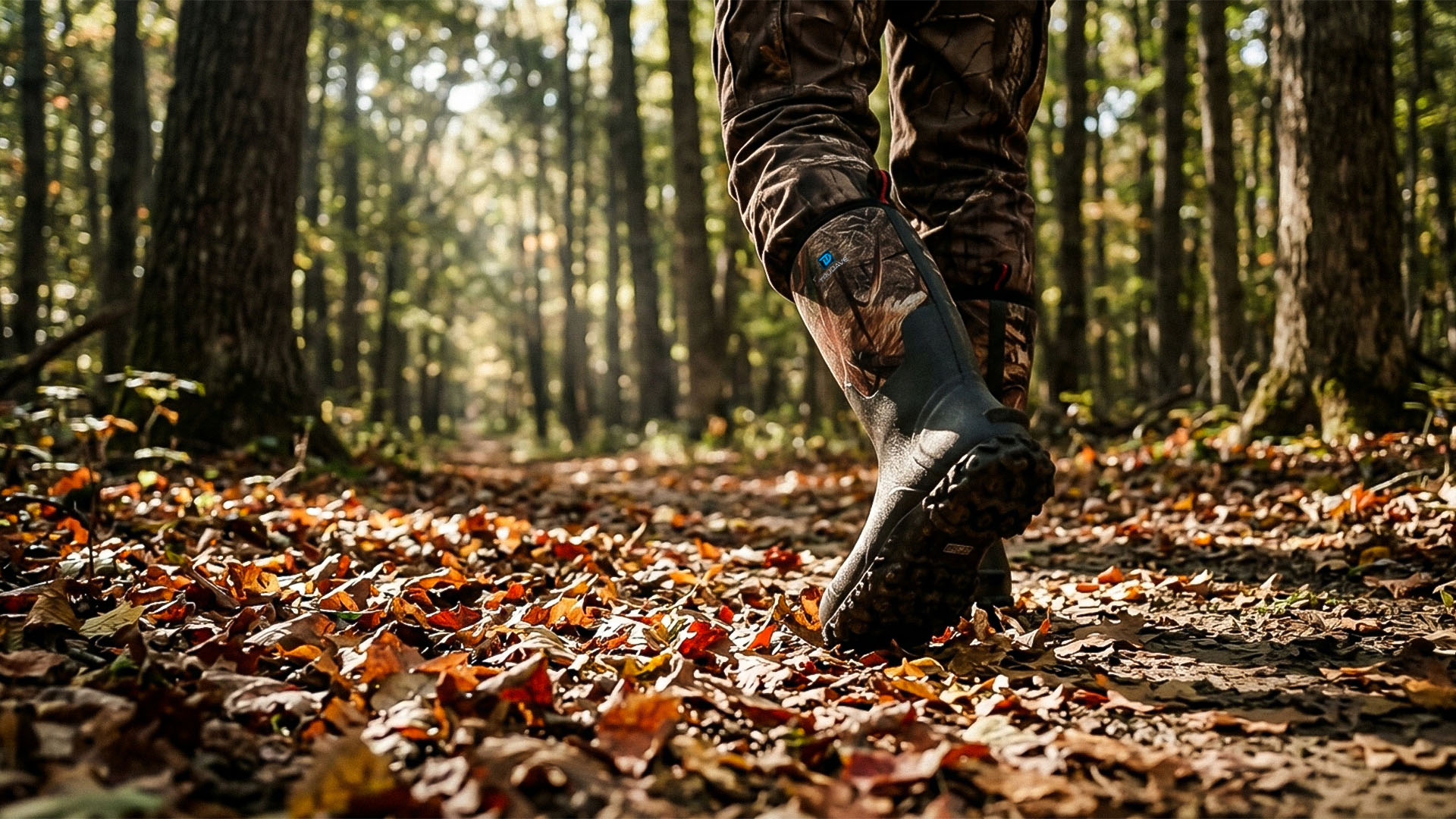
Hunters may benefit from waterproof hunting boots for rocky coastal hunting that provide secure heel retention, dependable wet-surface traction, and enough waterproof protection for repeated shoreline travel.
Waterproofing Is Essential
Salt spray alone can soak ordinary footwear.
Add:
- Tide pools
- Rain
- Wet grass
and water protection becomes critical.
Traction Matters More Than Maximum Stiffness
Rocky shorelines demand grip.
A heavy boot with poor wet-rock traction can still be dangerous.
Secure Heel Fit Improves Stability
Loose footwear allows the foot to move inside the boot.
That reduces control on:
- Rock
- Slopes
- Uneven shoreline
Rubber Boots Can Work in Wet Coastal Terrain
Tall rubber hunting boots can provide excellent protection around:
- Mud
- Shallow saltwater
- Wet shorelines
but outsole traction and fit matter greatly.
Smooth-Sole Rubber Boots Can Be Poor on Rock
Wet coastal surfaces require aggressive traction.
Boot selection should match the terrain.
Lace-Up Waterproof Boots May Be Better on Rocky Approaches
Where the hunt includes:
- Climbing
- Long walks
- Uneven shore
supportive waterproof boots may provide better foot control.
Waders May Be Necessary in Shallow Coastal Water
Some access or retrieval situations require greater waterproof height.
Properly fitted hunting waders can provide that protection.
Waders Do Not Make Surf Safe
They protect clothing from water.
They do not protect hunters from:
- Waves
- Strong current
- Falls
Never Enter Breaking Surf Because You Are Wearing Waders
A poor water decision stays poor regardless of clothing.
Take a safer route.
Tide Pools Can Hide Deep Holes
Clear-looking water can conceal:
- Sharp rock
- Drop-offs
- Shells
Step carefully.
Mussel and Barnacle Beds Can Be Sharp
Marine growth can damage:
- Boots
- Waders
- Hands
- Dog paws
Avoid careless contact.
Carry Wader Repair Supplies Where Appropriate
Sharp coastal terrain increases puncture risk.
Inspect equipment before leaving home.
Saltwater Is Hard on Gear
After the hunt, rinse appropriate equipment with fresh water according to manufacturer guidance.
Salt can accelerate corrosion.
Zippers and Hardware Need Attention
Salt residue can affect:
- Fasteners
- Buckles
- Firearm-safe storage hardware
- Boat equipment
Regular maintenance matters.
Small Boats Are Common in Coastal Hunting
Where lawful and suitable, boats can provide access to:
- Islands
- Offshore ledges
- Protected coves
But sea-duck hunting is fundamentally boating in cold water.
Boat Safety Comes First
A successful hunt begins with a safe return.
Consider:
- Weather
- Tide
- Current
- Boat capacity
- Distance from shelter
before launching.
Wear Appropriate Flotation Equipment
Cold-water hunting deserves conservative flotation choices.
Follow current boating regulations and safety guidance.
Do Not Overload Small Boats
Hunters may carry:
- Decoys
- Dogs
- Gear
- Fuel
which add weight quickly.
Stay within rated capacity.
Freeboard Matters
A heavily loaded boat sits lower in the water.
That reduces margin in waves.
Weight Distribution Matters
Poor distribution can make a boat unstable.
Secure equipment and keep loads balanced.
Loose Gear Can Shift in Rough Water
Everything should have a deliberate place.
Unexpected movement can affect balance.
Cold Water Changes the Consequences of a Fall
Water that feels manageable in summer can become dangerous within minutes in colder seasons.
Treat every crossing seriously.
Distance From Shore Can Be Deceptive
A small island may look close.
Wind and current can make the trip much longer.
Do Not Let Bird Activity Pull You Farther Offshore Than Planned
A flock beyond the safe zone is simply not your flock.
Safety defines the hunting area.
Marine Radios or Emergency Communication Can Add Redundancy
Remote coastal hunts may justify communication beyond a cell phone.
Cell coverage can be unreliable offshore.
Phones Need Waterproof Protection
Saltwater exposure can disable electronics quickly.
Protect navigation and communication devices.
Birds May Fly Very Low Over Water
Sea ducks often travel close to the surface.
That makes shooting-background awareness essential.
Boats May Be Hidden Behind Waves or Islands
Never assume the open horizon is empty.
Know where:
- Other hunters
- Fishing boats
- Recreational vessels
are located.
Do Not Shoot Toward Navigation Channels
Commercial and recreational traffic may pass unexpectedly.
Understand local waterways.
Low Sun Can Hide Boats
Glare near sunrise or sunset can reduce visibility.
If the background is uncertain:
Do not shoot.
Positive Identification Is Essential
Coastal water may contain multiple sea-duck species.
Hunters need to recognize the legal species before taking a shot.
Eiders Can Occur With Other Sea Ducks
Depending on region, hunters may see:
- Scoters
- Long-tailed ducks
- Other eiders
Study current identification materials.
Male and Female Eiders Look Very Different
Hunters should learn:
- Plumage
- Body shape
- Head profile
- Flight pattern
for both sexes.
Immature Birds Can Complicate Identification
Not every bird looks like a perfect adult field-guide illustration.
Study multiple age and sex classes.
Do Not Identify Only by Flock Behavior
Several sea-duck species may fly similarly.
Physical identification still matters.
Light Conditions Can Change Color Dramatically
Cloud, glare, and snow can make birds appear lighter or darker.
Use multiple features.
Mixed Flocks Require Extra Discipline
A group may contain more than one species.
Pick a clearly identified bird.
Species-Specific Regulations Matter
Eider hunting can involve special species or sex limits depending on jurisdiction and season.
Hunters should verify current official:
- Season dates
- Daily bag limits
- Possession limits
- Species-specific restrictions
- Sex-specific restrictions where applicable
- Shooting hours
- Licensing and stamp requirements
- Non-toxic ammunition rules
Do Not Rely on Last Season
Migratory waterfowl regulations can change.
Use current official information.
Coastal Zones Can Have Additional Restrictions
Some islands, refuges, or nearshore areas may be:
- Closed
- Seasonally restricted
- Protected
Know boundaries before hunting.
Marine Protected Areas and Wildlife Refuges Need Attention
A coastline can appear open while legal hunting access changes across invisible boundaries.
Use accurate current maps.
Island Ownership Can Be Complicated
Rocky islands may be:
- Public
- Private
- Restricted nesting habitat
Do not land without knowing access rules.
Public Shoreline Does Not Automatically Mean Hunting Is Allowed
Local laws and property restrictions still apply.
Boat Launch Rules Can Differ
Check:
- Opening hours
- Parking
- Ramp restrictions
before arriving before dawn.
Parking Can Be a Coastal Limitation
Popular access points may have limited space.
Do not block:
- Ramps
- Commercial access
- Emergency lanes
Decoy Placement Must Consider Current
Moving water can pull lines and anchors.
A setup that works in calm water may shift quickly.
Check Anchors Regularly
Current changes during the tide.
Secure equipment appropriately.
Do Not Use More Gear Than Conditions Allow
Large spreads add:
- Weight
- Setup time
- Retrieval difficulty
in rough coastal environments.
Mobility Can Be More Valuable
A lighter setup can make it easier to adapt to:
- Wind
- Tide
- Bird movement
Never Chase Loose Gear Into Dangerous Water
A lost decoy is replaceable.
A hunter is not.
Shore-Based Hunts Can Reduce Boat Exposure
Where legal and habitat allows, hunting from rocky shore can eliminate some boating risks.
But shore access brings its own challenges.
Scout Shore Access at Low Tide
Low water may reveal:
- Rock routes
- Mud
- Shell beds
that are hidden later.
High Tide Can Cut Off Shore Routes
A dry ledge at arrival may disappear.
Always know the exit route.
Rising Water Can Trap Hunters on Rock
Never sit on a low coastal shelf without understanding:
- Tide timing
- Wave conditions
Waves Can Reach Higher Than Expected
Large vessel wakes and weather-driven sets can wash over rock well above normal water.
Keep gear above the splash zone.
Do Not Turn Your Back on Rough Water
Even relatively calm seas can produce occasional larger waves.
Maintain awareness.
Ice Adds Another Layer of Risk
Northern eider hunts may involve:
- Frozen spray
- Shore ice
- Snow-covered rock
Every surface becomes more difficult.
Black Ice Can Be Nearly Invisible
Rock coated with thin ice may look merely wet.
Test footing.
Microspikes or Other Legal Traction Aids May Be Appropriate for Access
Where conditions and local rules permit, dedicated traction equipment may improve shore safety.
Use equipment according to its intended purpose.
Snow Can Hide Rock Gaps
Move slowly.
A few inches of snow can conceal major hazards.
Wind Chill Is Severe on Open Coast
There is little protection from moving air.
Layer appropriately.
Windproof Outerwear Matters
A small amount of wind penetration can reduce comfort dramatically during stationary periods.
Avoid Sweating on the Walk In
Rocky access can be physically demanding.
Vent before overheating.
Add Insulation Once Stationary
Layering allows hunters to adapt to active and inactive periods.
Gloves Need Water Resistance
Handling:
- Wet lines
- Decoys
- Boats
can soak hands quickly.
Carry a Dry Backup Pair
Cold wet gloves can become dangerous.
Neck and Face Protection Helps
Open-coast wind exposure can be constant.
Protect uncovered skin.
Warm Drinks Can Improve Comfort
Long cold hunts are easier when hunters can stay hydrated and warm.
Hydration Still Matters in Winter
Cold suppresses thirst.
Drink regularly.
Bring High-Energy Food
Cold weather increases energy needs.
Choose food that can be eaten easily in gloves or cold conditions.
Dogs Can Help With Retrieval
Trained retrievers may be valuable in appropriate coastal situations.
But sea-duck water can be extremely demanding.
Cold Saltwater Is Hard on Dogs
Swimming through:
- Waves
- Current
- Cold water
requires substantial energy.
Do Not Send Dogs Into Unsafe Surf
No retrieve is worth risking the dog’s life.
Use conservative judgment.
Currents Can Move Dogs Sideways
A straight-looking retrieve may become much longer.
Account for water movement.
Dogs Need Fresh Drinking Water
Saltwater is not suitable hydration.
Carry fresh water.
Dogs Can Swallow Saltwater While Swimming
Monitor them carefully.
Limit unnecessary exposure.
Provide Warm Dry Recovery Space
After retrieves, dogs need protection from:
- Wind
- Cold deck surfaces
Check Dog Paws Around Shell Beds
Barnacles and shells can cause cuts.
Inspect feet after shore work.
Recovery Can Be Difficult
A downed sea duck may:
- Drift
- Dive
- Move with current
Recovery conditions should influence shot selection.
Mark the Bird Immediately
Use:
- Rock point
- Island edge
- Shore structure
to track its position.
Current Can Move a Bird Quickly
Watch direction continuously.
Do not assume it remains where it first landed.
Wind Drift Adds Another Variable
Wind and tide can move in different directions.
Estimate both.
Binoculars Can Help Track Birds on Open Water
Keep visual contact where practical.
Do Not Lose Sight While Preparing Equipment
One hunter may maintain observation while another handles retrieval logistics when hunting with partners.
Ethical Recovery Starts Before the Shot
Ask:
If this bird falls there, can it be recovered safely?
If the answer is doubtful:
Pass.
Warm Sun Can Still Affect Harvested Birds
Even cold-weather hunts may have direct sun on dark boat surfaces.
Keep birds properly handled and cooled according to current food-safety guidance.
Saltwater and Mud Can Contaminate Game
Store harvested birds cleanly.
Avoid unnecessary contact with:
- Fuel
- Bilge water
- Dirty decks
Common Eider Hunting Mistakes
Treating Every Rocky Shoreline the Same
Birds respond to specific food, current, and structure.
Ignoring the Tide
Access and feeding habitat change continuously.
Choosing a Productive-Looking Point Without Planning the Exit
High water can cut off shore routes.
Wearing Boots With Poor Wet-Rock Traction
Coastal terrain punishes slippery footwear immediately.
Assuming Waders Make Surf Safe
They do not.
Taking Too Much Gear in Small Boats
Weight reduces safety margin.
Underestimating Cold Saltwater
Short exposures can become serious quickly.
Failing to Study Sea-Duck Identification
Multiple species may share the same coastline.
Frequently Asked Questions
Where do common eiders usually live?
Common eiders are associated with northern coastal marine habitats including rocky shorelines, islands, bays, shoals, tidal channels, and other nearshore saltwater environments.
Are rocky coastlines good places to hunt eiders?
They can be, especially where underwater structure and food attract feeding birds and where safe legal access exists.
Does tide matter for eider hunting?
Yes. Tide affects water depth, current, feeding access, shoreline routes, decoy placement, and boat navigation.
Does wind affect sea-duck hunting?
Yes. Wind can change wave conditions, bird flight, sheltered-water use, and the safety of boat or shore access.
What boots are best for rocky coastal hunting?
Waterproof hunting boots with secure heel fit and strong traction on wet rock, seaweed, mud, and uneven shoreline are practical. Tall rubber boots can work in shallow wet terrain, while more supportive waterproof boots may be preferable for long rocky approaches.
Are waders useful for eider hunting?
They can be useful in shallow coastal water or shore access, but waders do not make surf, strong current, deep channels, or unstable rock safe.
Can dogs retrieve eiders?
Trained retrievers may be used where conditions are appropriate and legal, but cold saltwater, surf, current, shells, and long swims require especially conservative judgment.
Do eider regulations vary?
Yes. Eiders are migratory waterfowl, and regulations may include species-specific or sex-specific limits depending on jurisdiction. Hunters should verify current official season, limit, licensing, ammunition, and area rules before hunting.
Final Thoughts
Common eider hunting teaches hunters that the coast is not simply land beside water.
It is a moving system.
One tide covers a ledge.
Another exposes it.
One wind makes a bay calm.
Another turns the same bay rough.
One current carries birds along a point.
One offshore reef becomes a feeding area.
Everything is connected.
Scout at several tide stages.
Watch where birds dive.
Study current.
Know the wind.
Plan the exit before the hunt begins.
Respect cold saltwater.
Carry less gear when conditions demand it.
Wear boots that let you cross wet rock, seaweed, mud, tide pools, shell flats, and salt-soaked shoreline without losing confidence in every step.
And when a flock of eiders follows the same current seam around a rocky point that looked completely ordinary from shore, remember the lesson:
The ocean is huge.
But the birds are still following structure.
The better you learn that structure, the smaller the coast begins to feel.
