Scaled quail hunting can make an apparently empty desert feel like it is moving just ahead of you.
The grass is short.
Mesquite trees stand far apart.
Prickly pear breaks up the flats.
A shallow arroyo cuts across the basin.
Nothing looks thick enough to hide twenty birds.
Then the dog becomes excited.
The covey is there.
But instead of holding in the grass, the birds begin running.
Fifty yards.
One hundred yards.
Across the wash.
Past another mesquite patch.
The hunters keep following.
Then the covey finally reaches a place where running becomes harder.
The ground erupts.
Birds fly in every direction.
That is scaled quail hunting.
These Southwestern birds are famous for using their legs.
They can run through open desert grassland far more effectively than many hunters expect.
That changes everything.
Successful hunters do not simply search for where scaled quail live.
They search for terrain features that can finally make the birds stop running.
Those features may include:
- Desert washes
- Fence corners
- Mesquite pockets
- Brush lines
- Rocky slopes
- Cactus patches
- Terrain breaks
Find where food, escape cover, and travel structure overlap, and scaled quail become much easier to understand.
Scaled Quail Are Birds of Open Dry Country
Scaled quail are associated with arid and semi-arid landscapes of the American Southwest and adjacent regions.
Productive habitat may include:
- Desert grassland
- Mesquite flats
- Shrubby plains
- Cactus country
- Arroyos
- Ranch grassland
- Rocky desert slopes
Compared with bobwhites, scaled quail often tolerate much more open habitat.
That openness is part of what makes hunting them so different.
Do Not Expect Thick Cover Everywhere
A scaled quail covey may spend much of the day in country containing:
- Short grass
- Scattered shrubs
- Open soil
that looks almost too exposed.
Their defense is often not hiding completely.
It is seeing danger early and running away from it.
Running Behavior Defines the Hunt
Scaled quail frequently move on foot before flushing.
This can frustrate hunters who expect classic tight-holding upland birds.
The covey may stay just ahead.
The more aggressively hunters chase, the farther the birds may run.
Slow Down When the Dog Speeds Up
A sudden dog acceleration may indicate birds moving ahead.
That is often a signal to:
- Stop rushing
- Watch likely escape routes
- Use terrain
rather than simply walking faster.
Running Birds Need Something to Stop Them
The most useful terrain often contains features that interrupt easy ground movement.
Look for:
- Deep washes
- Thick cactus
- Fence lines
- Rock
- Dense mesquite
- Steeper slopes
These can encourage birds to hold or flush.
Desert Washes Are Extremely Important
Arroyos and washes break otherwise open terrain.
They may provide:
- Shade
- Taller vegetation
- Softer soil
- Travel corridors
- Escape cover
Scaled quail may use both the wash and its edges.
Hunt Both Sides of the Wash
Birds may run parallel to the drainage.
Or they may cross it and hold on the opposite bank.
Watch:
- Mesquite clumps
- Grass pockets
- Eroded edges
carefully.
Deep Banks Can Finally Force a Flush
A running covey approaching a steep arroyo bank may hesitate.
That moment can create an opportunity.
Do not rush the final approach.
Wash Junctions Can Concentrate Cover
Where two arroyos meet, vegetation may become denser.
Look for:
- Mesquite
- Grass
- Shrubs
around these intersections.
They can function as small habitat islands.
Mesquite Flats Are Classic Scaled Quail Country
Scattered mesquite can provide:
- Shade
- Security
- Food-related habitat structure
without creating closed forest.
Birds may move from one mesquite cluster to another across open ground.
Not Every Mesquite Flat Is Equal
A huge flat containing almost no ground cover may be poor.
Look for combinations of:
- Grass
- Forbs
- Shrubs
- Nearby water or washes
Habitat diversity matters.
Mesquite Shade Can Matter During Warm Weather
Southwestern hunts can remain warm well into traditional hunting seasons.
Birds may spend more time near:
- Shaded washes
- Mesquite clusters
- North-facing microhabitat
during the hottest periods.
Early Morning Can Reveal Feeding Birds
Cool conditions may encourage coveys to use more open feeding ground.
Search:
- Grass flats
- Road edges
- Low slopes
near security cover.
Late Afternoon Can Create Another Movement Period
As temperatures drop, birds may leave shade and feed more actively.
Edges between open grass and shrub cover can become productive.
Midday Is Not Automatically Dead
If hunters understand thermal cover, midday can still produce birds.
Focus on:
- Mesquite shade
- Wash bottoms
- Dense shrub pockets
rather than wandering the hottest open flats.
Grass Structure Matters
Scaled quail country often contains a mixture of:
- Short grass
- Bunchgrass
- Bare soil
Birds need enough openness to run.
They also need enough cover to feel secure.
Extremely Dense Grass Can Change Use
When vegetation becomes too thick at ground level, scaled quail may prefer more open areas.
Think about movement from the bird’s perspective.
Bare Ground Can Be Useful
Some open ground allows birds to:
- Walk
- Feed
- Dust
easily.
Do not assume bare soil automatically means poor habitat.
Dusting Areas Can Reveal Activity
Quail may use loose dry soil for dusting.
Look for:
- Shallow depressions
- Feathers
- Tracks
near cover.
Roads Can Reveal Bird Sign
Ranch roads and dirt tracks often provide bare ground.
Fresh quail tracks may show where coveys cross between habitat blocks.
Soft Dust Can Preserve Tracks Well
Look for:
- Repeated small bird tracks
- Direction
- Group movement
after calm weather.
Rain Resets the Desert
Monsoon or seasonal storms can change the entire landscape.
Rain may create:
- Fresh green vegetation
- Mud
- Temporary water
- New insect activity
Bird distribution can respond quickly.
Scaled Quail Hunting After Rain Can Be Very Different
Coveys may spread farther from permanent water.
Green-up may create new feeding areas.
Old reliable locations may become less concentrated.
Fresh Mud Makes Scouting Easier
Check:
- Ranch roads
- Wash crossings
- Water edges
for recent tracks.
Rain can erase old sign and make current movement more obvious.
Temporary Water Changes Patterns
Small pools in:
- Rock depressions
- Washes
- Stock areas
may reduce the need for birds to visit traditional permanent sources.
Rescout after storms.
Permanent Water Still Matters During Dry Periods
When conditions become dry again, birds may concentrate around:
- Stock tanks
- Springs
- Seeps
- Livestock water
depending on local habitat.
Hunt Travel Routes Near Water
Birds do not necessarily spend the entire day beside the water source.
Look for tracks leading toward:
- Grass flats
- Mesquite
- Wash systems
The travel corridor may offer the better opportunity.
Livestock Water Requires Respect
Ranch infrastructure may support both:
- Wildlife
- Cattle
Never interfere with:
- Troughs
- Pumps
- Pipes
- Tanks
Cattle Country Can Hold Good Quail Habitat
Moderate grazing can create a patchwork of:
- Short vegetation
- Bare soil
- Taller grass
depending on management.
That structure can be useful to scaled quail.
Overgrazing Can Reduce Cover
Too little vegetation can remove:
- Security
- Nesting structure
Habitat balance matters.
Fence Lines Can Influence Movement
Scaled quail may run along fences before crossing.
Look for:
- Gaps
- Wash crossings
- Lower sections
where repeated movement occurs.
Fence Corners Can Stop Running Coveys
A covey pressured toward a corner may eventually:
- Hold
- Split
- Flush
This can create predictable opportunities.
Never Use a Fence Corner Without Planning Safe Shooting Zones
Fences often border:
- Roads
- Neighboring property
- Livestock
Know the background.
Barbed Wire Is a Major Hazard
Southwestern ranch country frequently contains old fencing.
Tall grass and darkness can hide:
- Broken strands
- Fallen wire
Move carefully.
Dogs Can Hit Wire at Speed
A bird dog chasing moving quail can encounter fencing unexpectedly.
Maintain control.
Scout Major Fences Before Running Dogs
Understanding property layout improves both:
- Safety
- Dog management
Cactus Changes Every Route
Scaled quail habitat may contain:
- Prickly pear
- Cholla
- Other cactus
Hunters cannot simply walk the straightest line.
Cholla Deserves Special Respect
Detached segments may lie on the ground.
They can attach to:
- Boots
- Pants
- Dogs
with very little contact.
Carry Appropriate Cactus-Removal Tools
Do not rely on bare hands.
Plan for cactus encounters before the hunt.
Check Dog Paws Frequently
Small cactus spines can cause major discomfort.
Inspect:
- Pads
- Toes
- Legs
throughout the day.
Prickly Pear Can Hide in Grass
Watch every step, especially when:
- Kneeling
- Sitting
- Crossing low cover
Durable Pants Are Valuable
Desert vegetation can include:
- Cactus
- Catclaw
- Thorny shrubs
Lightweight delicate clothing may tear quickly.
Brush-Resistant Clothing Improves Mobility
If every thorn patch forces a detour, hunters lose contact with running birds.
Durable pants create more route options.
Gloves Can Help
Light gloves protect hands when crossing:
- Brush
- Fence lines
without reducing too much dexterity.
Eye Protection Is Useful
Mesquite and thorny shrubs often reach face height.
Clear protective glasses can reduce eye injury.
Scaled Quail Hunting Is a Serious Walking Hunt
A typical day may involve:
- Desert grass
- Loose rock
- Sand
- Mud after storms
- Wash crossings
- Cactus
- Long distances
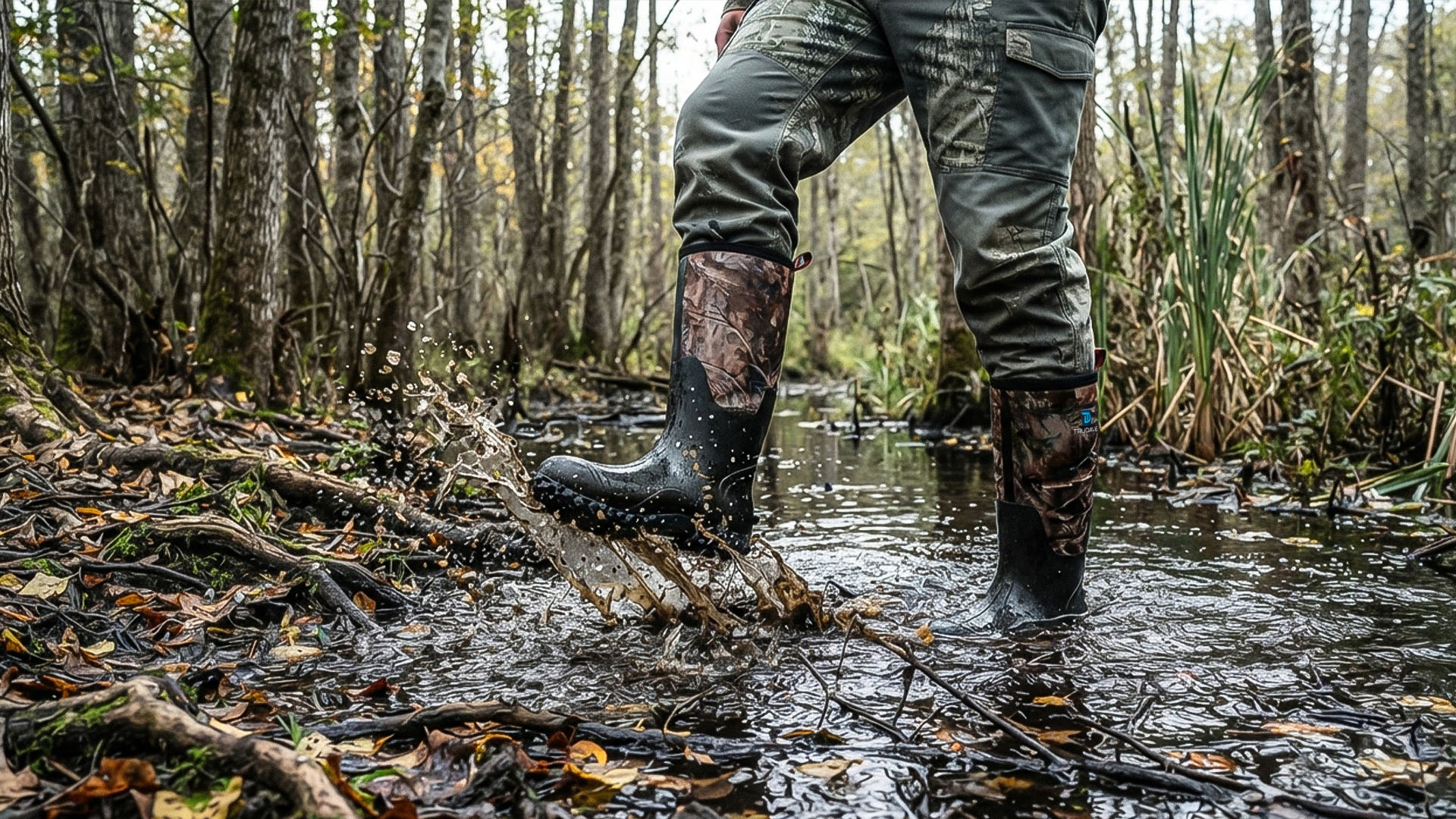
Hunters may benefit from waterproof hunting boots for desert quail hunting that provide secure heel retention, dependable traction, and enough protection for rocky, thorny, and occasionally muddy Southwestern terrain without becoming excessively heavy.
Lightweight Boots Usually Make Sense
Scaled quail hunting involves constant walking.
Heavy mountain boots may create unnecessary fatigue in flatter desert country.
Balance:
- Weight
- Support
- Durability
Waterproofing Still Matters in the Desert
Dry country can become surprisingly wet after storms.
Hunters may encounter:
- Muddy roads
- Wet grass
- Shallow wash water
Waterproof footwear improves versatility.
Too Much Insulation Is Usually Unnecessary in Mild Conditions
Southwestern winters can still produce warm afternoons.
Over-insulated boots may cause:
- Sweat
- Hot spots
- Blisters
Choose based on actual temperature.
Secure Heel Fit Matters
Long miles across uneven ground expose poor boot fit quickly.
Heel slip becomes painful.
Toe Protection Is Useful
Rock, cactus, and hard desert debris can punish soft footwear.
A durable toe area helps.
Traction Matters on Loose Rock
Dry gravel can roll underfoot.
Good outsole grip improves control.
Careful stepping still matters more than speed.
Wet Clay Can Be Extremely Slick
After rain, ranch roads may turn into:
- Sticky mud
- Slippery clay
Slow down.
Mud Can Pack Into Tread
Heavy buildup reduces traction.
Clean soles when practical.
Gaiters Can Help
Low gaiters may keep:
- Grass seeds
- Sand
- Gravel
- Mud
out of boots.
Grass Seeds Can Become a Major Dog Issue
Southwestern grasslands may contain sharp seeds that work into:
- Paws
- Ears
- Coat
Inspect dogs frequently.
Dog Conditioning Is Important
Scaled quail hunts often require many miles.
A dog conditioned only on short training sessions may fatigue quickly.
Running Birds Make Dogs Work Hard
Dogs may repeatedly relocate moving scent.
This increases:
- Distance
- Heat
- Energy expenditure
Range Control Is Essential
A dog working too far ahead can push running birds into wild flushes.
Match range to:
- Cover
- Terrain
- Wind
Dogs Can Help Pin Birds
A good pointing dog combined with hunter positioning can make running coveys easier to handle.
But the dog cannot eliminate the birds’ instinct to run.
Hunters Need to Work With the Dog
When the dog shows moving birds:
Do not sprint straight forward.
Consider where the covey is heading.
Use terrain to get ahead when possible.
Multiple Hunters Can Pressure Birds More Effectively
Where safe and legal, coordinated hunters may cover:
- Wash edge
- Grass flat
- Fence line
and reduce escape options.
Coordination Matters More Than Speed
Hunters should know:
- Relative position
- Safe zones
- Direction of movement
before pushing cover.
Never Surround Birds With Unsafe Shooting Angles
Containment is useful only when everyone knows where everyone else is.
Safety comes first.
Low Flushes Are Common
Scaled quail may rise from short grass and remain close to the ground initially.
Know where:
- Dog
- Partners
- Livestock
are at all times.
Pick One Bird
A covey rise can put many birds in the air.
Focus on one clear bird.
Do not shoot into the center of the group.
Watch the Covey After the Flush
Scaled quail may fly:
- Several hundred yards
- Across washes
- Around ridges
before landing.
Track them visually as long as possible.
Mark the Landing Area Carefully
Use multiple features such as:
- Mesquite tree
- Wash bend
- Cactus patch
- Fence post
Desert Landmarks Can Look Identical
“Next to the mesquite” is not enough when there are hundreds of mesquites.
Use several reference points.
Scattered Birds Can Hold Better
After the initial covey flush, singles and small groups may become easier to approach.
Slow down near the landing zone.
Singles May Still Run
Do not assume scattered birds behave exactly like bobwhites.
Scaled quail can continue moving on foot.
Work the Entire Landing Area
One bird may stop under:
- Grass
- Shrub
while another continues a hundred yards farther.
Listen for Calling Birds
Coveys may vocalize and regroup after being scattered.
Calls can reveal general direction.
Sound Can Travel Far Across Open Country
Wind and terrain can distort direction.
Use multiple listening positions if necessary.
Do Not Chase Every Call Blindly
Use habitat and terrain to predict where birds are regrouping.
Heat Can Be a Major Problem
Desert quail hunting may occur under surprisingly warm conditions.
Hunters and dogs can overheat.
Carry More Water Than You Think You Need
Natural water can be extremely unreliable.
Always carry enough for:
- Hunter
- Dog
Do Not Depend on Stock Tanks for Drinking Water
Water may be:
- Contaminated
- Inaccessible
- Reserved for livestock
Bring your own.
Dry Air Hides Dehydration
Sweat evaporates quickly.
Drink regularly.
Dogs Need Frequent Water Breaks
A working dog covers far more distance than the hunter.
Hydration needs can be substantial.
Shade Is Limited
Use mesquite or terrain shade when available.
Short rest periods can preserve dog performance.
Warm Ground Can Damage Paws
Rock and dry soil exposed to sun can heat up.
Monitor dog pads.
Cold Desert Mornings Can Be Misleading
Temperature may begin near freezing and become mild quickly.
Dress in layers.
Do Not Overdress for the First Hour
Climbing and walking generate heat.
Remove layers before sweating heavily.
Wind Can Make Desert Mornings Cold
Open grassland provides little protection.
Carry a wind-resistant layer.
Winter Storms Can Still Bring Snow
Some higher desert grasslands receive:
- Snow
- Ice
which can completely change bird movement and access.
Snow Can Reveal Tracks
Fresh snow may show:
- Running routes
- Feeding locations
- Covey movement
Snow Can Push Birds Toward Exposed Slopes
Windblown or sunny areas may offer:
- Accessible food
- Easier movement
South-Facing Slopes Can Warm Earlier
During cold conditions, birds may favor warmer exposures.
Search:
- Grass
- Rock
- Shrub edges
on these slopes.
Monsoon-Damaged Roads Can Affect Access
Desert storms can wash out:
- Dirt roads
- Creek crossings
Check current conditions.
Dry Washes Can Flood Rapidly
A storm miles away can create flash flooding downstream.
Never camp or remain in a drainage when flood risk exists.
Do Not Drive Into Moving Water
Desert washes can become dangerous extremely quickly.
Choose another route.
Wet Ranch Roads Are Easy to Damage
After rain, avoid:
- Deep ruts
- Off-road detours
Follow landowner and land-management rules.
Navigation Is Important
Open desert country can look simple.
After several miles, one wash may resemble another.
Use reliable navigation.
Offline Maps Are Useful
Download:
- Topography
- Roads
- Property boundaries
before the hunt.
Mark the Vehicle
A covey chase can pull hunters into another drainage.
Save the parking location.
Carry a Headlamp
Late recovery can extend after sunset.
Desert darkness makes:
- Cactus
- Wire
- Wash banks
harder to see.
Public-Land Access Can Be Complicated
Scaled quail habitat may occur on a mix of:
- Federal land
- State land
- Private ranch
Know where hunting is permitted.
Open Desert Does Not Mean Public Land
Use current ownership information.
Private Ranch Permission Matters
Follow rules concerning:
- Roads
- Gates
- Dogs
- Livestock
- Water
Leave Gates As Directed
Do not automatically close or open them.
Follow landowner instructions.
Livestock Shares Quail Country
Cattle may be hidden in:
- Draws
- Mesquite
- Low terrain
Know the background before shooting.
Brush Is Not a Safe Backstop
Sparse desert vegetation may hide:
- Livestock
- Roads
- People
farther away.
Open Terrain Allows Long Projectile Travel
Background awareness is essential.
Do not shoot toward:
- Skyline
- Roads
- Buildings
Other Quail Species May Overlap
Depending on location, scaled quail habitat may overlap with:
- Northern bobwhite
- Gambel’s quail
- Montezuma quail
Hunters should understand local identification.
Do Not Identify Only by Habitat
Several species can use similar areas.
Study:
- Plumage
- Head pattern
- Body shape
- Calls
Scaled Quail Have a Distinctive Appearance
Their scaled-looking breast pattern and head characteristics can help identification.
Use official wildlife resources before hunting.
Fast Flushes Still Require Positive Identification
If you are unsure:
Do not shoot.
Regulations Vary by State
Before hunting, verify current official:
- Season dates
- Daily bag limits
- Possession limits
- License requirements
- Legal methods
- Public-land regulations
Different Quail Species May Have Different Rules
Do not assume one quail season covers every species.
Check exact local regulations.
Public Lands May Have Special Vehicle Restrictions
Desert habitat is vulnerable to off-road damage.
Use legal roads and trails.
Avoid Driving Across Native Grass
Vehicle tracks can damage:
- Soil
- Vegetation
and create long-lasting disturbance.
Habitat Conservation Matters
Scaled quail depend on healthy desert grassland systems.
Changes involving:
- Drought
- Brush expansion
- Grass loss
- Land conversion
can affect habitat quality.
Rainfall Strongly Influences Desert Productivity
Good rainfall can improve:
- Vegetation
- Insects
- Cover
while prolonged drought reduces resources.
Habitat Quality Changes Year to Year
A basin that held strong bird numbers in one season may look completely different after drought.
Keep scouting.
Water Developments Can Support Wildlife
Properly managed water sources may benefit multiple species.
Hunters should respect all infrastructure.
Grassland Restoration Helps More Than Quail
Healthy desert grasslands can support:
- Pronghorn
- Songbirds
- Pollinators
- Other wildlife
Recovery Can Be Difficult
A small quail can disappear in:
- Dry grass
- Cactus
- Rock
- Mesquite litter
Mark the fall immediately.
Watch the Bird All the Way Down
Do not switch attention to the remaining covey too quickly.
Pick a landmark.
Dogs Can Greatly Improve Recovery
A trained dog can locate birds hidden beneath sparse-looking vegetation.
Watch for Cactus During Recovery
Do not rush through prickly pear or cholla simply because the bird fell nearby.
Take the safe path.
Birds May Run After Landing
Search beyond the apparent fall point.
Without a Dog, Search Methodically
Use:
- Small circles
- Parallel passes
from the marked location.
Warm Weather Requires Prompt Game Care
Southwestern conditions can remain warm during season.
Keep harvested birds:
- Clean
- Cool
according to current food-safety guidance.
Direct Sun Heats Game Quickly
Move birds into:
- Shade
- Proper cooling
as soon as practical.
Common Scaled Quail Hunting Mistakes
Treating Them Like Bobwhites
Scaled quail often run much farther before flushing.
Chasing Running Birds Faster
Speed usually makes the problem worse.
Ignoring Washes and Fence Lines
Terrain features can finally stop moving coveys.
Hunting Only Around Permanent Water After Rain
Temporary water may spread birds out.
Wearing Heavy or Poorly Fitting Boots
Desert quail hunting rewards lightweight all-day mobility.
Ignoring Cactus Hazards
Hunters and dogs can both be affected.
Failing to Mark Covey Landing Areas
Open desert landmarks are deceptively similar.
Assuming Every Quail Species Has the Same Regulations
Always verify current local rules.
Frequently Asked Questions
Where do scaled quail usually live?
Scaled quail commonly use Southwestern desert and semi-arid grasslands containing short grass, mesquite, shrubs, cactus, washes, and open ranch country.
Why do scaled quail run so much?
Running allows them to maintain distance while staying concealed in low vegetation, making it one of their primary escape strategies.
Are desert washes good places to hunt scaled quail?
They can be excellent because washes provide taller vegetation, shade, travel structure, and terrain features that may slow or stop running birds.
Is scaled quail hunting good after rain?
Rain can improve vegetation, create fresh tracks, and produce temporary water, but it can also spread birds farther across the landscape. Recent scouting becomes especially important.
What boots are best for scaled quail hunting?
Lightweight waterproof hunting boots with secure heel fit, durable protection, dependable traction on loose rock and mud, and enough support for long desert walking are practical.
Can dogs help hunt scaled quail?
Yes. Pointing dogs can help locate coveys, but scaled quail frequently run ahead of dogs, so range control, conditioning, hydration, cactus awareness, and paw checks are important.
How are scaled quail different from bobwhite quail?
Scaled quail generally use more open, arid Southwestern habitat and are particularly known for running extensively before flushing, while bobwhites are often associated with brushier grassland and field-edge environments.
Do scaled quail regulations vary?
Yes. Seasons, limits, licenses, species rules, and public-land restrictions can differ by jurisdiction. Hunters should verify current official regulations before hunting.
Final Thoughts
Scaled quail hunting teaches hunters that open country does not mean easy hunting.
The birds have room to run.
So they run.
Across grass.
Through mesquite.
Along fences.
Across washes.
Past cactus.
They keep moving until something finally forces a decision.
That is where the hunter needs to think ahead.
Find the washes.
Watch fence corners.
Use terrain.
Slow down when the dog begins tracking running birds.
Carry enough water.
Check paws for cactus and grass seeds.
Respect ranch roads and property boundaries.
Wear boots that let you cross loose rock, sand, cactus flats, wet grass after storms, sticky clay, and miles of desert country without making your feet the reason the hunt ends early.
And when a scaled quail covey finally erupts from the far edge of a wash after running in front of you for several hundred yards, remember the lesson:
You were never just hunting where the birds were.
You were hunting the place where they would finally stop running.
