
Winter changes coyote country.
A grassland that looked empty in November suddenly becomes covered in tracks after one night of snow.
A narrow line crosses the road.
Another follows a frozen creek.
Several tracks meet near a brushy draw.
The landscape has not become more populated overnight.
It has become easier to read.
That is one of the biggest advantages of winter coyote hunting.
Snow records movement.
Cold weather changes food needs.
Open vegetation improves visibility.
Tracks reveal where coyotes travel when hunters are not watching.
But snow does not automatically make coyotes easy to hunt.
These predators survive by noticing danger.
They use:
- Wind
- Terrain
- Cover
- Distance
- Human pressure
extremely well.
Successful winter hunters learn to combine sign with strategy.
Fresh tracks tell you where coyotes were.
Wind, food, terrain, and timing help predict where they may be next.
Coyotes Can Live Almost Everywhere
Coyotes occupy an enormous variety of habitats across North America.
Hunters may find them around:
- Prairie
- Agricultural land
- Desert
- Brush country
- Mountain foothills
- Forest edges
- Creek bottoms
- Ranchland
- Suburban-rural transitions where hunting is legal
Their adaptability is one reason coyote hunting can occur in so many different environments.
But winter narrows some of their priorities.
Food becomes more important.
Efficient travel becomes more important.
Weather protection matters.
Those needs can make certain terrain features much more useful to hunters.
Fresh Snow Is One of the Best Scouting Tools
Snow creates a timeline.
Tracks can reveal:
- Direction
- Number of animals
- Travel corridors
- Road crossings
- Hunting routes
Freshness matters.
Look for prints with:
- Sharp edges
- Little snow inside
- No wind-blown filling
Older tracks may still be useful for understanding long-term patterns.
But fresh tracks are much more valuable when planning today’s hunt.
Learn the Difference Between Travel and Hunting Tracks
A coyote traveling efficiently may leave a fairly straight track line.
A coyote actively searching for food may:
- Zigzag
- Investigate brush
- Circle cover
- Follow mouse sign
- Enter creek edges
This difference matters.
Straight tracks may connect large habitat zones.
Searching tracks can reveal feeding habitat worth hunting.
Do not treat every footprint the same.
Road Crossings Can Reveal Major Travel Corridors
Snow-covered ranch roads and field roads are excellent scouting surfaces.
When coyote tracks repeatedly cross the same location, ask:
Why here?
Possible reasons include:
- Creek corridor
- Fence opening
- Draw
- Field edge
- Ridgeline
A road crossing is rarely random when it repeats.
The surrounding terrain usually explains it.
Creek Bottoms Are Natural Travel Routes
Coyotes frequently use drainages because they provide:
- Cover
- Lower wind exposure
- Easier travel
- Food opportunities
Frozen creeks may also create efficient movement corridors.
Look for tracks along:
- Creek banks
- Sandbars
- Ice edges
- Brush lines
Do not assume coyotes remain inside the drainage.
They may travel low and then climb onto feeding ground.
Brushy Draws Deserve Serious Attention
A shallow draw can look insignificant across open prairie.
For coyotes, it can provide:
- Concealment
- Wind protection
- Travel cover
These draws may connect:
- Crop fields
- Pasture
- Creeks
- Bedding areas
A stand overlooking several draw intersections can be much more productive than calling random open grass.
Terrain Funnels Movement
Coyotes usually prefer efficient travel.
They may use:
- Saddles
- Low ridges
- Creek crossings
- Fence openings
to move through a landscape.
Snow makes these patterns visible.
After several scouting trips, repeated track lines often reveal a clear network.
Winter Food Changes Coyote Movement
Cold weather increases energy demands.
Coyotes may spend more time searching for:
- Rodents
- Rabbits
- Carrion
- Other natural food sources
Agricultural landscapes can create especially strong patterns.
Look for coyotes using:
- Field edges
- Hay ground
- Livestock areas
- Creek cover
where food opportunities overlap.
Rodent-Rich Fields Can Be Important
Some winter fields hold large numbers of:
- Mice
- Voles
- Other small mammals
Coyotes may hunt these areas repeatedly.
Fresh snow can reveal:
- Pouncing holes
- Searching tracks
- Multiple crossings
A field full of wandering coyote sign is telling you it provides food.
Hay Fields Can Attract Predators
Hay and pasture systems may support rodent populations.
Coyotes may work these areas during:
- Dawn
- Dusk
- Night
Hunt nearby cover or travel routes rather than assuming the center of the field is always best.
A coyote approaching an open feeding area often uses terrain before exposing itself.
Agricultural Edges Create Strong Transitions
The boundary between:
- Crop
- Grass
- Brush
- Creek
can create excellent hunting habitat.
Coyotes can move through cover while watching feeding areas.
These edges deserve more attention than large uniform fields.
Carrion Can Influence Winter Movement
Natural winter mortality or lawful livestock-management situations can create scavenging opportunities.
Hunters should always follow local rules concerning baiting, carcasses, livestock areas, and property access.
The broader scouting lesson is simple:
Coyotes remember reliable food.
Fresh tracks around one area can reveal repeated use.
Never Assume Baiting Rules Are the Same Everywhere
Predator-hunting regulations vary by jurisdiction.
Before using or hunting around any attractant, verify current rules regarding:
- Baiting
- Carcass use
- Artificial attractants
- Private versus public land
Do not rely on another state’s rules.
Wind Is the Most Important Part of the Stand
Coyotes trust their noses.
A perfect calling location can fail because of one wind mistake.
Before setting up, determine:
- Wind direction
- Expected coyote approach
- Safe shooting lanes
Coyotes often attempt to approach from a downwind angle.
Plan for that behavior.
Do Not Let the Wind Blow Toward Likely Cover
If fresh tracks show coyotes using a creek bottom, avoid placing your scent directly into that corridor.
Instead, try to create a setup where:
- Wind is crosswise
- Downwind area is visible
This allows you to watch the direction coyotes may attempt to use.
Crosswind Setups Can Be Extremely Useful
A crosswind may help hunters:
- Keep scent away from likely approach cover
- Watch the downwind side
- Maintain better visibility
The exact setup depends on terrain.
The key is anticipating how a cautious predator might try to verify the sound.
Thermals Matter Too
Winter air movement can change through the day.
Cold air may settle into:
- Draws
- Creeks
- Low basins
As sunlight warms slopes, air can begin shifting.
Check wind throughout the stand.
Do not assume the conditions at the vehicle are identical inside a drainage.
Calling Location Matters More Than Call Volume
Hunters sometimes focus heavily on the sound being used.
Location often matters more.
A good stand should provide:
- Visibility
- Wind control
- Concealment
- A believable approach route
The best call cannot fix a poor setup.
Give Coyotes Somewhere Safe to Approach
A predator may hesitate to cross a huge exposed area.
Calls positioned near:
- Brush
- Draws
- Creek edges
- Rolling terrain
can feel more natural.
Think about how the animal can approach while remaining comfortable.
Then set up where you can see that route.
Do Not Sit Directly on the Skyline
Coyotes detect silhouettes.
Avoid sitting on the highest visible ridge.
Use:
- Brush
- Rock
- Shadow
- Terrain
to break the outline.
A hunter can have perfect camouflage and still appear obvious against bright sky.
Approach the Stand Quietly
The hunt often fails before the calling begins.
Avoid:
- Slamming doors
- Talking loudly
- Crossing visible ridges
Park farther away when practical.
Use terrain.
Move slowly.
Coyotes may already be within hearing or viewing distance.
Snow Makes Human Movement Easier to Hear
Frozen snow can:
- Crunch
- Break
- Carry sound
farther than hunters expect.
Plan approaches around:
- Soft snow
- Wind
- Terrain
when possible.
Do not rush toward the stand.
Fresh Powder Is Quieter
New snow can create excellent walking conditions.
It also improves track visibility.
A calm morning after fresh powder can provide both:
- Better scouting
- Quieter access
But extreme cold may change animal movement.
Hard Crust Changes Everything
Freeze-thaw cycles create crust.
Hunters may break through loudly with every step.
Coyotes may travel on top more efficiently.
This gives the animal another advantage.
Shorten approach distances and use existing roads or packed trails when appropriate.
Cold Fronts Can Increase Feeding Activity
After a strong temperature drop, coyotes may need to hunt more aggressively.
This can increase movement around:
- Rodent fields
- Creek bottoms
- Winter food
Weather does not guarantee success.
But it can change timing.
Calm Sunny Days Create Different Challenges
On calm winter days, sound travels clearly.
Coyotes may hear calling from long distances.
Hunters also make more noticeable noise.
Move carefully.
Watch exposed slopes where animals may stop and observe.
Windy Days Can Push Coyotes Into Protected Terrain
Strong wind often changes movement.
Focus on:
- Leeward slopes
- Brushy draws
- Creek bottoms
These areas offer more comfortable travel and better scenting conditions for the animal.
Calling From Protected Terrain Can Be More Natural
A sound coming from a calm draw during strong wind may reach predators using the same sheltered system.
Instead of sitting on an exposed ridge, hunt where wildlife is more likely to be moving.
Visibility Is Important
Predator hunters need to see an approaching animal before it reaches the downwind side.
Good locations may include:
- Slight elevation
- Open brush edges
- Snow-covered fields
Do not choose cover so dense that the coyote can reach the call without ever becoming visible.
Snow Improves Visual Contrast
Coyotes can become easier to see against white ground.
Look for:
- Movement
- Dark legs
- Body outline
But brush, grass, and shadows still provide camouflage.
Use binoculars before and after calling.
Scan Constantly
Coyotes may approach:
- Fast
- Slowly
- From unexpected angles
Do not stare at only one trail.
Scan:
- Downwind
- Creek
- Ridge
- Field edges
The animal may appear much closer than expected.
Movement Gives Hunters Away
Coyotes have excellent vision.
Once an animal is approaching:
Move as little as possible.
Avoid:
- Turning head rapidly
- Repositioning repeatedly
- Raising equipment too early
Prepare before the stand begins.
Face and Hands Matter
Small exposed areas can create movement contrast.
Use appropriate concealment for current conditions.
Snow-covered surroundings may require different clothing than brown grass country.
But matching color is secondary to staying still.
Calling Strategy Should Match the Situation
Hunters may use different legal calling approaches depending on:
- Time of year
- Local pressure
- Habitat
The important principle is avoiding unnecessary constant noise.
Use calls deliberately.
Give animals time to respond.
Do Not Change Sounds Every Thirty Seconds
A coyote approaching from a mile away needs time.
Constant switching can create an unnatural sequence.
Stay patient.
Watch downwind.
A quiet period does not necessarily mean the stand failed.
Longer Stands Can Make Sense in Big Country
In open prairie or mountain basins, predators may need significant time to reach the setup.
Hunters who leave too quickly may educate an approaching coyote.
Stand length depends on terrain.
Large country usually deserves more patience.
Shorter Stands Can Work in Dense Habitat
In smaller brush or agricultural parcels, likely coyotes may be much closer.
The effective calling area is smaller.
Adjust timing to the landscape.
There is no universal stand length.
Hunting Pressure Changes Coyote Behavior
Coyotes learn quickly.
Heavily hunted animals may:
- Approach downwind farther out
- Stop at distance
- Avoid open areas
- Respond slowly
Public-land hunting often rewards subtle setups and less obvious access.
Change More Than the Sound
When pressured coyotes stop responding, hunters often change calls.
Sometimes the real problem is:
- Parking location
- Approach route
- Stand position
- Wind
Change the whole strategy.
Not only the audio.
Avoid Repeatedly Hunting One Stand
Coyotes can associate:
- Human scent
- Vehicles
- Calling
with danger.
Rotate locations.
Let productive areas rest.
Snow Tracks Can Show Hunting Pressure
Fresh vehicle and boot tracks tell you how much human activity an area receives.
If every accessible field has:
- Tire tracks
- Footprints
consider less obvious country.
Predators notice pressure too.
Fence Lines Can Guide Coyote Movement
Coyotes may travel along fences or cross at specific places.
Look for:
- Low spots
- Gaps
- Wash crossings
Repeated tracks reveal preferred locations.
These can help hunters predict approach routes.
Gates and Ranch Roads Create Easy Travel
Coyotes often use human-created travel routes.
Fresh tracks may follow:
- Ranch roads
- Two-tracks
- Field lanes
especially during deep snow.
These routes reduce energy expenditure.
Deep Snow Makes Efficient Travel More Important
When snow gets deep, every step costs energy.
Coyotes may increasingly use:
- Roads
- Packed livestock trails
- Windblown ridges
- Frozen waterways
Hunters should focus on the routes that make winter movement easier.
Windblown Ridges Can Stay Open
Strong wind may remove snow from exposed terrain.
This can create:
- Easier travel
- Better rodent access
Coyotes may patrol these areas.
Glass before walking onto the ridge.
You may see an animal already hunting there.
Deer and Livestock Trails Can Become Travel Corridors
Packed animal trails reduce energy cost.
Coyotes may use them too.
Fresh snow can show multiple species sharing the same route.
Track intersections near cover are worth watching.
Frozen Creeks Can Become Highways
Where ice conditions are suitable for wildlife, coyotes may travel long distances along frozen drainages.
But animal tracks do not mean ice is safe for hunters.
A coyote weighs far less than a person.
Never use wildlife tracks as proof of safe ice.
Human Ice Safety Comes First
Avoid uncertain:
- Rivers
- Creeks
- Ponds
during winter hunts.
Use bridges and established safe crossings.
A calling stand is never worth falling through ice.
Winter Predator Hunting Is a Footwear Test
A typical winter coyote hunt may involve:
- Snow
- Mud
- Frozen ground
- Wet grass
- Creek edges
- Long approaches
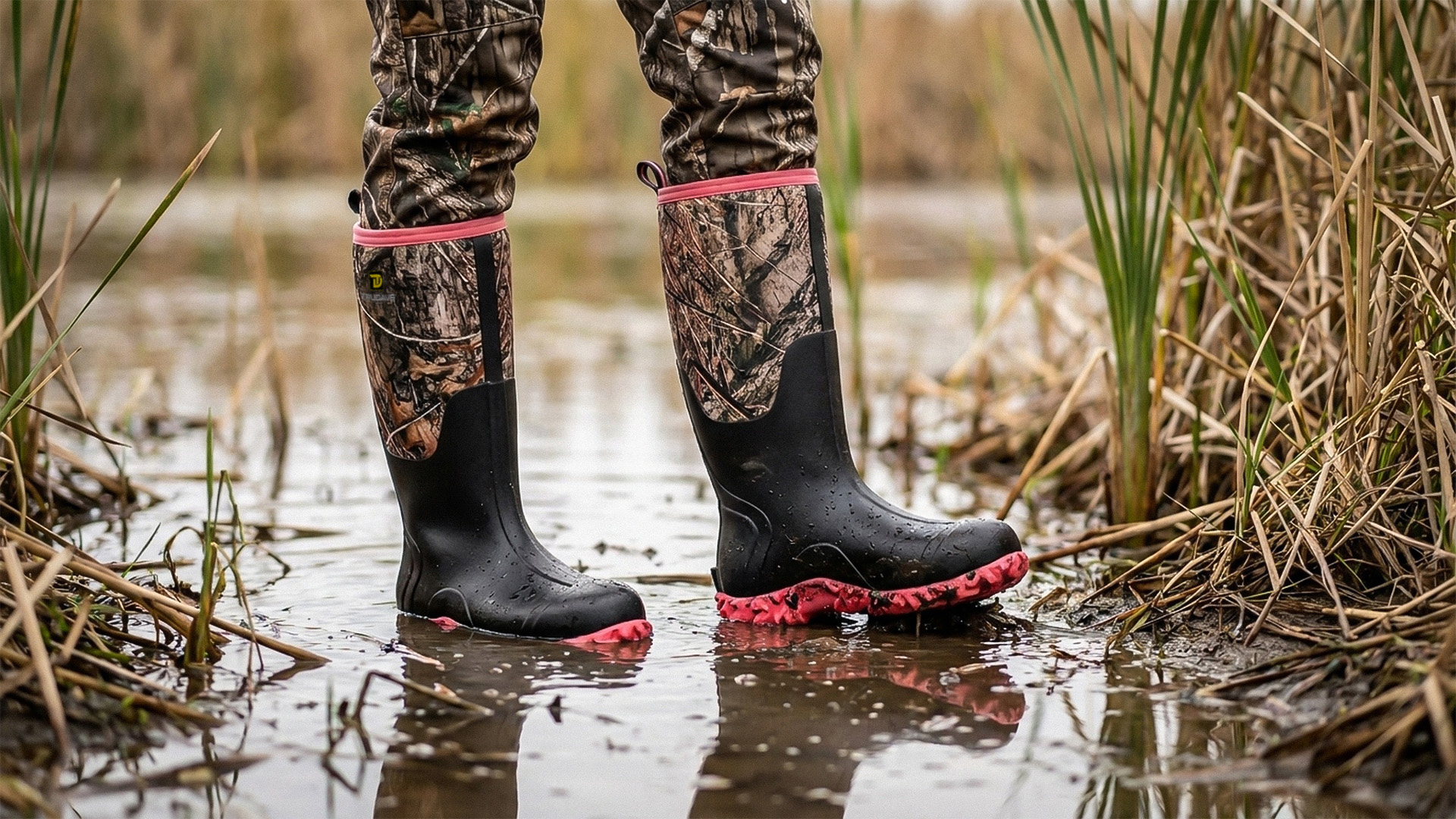
Hunters working these conditions may benefit from waterproof hunting boots for winter coyote hunting that provide reliable insulation, secure heel retention, and dependable traction across changing winter terrain.
Waterproofing Matters During Thaw
Winter does not mean everything stays frozen.
Afternoon sun can create:
- Slush
- Mud
- Snowmelt
A boot that performs perfectly at sunrise may face completely different conditions by noon.
Waterproof protection helps manage that transition.
Insulation Should Match Activity
Predator hunting combines:
- Walking
- Long stationary sits
This makes footwear selection difficult.
Too little insulation can become uncomfortable during a long stand.
Too much insulation creates sweat during the approach.
Choose according to:
- Temperature
- Walking distance
- Stand duration
Avoid Tight Winter Boots
Heavy socks inside tight boots can reduce circulation.
That may make feet colder.
Leave enough volume for:
- Proper sock thickness
- Natural circulation
Test the complete system before hunting.
Secure Heel Fit Matters in Snow
Deep snow pulls at footwear.
A loose boot can cause:
- Blisters
- Fatigue
Make sure footwear stays securely attached during long approaches.
Traction Matters on Frozen Ground
Winter fields may include:
- Ice
- Frozen ruts
- Snow-covered rock
Good tread improves control.
But no boot eliminates ice risk.
Slow down.
Gaiters Can Be Extremely Useful
Gaiters help keep:
- Snow
- Slush
- Seeds
from entering above the boot.
They are especially useful during deeper snow approaches.
Snowshoes Can Help in Deep Conditions
When snow becomes deep enough, snowshoes may reduce effort.
They can help hunters:
- Stay higher
- Travel farther
But they add noise and bulk.
Practice before hunting.
Do not make the first use a coyote stand approach.
Snowshoes Change the Approach Strategy
Large equipment can catch:
- Brush
- Fence wire
Plan routes through more open terrain.
Remove them before the final stand if doing so improves quiet movement and stability.
Layer Clothing for Walking and Sitting
Predator hunting creates temperature swings.
A hunter may sweat climbing a ridge and then sit motionless for thirty minutes.
Use layers that allow:
- Ventilation while walking
- Insulation while sitting
Moisture management matters.
Avoid Sweating on the Approach
Overheating early creates problems later.
Open zippers.
Remove layers.
Walk slower.
Arrive at the stand without soaked clothing.
Hands Need Extra Protection
Calling and shooting require dexterity.
Carry gloves that allow:
- Equipment use
- Trigger control
while protecting against cold.
A warmer backup pair can be useful between stands.
Binoculars Are Valuable
Before calling, glass:
- Field edges
- Draws
- Hillsides
A coyote may already be visible.
Calling immediately can sometimes turn a calm animal into an alert one unnecessarily.
Glass After the Stand Too
Before standing:
Scan one more time.
A cautious coyote may be watching from distance.
Many opportunities are lost when hunters stand up too quickly.
Public Land Requires Careful Planning
Predator hunting opportunities may exist on public lands depending on local regulations.
Research:
- Boundaries
- Vehicle access
- Seasonal closures
- Legal shooting zones
Do not assume every open-looking prairie is huntable.
Private Ranch Permission Can Be Valuable
Coyotes often occupy working agricultural and livestock landscapes.
When seeking access:
- Explain your plan
- Clarify vehicles
- Discuss livestock locations
- Follow landowner rules
Responsible behavior can create long-term access.
Livestock Changes Shooting Safety
Never take a shot when:
- Cattle
- Horses
- Buildings
create an uncertain background.
Snow can hide animals in terrain folds.
Study the entire property before calling.
Know Where Houses and Roads Are
Open prairie makes distance deceptive.
A farmhouse may appear much farther away than it actually is.
Use mapping.
Define safe shooting directions before calling.
Roads Require Special Legal Attention
Rules involving:
- Shooting from roads
- Shooting across roads
- Vehicle use
vary by jurisdiction.
Verify current local regulations.
Do not assume rural means unrestricted.
Artificial Light and Night Hunting Rules Vary
Some jurisdictions permit certain night predator-hunting methods.
Others restrict them.
Rules can involve:
- Lights
- Thermal optics
- Night vision
- Firearms
Always verify current state and local laws.
Electronic Calling Rules May Also Vary
Electronic predator calls are legal in many places but not universally under every circumstance.
Check current regulations.
Do not assume equipment legality based on online videos from another state.
Seasons and Licenses Differ Widely
Coyotes may be classified differently across jurisdictions.
Before hunting, verify:
- License requirements
- Season dates
- Bag limits where applicable
- Public-land restrictions
- Legal methods
Use current official wildlife-agency information.
Do Not Assume “Predator” Means “No Rules”
Even where coyote seasons are liberal, hunters must still follow:
- Firearm laws
- Property rules
- Road regulations
- Hunting-hour restrictions
Always verify.
Positive Identification Matters
Winter predator habitat can contain:
- Domestic dogs
- Wolves in some regions
- Foxes
Never shoot at:
- Movement
- A vague silhouette
- Eye shine
without positive identification.
Wolf Range Requires Extra Care
Where coyotes and wolves overlap, hunters must understand current species identification and legal protections.
Know differences in:
- Size
- Body proportions
- Track size
- Behavior
If uncertain, do not shoot.
Domestic Dogs Can Be Far From Homes
Rural dogs sometimes travel surprising distances.
A canid in a field is not automatically a coyote.
Positive identification is mandatory.
Snow Helps With Track Identification
Tracks can help distinguish species.
But snow conditions distort prints.
Use:
- Size
- Stride
- Pattern
- Context
rather than relying on one footprint.
Safe Backstops Matter in Open Country
Snow-covered prairie may appear empty.
But bullets can travel far.
Know what lies beyond the target.
Avoid shooting toward:
- Roads
- Houses
- Livestock
- Ridgelines with unknown terrain beyond
Do Not Use Snow as a Backstop
Snow is not a reliable bullet stop.
A white hillside can hide:
- Frozen ground
- Hard surfaces
Choose safe angles and suitable natural backstops.
Shot Discipline Matters
Coyotes may pause only briefly.
Do not let urgency override judgment.
Take only shots within:
- Your effective ability
- Safe conditions
The goal is a clean, responsible harvest.
Recovery Begins Before the Shot
Before shooting, note:
- Coyote location
- Nearby brush
- Creek
- Terrain
Snow can help recovery.
But thick cover still hides animals quickly.
Fresh Snow Helps Tracking
After the shot, snow can reveal:
- Tracks
- Direction
- Blood where present
Mark the last visible point.
Move methodically.
Do Not Rush the Trail
If tracking is necessary, avoid destroying sign.
Follow carefully.
Multiple hunters should not immediately spread through the area.
Predator Handling Requires Hygiene
Wild canids can carry parasites and diseases.
Use appropriate precautions when handling harvested animals.
Follow current wildlife and public-health guidance.
Wear gloves where appropriate.
Avoid Handling Abnormally Acting Animals Casually
If a coyote displays unusual:
- Aggression
- Disorientation
- Weakness
use caution.
Follow local wildlife guidance if disease is suspected.
Fur Handling Depends on Hunter Goals
Some hunters pursue coyotes for:
- Predator management
- Fur
- Other lawful purposes
If preserving fur, prepare necessary equipment before the hunt.
Do not wait until after harvest to determine the plan.
Common Winter Coyote Hunting Mistakes
Calling Before Reading Fresh Tracks
Use snow to understand movement first.
Ignoring Wind
Coyotes trust scent heavily.
Walking Directly Across Open Ground
Use draws and terrain.
Sitting on the Skyline
Silhouettes are easy to detect.
Leaving the Stand Too Quickly
Big country requires patience.
Wearing Poor Winter Footwear
Snow, slush, frozen ground, and long sits require waterproof warmth and traction.
Hunting the Same Stand Repeatedly
Pressure educates predators.
Ignoring Current Predator Regulations
Night methods, equipment, licenses, and public-land rules vary widely.
Frequently Asked Questions
Is fresh snow good for coyote hunting?
Yes. Fresh snow can reveal current travel routes, feeding behavior, road crossings, and frequently used terrain features.
Where do coyotes go in winter?
Coyotes may use creek bottoms, brushy draws, agricultural edges, rodent-rich fields, livestock country, and other habitats offering food and efficient travel.
What is the best wind for coyote calling?
The ideal wind depends on terrain and stand design. Hunters generally need to keep scent away from likely coyote cover while maintaining visibility of the downwind approach.
Are coyotes more active during cold weather?
Cold temperatures can increase energy demands and influence feeding behavior, although daily movement still depends on pressure, food, weather, and local conditions.
What boots are best for winter coyote hunting?
Waterproof hunting boots with suitable insulation, secure heel fit, good snow and frozen-ground traction, and enough comfort for both walking and stationary calling stands are practical.
Do coyote hunting regulations vary by state?
Yes. Licensing, seasons, night hunting, electronic calls, artificial lights, thermal equipment, and public-land rules can vary significantly. Always verify current local regulations.
Final Thoughts
Fresh snow does something important for coyote hunters.
It removes some of the mystery.
A creek crossing becomes a travel route.
A straight line of tracks becomes a connection between cover.
A field full of wandering prints becomes a feeding area.
A brushy draw becomes more than a piece of terrain.
The coyote has already explained how it uses the landscape.
The hunter simply has to read it.
Scout fresh snow.
Follow the food.
Respect the wind.
Approach quietly.
Watch the downwind side.
Use terrain instead of skylining yourself.
Wear boots that let you cross snow, frozen grass, slush, mud, creek edges, and long winter approaches without losing focus on the hunt.
And when you find a fresh track crossing your own boot print after a stand, study it carefully.
The coyote just taught you something.
Next time, make sure you are there before it is.
