
A northern forest can look perfect for grouse.
Miles of trees.
Creeks.
Logging roads.
Mixed hardwoods stretching beyond sight.
Yet a hunter can spend an entire morning walking through mature timber without flushing a single bird.
Then the forest changes.
The trees become smaller.
Young aspen grows tightly together.
Raspberry and hazel fill the understory.
Old logging slash lies between patches of thick regeneration.
Within ten minutes, a grouse explodes from beside the trail.
Another flushes fifty yards farther ahead.
The difference is not luck.
It is forest age.
Ruffed grouse do not simply need “woods.”
They need a landscape containing different stages of forest growth.
Young timber provides feeding and security habitat.
Older trees provide winter food and additional structure.
Brush, openings, wet edges, and logging cuts connect everything together.
Successful grouse hunters learn to stop searching the largest forests.
They search for the right combination of young cover, food, edge, and seasonal habitat.
Ruffed Grouse Are Birds of Forest Change
Ruffed grouse thrive in landscapes where forests are constantly changing.
Productive habitat may include:
- Young aspen
- Regenerating hardwoods
- Logging cuts
- Brushy creek bottoms
- Alder
- Hazel
- Birch
- Mixed-age forest
- Abandoned farm edges
A completely mature forest can provide some needs.
But when every tree is the same age and the understory is open, grouse habitat often becomes less productive.
The key word is diversity.
Young Forest Is One of the Best Places to Start
Dense young timber gives grouse:
- Security
- Feeding opportunities
- Escape cover
- Protection from predators
Look for stands where saplings grow close enough together to make walking inconvenient.
If visibility is limited to fifteen or twenty yards, you may be in better grouse cover than the beautiful open hardwoods nearby.
Aspen Is Classic Grouse Habitat
Aspen is strongly associated with ruffed grouse across many parts of their range.
Different age classes provide different benefits.
Young aspen can offer:
- Dense cover
- Budding vegetation
- Protective stem density
Older aspen can provide:
- Catkins
- Buds
- Winter food
A landscape containing several age classes can be especially productive.
Do Not Hunt Every Aspen Stand the Same
An aspen stand only a few years old may look completely different from one several decades older.
Hunters should learn to identify:
- Very young regeneration
- Pole-stage aspen
- Mature aspen
Then notice how grouse use the transitions.
One age class may provide security.
Another provides food.
The edge between them can be excellent.
Logging Cuts Create Future Grouse Habitat
Forest harvest changes vegetation.
Immediately after cutting, the ground may be very open.
Several years later, regeneration can create:
- Aspen sprouts
- Birch
- Raspberry
- Dense hardwood stems
That is when habitat often becomes more attractive.
Hunters should think of cuts as a timeline.
A fresh cut and a ten-year-old cut are completely different grouse habitats.
Old Cuts Eventually Become Less Productive
Young forest does not stay young.
As regeneration matures:
- Tree crowns rise
- Lower cover disappears
- Ground-level density decreases
A cover that produced birds repeatedly ten years ago may eventually become less attractive.
Do not hunt memories.
Hunt current forest structure.
Forestry Maps Can Save Hours
Where available, timber-management maps can help identify:
- Recent harvest units
- Young regeneration
- Forest age classes
These maps can dramatically improve scouting efficiency.
Instead of walking random forest, hunters can target areas likely to contain the habitat grouse prefer.
Maps create the starting point.
Field scouting confirms the quality.
Satellite Imagery Can Show Habitat Transitions
Aerial images can reveal:
- Clearcuts
- Young forest blocks
- Roads
- Creek corridors
- Agricultural edges
But satellite images cannot always reveal:
- Stem density
- Food plants
- Current understory
Use imagery to narrow the search.
Then walk the cover.
Edge Is One of the Most Important Concepts
Ruffed grouse often benefit from places where habitat types meet.
Look for:
- Young timber beside mature forest
- Aspen beside conifer
- Logging road beside brush
- Creek bottom beside upland hardwood
- Field beside young forest
These transitions provide multiple resources within a small area.
Young Timber Beside Mature Aspen Can Be Excellent
Young cover provides daytime security.
Mature aspen can provide seasonal feeding opportunities.
A grouse may move only a short distance between the two.
This creates a compact habitat system.
Hunters who identify these combinations can focus effort more effectively.
Creek Bottoms Add Valuable Diversity
Small streams can create:
- Moist soil
- Alder
- Hazel
- Berry-producing shrubs
- Dense vegetation
These corridors may connect several forest-age classes.
Look particularly where a creek passes between:
- Young aspen
- Mature hardwood
- Logging cuts
Habitat intersections often hold birds.
Alder Can Be Excellent Cover
Alder thickets provide dense stems close to the ground.
Grouse may use alder around:
- Wet depressions
- Beaver areas
- Creek edges
Alder is also common in woodcock habitat.
That means some northern covers can produce both species.
Hunters should know identification before shooting.
Hazel Can Provide Food and Cover
Hazel thickets can offer both structure and food.
Look for dense patches near:
- Aspen
- Logging roads
- Creek edges
Grouse may move through hazel while remaining extremely difficult to see.
A dog can become especially valuable in this cover.
Raspberry Patches Deserve Attention
Recently disturbed forests often develop raspberry and related vegetation.
These areas can provide:
- Food
- Insects
- Thick ground-level cover
Early-season grouse may use these areas extensively.
Look where berry-producing vegetation meets young hardwood stems.
Clover Along Forest Roads Can Attract Birds
Logging roads often develop:
- Clover
- Grass
- Forbs
Grouse may feed along these openings during low-disturbance periods.
Early morning and evening can be particularly useful scouting times.
A road sighting should lead to another question:
Where is the nearby security cover?
Forest Roads Create Travel and Feeding Edges
An old logging road can be one of the easiest features to hunt.
It provides:
- Easier walking
- Visibility
- Grit
- Vegetation diversity
But grouse rarely depend on the road alone.
The best road has productive cover on both sides.
Abandoned Roads Can Be Better Than Busy Roads
A road closed to regular vehicle traffic may develop:
- Grass
- Brush
- Young vegetation
It also receives less disturbance.
These old routes can become excellent hunting corridors.
Walk slowly.
Birds may sit only a few yards inside the edge.
Gravel Provides Grit
Grouse need grit to help process food.
Potential grit sources include:
- Logging roads
- Gravel shoulders
- Exposed soil
Roadside sightings may sometimes reflect this behavior.
Again, use the sighting to identify the larger habitat system.
Early Season Grouse Often Use Food-Rich Ground Cover
Earlier in fall, birds may take advantage of:
- Berries
- Clover
- Green vegetation
- Insects
This can place grouse near:
- Forest edges
- Roads
- Regenerating cuts
As the season changes, so does the food.
Seasonal Diet Changes Shift Bird Location
Ruffed grouse food availability changes as autumn progresses.
Leaves fall.
Berries disappear.
Frost kills vegetation.
Birds may rely increasingly on:
- Buds
- Catkins
- Woody foods
This can change which part of the forest produces birds.
Follow seasonal food.
Winter Aspen Buds Can Become Important
During colder conditions, aspen buds and catkins can become valuable.
Birds may spend more time around suitable mature trees.
Fresh snow can reveal tracks beneath feeding areas.
Look for evidence that birds are moving between cover and winter food.
Birch Can Also Matter
Depending on region, birch may provide additional feeding habitat.
A mixed landscape containing:
- Aspen
- Birch
- Conifer
- Young forest
often creates more opportunities than one uniform stand.
Snow Makes Grouse Sign Easier to Read
Fresh snow creates a record.
Hunters can find:
- Tracks
- Feeding areas
- Roost evidence
- Travel routes
A seemingly empty winter forest suddenly becomes easier to understand.
Grouse Tracks Can Lead to Cover
Fresh tracks may move between:
- Young stems
- Mature aspen
- Conifers
Rather than following every individual footprint, study the pattern.
Ask:
Why is the bird moving between these places?
That relationship matters more than the exact track.
Snow Roosting Can Change the Hunt
During suitable snow conditions, ruffed grouse may use snow for thermal protection.
Hunters may encounter birds emerging unexpectedly.
Do not assume all grouse will be sitting openly beneath trees.
Winter behavior can be very different from early fall.
Deep Snow Changes Walking More Than Bird Habitat
Hunters often underestimate how quickly deep snow increases energy use.
A one-mile loop can become exhausting.
Plan shorter, higher-quality routes.
Use habitat knowledge instead of trying to cover the same mileage as dry-season hunting.
First Snow Can Be Excellent
Early snowfall often provides a useful combination:
- Visible tracks
- Moderate snow depth
- Remaining open ground
This can be one of the best times to learn how grouse use cover.
Study every track carefully.
Frost Can Make Leaves Noisy
Cold dry leaves may become crisp.
Every step can announce the hunter.
Move slowly.
Use pauses.
A grouse may flush farther if it hears continuous aggressive walking.
Rain Creates Quieter Hunting Conditions
Light rain or wet ground can soften forest noise.
After rain:
- Leaves become quieter
- Tracks become more visible in mud
- Vegetation holds moisture
This can help hunters and dogs move more effectively.
Wet Forest Means Wet Feet
Ruffed grouse habitat may involve:
- Wet leaves
- Mud
- Creek crossings
- Dew
- Rain
- Early snow
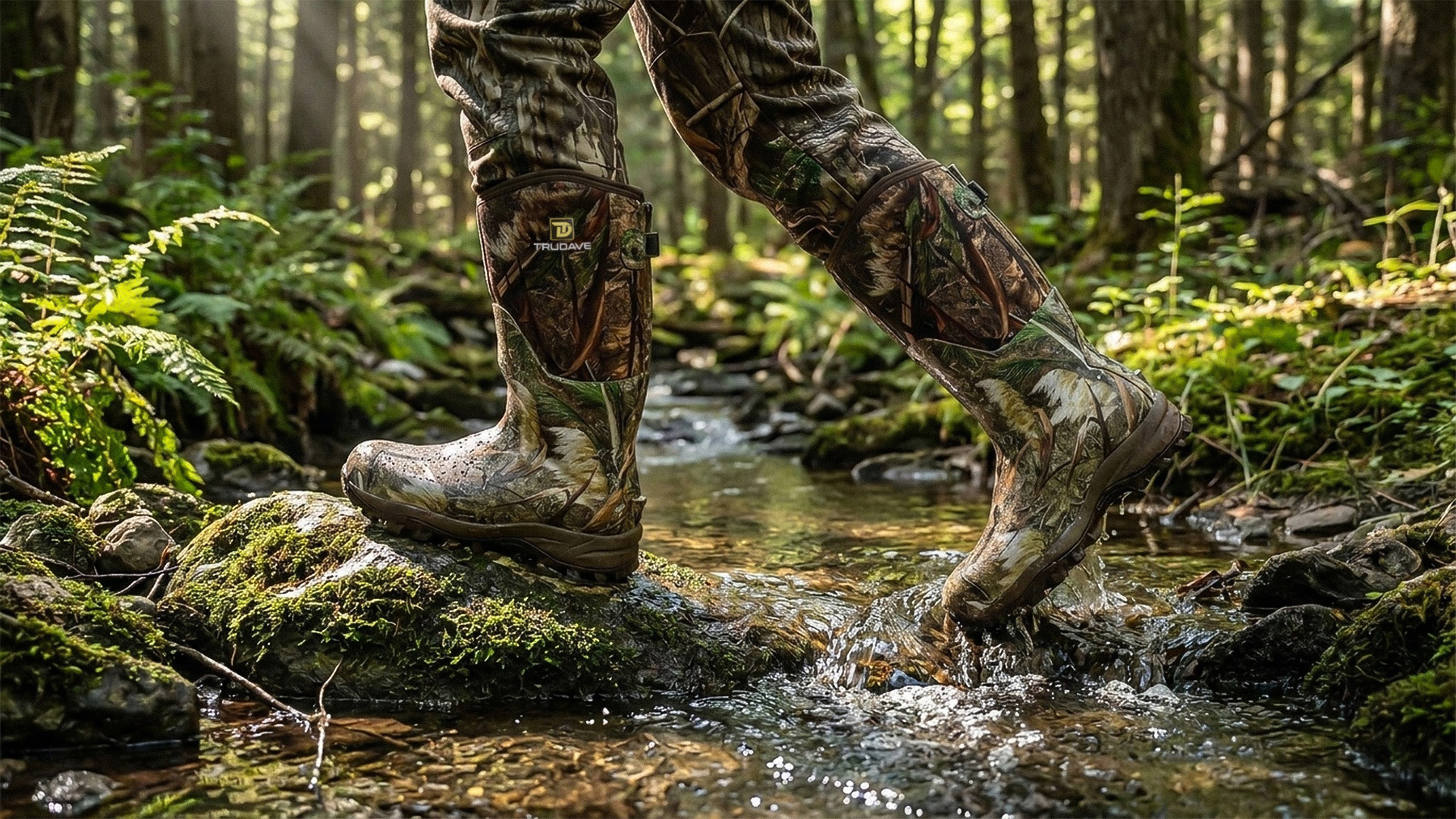
Hunters covering these conditions may benefit from waterproof hunting boots for ruffed grouse hunting that provide reliable traction, secure heel retention, and enough protection for long days in young forest.
Lightweight Boots Usually Make Sense
Ruffed grouse hunting involves constant movement.
Hunters step:
- Over logs
- Through brush
- Across wet ground
- Up and down small ridges
Heavy footwear adds unnecessary fatigue.
Choose enough support without sacrificing mobility.
Waterproofing Extends the Hunting Day
A morning walk through dew-covered regeneration can soak non-waterproof footwear quickly.
Once socks become wet:
- Blisters become more likely
- Cold becomes worse
- Comfort decreases
Waterproof protection helps hunters stay focused on birds instead of feet.
Traction Matters on Wet Leaves
Wet leaves can hide:
- Roots
- Rocks
- Mud
A good outsole improves confidence.
But hunters still need controlled foot placement.
Do not run after a flushing bird.
Logging Slash Creates Difficult Footing
Young forest often contains leftover:
- Branches
- Tops
- Logs
These obstacles may be hidden beneath grass or snow.
Step carefully.
Do not jump blindly over slash.
Secure Heel Fit Matters
Repeated stepping over obstacles creates constant heel movement.
A loose boot can lead to:
- Hot spots
- Blisters
Test footwear before hunting season.
A long grouse day is not the place to break in brand-new boots.
Moderate Ankle Support Can Help
Young forests hide:
- Holes
- Roots
- Logs
Supportive footwear can improve stability.
But excessive stiffness may reduce comfortable movement.
Balance is important.
Gaiters Can Keep Debris Out
Low gaiters may reduce:
- Leaves
- Seeds
- Snow
- Mud
entering boots.
They can also protect lower pant legs from wet vegetation.
Brush Pants Are Extremely Useful
Ruffed grouse cover can contain:
- Raspberry
- Blackberry
- Young branches
- Thorny shrubs
Durable pants improve comfort.
Hunters unwilling to enter thick cover often walk around the exact places birds use.
Eye Protection Helps in Young Timber
Saplings and branches constantly reach face height.
Clear protective glasses can reduce eye injuries.
This is especially useful when the hunter is focused on:
- Dog
- Bird movement
instead of the branch directly ahead.
Old Fences Can Hide in Regeneration
Many young forests grow over former:
- Farms
- Pastures
- Logging boundaries
Old barbed wire may remain hidden.
Watch for:
- Fence posts
- Straight vegetation lines
- Old stone walls
Both hunters and dogs can be injured.
Stone Walls Can Be Habitat Clues
In parts of the Northeast and Great Lakes region, old stone walls may indicate historic farmland.
Abandoned fields often regenerate into young forest.
These landscapes can become productive grouse cover.
History can help explain current habitat.
Abandoned Orchards Can Be Interesting
Old apple trees may remain inside regenerating forest.
Where fruit is available, wildlife including grouse may use the area.
Look for:
- Old farm clearings
- Stone walls
- Apple trees
- Young forest edges
A forgotten homestead can become a wildlife hotspot.
Apple Trees Can Concentrate Birds
Fall fruit can provide valuable food.
Grouse may use abandoned orchards surrounded by security cover.
One apple tree inside thick young forest can be worth checking carefully.
Dogs Can Transform Grouse Hunting
A trained bird dog helps locate birds that hunters would otherwise walk past.
Ruffed grouse can:
- Run
- Hold
- Flush unpredictably
Dog work provides information.
Pointing Dogs Need Control
Grouse may run ahead of a dog.
The point moves.
The dog relocates.
Hunters must remain patient.
Do not constantly rush forward expecting the bird to stay exactly where the dog first smelled it.
Flushing Dogs Can Be Effective
Close-working flushing dogs can excel in thick cover.
The key is keeping birds within practical shooting range.
A dog working too far ahead can produce only distant wing noise.
Dog Range Should Match Visibility
In dense regeneration, twenty-five yards can feel far.
Choose dog range based on:
- Stem density
- Terrain
- Shooting visibility
The goal is not maximizing distance.
It is creating huntable flushes.
Watch the Dog, but Watch Your Feet Too
Grouse hunters often stare at dog movement.
Young forest punishes that habit.
Remember the ground contains:
- Logs
- Holes
- Wire
- Rock
Use short glances.
Stop when you need to watch the dog carefully.
Grouse Can Run Ahead of Hunters
Not every ruffed grouse waits for a close flush.
Pressured birds may move on foot.
Clues include:
- Dog repeatedly relocating
- Rustling ahead
- Sudden loss of scent
Do not automatically assume the bird vanished.
It may simply be thirty yards farther inside the cover.
Pressure Can Make Birds Wilder
Public-land grouse often learn quickly.
After repeated hunting pressure, birds may:
- Flush earlier
- Run more
- Move into thicker cover
Adjust by:
- Hunting slower
- Using less obvious access
- Trying weekdays
Bird behavior changes with experience.
Do Not Walk the Same Trail Every Hunt
Easy logging trails attract hunters.
Birds near them may receive constant pressure.
Try:
- Parallel cover
- Secondary cuts
- Remote edges
You do not always need to go miles deeper.
Sometimes you only need to move fifty yards away from the obvious route.
First-Hour Birds Can Be Near Roads
Low-pressure early morning birds may feed near:
- Clover
- Gravel
- Open edges
Use this as scouting information.
Once disturbed, they may move quickly into thicker security cover.
Midday Can Still Be Productive
Ruffed grouse are not strictly a first-light hunting opportunity.
Cool fall weather allows productive hunting throughout much of the day.
Midday can be especially useful for:
- Exploring new covers
- Hunting thick security habitat
Do not end a grouse hunt simply because morning activity slowed.
Wind Can Change Cover Choice
Strong wind creates noise and movement in the canopy.
Birds may prefer:
- Protected draws
- Dense young forest
- Leeward slopes
Hunters should target sheltered habitat.
Wind can make open hardwoods extremely difficult to hunt effectively.
Snow and Wind Together Push Hunters Toward Quality Cover
Late-season weather punishes random walking.
Use terrain.
Hunt:
- Protected cuts
- Aspen edges
- Conifer transitions
A smaller search area often produces better results.
Conifers Can Provide Winter Shelter
Grouse may use:
- Spruce
- Fir
- Pine
for thermal protection.
Especially where conifers border feeding habitat.
A young hardwood-conifer edge can become valuable during severe weather.
Conifer Islands Inside Aspen Are Worth Checking
A small group of evergreens surrounded by deciduous cover creates diversity.
Birds gain:
- Shelter
- Feeding access
- Security
Work these transitions slowly.
Drumming Logs Are Important Habitat Clues
Male ruffed grouse use drumming sites during breeding behavior.
A drumming log may indicate long-term habitat suitability.
Hunters scouting outside the season may encounter these structures.
Do not assume one log guarantees fall birds.
But it can help confirm quality grouse country.
Drumming Habitat Often Includes Dense Cover
Good drumming locations typically occur where the bird has:
- Visibility
- Escape cover
- Suitable forest structure
Finding historic drumming areas can help hunters understand productive landscape features.
Spring Scouting Can Improve Fall Hunting
Hunters do not need to wait until fall to learn grouse habitat.
Spring activities such as listening for drumming can reveal areas holding breeding birds.
Later, combine that knowledge with:
- Summer forest growth
- Fall food
- Hunting pressure
The most effective scouting happens year-round.
Public Forests Can Offer Good Grouse Hunting
National forests, state forests, and wildlife lands can contain excellent habitat where timber management maintains young forest.
Look for:
- Harvest units
- Aspen regeneration
- Utility corridors
- Beaver wetlands
Property size alone means little.
Habitat age means more.
Wildlife Management Areas May Maintain Early Successional Cover
Some public areas actively manage:
- Young forest
- Shrub habitat
- Openings
These can be excellent starting points.
Pressure may also be higher.
Use maps to find secondary habitat away from the most obvious access.
Private Timberland Can Be Productive
Where legal access is available, commercial timberlands may contain:
- Multiple cut ages
- Logging roads
- Regeneration
Follow current property rules.
Logging operations can change access rapidly.
Active Logging Requires Extra Caution
Never interfere with:
- Machinery
- Workers
- Truck routes
Stay away from active operations.
A productive grouse cover is not worth creating a workplace hazard.
Wet Logging Roads Can Be Easily Damaged
After rain, forest roads may become soft.
Respect:
- Gates
- Vehicle restrictions
- Seasonal closures
Walking protects both access and roads.
Navigation Is Easy to Lose in Young Forest
Dense stems block landmarks.
A hunter can become disoriented even on relatively small properties.
Carry reliable navigation.
Mark:
- Vehicle
- Main road
- Trail
- Property boundaries
Offline Maps Are Useful
Cell service can be unreliable in forested rural areas.
Download maps in advance.
Do not assume you can retrieve property information when already deep in the cover.
Carry a Headlamp
A late flush can pull hunters farther from the road.
Autumn daylight disappears quickly.
A small headlamp provides easy insurance for the walk out.
Property Boundaries Matter
A grouse can fly across:
- Private land
- Closed property
- Another management unit
Hunters cannot automatically follow.
Know the line before entering cover.
Low Grouse Flushes Require Discipline
Ruffed grouse often fly low through trees.
Know where:
- Dog
- Partners
- Roads
- Houses
are located.
Never shoot through thick brush at only wing sound.
Shooting Lanes Are Short
A typical opportunity may last only seconds.
Prepare by:
- Carrying correctly
- Watching openings
- Staying balanced
But speed does not excuse unsafe shooting.
Do Not Shoot Through Saplings
Branches can block visibility and affect a shot.
Wait for a clear lane.
The bird may escape.
That is part of grouse hunting.
Pick One Bird From a Group Flush
Occasionally several grouse may flush from a small area.
Choose one bird.
Maintain target focus.
Do not fire at movement generally.
Watch for Additional Birds After the First Flush
Family groups or birds using the same productive cover may remain nearby.
After one bird flushes:
Stop.
Reload safely.
Listen.
Do not rush immediately out of the cover.
Mark Downed Birds Immediately
A grouse can disappear in:
- Leaves
- Ferns
- Slash
- Snow
Use landmarks.
Walk directly toward the fall.
A trained dog can be extremely valuable for recovery.
Wounded Grouse Can Run
If the bird is not immediately found, look for:
- Feathers
- Tracks
- Dog behavior
- Disturbed vegetation
Give recovery serious effort.
Early Seasons Can Still Be Warm
Northern autumn days may warm quickly.
Keep harvested birds:
- Clean
- Cool
- Shaded
Do not assume forest shade automatically provides enough cooling.
Late Snow Does Not Replace Proper Game Care
Cold weather helps.
But birds still need proper handling.
Follow current wildlife and food-safety guidance.
Ruffed Grouse Regulations Vary
Before hunting, verify current:
- Season dates
- Bag limits
- Possession limits
- License requirements
- Public-land rules
- Blaze-orange requirements where applicable
- Legal methods
Use current official wildlife-agency information.
Species Identification Matters
Ruffed grouse habitat may overlap with other grouse species depending on region.
Hunters should understand local identification differences.
Positive identification comes before the shot.
Population Cycles Can Affect Hunting
Ruffed grouse numbers can vary between years and regions.
Habitat conditions, weather, predation, and broader population dynamics all influence local abundance.
Do not judge habitat quality solely from one season.
Habitat Management Is Essential
Young forest eventually becomes mature forest.
Without continued disturbance, early-successional habitat declines.
Responsible forest management can create:
- Multiple age classes
- Dense young cover
- Food-producing edges
Healthy grouse landscapes are dynamic landscapes.
Common Ruffed Grouse Hunting Mistakes
Hunting Mature Open Forest All Day
Find younger regeneration.
Ignoring Forest Age
The right tree species at the wrong age may provide poor cover.
Hunting Only Logging Roads
Use roads to locate habitat, then hunt the surrounding cover.
Walking Too Fast
Grouse may hold or run ahead.
Avoiding Thick Regeneration
Difficult walking often means better security cover.
Wearing Heavy or Leaky Boots
Young forest hunting rewards waterproof mobility.
Letting Dogs Work Too Far Ahead
Dense cover shortens practical range.
Assuming Last Year’s Cover Is Still Perfect
Forest habitat constantly changes.
Frequently Asked Questions
Where do ruffed grouse usually live?
Ruffed grouse commonly use mixed-age forests containing young hardwood regeneration, aspen, alder, hazel, brush, creek bottoms, and older feeding trees.
Why is young forest important for ruffed grouse?
Dense young stems provide security, feeding opportunities, and escape cover that more mature open forest may lack.
Are logging cuts good for ruffed grouse?
Yes, especially after enough regeneration has occurred to create dense young cover. Very fresh cuts may initially be too open, while older cuts can eventually mature beyond ideal structure.
Is ruffed grouse hunting good after rain?
Wet conditions can quiet dry leaves, create muddy tracks, and make stalking easier, although they also make waterproof footwear more important.
Can you hunt ruffed grouse without a dog?
Yes. Hunters can still-hunt productive young forest, edges, creek bottoms, and regeneration slowly without dogs.
What boots are best for ruffed grouse hunting?
Lightweight waterproof hunting boots with secure heel fit, good wet-leaf and mud traction, moderate ankle support, and enough durability for slash and brush are practical.
Final Thoughts
Ruffed grouse hunting teaches hunters to stop seeing forest as one continuous habitat.
A twenty-year-old stand is not the same as a five-year-old cut.
A mature aspen grove is not the same as dense aspen regeneration.
A creek bottom is not the same as an open hardwood ridge.
The birds understand those differences.
Hunters need to understand them too.
Find young forest.
Study forest age.
Look for aspen.
Follow creek and alder edges.
Check old logging roads, but do not stay on them all day.
Watch how food changes from berries to buds as fall becomes winter.
Wear boots that let you move through wet leaves, mud, logging slash, snow, creeks, and dense regeneration without choosing the easy route around the best habitat.
And when a grouse explodes from a ten-year-old cut after you walked an hour through beautiful mature forest without seeing anything, remember what happened.
The forest was never empty.
You were simply hunting the wrong age of it.
