
A mature hardwood forest can make squirrel hunting look easy.
There are trees everywhere.
Acorns everywhere.
Branches everywhere.
Surely there should be squirrels everywhere too.
Then a hunter spends two hours walking through perfect-looking woods and sees nothing.
No barking.
No tails moving through branches.
No fresh cuttings beneath the trees.
The forest feels empty.
A few hundred yards later, the hunter reaches a creek bench filled with mature oak and hickory.
Shell fragments cover the ground.
Fresh leaves have been disturbed.
A fox squirrel suddenly moves around the opposite side of a tree trunk and freezes.
Now the woods make sense.
Squirrel hunting is not about finding trees.
It is about finding the trees that are producing food right now.
Fox squirrels can use a wide variety of woodland habitats, but during much of the hunting season their movement is strongly connected to mast, cover, water, and the relationship between mature feeding trees and nearby security habitat.
Learn those relationships and a thousand-acre forest becomes much smaller.
Fox Squirrels Are Built for Hardwood Country
Fox squirrels commonly use woodland habitats containing mature trees and a reliable food supply.
Productive areas may include:
- Oak forests
- Hickory stands
- Creek bottoms
- Woodlots
- Farm edges
- River bottoms
- Pecan groves
- Mixed hardwoods
- Mature trees beside open ground
Exact habitat varies by region.
But food is usually the best place to begin.
A beautiful forest with poor mast production may hold fewer squirrels than a smaller woodlot containing several heavily producing trees.
Learn the Mast Trees First
Mast refers to fruits and nuts produced by trees and shrubs.
For squirrel hunters, important hard mast may include:
- Acorns
- Hickory nuts
- Walnuts
- Pecans
- Beechnuts
depending on region.
The hunter who can identify these trees immediately gains an advantage.
Instead of hunting every mature tree equally, you begin asking:
Which species are producing?
Which individual trees have fresh feeding sign beneath them?
That is a much more efficient way to hunt.
Not Every Oak Produces Equally
One oak can be covered in acorns.
Another oak only fifty yards away may produce almost nothing.
Squirrels know the difference.
Hunters should too.
Look beneath individual trees for:
- Acorns
- Acorn caps
- Shell fragments
- Cuttings
- Squirrel tracks
- Disturbed leaves
Do not assume an entire ridge is productive because it contains oak.
Find the trees actually dropping food.
Hickory Trees Can Become Major Hotspots
Hickory nuts are a classic squirrel food.
During periods when hickory is producing well, squirrels may spend significant time around individual trees.
Fresh feeding evidence can include:
- Cut nut shells
- Small fragments
- Green or recently opened husks
Stand quietly beneath productive hickory and listen.
Sometimes you hear squirrels before seeing them.
A faint cutting sound from the canopy can reveal exactly where to look.
Listen for Falling Nut Pieces
Squirrel hunting rewards hunters who use their ears.
In calm woods, you may hear:
- Nut fragments hitting leaves
- Bark scratching
- Branch movement
- Squirrel barking
before you see the animal.
Stop walking regularly.
Let the forest become quiet again.
A squirrel that froze when you approached may resume feeding after several minutes.
Constant walking often prevents this.
Creek Bottoms Can Be Excellent Habitat
Creek systems create diverse hardwood habitat.
They may contain:
- Mature trees
- Moist soils
- Pecan or walnut
- Dense understory
- Water
- Natural travel corridors
Fox squirrels may move along creek bottoms where food and tree cover remain connected.
Look especially at wider creek benches rather than only the steep banks.
A flat hardwood shelf above the water can combine excellent feeding trees with comfortable travel.
River Bottoms Can Hold Large Squirrels
Larger river systems often support mature hardwood forests.
These bottoms may contain:
- Oak
- Pecan
- Walnut
- Cottonwood
- Mixed mast trees
Food diversity can support strong squirrel populations.
However, floodplain terrain can also include:
- Mud
- Sloughs
- Flooded channels
- Thick vegetation
The best squirrel tree may require crossing wet ground to reach.
That makes route planning and footwear important.
Farm Woodlots Are Easy to Overlook
Squirrels do not require wilderness.
A small woodlot surrounded by:
- Corn
- Soybeans
- Pasture
- Farm roads
can provide excellent habitat.
Especially if the woodlot contains mature mast trees.
These small patches are often easier to scout because feeding activity becomes concentrated.
A fifty-acre woodlot can sometimes produce more consistent action than a huge forest.
Field Edges Can Be Productive
Fox squirrels may use mature trees along agricultural edges.
Look where:
- Oak meets corn
- Hickory meets pasture
- Creek timber meets crop ground
Edges provide multiple food sources.
They also improve visibility for hunters.
A squirrel moving from deep timber toward field-edge trees may be easier to spot.
Corn Can Influence Squirrel Movement
Where agricultural corn is available legally as part of normal farming activity, squirrels may use kernels or field edges.
Do not focus only on the crop.
Look at nearby:
- Tree lines
- Creek corridors
- Woodlots
- Fence rows
The crop may provide food.
The trees provide security.
The strongest habitat combines both.
Pecan Trees Can Be Valuable in Southern Country
In suitable regions, pecan trees can create excellent squirrel feeding locations.
Search:
- River bottoms
- Farm groves
- Old homesteads
- Creek edges
Fresh shell fragments beneath trees confirm active use.
Do not assume every pecan tree is productive every year.
Mast conditions vary.
Scout current food.
Old Homesteads Can Create Wildlife Islands
Abandoned rural home sites may contain mature:
- Pecan
- Walnut
- Oak
- Fruit trees
along with thick surrounding vegetation.
These locations can support squirrels if legal access is available.
But old properties may also contain hazards:
- Wells
- Nails
- Metal debris
- Collapsing structures
Scout carefully.
Good wildlife habitat does not automatically mean safe walking.
Early Morning Is a Classic Time
Squirrels often become active after daylight.
Early morning can provide:
- Feeding activity
- More visible movement
- Calm wind
- Better listening conditions
Find a productive mast tree before activity peaks.
Sit quietly.
Let squirrels reveal themselves.
Walking continuously at first light can disturb animals before you understand where they are feeding.
Late Afternoon Can Produce Too
Squirrels may become active again later in the day.
Return to productive food sources.
Watch:
- Oak ridges
- Hickory stands
- Creek bottoms
Afternoon sunlight can make movement in the canopy easier to see.
A squirrel feeding on the shaded side of a tree may become visible as light changes.
Midday Is Not Always Dead
On mild days, fox squirrels may remain active beyond early morning.
This is especially true when:
- Food is abundant
- Weather is stable
- Hunting pressure is low
Do not automatically stop hunting because the first two hours slowed down.
Use midday to:
- Scout new mast
- Still-hunt creek bottoms
- Check woodlot edges
The forest may become active again after a quiet period.
Cold Weather Can Increase Feeding Urgency
Cold conditions increase energy demands.
Squirrels may feed actively during favorable weather windows.
Watch for activity after:
- Cold nights
- Calm mornings
- Sunny periods
A bitter windy morning may produce little activity early.
A warmer midday window may be much better.
Weather matters.
Wind Makes Squirrels Harder to Detect
Strong wind causes:
- Branch movement
- Leaf noise
- Reduced hearing
- Harder visual detection
Squirrels may also remain more sheltered.
On windy days, focus on:
- Protected creek bottoms
- Leeward slopes
- Dense timber
Avoid spending all morning in exposed ridge-top forest.
The calmest pocket may hold the most visible activity.
Rain Changes Hardwood Hunting
Light rain can create advantages.
It may:
- Quiet dry leaves
- Make stalking easier
- Create fresh tracks
- Reduce other human activity
But steady heavy rain may reduce visible squirrel activity.
After a rain passes, hunting can improve.
Listen for movement as the woods become quiet again.
Wet Leaves Make Still-Hunting Easier
Dry hardwood leaves are noisy.
Every step can announce the hunter.
After rain, the forest floor becomes softer.
This allows slower, quieter movement through:
- Oak ridges
- Creek benches
- Woodlots
Use the opportunity.
Take several careful steps.
Stop.
Scan the canopy.
Repeat.
Mud Reveals Current Movement
Creek bottoms and farm woods may develop muddy patches after rain.
Check:
- Logging roads
- Creek crossings
- Field edges
- Bare soil
Fresh squirrel tracks can confirm current use.
Tracks are not always necessary to find squirrels, but they help identify high-activity habitat.
Combine tracks with food evidence.
Fresh Snow Is Even Better for Sign
Snow transforms squirrel scouting.
Tracks can reveal routes between:
- Den trees
- Feeding areas
- Ground caches
- Woodlots
Look for repeated tracks beneath producing trees.
Fresh snow also highlights:
- Nut debris
- Digging activity
- Tree-to-tree movement
A productive food tree can become obvious very quickly.
Squirrels Sometimes Travel on the Ground More Than Expected
Hunters tend to look upward.
That makes sense.
But fox squirrels frequently move on the ground between trees.
Watch:
- Fallen logs
- Creek crossings
- Field edges
- Open woods
A squirrel running on the ground may freeze at the base of a tree after spotting danger.
Knowing where it entered the tree helps enormously.
The Tree-Trunk Game Is Real
One of the classic squirrel behaviors is moving around the opposite side of a tree trunk.
The hunter moves left.
The squirrel moves right.
The hunter moves right.
The squirrel disappears again.
Patience works better than chasing around the tree.
Stay still.
Watch:
- Branch intersections
- Neighboring trees
- Trunk edges
The squirrel may eventually expose itself while trying to locate you.
Use Multiple Angles Carefully
When hunting with a partner, one person can sometimes remain stationary while the other changes angle.
This may cause a hidden squirrel to move around the trunk.
But safety comes first.
Before separating, establish:
- Hunter locations
- Shooting directions
- No-shoot zones
Never shoot toward another hunter simply because a squirrel appears.
Sit Longer Than You Think
A squirrel that detects a hunter may freeze for a surprisingly long time.
If fresh sign shows the area is active, sit quietly.
Ten or fifteen minutes can make a major difference.
The woods slowly return to normal.
Birds begin moving.
Squirrels resume feeding.
Patience often produces what additional walking would have pushed away.
Still-Hunting Works Well
Still-hunting means moving slowly through the forest while stopping frequently.
A useful rhythm is:
- Walk quietly.
- Stop near productive trees.
- Scan trunks and branches.
- Listen.
- Move again.
The “still” part matters more than the walking.
A hunter moving continuously sees fewer squirrels.
Scan Tree Crotches Carefully
Fox squirrels may sit motionless in:
- Large forks
- Tree cavities
- Thick branch intersections
- Leaf nests
Do not only scan outer limbs.
A squirrel hiding close to the trunk can be difficult to see.
Look for:
- Tail shape
- Ear silhouette
- Unusual lumps
- Movement
Binoculars can help even at relatively close range.
Binoculars Are Underrated for Squirrel Hunting
Small lightweight binoculars can help hunters inspect:
- High branches
- Tree cavities
- Distant canopy movement
They are especially useful in mature bottomland timber.
Do not use optics while walking.
Stop first.
Then glass.
Looking upward while moving through roots and logs is an easy way to fall.
Leaf Nests Can Reveal Good Habitat
Squirrel nests often appear as balls of leaves high in tree branches.
Several nests in one area may confirm regular squirrel use.
But nests alone do not guarantee current hunting activity.
Combine them with:
- Fresh mast
- Cuttings
- Tracks
- Direct sightings
Think of nests as habitat confirmation.
Food determines current concentration.
Den Trees Are Important
Large mature trees containing cavities can provide secure shelter.
These may be especially important during:
- Cold weather
- Storms
- Breeding periods
Do not focus only on den trees.
Search feeding habitat around them.
The connection between shelter and mast creates a more complete squirrel pattern.
Mature Timber With No Understory Can Still Produce
Unlike rabbits, squirrels do not always need thick ground cover.
A mature oak-hickory forest with relatively open understory can be excellent if mast is strong.
This makes squirrel hunting accessible to hunters who prefer easier walking.
But open woods also allow squirrels to detect movement.
Slow down.
Thick Understory Can Hide Ground Movement
Creek bottoms may contain dense brush.
This makes squirrels harder to see when moving between trees.
Listen for:
- Leaves
- Bark
- Nut debris
A squirrel can travel several yards on the ground without giving a clear visual opportunity.
Fallen Logs Create Travel Routes
Squirrels may run along logs to move through woodland.
Logs provide:
- Raised travel
- Easier movement
- Good visibility
Watch large fallen timber around food trees.
Snow can make log use especially obvious through tracks.
Creek Crossings Deserve Attention
Where a creek narrows or fallen trees span water, squirrels may use predictable crossing points.
These locations can connect feeding areas on opposite banks.
Fresh tracks in mud or snow help confirm use.
Do not stand too close to unstable banks.
The best squirrel route may not be the best human crossing.
Woodland Footwear Matters More Than Hunters Expect
Squirrel hunting can involve hours of walking through:
- Wet leaves
- Mud
- Creek edges
- Morning dew
- Snow
- Roots
- Farm roads
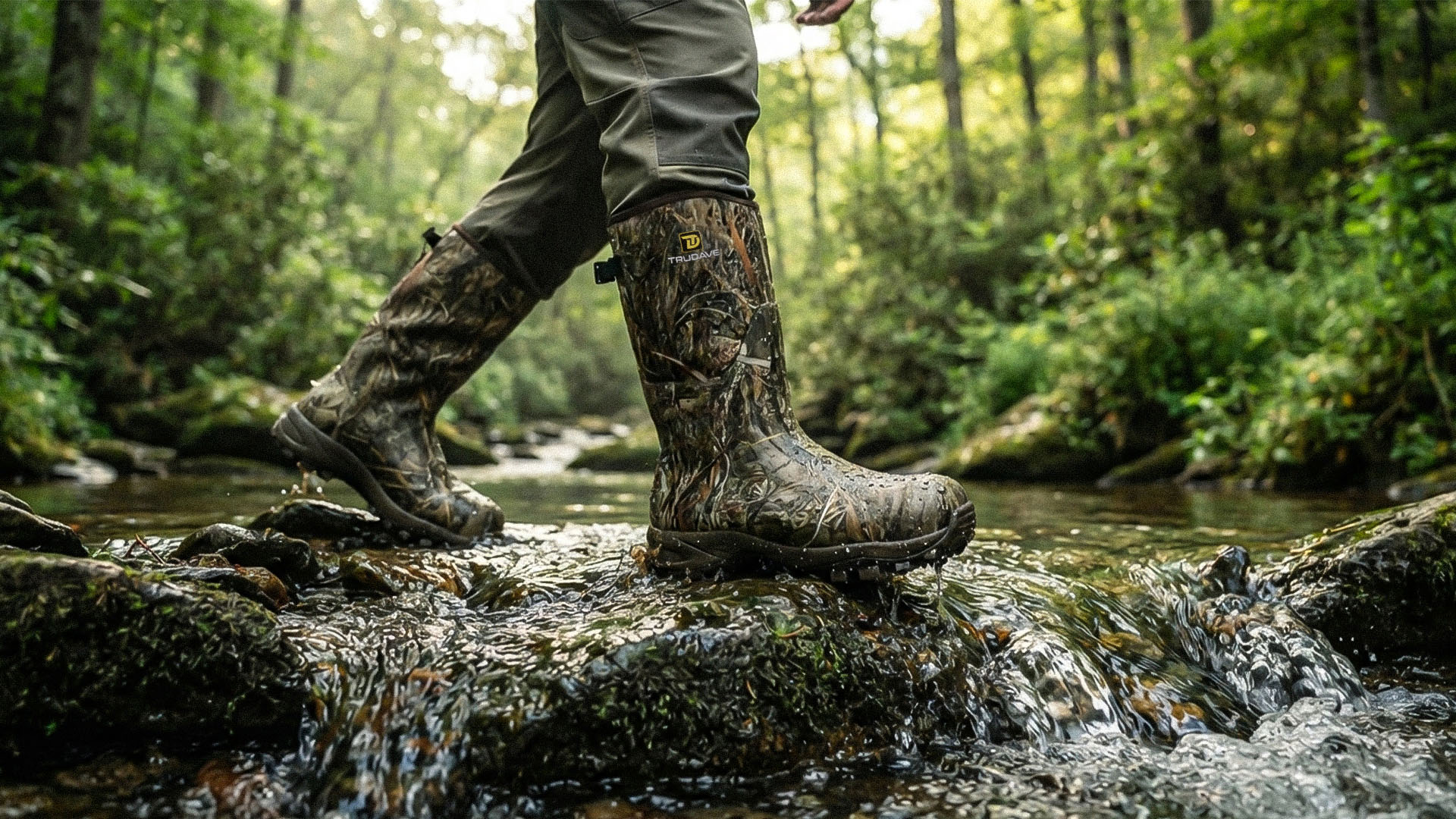
Hunters covering these conditions may benefit from waterproof hunting boots for hardwood squirrel hunting that provide dependable traction, comfortable long-distance fit, and enough moisture protection for wet woodland conditions.
The hunt may not look physically extreme.
Wet feet and slippery leaves can still ruin it.
Waterproofing Helps in Morning Dew
Tall grass around woodlot edges can soak footwear before the hunter even enters the timber.
Morning moisture may come from:
- Dew
- Wet weeds
- Frost melt
Waterproof boots reduce the problem.
Gaiters can also help where vegetation is tall.
Creek Bottoms Can Stay Wet All Season
Low ground holds moisture longer than surrounding ridges.
Expect:
- Mud
- Soft soil
- Wet leaves
- Small stream crossings
A boot that works perfectly on a dry ridge may struggle in a creek bottom.
Choose footwear based on the whole route.
Traction Matters on Wet Leaves
Wet hardwood leaves can become extremely slippery.
They often hide:
- Roots
- Rock
- Mud
A good outsole improves stability.
Take shorter steps downhill.
Do not stare into the canopy while moving.
Stop before searching overhead.
Rubber Boots Can Work in Wet Bottoms
Tall rubber hunting boots may be useful when habitat includes:
- Mud
- Shallow water
- Wet farm edges
But long walking can expose fit problems.
Loose heels create:
- Blisters
- Fatigue
If the hunt includes miles of dry ridges and only occasional wet ground, a supportive waterproof hunting boot may be more comfortable.
Match the boot to the terrain.
Lightweight Boots Work Well for Mobile Hunts
Squirrel hunters often cover moderate distances.
Heavy winter boots may be unnecessary during mild conditions.
A lighter waterproof option can improve:
- Mobility
- Comfort
- Quiet foot placement
Choose insulation according to weather.
The goal is staying comfortable without carrying unnecessary weight.
Cold Feet Become a Problem During Long Sits
A mobile squirrel hunt can suddenly turn stationary.
Once good feeding activity is found, the hunter may sit for an hour.
Footwear needs to balance:
- Walking comfort
- Warmth
Cold-weather hunters should choose socks and insulation appropriate for actual conditions.
Gaiters Can Keep Debris Out
Woodland hunting often fills boots with:
- Leaves
- Seeds
- Snow
- Mud
Low gaiters can reduce this.
They also help keep wet vegetation from directing water over the cuff.
Eye Protection Is Useful in Brush
Creek bottoms and farm edges may contain low branches and briars.
Clear protective glasses can help reduce eye injuries.
This is especially useful while walking with eyes constantly searching upward.
Old Barbed Wire Is a Major Farm-Woods Hazard
Small woodlots frequently contain old fencing.
Wire can become:
- Rusted
- Hidden in leaves
- Covered by vines
Watch for old fence posts.
Do not step over dense brush without checking what lies underneath.
Dogs, if present for other legal purposes, also need protection from abandoned wire.
Hunters Need to Watch for Other Tree Users
Never shoot at a squirrel without knowing the background.
Woodlands may contain:
- Other hunters
- Hikers
- Houses
- Farm buildings
- Roads
A squirrel high in a tree can create an unsafe upward or horizontal shot depending on the angle.
Know where the projectile will travel.
Rifle and Shotgun Hunting Require Different Considerations
Legal methods vary by jurisdiction.
Hunters may use different equipment depending on:
- Local regulations
- Habitat
- Personal preference
Regardless of equipment, positive identification and a safe background are essential.
Do not use the forest canopy as an excuse to ignore what lies beyond the target.
Never Shoot Toward the Horizon Through Trees
A squirrel sitting on a horizontal limb may appear to have a forest background.
Branches are not a reliable backstop.
If the shot angle could carry beyond the animal into unknown terrain, do not take it.
Wait for a safer position.
Pick Clear Opportunities
Dense branches can obscure:
- Head
- Body
- Background
Move slightly when safe.
Wait for the squirrel to reposition.
A clean shot is better than forcing one through vegetation.
Patience is part of squirrel hunting.
Multiple Hunters Need Clear Separation
If hunting with a partner, establish:
- General route
- Spacing
- Shooting directions
before moving through timber.
Do not assume the other person remains exactly where you last saw them.
Trees block visibility quickly.
Blaze Orange May Be Required
Squirrel seasons can overlap other hunting seasons.
Depending on jurisdiction, blaze-orange requirements may apply.
Even where not legally required, visibility may be prudent during overlapping big-game seasons.
Check current local rules.
Public Forests Can Offer Excellent Hunting
Public hardwood forests may provide good squirrel opportunity.
Instead of walking only popular trails, search for:
- Mature mast trees
- Creek bottoms
- Remote oak ridges
- Hickory pockets
Distance from parking can help reduce pressure.
But habitat quality matters more than simply walking farther.
Small Public Woodlots Can Be Productive
Do not ignore smaller wildlife-management properties.
If they contain strong mast and mature timber, they may support good squirrel numbers.
Pressure may be higher, so consider:
- Weekdays
- Less obvious access
- Midday periods
when legal and practical.
Hunting Pressure Changes Squirrel Behavior
Heavily hunted squirrels may become:
- Quieter
- More likely to freeze
- More cautious around trails
Still-hunting becomes more important.
Avoid stomping directly through feeding areas.
Sit and let the woods settle.
After Opening Weekend, Hunt Differently
Early-season squirrels may tolerate normal forest activity.
After pressure, they learn.
Try:
- Slower movement
- Less popular ridges
- Creek interiors
- Longer sits
Changing hunter behavior can produce results without changing properties.
Mast Crops Change From Year to Year
One of the biggest squirrel-hunting mistakes is assuming last year’s hotspot will remain productive.
Mast production varies.
A ridge full of squirrels one season may be quiet the next.
Scout every year.
Follow food.
Do not follow nostalgia.
Mark Productive Tree Species
When you find several squirrels feeding in one area, identify the tree species.
Record:
- Tree type
- Mast condition
- Nearby creek
- Surrounding cover
Over time, this builds useful habitat knowledge.
The goal is understanding why squirrels were there.
Not merely saving one GPS pin.
Every Squirrel Encounter Teaches Something
After seeing or harvesting a squirrel, stop and look around.
Ask:
- What was it eating?
- Which tree was it using?
- How close was the creek?
- Was there thick cover nearby?
Patterns appear quickly.
Good small-game hunters are constantly collecting habitat information.
Recovery Can Be Difficult in Leaves
A squirrel falling from a tree can disappear in:
- Leaves
- Brush
- Logs
Mark the exact location.
Walk directly to it.
Do not immediately begin searching another tree.
Small game deserves deliberate recovery.
Wounded Squirrels May Reach Cavities
Shot placement and ethical equipment use matter.
A wounded squirrel may attempt to reach:
- Tree cavities
- Dense branches
Take responsible shots within your ability.
Avoid marginal opportunities.
A clean harvest is always the goal.
Warm Early Seasons Require Game Care
Early squirrel seasons can occur during hot weather.
Do not leave harvested game in a warm closed container for hours.
Keep squirrels:
- Clean
- Cool
- Shaded
Follow appropriate food-safety and wildlife guidance.
Ticks Can Be Active in Squirrel Habitat
Hardwood woods, brush, and creek edges can hold ticks.
Check:
- Clothing
- Skin
- Gear
after the hunt.
Use appropriate prevention.
Do not assume cold mornings mean ticks are completely inactive.
Mosquitoes Can Remain a Problem Near Creeks
Early-season bottomland hunting can include heavy mosquitoes.
Repellent and breathable long sleeves can make long sits more comfortable.
Constant swatting creates movement.
Good insect protection can improve hunting patience.
Snakes Can Be Present During Warm Seasons
Depending on location, warm creek bottoms may contain venomous snakes.
Watch:
- Logs
- Rock
- Tall grass
- Water edges
Do not place hands blindly into cavities or brush.
Know local species and appropriate emergency procedures.
Regulations Must Be Verified Locally
Fox squirrel hunting rules vary by state.
Before hunting, verify:
- Season dates
- Daily bag limits
- Possession limits
- Legal methods
- License requirements
- Public-land rules
- Blaze-orange requirements
Some jurisdictions distinguish among squirrel species.
Positive species identification matters.
Use current official wildlife-agency information.
Common Fox Squirrel Hunting Mistakes
Hunting Trees Instead of Food
Find producing mast.
Walking Too Much
Stop and let squirrels resume activity.
Ignoring Creek Bottoms
Moist hardwood systems can provide excellent habitat.
Assuming Last Year’s Hotspot Is Still Good
Mast crops change.
Looking Only Into the Canopy
Squirrels frequently travel on the ground.
Wearing Leaky or Slippery Boots
Wet leaves, mud, and creek edges require dependable footwear.
Moving Around a Tree Too Aggressively
Patience often makes hidden squirrels reveal themselves.
Ignoring the Background
Tree branches are not a safe backstop.
Frequently Asked Questions
Where do fox squirrels live?
Fox squirrels commonly use mature hardwood forests, creek and river bottoms, farm woodlots, and other areas containing suitable mast-producing trees and shelter.
What food is best for finding fox squirrels?
Acorns, hickory nuts, walnuts, pecans, and other locally available mast can strongly influence squirrel locations.
Is squirrel hunting good after rain?
It can be. Wet leaves allow quieter movement, and muddy ground may reveal fresh tracks, although heavy rain can temporarily reduce visible activity.
Is snow good for squirrel hunting?
Fresh snow can make tracks, feeding debris, and ground movement much easier to identify.
Can you hunt squirrels without a dog?
Yes. Still-hunting and sitting near productive mast trees are classic and effective methods.
What boots are best for squirrel hunting?
Lightweight waterproof hunting boots with secure fit and dependable traction on wet leaves, mud, creek bottoms, and woodland trails are a practical choice.
Final Thoughts
Fox squirrel hunting teaches hunters that a forest is not one habitat.
One oak produces food.
The next does not.
One creek bench has hickory.
Another has nothing.
One farm woodlot becomes full of activity while hundreds of acres of surrounding timber remain quiet.
The difference is food.
Learn the trees.
Watch the mast.
Listen for cutting.
Slow down beneath productive hardwoods.
Check creek bottoms and field edges.
Wear boots that let you cross wet leaves, mud, dew, and shallow creeks without avoiding good habitat.
And when a squirrel suddenly appears in a tree you have stared at for ten minutes, do not assume it just arrived.
More likely, the woods finally became quiet enough for it to move.
