
Mountain goat country does not look welcoming.
Sharp ridges.
Snowfields.
Vertical cliffs.
Loose rock.
Cold wind.
The kind of terrain where most hunters naturally ask:
“Why would any animal choose to live here?”
Then a hunter looks through binoculars and finds a white shape standing on a cliff face hundreds of yards above.
A mountain goat.
Completely comfortable.
Balanced on terrain that makes humans slow down with every step.
That is the challenge of mountain goat hunting.
The animal is not difficult because it disappears into thick cover.
It is difficult because it lives in a world where every decision matters.
Finding the goat is only the first step.
Reaching the right mountain.
Managing elevation.
Crossing snow.
Reading weather.
Choosing safe routes.
All of these determine whether a hunter succeeds.
Mountain goat hunting is a pursuit built around patience, preparation, and respect for alpine country.
Mountain Goats Are Designed for Extreme Terrain
Mountain goats thrive in some of the harshest environments in North America.
Their habitat commonly includes:
- Alpine basins
- Rocky cliffs
- Talus slopes
- Snowfields
- High ridges
- Mountain bowls
- Steep escape terrain
They use these areas because cliffs provide:
- Security from predators
- Mineral sources
- Wind protection
- Visibility
- Escape routes
A hunter looking for easy walking terrain is often looking in the wrong place.
Mountain goats choose country that provides safety.
Start With Habitat, Not Random Hiking
One of the biggest mistakes in mountain goat hunting is simply climbing the highest mountain available.
Elevation alone does not create good goat habitat.
Look for combinations of:
- Steep rock
- Grass feeding areas
- Escape cliffs
- Mineral sources
- Snowfields
- Alpine meadows
A mountain with endless exposed rock but little food may hold fewer goats than a slightly lower area with better habitat diversity.
The best goat country provides both security and nutrition.
Glassing Is the First Weapon
Mountain goat hunters spend enormous amounts of time behind optics.
The terrain is too large.
The animals are too well adapted.
Walking blindly through alpine country wastes energy.
Good glassing points allow hunters to inspect:
- Cliff bands
- Rock ledges
- Snow edges
- Alpine meadows
- Canyon walls
Look for movement.
A white animal on white snow can still disappear because of distance and terrain.
Patience reveals what quick scans miss.
Search Cliff Edges Carefully
Mountain goats often use terrain where they can escape quickly.
Pay special attention to:
- Ledges
- Rock shelves
- Cliff bases
- Steep grass benches
A goat may bed on a small shelf that appears impossible from below.
Do not only scan open slopes.
Scan the places where a goat feels safest.
White Animals Are Not Always Easy to See
Many hunters assume a white goat should stand out.
In reality, alpine environments contain:
- Snow
- Light-colored rock
- Clouds
- Bright sunlight
A goat can blend surprisingly well.
Look for:
- Shape
- Shadow
- Movement
- Horn outline
- Dark facial markings
Do not search for “white.”
Search for “something that behaves differently.”
Morning Glassing Can Reveal Movement
Early morning is often valuable because goats may move between:
- Feeding areas
- Bedding locations
- Mineral sites
Watch slopes as sunlight reaches them.
A goat hidden in shadow may become visible as the mountain warms.
Do not rush away from a good viewpoint.
Alpine hunting rewards long observation.
Midday Can Be Excellent
Many hunters assume midday is useless.
For mountain goats, it can be productive.
A goat bedded on an open slope may remain visible all day.
Focus on:
- Shade pockets
- Rock benches
- High cliffs
- Snow edges
The challenge is not always finding movement.
Sometimes it is finding a stationary animal.
Weather Controls Goat Behavior
Mountain weather changes quickly.
Temperature, wind, and storms influence where goats spend time.
Cold windy conditions may push goats toward:
- Protected cliffs
- Rock shelters
- Lower elevations
Stable weather may allow them to remain higher.
A successful hunter reads weather as part of the habitat.
Snow Can Improve Visibility
Fresh snow can reveal:
- Tracks
- Travel routes
- Bedding areas
- Feeding zones
It can also make goats easier to see against darker terrain.
However, snow introduces additional risks.
Deep snow.
Avalanches.
Cold exposure.
Difficult travel.
Snow helps scouting but increases preparation requirements.
Spring and Fall Snow Conditions Are Different
Early-season snow may cover only shaded slopes.
Later storms can transform entire mountains.
Understand:
- Snow depth
- Freeze cycles
- Wind loading
- Route conditions
A slope that looks manageable from binoculars may be dangerous after weather changes.
Never judge alpine terrain only from a distance.
Wind Is Critical in Goat Country
Mountain goats live in open terrain.
They can detect approaching hunters through:
- Sight
- Sound
- Scent
Wind direction is essential.
Mountain airflow changes because of:
- Sun
- Shade
- Elevation
- Valleys
- Ridges
A morning route may not work in afternoon.
Check wind constantly.
Thermals Create Hidden Problems
Cold air often moves downhill in the morning.
Warm air rises as slopes heat.
A hunter climbing toward goats may unknowingly send scent uphill.
Plan approaches around changing airflow.
The perfect route is not only the shortest route.
It is the route where wind remains predictable.
Use Terrain to Hide Movement
Mountain goats may see enormous distances.
Camouflage clothing alone will not hide a hunter crossing open rock.
Use:
- Ridges
- Rock formations
- Depressions
- Snow shadows
Move when the terrain allows concealment.
Alpine hunting is a chess game with the mountain.
Avoid Skylines
A hunter walking across a ridge top creates an obvious silhouette.
Stay below ridgelines whenever possible.
Before moving onto exposed terrain, ask:
“Can the animal see my entire body?”
If yes, find another route.
The mountain offers many options.
Use them.
The Final Approach Is the Hardest Part
Finding a goat through optics can feel like success.
It is not.
The final approach creates the real challenge.
Consider:
- Wind
- Distance
- Elevation loss
- Climbing route
- Time remaining
- Weather
A rushed approach often ruins a hunt that careful glassing created.
The mountain will still be there tomorrow.
A spooked goat may not be.
Rocky Terrain Demands Serious Footwear
Mountain goat hunting involves some of the most demanding terrain in North America.
Conditions may include:
- Loose rock
- Wet stone
- Snow
- Mud
- Talus
- Steep slopes
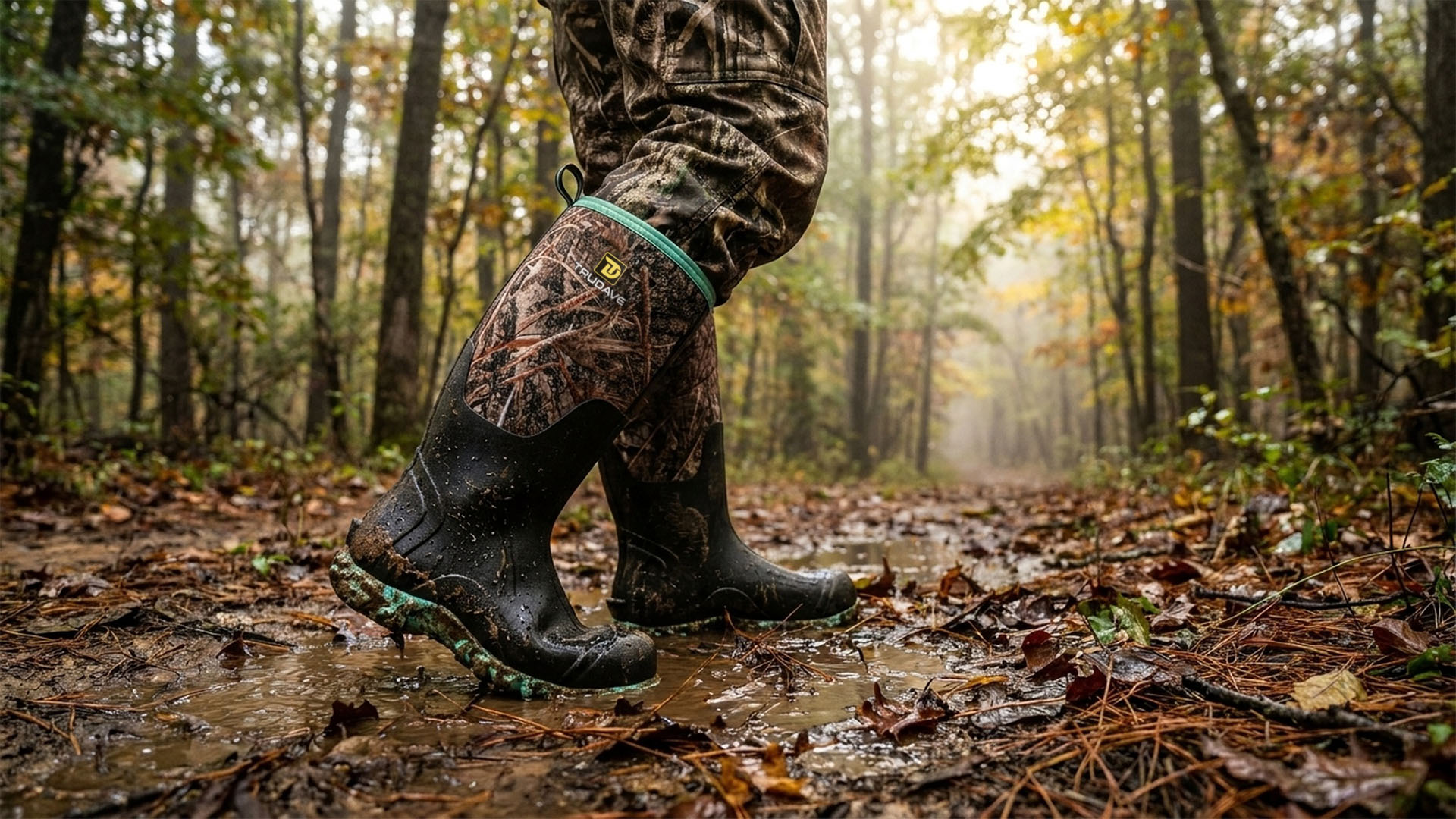
Hunters working these environments may benefit from waterproof hunting boots for alpine mountain hunting that provide strong traction, secure ankle support, waterproof protection, and enough durability for long climbs.
Footwear is not a comfort detail.
It is safety equipment.
Traction Matters on Wet Rock
Rock can become extremely slippery when covered with:
- Rain
- Snow
- Ice
- Wet vegetation
A boot that performs on dry dirt may fail on wet stone.
Choose footwear designed for mountain conditions.
Move slowly on exposed sections.
One mistake on steep terrain can end the hunt.
Ankle Support Helps on Talus
Loose rock creates unpredictable footing.
Every step may shift.
A supportive boot helps reduce fatigue during:
- Sidehilling
- Descents
- Heavy pack movement
However, stiffness should match the hunter.
A boot that is too rigid can become uncomfortable during long approaches.
Balance support and mobility.
Waterproofing Is Essential
Alpine weather can change within minutes.
A sunny morning can become:
- Rain
- Snow
- Slush
Wet feet in cold conditions quickly become a serious problem.
Waterproof footwear helps protect against:
- Snow crossings
- Wet grass
- Mud
- Stream crossings
Dry feet improve endurance and decision-making.
Snow Requires Different Movement
Snow travel changes everything.
Early morning snow may be firm.
Afternoon snow may become soft.
Boot penetration increases.
Energy requirements increase.
Use caution when crossing:
- Snowfields
- Cornices
- Steep slopes
A short snow crossing can be more dangerous than a longer rock route.
Ice Can Hide Under Snow
Thin snow may cover ice.
Especially near:
- Shaded slopes
- Creek areas
- Frozen patches
Test footing.
Do not assume white ground means safe ground.
Mountain conditions change constantly.
Carry Emergency Equipment
Remote alpine hunts require preparation.
Depending on location and conditions, hunters may consider carrying:
- Navigation tools
- Emergency communication
- Extra layers
- First-aid supplies
- Fire starter
- Extra food
A simple delay can become a serious situation when temperatures drop.
Altitude Changes Performance
High elevation affects everyone differently.
Symptoms can include:
- Headache
- Shortness of breath
- Fatigue
- Poor decision-making
Do not ignore your body.
Move slower.
Hydrate.
Rest when necessary.
A successful hunt requires staying functional.
Hydration Matters in Cold Weather
Many hunters drink less when temperatures are low.
That is a mistake.
Dry mountain air increases water loss.
Heavy climbing increases demand.
Carry enough water.
Do not wait until thirst becomes obvious.
Food Planning Matters Too
Alpine hunts burn significant energy.
Long climbs.
Cold temperatures.
Heavy packs.
Carry food that provides reliable calories.
Small mistakes in nutrition become large problems after several days.
Maps Are Essential
Mountain terrain is deceptive.
A slope that looks simple from one angle may contain:
- Cliffs
- Gullies
- Hidden drops
- Snow traps
Study:
- Topographic maps
- Satellite imagery
- Elevation changes
Plan routes before entering the country.
Do not create the plan while standing above a dangerous obstacle.
Know Your Exit Routes
Many hunters focus only on reaching the goat.
They forget leaving can be harder.
Consider:
- Darkness
- Weather
- Pack weight
- Downhill fatigue
A safe exit route should be part of the plan before the hunt begins.
Remote Roads Require Preparation
Access roads into mountain areas can be rough.
Conditions may include:
- Mud
- Snow
- Rock
- Washouts
Do not assume a road is passable because another vehicle used it previously.
Conditions change.
Carry appropriate recovery equipment where needed.
Respect Wilderness Regulations
Mountain goat habitat often overlaps:
- Wilderness areas
- National forests
- National parks
- Protected lands
Rules vary.
Verify:
- Access
- Vehicle restrictions
- Camp rules
- Fire regulations
- Permits
Protecting these landscapes protects future hunting opportunity.
Public Land Hunting Requires Research
Many mountain goat opportunities involve limited permits or specific units.
Before applying or hunting, verify:
- Draw requirements
- Season dates
- Unit boundaries
- Legal methods
- Access rules
Mountain goat hunting is often highly regulated because populations are carefully managed.
Ethical Shot Selection Matters
Mountain goats live in steep terrain.
A shot opportunity should consider:
- Angle
- Distance
- Animal position
- Recovery route
A difficult recovery should influence the decision before shooting.
The goal is not simply taking the animal.
The goal is completing the hunt responsibly.
Recovery Can Be More Difficult Than the Hunt
A mountain goat on a cliff creates a serious recovery challenge.
Before shooting, consider:
- Where will the animal fall?
- Can you reach it safely?
- Is there a cliff below?
- How will you pack it out?
The shot is only one moment.
Recovery may take days.
Weather After the Shot Matters
A successful hunt can quickly become complicated if a storm arrives.
Plan for:
- Temperature drops
- Snow
- Wind
- Reduced visibility
Do not assume good weather at the start means good weather after success.
Mountain conditions change rapidly.
Common Mountain Goat Hunting Mistakes
Climbing Before Finding Goats
Use optics first.
Ignoring Weather
Alpine conditions change quickly.
Taking the Shortest Route
The safest route is usually better.
Underestimating Snow
Snow changes movement and risk.
Wearing Inappropriate Boots
Rock, snow, and wet conditions demand proper footwear.
Ignoring Wind
Mountain airflow changes constantly.
Forgetting Recovery Planning
A goat in bad terrain creates a major responsibility.
Frequently Asked Questions
Where do mountain goats live?
They primarily inhabit steep alpine environments with cliffs, rocky slopes, snowfields, and high-elevation terrain.
How do you find mountain goats?
Long-distance glassing from strategic viewpoints is one of the most effective methods.
Is mountain goat hunting physically difficult?
Yes. It is considered one of the most demanding western big-game hunts due to elevation, steep terrain, weather, and pack-out challenges.
Are mountain goats hard to see?
Despite their white color, they can blend into snow, rock, and bright alpine environments surprisingly well.
What boots are best for mountain goat hunting?
Waterproof mountain hunting boots with strong traction, ankle support, durability, and comfort for long climbs are ideal for alpine conditions.
Final Thoughts
Mountain goat hunting is not about conquering the mountain.
It is about understanding it.
The goat does not survive because it is impossible to find.
It survives because it lives in a place where every mistake costs energy.
The hunter who rushes climbs too much.
The hunter who ignores weather gets uncomfortable.
The hunter who ignores wind gets detected.
The hunter who ignores terrain creates unnecessary risk.
Slow down.
Glass longer.
Respect the mountain.
Choose equipment that can handle rock, snow, mud, and long climbs.
And remember:
The goat is not hiding from you.
It is simply living exactly where it was designed to live.
