
Spring turkey hunting in western mountain country can begin with two completely different seasons on the same hillside.
The valley floor is green.
Creeks are running.
Grass is beginning to grow.
Several hundred feet higher, shaded slopes still hold snow beneath ponderosa pine.
A hunter hears a gobble somewhere above him.
He climbs.
The trail turns to mud.
Then snow.
Then a patch of dry pine needles.
Another gobble echoes across the drainage.
It sounds close.
It is not.
That is Merriam’s turkey hunting.
These birds occupy big western landscapes where elevation, snow, green-up, roost trees, water, sunlight, and terrain can all influence daily movement.
A hunter accustomed to eastern hardwood turkeys may recognize the same basic animal but encounter a very different hunt.
The distances are larger.
Gobbling can carry farther.
Terrain hides birds.
And a flock can move from snowy timber to a sunny meadow surprisingly quickly.
The key is understanding how spring progresses through the mountain.
Because in Merriam’s country, spring does not arrive everywhere at once.
Merriam’s Turkeys Are Mountain Birds
Merriam’s wild turkeys are strongly associated with portions of the western United States.
Productive habitat may include:
- Ponderosa pine forest
- Mountain meadows
- Oak brush
- Open timber
- Creek bottoms
- Pine ridges
- Aspen pockets
- Grasslands
- Agricultural edges
- Burned areas
The best habitat usually contains a combination of:
- Roost trees
- Feeding ground
- Water
- Open strutting areas
- Security cover
One enormous pine forest may look perfect but hold few birds if the surrounding food and openings are poor.
A smaller mountain basin containing roost timber, grass, water, and several sunny openings may be much more productive.
Spring Elevation Matters
Western mountain spring arrives in stages.
Lower elevations green up first.
Higher elevations may remain snow-covered for weeks.
Turkeys respond to those differences.
Early in the season, birds may favor:
- Lower slopes
- South-facing hillsides
- Valley edges
- Snow-free openings
As conditions warm, they may begin using higher terrain.
Hunters should not assume last year’s late-season elevation will produce birds early this year.
Follow the current snowline and green-up.
The Snowline Can Be a Habitat Edge
A melting snowline creates a unique transition.
Below it:
- New grass appears
- Insects become active
- Ground is exposed
- Feeding becomes easier
Above it:
- Timber remains colder
- Snow persists
- Travel may be more difficult
Turkeys may use the edge between these environments.
Look for:
- Snow-free pine benches
- Sunny openings beside remaining snow
- South-facing timber
- Melted logging roads
- Green creek bottoms
The exact line can change quickly during warm spring weather.
A productive area on Monday may look completely different by Saturday.
South-Facing Slopes Warm First
During early spring, southern and southeastern exposures often receive more sunlight.
That can lead to earlier snowmelt and vegetation growth.
Search these slopes for:
- Fresh tracks
- Droppings
- Scratchings
- Feeding activity
- Strutting birds
Morning sunlight can also make these locations more comfortable after cold nights.
A turkey may roost higher and move toward the sunny slope after fly-down.
Understand the daily relationship between roost and warmth.
North-Facing Slopes May Stay Quiet Longer
Shaded slopes can hold snow well into spring.
That does not mean they are useless.
They may contain:
- Roost trees
- Security cover
- Travel routes
But feeding activity may be concentrated elsewhere until conditions improve.
If a north slope shows little ground disturbance and deep snow, do not spend the entire day forcing the issue.
Look toward warmer terrain nearby.
The mountain tells you where spring is happening first.
Roost Trees Are the Starting Point
Merriam’s turkeys often use large mature trees for roosting.
Ponderosa pine can provide excellent roost structure.
Hunters scouting evenings or mornings may hear birds around:
- Ridge edges
- Pine benches
- Creek bottoms
- Large isolated pines
- Protected slopes
Roost knowledge provides a major advantage.
But avoid disturbing birds unnecessarily.
Walking directly beneath the roost late in the evening may push the flock into another drainage.
Observe from a distance whenever possible.
Evening Listening Can Save Miles
One of the most effective scouting strategies is listening near sunset.
A gobbler may reveal his general roost area before dark.
Listen from:
- Ridges
- Roads
- High points
- Drainage overlooks
Do not chase the final evening gobble.
Mark the area.
Study the map.
Plan the morning approach.
The goal is knowing where to begin before daylight, not forcing a last-minute interaction.
Morning Gobbles Travel Far
Mountain acoustics can fool hunters.
A gobble across a canyon may sound only a few hundred yards away.
In reality, the bird may be much farther.
Sound can bounce off:
- Canyon walls
- Rock
- Timber
- Ridges
Before making a major move, listen again.
Try to determine whether the gobbler is:
- Above you
- Across the drainage
- Moving
- Stationary
One wrong assumption can lead to an unnecessary thousand-foot climb.
Get Close Without Getting Too Close
Roosted birds create excitement.
Hunters want to move as close as possible before daylight.
Too close can create problems.
You may:
- Walk under hens
- Make noise on frozen ground
- Get silhouetted
- Force birds to fly away from you
Choose a setup allowing the gobbler to feel comfortable approaching.
Terrain should hide your movement without placing you directly beneath the roost.
The perfect distance depends on cover and conditions.
Fly-Down Does Not Always Mean Immediate Action
A gobbler may hit the ground and become quiet.
That does not automatically mean he left.
He may:
- Join hens
- Feed quietly
- Move behind terrain
- Strut out of sight
Stay patient.
Listen for:
- Drumming
- Hens
- Footsteps
- Wing movement
- Occasional gobbles
Mountain turkeys can disappear behind one small ridge without traveling far.
Silence is not proof of absence.
Hens Often Determine the Morning
Early in the breeding period, a gobbler may stay closely associated with hens.
Calling aggressively may not pull him away.
Instead, understand where the flock wants to go.
Watch for routes toward:
- Meadows
- Feeding slopes
- Water
- Logging roads
- Open timber
Sometimes the best strategy is positioning along natural movement rather than attempting to call the gobbler directly away from hens.
Call to the Flock, Not Only the Gobbler
If hens are present, their behavior matters.
Subtle calling can sometimes attract the group rather than the tom alone.
Match the situation.
Avoid turning every setup into a loud calling contest.
Listen to real birds.
If hens are soft and relaxed, aggressive calling may sound unnatural.
A few realistic sounds placed at the correct time can be more effective than constant calling.
Do Not Overcall Mountain Birds
Open mountain country can make hunters anxious.
They call simply to hear a response.
Every response feels reassuring.
But repeated calling can tell a turkey exactly where you are.
If the gobbler is already moving toward the setup, reduce calling.
Let curiosity and breeding behavior work.
The objective is not producing the maximum number of gobbles.
It is creating a close ethical opportunity.
Terrain Can Block a Turkey
A gobbler may want to approach but refuse to cross one specific terrain feature.
Common barriers include:
- Deep creek
- Fence
- Steep canyon
- Thick downfall
- Snowbank
- Open road
Before calling, study what lies between you and the bird.
If possible, get on the same side of major obstacles.
Calling across an obvious barrier can produce a long frustrating conversation with a bird that never intended to cross.
Small Ridges Are Huge to Turkeys
A low rise can hide hunter movement.
It can also completely hide the turkey.
Use terrain intelligently.
A gobbler calling behind a ridge may be much closer than it sounds.
Avoid standing to look over the crest.
Stay below the skyline.
Move only when you are confident the bird cannot see you.
Many turkey hunts end because the hunter wanted one extra look.
Logging Roads Can Be Important Travel Routes
Mountain forests contain many old roads.
Turkeys may use them because they offer:
- Easy walking
- Open feeding
- Dusting areas
- Strutting visibility
Search muddy sections for tracks.
Look for:
- Droppings
- Feathers
- Scratchings
- Dust bowls
A logging road connecting roost timber to a meadow can become a consistent morning route.
Do not assume the middle of the road is the best setup.
Use cover beside the route.
Mud Is a Turkey Tracker
Spring snowmelt and rain create excellent tracking surfaces.
Look along:
- Dirt roads
- Creek edges
- Meadow margins
- Tank areas
- Snow patches
Fresh turkey tracks can reveal:
- Travel direction
- Flock size
- Current use
Tracks crossing yesterday’s vehicle marks or recent rain disturbance are especially useful.
One set of prints can save hours of random calling.
Snow Can Record Movement Too
Late spring storms may cover the ground overnight.
Fresh snow makes turkey movement easy to see.
Look for tracks leaving:
- Roost areas
- Pine benches
- Creek bottoms
Follow the pattern carefully.
Do not blindly trail birds step by step.
Use tracks to understand where they are feeding and traveling.
Once the route becomes clear, get ahead rather than following from behind.
Scratchings Reveal Feeding Areas
Turkeys move leaves, pine needles, and soil while searching for food.
Fresh scratching can look:
- Darker than surrounding ground
- Recently disturbed
- Moist underneath
Look around:
- Oak patches
- Pine benches
- Meadow edges
- Creek corridors
Old scratching tells you birds have used the area.
Fresh scratching combined with droppings and tracks tells you they may still be close.
Open Pine Forest Can Be Better Than Thick Timber
Turkeys need enough visibility to move and detect danger.
Open ponderosa pine with grass underneath can be excellent habitat.
Look for forests containing:
- Large trees
- Open understory
- Grass
- Small meadows
- Gentle benches
Extremely dense timber can reduce ground-level feeding opportunity.
Do not assume more trees equal more turkeys.
Structure matters.
Meadows Create Feeding and Strutting Opportunities
Mountain meadows can be excellent during spring.
Turkeys may use them for:
- Feeding
- Strutting
- Bugging
- Social interaction
Good meadows often sit near roost timber.
Look for tracks around the perimeter.
Do not walk through the center during scouting.
Glass from a distance.
A tom may use one corner repeatedly because hens enter there each morning.
Small Meadows Can Outperform Big Ones
A huge meadow looks attractive to hunters.
It also exposes turkeys.
A smaller opening surrounded by timber may feel safer.
Search:
- Pocket meadows
- Logging landings
- Small burns
- Grassy benches
These areas provide open ground without forcing birds far from security cover.
A twenty-yard opening can be enough for a gobbler to strut.
Burns Can Create Excellent Turkey Habitat
Wildfire changes mountain forests.
Depending on age and severity, burned areas may develop:
- Grasses
- Forbs
- Insects
- Open travel routes
Turkeys may use burn edges where new feeding habitat meets surviving roost cover.
Look for:
- Green regeneration
- Standing mature trees nearby
- Creek systems
- Open ground
Do not assume an old burn is empty simply because tree cover looks reduced.
Disturbance can create valuable feeding habitat.
Insects Matter as Spring Warms
As temperatures rise, insects become more available.
Turkeys may feed heavily in:
- Meadows
- Grass
- Burn areas
- Creek edges
This can change daily movement.
A meadow ignored during freezing weather may become productive after several warm days.
Follow seasonal progression.
Spring turkey habitat is constantly changing.
Water Can Become Important in Dry Mountain Country
Merriam’s habitat can become relatively dry.
Possible water sources include:
- Springs
- Creeks
- Stock tanks
- Seeps
Fresh tracks near water can confirm bird activity.
However, do not assume the water itself is always the best hunting location.
Study travel between:
- Roost
- Feed
- Water
- Security cover
The route often provides more flexibility and better concealment.
Spring Creeks Can Become Difficult to Cross
Snowmelt raises water.
A creek that was easy during scouting may become much stronger several days later.
Do not cross unfamiliar fast water casually.
Use safe established crossings.
Consider whether you must cross again after the hunt.
Mountain water can be:
- Cold
- Fast
- Slippery
A turkey on the other side is never worth a dangerous crossing.
Wet Grass Creates a Footwear Problem
Mountain turkey hunting can involve more water than hunters expect.
Morning conditions may include:
- Dew
- Snowmelt
- Mud
- Creek crossings
- Wet meadow grass
- Spring rain
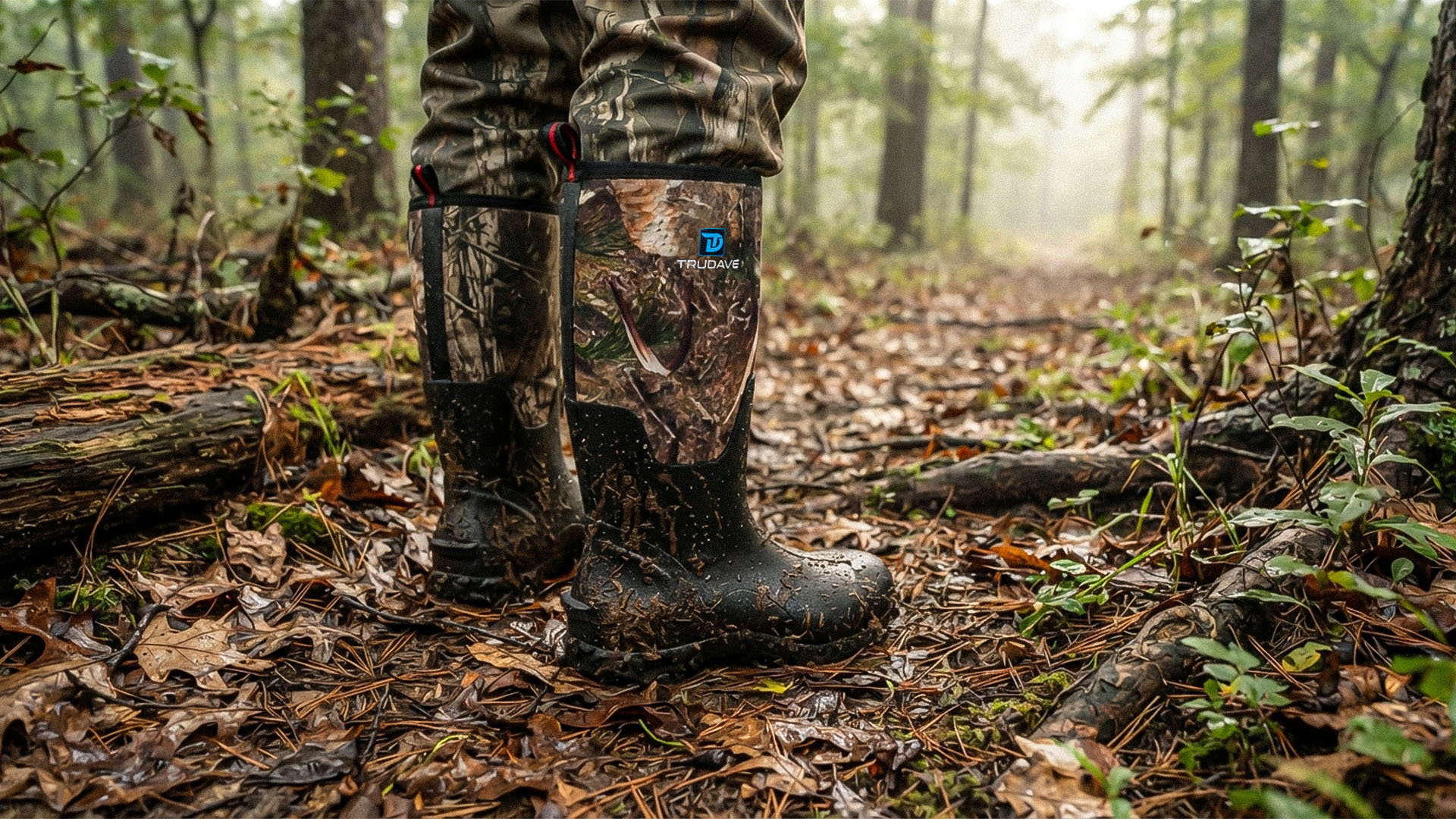
Hunters covering these conditions may benefit from waterproof hunting boots for spring mountain turkey hunting that provide reliable traction, secure heel retention, and enough moisture protection without the excessive weight of a deep-winter boot.
Turkey hunters often walk several miles, then sit completely still.
Footwear must work for both.
Too Much Insulation Can Be a Problem
Spring mornings can begin below freezing.
By afternoon, temperatures may become warm.
Heavily insulated boots can cause sweating during climbs.
Once the hunter stops to call, damp socks may become cold.
Choose insulation according to:
- Temperature
- Elevation
- Walking distance
- Snow depth
Layering applies to feet too.
A moderate boot with appropriate socks can be more versatile than excessive insulation.
Waterproofing Helps During Snowmelt
Melting snow creates constant moisture.
Even where snow depth is low, boots may encounter:
- Slush
- Mud
- Wet pine needles
- Shallow runoff
A waterproof boot makes moving between snow and dry ground much easier.
Gaiters can help prevent snow and water from entering over the cuff.
Mud Traction Matters on Mountain Roads
Spring roads can be slick.
Clay and melting snow create poor footing.
Hunters may spend significant time walking old roads before leaving the trail.
Choose outsole traction that performs in:
- Mud
- Wet grass
- Loose soil
- Pine needles
A turkey hunt may not involve extreme cliffs, but one fall with a shotgun can still be serious.
Pine Needles Can Be Slick
Dry pine needles slide underfoot.
Wet pine needles become even more slippery.
Be especially careful on:
- Steep slopes
- Road banks
- Creek approaches
Take controlled steps.
Do not stare toward the gobbling bird while walking.
Stop.
Listen.
Then continue watching the ground.
Snow-Covered Logs Are Dangerous
Spring storms can hide fallen timber beneath snow.
Step around logs when practical.
Do not jump over obstacles without knowing what is on the other side.
Mountain turkey hunters often move before daylight.
A headlamp helps, but speed should remain controlled.
The bird will still be on the mountain if you take thirty extra seconds.
Physical Fitness Expands Your Options
Merriam’s hunting can involve significant elevation.
Birds may gobble from the next ridge.
Then the ridge after that.
A physically prepared hunter can:
- Reposition faster
- Hunt farther from roads
- Reach better listening points
- Stay focused longer
Preparation does not require extreme mountain-athlete fitness.
But regular hiking, hill work, and loaded pack walking can make the hunt far more enjoyable.
Do Not Chase Every Gobble
A gobbling bird triggers urgency.
Mountain terrain punishes that reaction.
Before dropping into a canyon, ask:
- Is the bird moving?
- Can I call from here?
- Is there a better ridge route?
- Will I have to climb back out?
Sometimes staying high is smarter.
A turkey may travel toward you.
Losing a thousand feet because one gobble sounded exciting can create a miserable afternoon.
Use Roads to Change Elevation Efficiently
Where legal and accessible on foot, old roads and trails can help hunters contour around mountains without constantly climbing.
Study maps before the hunt.
A route that looks longer horizontally may save enormous energy by maintaining elevation.
Walking smarter leaves more energy for the final setup.
Stop Calling Before Reaching the Crest
If a gobbler is beyond a ridge, resist calling while standing directly below the top.
You may bring the bird toward the crest just as you expose yourself.
Instead:
- Move quietly
- Find cover
- Set up first
- Then call
Always assume the turkey may be closer than the last gobble suggested.
Gobblers Can Come In Silent
One of the most important turkey lessons applies strongly in mountain country.
A bird does not need to keep gobbling while approaching.
If a tom suddenly goes quiet after responding, do not immediately stand up.
He may be:
- Walking
- Strutting
- Crossing behind terrain
Stay ready.
Wait longer than feels necessary.
Many hunters spook the exact bird they thought had left.
Patience Kills Mountain Turkeys
Terrain makes it easy to lose visual contact.
A tom may take a long route around:
- Creek
- Rock
- Snow
- Downfall
Give him time.
A twenty-minute silence can still end with a bird appearing thirty yards away.
The hunter who constantly relocates often moves at exactly the wrong time.
Know When to Reposition
Patience does not mean never moving.
If a gobbler consistently shifts away, study the pattern.
He may be following hens toward:
- Meadow
- Ridge
- Feeding area
Use terrain to make a large reposition out of sight.
Then call again from where the bird naturally wants to travel.
Strategic movement beats random chasing.
Midmorning Can Be Excellent
After hens begin leaving gobblers to nest, toms may become more responsive later in the morning.
A quiet mountain at sunrise can become productive at 9:00 or 10:00.
Continue hunting.
Check:
- Logging roads
- Meadows
- Ridge benches
- Feeding areas
Do not return to the truck simply because the classic fly-down hunt failed.
The second phase of the morning may be better.
Afternoon Scouting Has Value
Where legal hunting hours allow hunting or scouting activity, later periods can help reveal where birds spend the day.
Look for:
- Tracks
- Dusting areas
- Meadow use
- Evening movement toward roosts
Even if the afternoon does not produce a shot opportunity, it can prepare the next morning.
Turkey hunting is a multi-day information game.
Dusting Areas Can Reveal Regular Use
Turkeys dust in loose soil.
Look for shallow depressions along:
- Dry roads
- Pine benches
- Meadow edges
- Open timber
Fresh feathers and tracks can indicate recent use.
A dusting site is not necessarily the best ambush location.
But it confirms birds are spending daylight in that section of the mountain.
Droppings Help Identify Roost and Travel Areas
Droppings beneath large pine trees can indicate roost activity.
Fresh droppings along roads or trails show current travel.
Combine them with:
- Tracks
- Feathers
- Scratchings
- Vocalizations
One sign alone is useful.
Several fresh sign types together mean slow down.
Feathers Can Reveal Habitual Locations
Turkey feathers occasionally appear around:
- Roosts
- Dusting sites
- Strutting areas
- Travel routes
Do not assume every feather marks a fresh bird.
Weather and time can leave feathers in place.
Use them as supporting evidence.
The strongest scouting comes from multiple current clues.
Trail Cameras May Help Where Legal
Where current regulations allow them, trail cameras can help monitor:
- Logging-road crossings
- Water
- Meadow edges
But turkey hunters should verify local camera rules.
Do not place cameras in ways that create unnecessary disturbance.
Information is useful only if collecting it does not push birds away.
Calling From Roads Can Educate Birds
Hunters often drive or walk roads and call repeatedly.
This can locate turkeys.
It can also teach heavily pressured birds to associate calls from roads with danger.
Use locator strategies selectively.
Once a bird responds, avoid turning the encounter into a long roadside conversation.
Mark the location.
Build a real hunting setup.
Pressure Moves Birds Away From Easy Access
Public-land Merriam’s can receive significant spring pressure.
Birds near roads may become cautious.
Search:
- Secondary ridges
- Quiet drainages
- Areas behind steep access
- Less obvious meadows
But farther is not always better.
Good habitat close to a road can still hold birds if pressure is managed.
Hunt habitat and behavior, not distance alone.
Public Land Requires Good Mapping
Western turkey habitat often includes complicated boundaries.
Know:
- Public land
- Private parcels
- State land
- Tribal lands where applicable
- Closed areas
- Access routes
A gobbler can cross a boundary quickly.
Hunters cannot.
Mark boundaries in advance.
Do not wait until the bird is calling to determine whether you can legally follow.
Private Ranch Access Can Be Valuable
Merriam’s habitat frequently overlaps ranch and agricultural property.
If permission is granted:
- Park where instructed
- Respect livestock
- Leave gates properly
- Avoid damaging wet roads
- Follow access restrictions
Spring mud makes ranch-road respect especially important.
A hunter who tears up a road may lose access for everyone.
Avoid Driving Soft Roads
Snowmelt and rain can make mountain dirt roads extremely vulnerable.
If ruts begin forming, stop.
Walk.
A vehicle can damage a soft road in minutes.
That damage may last for months.
Responsible access protects both habitat and hunting opportunity.
Weather Can Change Faster Than the Hunt
Spring mountain weather can bring:
- Rain
- Snow
- Wind
- Thunderstorms
- Rapid temperature changes
Carry layers.
Monitor forecasts.
Do not assume warm afternoon conditions mean the night or next morning will remain mild.
Western spring is unstable.
Preparation keeps bad weather from ending the hunt unnecessarily.
Spring Snow Does Not Always Shut Birds Down
A late storm may change turkey activity without ending it.
Birds may concentrate on:
- Snow-free slopes
- Roads
- Sunny meadows
- Lower elevation
- Protected timber
Fresh snow can actually make tracks easier to find.
Instead of staying at camp, study how the storm changed usable habitat.
The birds still need to feed.
Strong Wind Makes Calling Harder
Wind reduces how well both hunter and bird can hear.
Turkeys may move into protected terrain.
Search:
- Lee slopes
- Timbered draws
- Canyon bottoms
- Sheltered meadows
Calling may need adjustment, but do not automatically become excessively loud.
First position where the bird can realistically hear you.
Terrain can solve problems volume cannot.
Wind Can Hide Your Movement—and Your Mistakes
Strong wind covers some sound.
Hunters may become careless.
Remember that visual detection still matters.
A turkey may not hear a footstep but can still see the hunter crossing an open meadow.
Use wind as an advantage without abandoning concealment.
Rain Can Quiet the Forest
Wet pine needles and leaves reduce walking noise.
That can help when repositioning.
Rain may also push birds toward:
- Roads
- Open meadows
- Clearings
where visibility is better.
Do not assume light rain ruins turkey hunting.
It may simply change where birds feel comfortable.
Thunder Can Trigger Gobbles
Turkeys sometimes gobble in response to sudden loud natural sounds.
Thunder can occasionally reveal bird location.
But thunderstorms create serious safety concerns.
Do not remain exposed on ridges during lightning.
A gobble is not worth a dangerous position.
Weather safety comes first.
Lightning Is a Mountain Hazard
Open ridges and isolated trees can be dangerous during storms.
If lightning approaches:
- Leave exposed high points
- Avoid isolated tall trees
- Move toward safer terrain
Plan retreat routes before the storm arrives.
Turkey hunting involves waiting.
Do not wait in the wrong place.
Shot Opportunities Happen Quickly
A gobbler can appear silently at the edge of cover.
Hunters should prepare before calling.
Have:
- Safe shooting direction
- Comfortable position
- Clear gun movement
- Known landmarks
Avoid large last-second movements.
Once the bird can see the setup area, every adjustment becomes risky.
Do Not Set Up Too Close to the Crest
A turkey may appear suddenly at only a few yards.
Give yourself enough distance from a ridge edge to see the bird before it sees your full outline.
Use:
- Tree
- Rock
- Brush
as background cover.
The goal is allowing the bird to enter a visible safe zone before detecting the hunter.
Identify the Target Completely
Wild turkey hunting requires clear target identification.
Confirm:
- Legal bird
- Beard or sex requirements as applicable
- Safe background
before shooting.
Do not fire at:
- Movement
- A fan
- A dark shape
without positively identifying the full situation.
Other hunters may also use turkey calls and decoys.
Assume human presence is possible.
Never Stalk Turkey Sounds
This is one of the most important turkey-hunting safety rules.
A gobble, yelp, or turkey-like movement may be another hunter.
Do not stalk calling sounds as though they are guaranteed to be birds.
Use extreme caution around known hunting pressure.
Visible identification must come before any shot decision.
Decoy Safety Matters
Where decoys are legal and used, position them so another hunter is unlikely to mistake your setup for live birds.
Avoid placing realistic decoys in locations visible from heavily traveled roads or trails.
Carry them concealed when moving.
Public-land turkey hunting requires thinking not only about your target but also about how other people perceive your setup.
Recovery Is Usually Straightforward—but Terrain Still Matters
A turkey falling on a steep mountainside can slide or disappear into brush.
Mark the location.
Approach carefully.
Do not rush downhill with a loaded firearm.
Steep wet pine needles can be slippery.
Complete recovery before packing gear or moving to another location.
Spring Heat Can Affect Game Care
Morning conditions may be cold.
Afternoon may become warm.
Handle harvested turkey properly.
Keep meat:
- Clean
- Cool
- Protected from direct sun
Follow current wildlife regulations for:
- Tagging
- Transport
- Evidence requirements
Plan cooler space before leaving home.
Regulations Vary by State and Unit
Merriam’s turkey seasons, permits, legal methods, and tag systems vary significantly by jurisdiction.
Before hunting, verify current rules regarding:
- Season dates
- Tags
- Units
- Bag limits
- Legal shooting hours
- Weapon rules
- Decoy regulations
- Public-land restrictions
- Hunter-orange requirements where applicable
Use current official wildlife-agency information.
Do not rely on an old article for legal guidance.
Common Merriam’s Turkey Hunting Mistakes
Hunting the Same Elevation All Spring
Follow snowmelt and green-up.
Chasing Every Gobble Straight Downhill
Study the route before sacrificing elevation.
Calling Too Much
If the bird is already working, let him come.
Ignoring Hens
The flock’s natural destination may matter more than your calling.
Setting Up Across Barriers
Creeks, fences, and steep terrain can stop an approaching gobbler.
Leaving After the Fly-Down Hunt Fails
Midmorning can be excellent.
Wearing Heavy or Non-Waterproof Footwear
Spring mountains combine miles of walking with snowmelt, mud, and wet grass.
Damaging Soft Roads
Walk when spring conditions make vehicle travel destructive.
Stalking Turkey Sounds
Other hunters may be calling. Positive identification and safe setups are essential.
Frequently Asked Questions
Where do Merriam’s turkeys live?
They commonly use western mountain habitats containing ponderosa pine, meadows, open timber, grasslands, oak, water sources, and suitable roost trees.
How does snow affect spring turkey hunting?
Snow can shift birds toward lower elevations, sunny slopes, exposed roads, and snow-free feeding areas. Melting snow can also create fresh tracks and muddy travel corridors.
What is the best time of day to hunt Merriam’s turkeys?
Early morning around roost movement is popular, but midmorning can be highly productive as gobblers separate from hens and become more responsive.
Are mountain turkey hunts physically difficult?
They can be. Elevation changes, long distances, mud, snow, and large western landscapes often require significantly more walking than small-property turkey hunting.
What boots are best for Merriam’s turkey hunting?
Waterproof hunting boots with dependable traction, secure fit, moderate support, and manageable weight are useful for snowmelt, wet grass, muddy roads, pine forest, and mountain walking.
Should you hunt directly under a turkey roost?
Generally, avoid unnecessary disturbance around the roost. Set up at a reasonable distance on a likely fly-down or travel route rather than walking directly beneath birds.
Final Thoughts
Merriam’s turkey hunting is really a hunt for spring itself.
The birds follow the mountain as it wakes up.
Snow disappears from one slope.
Grass turns green in a meadow.
A creek begins running.
Insects appear.
Hens shift feeding patterns.
Gobblers move with them.
The hunter who sits on the same ridge using the same plan every day may wonder where the turkeys went.
The hunter who watches elevation, snow, sunlight, food, hens, and water sees the pattern changing.
Listen before climbing.
Stay high until you know where the bird is.
Do not chase every gobble.
Use terrain before calling.
Protect your feet from snowmelt, mud, and wet mountain grass.
And when a gobbler suddenly answers from a slope that was covered in snow only a week ago, pay attention to what changed.
The turkey probably already did.
