
A Coues whitetail buck can stand on an open Arizona hillside and still disappear.
There may be no thick swamp.
No wall of northern timber.
No chest-high grass.
Just oak.
Juniper.
Rock.
Agave.
Dry grass.
And broken sunlight.
The hunter raises binoculars.
Nothing.
He scans again.
Still nothing.
Then one gray shape moves beneath an oak tree.
An ear turns.
A small antler catches the light.
Suddenly the deer is obvious.
The buck had been there the entire time.
That is Coues deer hunting.
These small desert-mountain whitetails have earned a reputation for being extremely difficult to spot because their coloration blends almost perfectly into the broken terrain of the Southwest.
For many successful hunters, the challenge is not walking farther.
It is learning to look longer.
Coues hunting is a game of optics, terrain, patience, weather, wind, and the ability to recognize tiny pieces of a deer instead of waiting for a full animal to step into the open.
Coues Deer Live in Broken Mountain Country
Coues whitetails are associated with portions of the southwestern United States and Mexico.
In Arizona, hunters may find suitable habitat containing combinations of:
- Oak woodland
- Juniper
- Pine transitions
- Desert grassland
- Brushy canyons
- Rocky slopes
- Mountain benches
- Drainages
- Springs
- Sky-island mountain ranges
The habitat can change quickly with elevation.
A hunter may begin in dry desert vegetation and climb into oak-covered hills within a relatively short distance.
That diversity creates a large amount of usable country.
The challenge is determining which portion the deer are actually using.
Glassing Is the Foundation of Coues Hunting
Many Coues hunters spend far more time behind binoculars than they do walking.
That is not laziness.
It is efficiency.
The terrain is too large and the deer are too difficult to see for random hiking to be the best strategy.
Good glassing locations overlook:
- Multiple canyon faces
- Oak benches
- Sunny slopes
- Brushy draws
- Small openings
- Ridge shoulders
A good viewpoint can reveal several hundred acres.
The hunter who walks immediately into that country may disturb deer before ever seeing them.
The hunter who sits and glasses can learn where the animals are before making a move.
Glass Longer Than Feels Necessary
One of the biggest mistakes new Coues hunters make is leaving a productive glassing point too quickly.
They scan a hillside.
See nothing.
Move.
Experienced hunters may remain at the same location for hours.
Why?
Because deer move.
Light changes.
Shadows move.
A bedded buck stands.
A feeding deer steps from behind one oak tree.
A flicking ear becomes visible.
The landscape itself reveals animals over time.
The first scan tells you what is obvious.
The tenth scan may show the deer.
Do Not Search Only for Full Bodies
Coues deer often appear as fragments.
Look for:
- An ear
- A leg
- A horizontal back line
- Antler tips
- A tail movement
- A patch of gray
- A shadow that changes shape
Train your eyes to notice things that do not belong.
Natural terrain contains irregular shapes.
A deer often creates:
- Smooth curves
- Straight leg lines
- Repeated symmetry
The animal may be almost completely hidden.
You only need one clue.
Tripod-Mounted Binoculars Can Change the Hunt
Handheld binoculars work well for quick scanning.
Long glassing sessions benefit from stability.
A tripod reduces movement and eye fatigue.
It allows hunters to inspect the landscape slowly.
Small details become easier to recognize.
A stationary optic is especially useful when searching:
- Distant oak pockets
- Shadowed slopes
- Bedding areas
- Canyon walls
Coues hunting often rewards hunters who turn binoculars into their primary hunting tool.
Early Light Can Reveal Movement
Dawn is valuable because deer may be feeding or traveling before bedding.
Low-angle sunlight also creates useful contrast.
Search:
- Grass openings
- Oak edges
- Lower slopes
- Drainage mouths
- Ridge shoulders
Watch how light reaches the hillside.
A deer hidden in shadow may become visible when the sun reaches the slope.
Sometimes the best move is simply waiting for the mountain to brighten.
Evening Light Creates Another Opportunity
Late afternoon can produce renewed movement.
Deer may begin leaving bedding cover and moving toward food or water.
Set up early enough to observe the full transition.
Do not arrive at the glassing point during the final twenty minutes of daylight.
You need time to:
- Locate deer
- Study movement
- Evaluate terrain
- Plan future access
Even if no shot opportunity exists that evening, the information can make the next morning much better.
Midday Glassing Is Underrated
Many deer hunters mentally quit around late morning.
Coues hunters often keep glassing.
A bedded buck may remain visible for hours once located.
Midday light may also penetrate areas that were completely shaded early.
Focus on:
- North-facing oak pockets
- Bench edges
- Rock shade
- Juniper clusters
- Brush below cliffs
The objective may not be finding a moving deer.
It may be finding one tiny stationary shape.
Bedding Cover Can Look Extremely Open
Coues deer do not always bed inside thick vegetation.
They may choose surprisingly open positions that provide:
- Shade
- Wind
- Visibility
- Escape terrain
A buck can bed beneath one oak tree on an otherwise exposed hillside.
From the deer’s perspective, the location may provide a complete view of the canyon below.
From the hunter’s perspective, the oak shadow hides the animal perfectly.
Look beneath individual trees.
Do not assume only thick brush can hold bedding deer.
North-Facing Slopes Can Be Valuable
In warm weather, north-facing slopes may provide cooler conditions and better moisture.
Vegetation can be denser.
Oak and brush may be more developed.
These areas can offer:
- Bedding
- Feed
- Shade
- Travel cover
During hot conditions, spend extra time glassing cooler aspects.
The opposite may become true during cold winter mornings when deer seek sunlight.
Terrain aspect should always be considered together with weather.
Sunny Slopes Matter During Cold Weather
Cold desert-mountain mornings can push deer toward sun-exposed terrain.
South- and east-facing slopes may warm earlier.
Look for deer:
- Feeding on sunny benches
- Standing at oak edges
- Moving through open grass
A buck may bed in the sun after feeding.
This can provide excellent visibility if the hunter reaches a glassing point early enough.
Follow comfort.
Animals do.
Small Benches Are Important
Coues country is full of steep slopes interrupted by small flatter areas.
These benches may provide:
- Bedding
- Feeding
- Easier travel
- Scrape or rub activity
- Visibility
From the bottom of the canyon, a bench may be invisible.
From across the drainage, it becomes obvious.
This is another reason distant glassing is so valuable.
A twenty-yard-wide bench may hold a buck all morning.
Saddles Connect Mountain Systems
A saddle creates an easier crossing between ridges.
Deer can use these terrain features when moving between:
- Feeding areas
- Bedding zones
- Water
- Different canyon systems
Look for fresh trails around saddles.
During rut-related movement, these crossings can become especially useful.
Do not assume deer always travel the lowest canyon route.
Mountain animals often choose efficient high crossings.
Canyon Heads Can Funnel Movement
The upper end of a drainage may narrow before reaching a ridge.
These locations can create travel funnels.
A deer moving between two sides of the mountain may use the same small route repeatedly.
Look for:
- Trails
- Droppings
- Rubs
- Tracks
- Bedding nearby
A canyon head combined with oak cover and a saddle can be particularly interesting.
Water Can Matter Greatly in Dry Country
Depending on season and local conditions, reliable water can influence deer distribution.
Possible sources include:
- Springs
- Seeps
- Stock tanks
- Creek pools
- Developed wildlife water
But water should be viewed as part of a larger habitat system.
Ask:
Where do deer bed?
Where do they feed?
How can they reach water while remaining secure?
The trail between resources may be more useful than sitting directly beside the water itself.
Monsoon Rain Can Change Everything
Arizona summer monsoon storms can transform the landscape.
Dry washes run.
Grass becomes green.
Temporary pools appear.
Tracks become visible in soft soil.
Food availability changes.
A previously important permanent water source may become less critical because deer suddenly have more drinking options.
This is why hunters should rescout after meaningful rainfall.
The mountains may look similar.
The deer pattern can be completely different.
Rain Produces Better Tracking Conditions
Rocky ground is normally difficult for track aging.
After rain, softer areas become useful.
Check:
- Ranch roads
- Tank edges
- Creek crossings
- Trail intersections
- Muddy saddles
Fresh tracks can help confirm that deer are using the same terrain you identified through glassing.
Do not replace glassing with tracking.
Use sign to support what the optics are already telling you.
Wet Desert Grass Can Soak Hunters Quickly
Southwestern mountains are often described as dry.
After a storm, that changes.
Tall grass can stay wet for hours.
Oak brush drips water.
Clay roads become muddy.
Small creeks begin flowing.
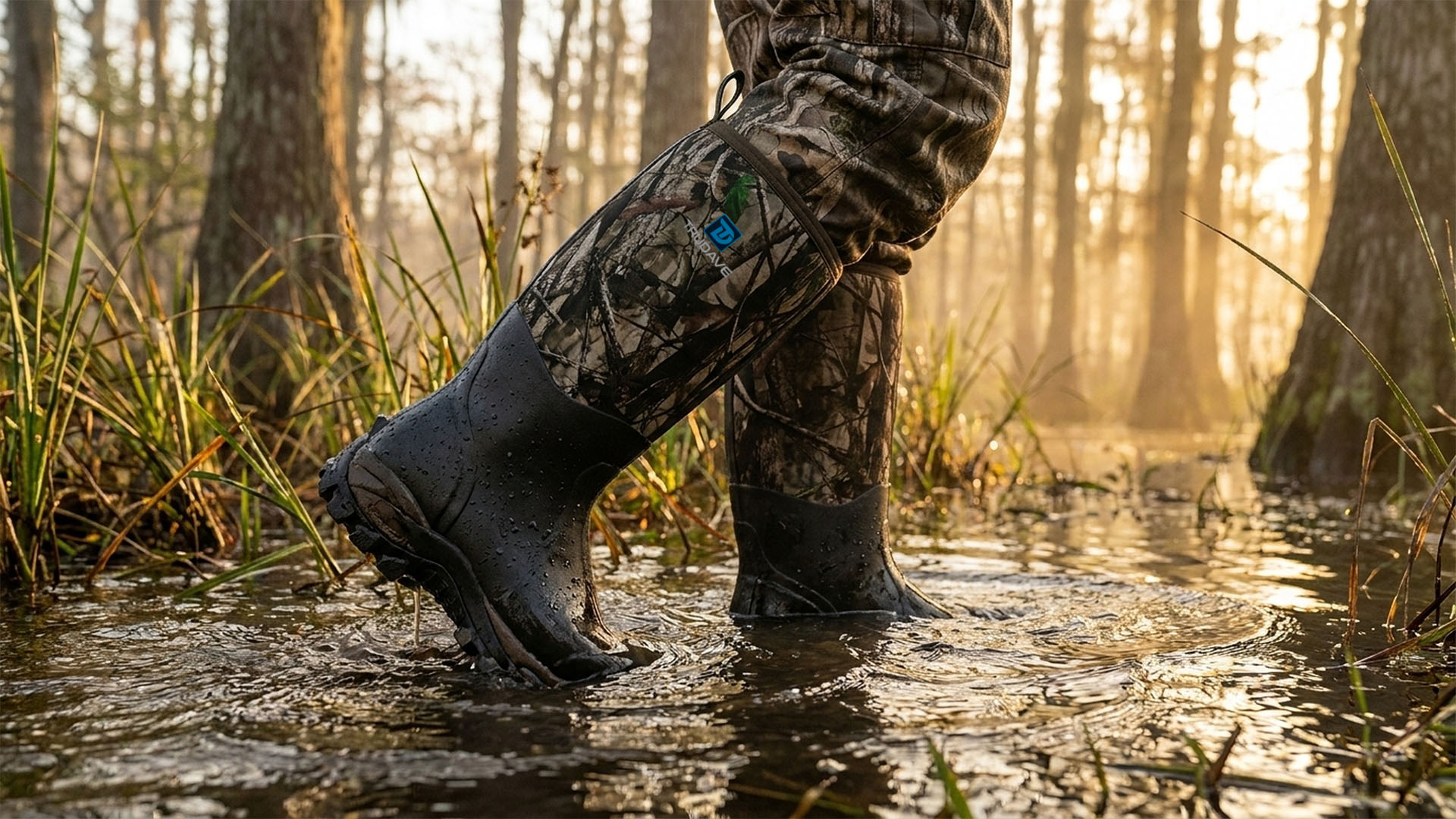
Hunters covering these conditions may benefit from waterproof hunting boots for Arizona mountain hunting that provide secure heel fit, reliable traction, and moisture protection without becoming excessively heavy for long glassing-and-stalking days.
The terrain may be dry most of the year.
Your boots still need to handle the days when it is not.
Rocky Slopes Require Stable Footwear
Coues hunting often involves:
- Loose rock
- Gravel
- Steep sidehills
- Oak leaves
- Mud
- Cactus
A soft flat-ground boot may become uncomfortable quickly.
Look for footwear that balances:
- Ankle support
- Traction
- Flexibility
- Weight
- Durability
This is not necessarily heavy alpine hunting.
But it is still mountain hunting.
Heel Retention Matters on Sidehills
Sidehilling places constant lateral pressure on footwear.
A loose heel creates friction.
That can lead to:
- Hot spots
- Blisters
- Instability
A secure fit helps the boot move with the foot instead of against it.
Test hunting footwear on actual slopes before the season.
A comfortable boot on pavement tells you almost nothing about how it will perform after three miles of rocky sidehilling.
Toe Room Matters on Descents
Descending steep slopes pushes the foot forward.
Poorly fitted boots can cause toes to strike the front repeatedly.
Leave appropriate toe room while maintaining heel lock.
Trim toenails before long mountain hunts.
Small foot-care details can determine whether the hunter remains effective for the entire day.
Cactus Makes Route Selection Important
Depending on elevation and location, Coues habitat can include cactus and other sharp vegetation.
Watch for:
- Prickly pear
- Agave
- Thorny shrubs
Do not walk while staring only through binoculars.
Stop to glass.
Walk while watching the ground.
A simple cactus encounter can create unnecessary pain and wasted time.
Grass Seeds Can Become Annoying
Dry-season vegetation may fill boots and socks with seeds.
Low gaiters can help reduce:
- Grass seed
- Gravel
- Dust
- Mud
entering footwear.
They may also help keep wet vegetation from directing water into the boot cuff after rain.
Choose breathable options.
Southwestern hunting can still become warm during the day.
Heat Management Is Serious
Even fall mountain hunts can become hot during midday.
Carry enough water.
Do not assume elevation eliminates heat risk.
Long climbs combined with direct sun can create dehydration quickly.
Watch for:
- Headache
- Weakness
- Dizziness
- Nausea
- Confusion
Take breaks.
Use shade.
A deer hunt should never become a heat emergency.
Start Hydrated
Drink before the hike begins.
Carry water during every stalk.
A buck that looks half a mile away may require a much longer route around terrain.
Do not leave water behind simply because the move seems short.
Arizona terrain has a habit of making straight-line distance meaningless.
Elevation Changes Walking Distance
A buck may be only eight hundred yards away.
But between hunter and deer may be:
- One canyon
- A steep descent
- A rocky creek
- Another climb
That “short” stalk can become several miles.
Study topographic maps before leaving the glassing position.
Understand the full route.
Do not let excitement override basic terrain planning.
Do Not Drop Into Every Canyon
Losing elevation is easy.
Regaining it is expensive.
If a deer disappears, do not automatically descend.
Wait.
Glass.
Study where it may reappear.
A hunter who drops a thousand feet without a plan may spend the rest of the afternoon climbing back to the same ridge.
Coues hunting rewards strategic movement.
Stay High When Possible
High ridges offer:
- Better visibility
- Easier glassing
- Access to multiple basins
Once you descend into thick canyon vegetation, your field of view disappears.
Whenever possible, use high ground to locate deer before making the stalk.
Your legs should confirm what your optics found.
Not search blindly for what your optics could have found first.
Wind Still Controls the Final Stalk
Glassing may locate the deer.
Wind determines whether you can approach.
Mountain air can change because of:
- Sun
- Shade
- Canyon structure
- Time of day
- Weather fronts
Check constantly.
A good stalking route should consider where scent will travel both now and later.
Do not assume wind at the glassing point matches wind on the opposite slope.
Thermals Change During the Day
Morning air may move downhill.
As the sun warms slopes, thermals may begin rising.
Later in the evening, the pattern can reverse.
A stalk lasting several hours may experience more than one airflow regime.
Anticipate the change.
A route that begins safe may become dangerous to the hunt before you reach the final position.
Use Terrain Instead of Trying to Be Invisible
Coues deer have excellent vision.
Do not rely on camouflage alone.
Use:
- Ridges
- Oak cover
- Rock
- Drainages
- Terrain folds
to hide movement.
A hunter walking fully exposed across a hillside can be noticed from long distance.
A hunter moving below the ridge line may remain unseen.
Terrain is your best camouflage.
Avoid Skylining Yourself
Ridge tops create excellent views.
They also expose human silhouettes.
Stay slightly below the crest when moving.
Approach glassing points carefully.
Use vegetation or rock behind your body.
A deer may be watching the ridge even when you have not found it yet.
Assume the animal sees more of the mountain than you do.
Slow Down Near the Final Position
The first mile of a stalk may be easy.
The last two hundred yards are different.
Noise matters more.
Wind matters more.
Movement matters more.
Slow down.
Remove loose equipment that may strike brush.
Check footing.
Prepare optics and shooting equipment.
The final approach should look completely different from the initial hike.
Oak Leaves Can Be Loud
Dry oak leaves and loose rock create significant noise.
After rain, movement becomes quieter.
During dry conditions, use patience.
Take controlled steps.
Time movement with:
- Wind
- Deer feeding
- Natural noise
Do not rush because the deer is close.
The closer you are, the less forgiving the situation becomes.
Coues Deer Can Stand Motionless for Long Periods
A hunter may relocate to a new glassing position and believe the buck left.
Often, it simply stopped moving.
Return to the last known location.
Search every:
- Tree
- Rock
- Shade pocket
- Brush gap
The buck may have moved only ten yards.
The gray ghost reputation comes from this ability to disappear while standing nearly still.
Mark the Deer Before Beginning the Stalk
Once you leave the glassing position, perspective changes.
The tree that looked obvious from two miles away may disappear among hundreds of similar oaks.
Before leaving, mark several landmarks.
Examples:
- White rock
- Distinctive tree
- Cliff band
- Drainage fork
- Saddle
Use mapping tools where appropriate.
Do not rely on one visual landmark.
You may lose it during the approach.
Take Reference Photos Through Your Optics
A quick reference image can help preserve the exact terrain relationship before the stalk.
The goal is not photography.
It is navigation.
Record:
- Buck location
- Nearby rock
- Oak pattern
- Drainage
Once you reach the opposite slope, that reference can help prevent walking into the wrong pocket.
Technology should support observation, not replace it.
Rut Behavior Can Increase Movement
During breeding periods, bucks may move more and become easier to locate.
They may:
- Follow does
- Cross saddles
- Move between groups
- Spend more daylight on their feet
This increases opportunity.
It does not make the deer careless.
Wind and movement still matter.
The buck may travel farther, but it remains adapted to detecting danger in open mountain country.
Find Does During the Rut
Where breeding activity is underway, doe groups can become excellent clues.
Watch:
- Feeding slopes
- Oak benches
- Canyon edges
A buck may be:
- Following behind
- Standing above them
- Hidden in brush
- Moving between groups
Do not stop glassing after locating several does.
The animal you want may be only fifty yards away and nearly invisible.
Fresh Rubs Can Confirm Buck Activity
Depending on timing and location, rubs and other sign may help confirm deer use.
Look along:
- Travel routes
- Saddles
- Canyon heads
- Oak edges
Fresh sign is useful.
But one rub is not a reason to abandon glassing.
Coues country is too open and expansive for sign-only hunting to be efficient.
Let sign refine your search.
Trail Cameras Can Provide Information Where Legal
Where regulations allow, cameras can help study:
- Water use
- Saddle crossings
- Travel timing
But camera regulations can change and vary by jurisdiction.
Always confirm current rules.
Avoid checking cameras so frequently that you create additional pressure.
The objective is gaining information, not repeatedly walking through the deer’s best travel corridor.
Public Land Requires Boundary Awareness
Arizona deer country may contain a mixture of:
- Federal land
- State land
- Private property
- Tribal lands
- Other restricted areas
Know exactly where you are.
A deer moving into another jurisdiction does not give you legal access.
Use accurate maps.
Confirm:
- Road status
- Access
- Closures
- Property boundaries
before hunting.
Roads Can Look Public When They Are Not
Remote ranch roads and mountain tracks may cross multiple land types.
Do not assume an open gate means unrestricted access.
Research the route.
Follow signs.
Respect closures.
Good public-land hunting depends on responsible access behavior.
Monsoon-Damaged Roads Can Become Dangerous
Heavy rain can wash out:
- Dirt roads
- Creek crossings
- Steep tracks
A road that was passable last month may not be safe today.
Do not force vehicles through severe damage.
Park and walk when appropriate.
A recovery bill or damaged vehicle can ruin a hunt much faster than an extra hiking mile.
Remote Terrain Requires Navigation
Carry reliable navigation.
Mark:
- Vehicle
- Glassing point
- Major trail
- Water
- Property boundaries
Canyons become confusing after dark.
Do not depend only on the idea that you can “just walk downhill.”
The wrong drainage can put you miles from the vehicle.
Carry a Headlamp Every Time
A stalk can last longer than expected.
Recovery can push into darkness.
Even a morning hunt may produce unexpected delays.
Carry a headlamp and backup power.
Do not depend entirely on a phone light.
A dedicated light weighs little and solves a major problem.
Recovery Can Be Physically Difficult
A Coues deer is smaller than many western big-game animals.
That does not mean recovery is easy.
The deer may fall:
- Across a canyon
- On a steep slope
- Inside oak brush
- Far below the road
Before taking the shot, consider:
- Route
- Distance
- Weather
- Remaining daylight
- Pack capacity
A successful shot creates a physical job.
Plan it.
Mark the Exact Shot Location
After the shot, record:
- Hunter position
- Deer position
- Last visible point
- Direction of movement
Mountain terrain changes perspective dramatically.
A tree that appeared close may be hundreds of yards away.
Use mapping tools and multiple visual landmarks.
Do not begin searching with only a vague idea of where the deer stood.
Blood Can Be Difficult to See on Rocky Ground
Dry grass, rock, and hard soil can make tracking challenging.
Look for:
- Blood
- Hair
- Tracks
- Broken grass
- Disturbed leaves
- Displaced rock
Move slowly.
Do not allow multiple people to walk randomly through the trail.
Protect whatever sign exists.
Rain Can Complicate Recovery
Rain may wash sign from:
- Grass
- Rock
- Leaves
If rain is approaching after a shot, recovery becomes more urgent while still requiring safe judgment.
Mark locations immediately.
Use technology and landmarks.
Weather should be part of shot planning before the trigger is pulled.
Warm Weather Makes Meat Care Important
Arizona temperatures can remain warm during many hunts.
Begin cooling meat promptly.
Prepare with:
- Game bags
- Knives
- Pack
- Cooler
- Ice at the vehicle
Do not wait until success to think about meat care.
The recovery system should already be ready.
Shade Helps With Meat Cooling
When field processing, move meat into shade where practical and legal.
Allow airflow.
Avoid placing meat directly onto dirty ground.
Follow current wildlife-agency requirements for:
- Tagging
- Evidence of sex
- Transport
- Meat salvage
Responsible hunting continues after the shot.
Common Coues Deer Hunting Mistakes
Walking Before Glassing Enough
Optics should locate deer before legs begin the stalk.
Glassing Too Fast
Coues deer may reveal themselves only after hours of observation.
Looking Only for Full Deer
Search for ears, legs, antlers, and movement.
Dropping Into the Canyon Without a Plan
Elevation is expensive to regain.
Ignoring Midday
Bedded deer can still be located during the middle of the day.
Wearing Heavy or Poor-Fitting Boots
Rocky sidehills reward secure, waterproof, lightweight support.
Ignoring Monsoon Changes
Rain can alter water, forage, tracks, and road conditions.
Trusting One Landmark
Perspective changes dramatically during mountain stalks.
Shooting Before Planning Recovery
A small deer can still be very difficult to retrieve from steep canyon country.
Frequently Asked Questions
Why are Coues deer called the gray ghost?
Their gray coloration and small body size allow them to blend extremely well into oak, rock, grass, and shadowed southwestern mountain terrain.
What is the best way to find Coues deer?
Long-distance glassing from stable viewpoints is one of the most effective methods. Focus on feeding slopes, oak benches, canyon systems, and areas with suitable water and security cover.
What time of day is best for Coues deer hunting?
Early morning and evening often provide more movement, but midday glassing can still reveal bedded deer and should not be ignored.
Is hunting after rain good for Coues deer?
Rain can improve tracking, create green forage, and change water availability. It can also make roads, grass, and rocky slopes more difficult to travel.
What boots are best for Coues deer hunting?
Waterproof hunting boots with secure heel retention, good rocky-terrain traction, moderate ankle support, and manageable weight are useful for long Arizona mountain hunts.
Is Coues hunting physically difficult?
It can be. Steep canyons, rocky sidehills, heat, elevation changes, and long glassing-and-stalking days make fitness and route planning important.
Final Thoughts
Coues deer hunting teaches hunters to slow down.
The mountain looks empty because the deer are small.
The deer look invisible because their color matches everything.
And the hunt feels impossible when the hunter keeps moving faster than his eyes can work.
Sit longer.
Glass smaller pieces of the hillside.
Look beneath every oak.
Study benches, saddles, canyon heads, water, and shade.
Watch how the sun changes the slope.
Use the wind before committing to the stalk.
Choose footwear that lets you cross rock, wet grass, mud, and sidehills without thinking about your feet every ten minutes.
And when a gray buck suddenly appears in a place you already glassed five times, do not be surprised.
He probably did not just arrive.
You finally learned how to see him.
