
Greater prairie-chicken country can make a hunter feel very small.
Grass stretches for miles.
Fields roll into the horizon.
There may be no obvious timber edge, canyon, or brush pile telling you where to begin.
Everything looks like bird habitat.
That is exactly the problem.
A hunter can walk two miles through beautiful grass and see nothing.
Then, after crossing one subtle rise beside a shorter patch of vegetation, a group of prairie chickens erupts from the ground and sails across the landscape.
Suddenly, the prairie does not look uniform anymore.
The birds were using something different.
Maybe the grass was shorter.
Maybe food was closer.
Maybe the ridge offered better visibility.
Maybe the wind was calmer.
Maybe grazing had created exactly the structure they wanted.
That is the key to hunting greater prairie chickens.
The landscape may be enormous.
The useful habitat inside it is much more specific.
Prairie Chickens Are True Grassland Birds
Greater prairie chickens are strongly associated with grasslands and open prairie.
Productive landscapes may contain:
- Native prairie
- CRP grasslands
- Lightly grazed pasture
- Hay ground
- Agricultural edges
- Rolling grass hills
- Short-grass feeding areas
- Taller nesting and escape cover
Unlike ruffed grouse, they do not require forest.
Unlike pheasants, they are often more strongly connected to large grassland systems.
The best hunting country usually contains enough open space for the birds to detect danger while still offering adequate vegetation for feeding, loafing, nesting, and escape.
Uniform Grass Is Not Always Good Grass
Hunters often look at a large grass field and assume every acre is equally valuable.
Birds see structure.
They notice differences in:
- Grass height
- Plant density
- Grazing pressure
- Forb abundance
- Seed availability
- Moisture
- Terrain
A field with one consistent wall of tall grass may be less attractive than a property containing several different vegetation heights.
Prairie chickens benefit from diversity.
Search for transitions rather than uniformity.
CRP Can Be Excellent Habitat
Conservation Reserve Program grasslands can create important habitat when vegetation structure and surrounding landscape conditions are suitable.
Productive CRP may contain:
- Native warm-season grasses
- Forbs
- Weedy food sources
- Different grass heights
- Adjacent agricultural feed
Older CRP fields can vary greatly.
Some become too dense.
Others develop ideal patchiness.
Do not judge CRP from a roadside glance.
Walk enough of the property to understand how vegetation changes internally.
One corner may hold birds while the rest appears empty.
Native Prairie Deserves Priority
Where intact native prairie remains, it can provide excellent habitat.
Native grasslands often contain plant diversity difficult to reproduce elsewhere.
This can create:
- Better insect availability
- More seed-producing plants
- Varied vegetation structure
- Natural travel areas
Pay attention to landscapes managed through appropriate grazing or prescribed disturbance.
Healthy prairie often looks messy rather than perfectly uniform.
That mess creates options for birds.
Grazing Can Improve Hunting Habitat
Grazing is not automatically bad for prairie chickens.
The effect depends on intensity and timing.
Moderate grazing may create:
- Short feeding areas
- Open travel routes
- Vegetation diversity
Overgrazing can remove too much cover.
Completely ungrazed areas may become overly dense.
Compare neighboring pastures.
If birds consistently use one pasture more than another, vegetation structure may explain why.
Hunt the Grazing Transition
One of the best places to start is where grazing pressure changes.
For example:
A shorter cattle pasture may border taller CRP or native grass.
That transition gives birds access to:
- Feeding ground
- Escape cover
- Better visibility
Walk parallel to the edge.
Let dogs search both sides where appropriate.
Birds may loaf just inside taller vegetation while feeding nearby in more open ground.
Slight Ridges Matter
Prairie chickens often use terrain providing visibility.
A low ridge or broad hilltop may allow birds to watch surrounding country while feeding or resting.
These locations can be especially valuable in morning conditions.
Before walking randomly, glass:
- Ridge tops
- Hill shoulders
- Open short-grass rises
- Windblown slopes
A rise only twenty feet higher than the surrounding prairie can influence bird use.
Open-country animals think in sightlines.
Low Ground Can Matter in Wind
When prairie wind becomes strong, birds may shift away from exposed ridges.
Look for:
- Swales
- Shallow draws
- Leeward slopes
- Low grass basins
These places reduce wind while maintaining open visibility.
If the entire property feels uncomfortable to stand in, ask where the birds can get out of the wind.
That protected ten-acre strip may hold most of the birds.
Wind Is One of the Biggest Variables
Prairie chicken hunting is heavily influenced by wind.
Wind changes:
- Bird location
- Dog scenting
- Flush distance
- Shooting difficulty
- Hunter comfort
On calm days, birds may use more open feeding areas.
On strong-wind days, they may concentrate in protected terrain.
Use wind as a habitat filter.
Instead of searching the entire property, prioritize the side that offers shelter.
Crosswind Dog Work Can Be Efficient
If using a bird dog, plan routes around wind.
A crosswind pass allows the dog to sample more ground while hunters walk an efficient line.
This works especially well along:
- Grass transitions
- Grazing boundaries
- Crop edges
- Ridge shoulders
Watch the dog.
Prairie chickens may move before the dog locks into a traditional close point.
Late-season birds can be especially difficult.
Early-Season Birds May Hold Better
Young or less-pressured birds may allow closer approaches early in the season.
Vegetation may also remain thicker.
Expect:
- Shorter flush distances
- Warmer weather
- More insects
- Wet morning grass
Later, pressure and weather change the hunt.
Do not assume one strategy works from opener to late season.
Late-Season Birds Can Flush Wild
Prairie chickens learn quickly.
After repeated hunting pressure, groups may flush at long distance.
This can frustrate hunters.
The solution is usually not longer shooting.
It is better positioning.
Use:
- Ridges
- Terrain folds
- Wind
- Food patterns
to approach more intelligently.
If birds are already alert, walking directly at them across open grass rarely works.
Watch the Birds Before Moving
If you glass a group from a distance, spend time studying behavior.
Are they:
- Feeding?
- Loafing?
- Walking?
- Flying between fields?
- Nervous?
A relaxed feeding group may remain in one area.
A group already watching roads may flush before you get close.
Build the approach based on their behavior rather than your impatience.
Agricultural Food Can Influence Daily Movement
Prairie chickens may use agricultural areas where suitable grassland remains nearby.
Potential feeding habitat may include:
- Grain residue
- Crop edges
- Weed seed areas
- Harvested fields
The strongest setup is often food beside good grass rather than food alone.
Birds may feed in more open ground and retreat into grass afterward.
That creates predictable transitions.
Hunt the Grass Beside the Food
Hunters often walk directly into harvested fields because birds were seen feeding there.
By the time hunters arrive, the birds may already be back in grass.
Search the security cover adjacent to the feed.
Good locations include:
- CRP beside grain
- Native grass beside harvested crops
- Pasture transitions
The feeding field tells you why birds are present.
The nearby grass tells you where you may actually flush them.
Morning Feeding Patterns Can Be Strong
Early morning can provide excellent scouting.
Birds may be visible feeding before moving toward loafing habitat.
Use binoculars from a distance.
Watch where groups travel after feeding.
That movement tells you where to start walking later.
A five-minute observation of a group leaving a field may be more useful than an hour of blind walking.
Midday Birds Can Be Hard to Find
During midday, prairie chickens may sit quietly in grass.
They become nearly invisible.
Focus on:
- Slightly taller cover
- Wind-protected slopes
- Grass near feeding areas
- Ridge shoulders
Do not expect birds to reveal themselves from a distance.
This is where dog work and slow coverage become more important.
Rain Changes the Ground
Rain can make prairie hunting more interesting.
Wet conditions may:
- Improve dog scenting
- Reduce dust
- Create greener feeding zones
- Produce fresh tracks
- Quiet vegetation
But rain also makes grass extremely wet.
Even after the sky clears, every step through tall prairie can transfer water to clothing.
That matters for gear.
Wet Grass Can Soak Feet Without Standing Water
Prairie hunters do not need marshes to get wet.
Morning dew alone can saturate footwear.
After rain, wet grass may remain soaked for hours.
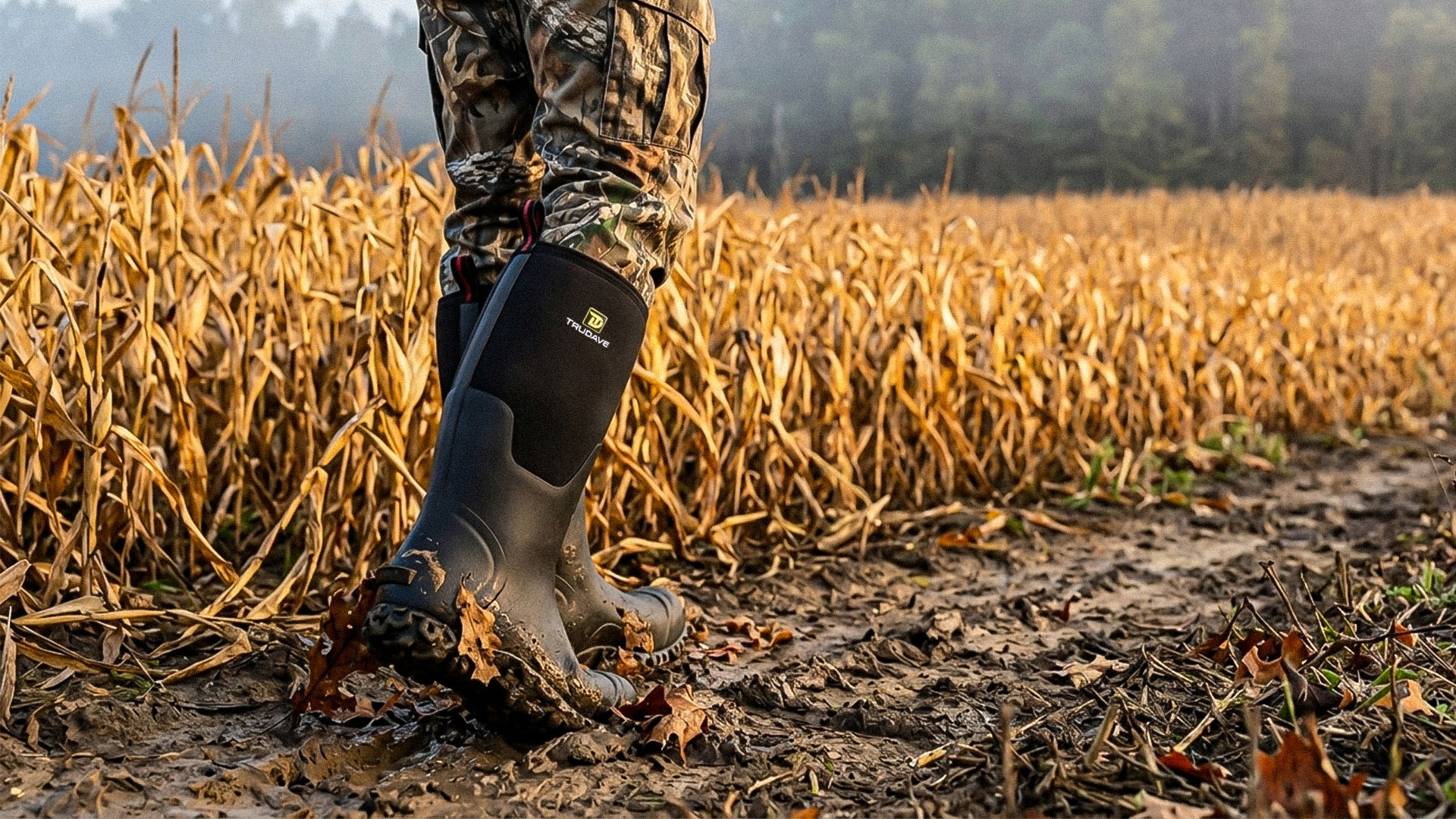
Hunters covering these environments may benefit from lightweight waterproof hunting boots for prairie grassland hunting that provide moisture protection, secure heel fit, and enough traction for muddy depressions while remaining comfortable for long walking days.
This is active hunting.
Weight matters.
Heavy Boots Add Up Over Miles
Prairie chicken hunting often involves covering a lot of ground.
A boot that feels slightly heavy at the vehicle can feel dramatically heavier after several miles.
Choose insulation based on weather.
Avoid wearing extreme cold-weather footwear during mild conditions simply because the season occurs in fall.
The right boot balances:
- Weight
- Waterproofing
- Support
- Durability
Heel Fit Prevents Long-Day Problems
Rolling prairie creates constant small climbs and descents.
Poor heel fit can lead to:
- Friction
- Blisters
- Reduced confidence
Break boots in before the hunt.
Test them on uneven ground.
A long prairie day is not the ideal first use of new footwear.
Mud Around Low Spots Can Be Slick
Grasslands may hide muddy soil beneath vegetation.
After rain, watch for:
- Cattle trails
- Low swales
- Stock pond edges
- Vehicle ruts
Clay can pack into outsole tread.
Clean tread when needed.
A slip in flat-looking prairie can still produce a serious injury.
Badger Holes Are a Real Hazard
Prairie landscapes can contain badger holes and other burrows.
Tall grass may hide them completely.
Watch the ground.
Especially when:
- Following a dog
- Watching flushed birds
- Walking downhill
Do not sprint blindly after birds.
A single hole can end the day instantly.
Gopher and Prairie-Dog Holes Need Attention Too
Depending on region, smaller burrow systems may also be present.
They are easier to miss than large badger holes.
Keep steps controlled.
Stop when using binoculars.
Do not try to scan distant birds while walking through uneven terrain.
Glassing Can Save Enormous Energy
Prairie hunting is one of the best upland environments for binocular use.
Glass:
- Feeding fields
- Ridges
- Short-grass areas
- Open hilltops
Look for small groups of birds moving together.
At distance, they may appear as:
- Dark shapes
- Small upright heads
- Movement across stubble
Seeing birds first allows you to hunt strategically.
Without glassing, you may spend hours covering empty ground.
Roads Are Useful for Scouting
Gravel roads can help hunters evaluate large grassland landscapes.
Birds may sometimes be seen near:
- Road edges
- Field entrances
- Gravel areas
Use these sightings to understand movement.
Do not assume roadside birds can legally or safely be hunted from the road.
Check local regulations.
Use road access to gather information, then pursue birds correctly.
Gravel Can Attract Birds
Prairie chickens may use grit sources.
Areas with exposed gravel or bare soil can therefore deserve attention.
Look near:
- Rural roads
- Farm lanes
- Bare hillsides
- Field entrances
Combine grit availability with nearby food and cover.
A gravel spot surrounded by poor habitat is less useful than one sitting beside productive grassland.
Small Bare Patches Can Hold Feeding Birds
Prairie chickens do not necessarily need dense grass every minute of the day.
Shorter vegetation can provide easier feeding.
Look for natural openings within larger grass fields.
A patch created by:
- Grazing
- Soil differences
- Disturbance
may attract birds.
Then search the surrounding taller cover.
The bird may use both in one short period.
Lek Country Can Help You Understand the Landscape
Greater prairie chickens are known for traditional booming grounds or leks.
Spring lek activity is a famous part of prairie chicken biology.
However, fall hunting locations are not always the exact same places.
Still, known lek landscapes can reveal broader areas supporting strong prairie chicken populations.
Use this information carefully.
Avoid disturbing breeding activity during sensitive periods.
Fall hunting should focus on seasonal habitat and legal opportunity.
Habitat Around Leks Matters
A lek does not exist in isolation.
The surrounding landscape often contains:
- Nesting grass
- Feeding habitat
- Brood cover
- Winter habitat
Thinking at the landscape scale helps hunters understand why one region supports birds and another similar-looking region does not.
Good prairie chicken hunting depends on a functioning grassland system.
Brood Habitat Can Look Different From Adult Cover
Young birds require abundant insects and suitable structure.
Moisture, forbs, and varied vegetation can be important.
By fall, family groups may still reflect where good brood habitat existed earlier.
Look for grasslands containing:
- Forbs
- Insects
- Patchy structure
- Nearby feeding areas
A sterile-looking monoculture may not support the same bird numbers.
Small Wet Depressions Can Add Diversity
Prairie chickens are not wetland birds, but damp grassland pockets can increase plant and insect diversity.
Search the edges of:
- Seasonal wetlands
- Wet swales
- Grass around stock ponds
especially where surrounding prairie remains suitable.
The edge matters more than standing water.
Habitat diversity creates feeding opportunity.
Snow Changes Visibility and Food
Fresh snow provides valuable clues.
Tracks may reveal:
- Feeding movement
- Roosting areas
- Travel routes
Snow can also cover food.
Birds may move toward:
- Windblown ridges
- Exposed crop residue
- Short grass
- Areas where snow depth is lower
Follow current conditions.
Winter habitat can shift quickly after one storm.
Windblown Slopes Can Become Important
Strong prairie wind clears snow from exposed terrain.
That may uncover seeds and vegetation.
Birds can concentrate there during cold periods.
Glass these slopes before approaching.
The same openness that exposes food also allows birds to see hunters from long distance.
Use terrain whenever possible.
Deep Snow Can Concentrate Birds
When much of the landscape becomes difficult, birds may use fewer available feeding and loafing locations.
This can improve scouting efficiency.
But winter also increases energetic stress on wildlife.
Avoid excessive unnecessary disturbance.
Make deliberate hunts rather than repeatedly chasing the same group across severe-weather habitat.
Prairie Chickens Can Fly Far
A flushed group can cover significant distance.
Watch every bird.
Do not assume the hunt is over.
Mark where the group appears to land.
Use fixed landmarks:
- Fence corners
- Ridges
- Windmills
- Shelterbelts
- Field edges
Once birds settle, evaluate whether a second approach makes sense.
Do Not Immediately Chase a Long Flush
Running toward the landing area usually creates more pressure.
Pause.
Watch.
Plan.
Consider:
- Wind
- Terrain
- Distance
- Other access
The second approach should be smarter than the first.
Otherwise, the birds will simply repeat the same long flush.
Singles May Hold Better
If a group splits after flushing, individual birds or smaller groups can sometimes hold more tightly.
Mark separate landing areas.
Work them slowly.
Do not race from one location to another.
Scattered birds can create the closest opportunities of the day.
Pick One Bird During the Flush
A group flush can create visual confusion.
Focus on one bird.
Mount smoothly.
Maintain a safe background.
Do not fire into the group without a clear target.
Controlled shooting improves both accuracy and ethical outcomes.
Shot Distance Discipline Matters
Open country makes long shots tempting.
Avoid stretching range because birds flushed early.
Better strategy is preferable to longer shooting.
If birds are too far, watch them land.
Build another approach.
The goal is bringing birds into a responsible range, not proving how far a shotgun can reach.
Background Awareness Is Critical
Rolling grasslands can hide:
- Hunters
- Livestock
- Roads
- Buildings
behind low ridges.
Never shoot low birds toward terrain you cannot see beyond.
Open prairie is not always open from the projectile’s perspective.
Know where partners and dogs are before firing.
Multiple Hunters Need Clear Spacing
A group of hunters can cover prairie efficiently, but spacing matters.
Establish:
- Direction
- Distance between hunters
- Shooting zones
- Dog locations
Avoid converging on one point when birds are likely nearby.
A coordinated line is safer and covers more ground.
Blaze Orange Can Improve Visibility
Grasslands can hide a hunter when someone drops into a shallow depression.
Appropriate blaze orange helps partners maintain awareness.
Follow legal requirements.
Visibility does not replace communication.
But it gives everyone another safety margin.
Dogs Need Water in Open Prairie
Bird dogs can cover huge amounts of ground.
Wind and cool temperatures can hide dehydration.
Carry water.
Offer breaks.
Do not rely solely on stock tanks or ponds.
Some may be:
- Dry
- Poor quality
- Far from the actual route
Dog hydration needs to be planned before the hunt.
Check Dogs for Seeds and Burrs
Grasslands can be hard on dogs.
Inspect:
- Paws
- Eyes
- Ears
- Coat
for:
- Grass awns
- Burrs
- Seeds
- Cuts
A small problem discovered early is easier to manage.
Do not wait until the dog is limping badly.
Porcupines Can Appear Around Shelterbelts
Depending on region, dogs may encounter porcupines in brushy or wooded edges.
Maintain control around shelterbelts and old farm sites.
Know where veterinary care is available.
Remote prairie does not mean hazard-free terrain.
Barbed Wire Requires Constant Attention
Grassland hunting often means crossing fences.
Use gates when available and permitted.
Never damage fences.
Watch dogs carefully around wire.
Old fence strands may lie hidden in grass.
Communicate before crossing.
Safe firearm handling is essential.
Respect Livestock
Native prairie and ranchlands are often working landscapes.
Hunters should avoid:
- Chasing cattle
- Blocking livestock routes
- Leaving gates wrong
- Shooting toward animals
- Disturbing water infrastructure
Ask landowners about livestock locations.
Good hunting behavior protects access.
Private Grassland Permission Can Be Valuable
Many remaining grasslands are privately managed.
Build relationships respectfully.
When requesting access, be clear about:
- Number of hunters
- Dogs
- Vehicles
- Timing
If permission is granted:
- Follow parking instructions
- Avoid wet roads
- Leave gates as found
- Pick up shells
- Thank the landowner
Habitat conservation and landowner relationships are deeply connected in prairie country.
Public Grasslands Can Be Excellent Too
Public grasslands, wildlife management areas, and other conservation lands may offer prairie chicken opportunity where populations and regulations allow.
Search landscapes containing:
- Large connected grasslands
- Appropriate grazing
- Nearby feeding habitat
- Limited woody encroachment
Public-land birds may receive pressure.
Use habitat knowledge rather than simply walking farther.
Woody Encroachment Can Reduce Grassland Quality
Prairie chickens depend on open landscapes.
Excessive expansion of trees and tall woody cover can alter grassland habitat and predator dynamics.
Healthy prairie management often focuses on maintaining open grassland systems.
Hunters should understand that “more cover” does not always mean “better habitat.”
For prairie chickens, open grassland character matters.
Conservation Is Central to Prairie Chicken Hunting
Prairie chicken populations depend on large connected habitats.
Threats can include:
- Habitat conversion
- Fragmentation
- Woody encroachment
- Loss of native grass
- Inappropriate land management
Hunters benefit directly from conservation programs protecting grasslands.
Supporting habitat work helps preserve both wildlife and future hunting opportunity.
Without grassland, there is no prairie chicken hunting.
Regulations Can Be Restrictive
Prairie chicken hunting opportunities may be limited by state, region, population status, season, or permit system.
Some areas may have:
- Short seasons
- Limited zones
- Special permits
- Low bag limits
- Closed populations
Never assume prairie chickens are legally huntable everywhere they occur.
Verify current official regulations before planning a hunt.
Species Identification Matters
Prairie chickens may overlap geographically with other grouse species in some regions.
Hunters should understand:
- Body shape
- Plumage
- Tail
- Habitat
- Range
before hunting.
Positive identification is required.
Do not shoot simply because a grouse-like bird flushed from grass.
Current Wildlife Information Is Essential
Before hunting, confirm:
- Open areas
- Season dates
- Bag limits
- Permit requirements
- License requirements
- Shooting hours
- Public-land rules
Use current wildlife-agency information.
Prairie grouse regulations can change with population conditions.
Old forum posts are not enough.
Common Prairie Chicken Hunting Mistakes
Treating Every Grass Field the Same
Vegetation structure and food determine bird use.
Ignoring Grazing Transitions
Different grass heights can create high-value habitat.
Walking Without Glassing
Open-country optics can save miles.
Chasing Wild-Flushing Birds Directly
Use terrain and wind for a smarter second approach.
Wearing Heavy or Leaky Boots
Prairie hunting rewards lightweight waterproof mobility.
Ignoring Wind
Wind changes bird location, dog performance, and shooting.
Taking Long Shots Because the Landscape Is Open
Better positioning is the answer.
Failing to Check Regulations Carefully
Prairie chicken seasons may be highly localized.
Frequently Asked Questions
What habitat do greater prairie chickens prefer?
They are strongly associated with open grassland landscapes containing suitable vegetation structure, food, and large connected prairie habitat.
Is CRP good for prairie chicken hunting?
CRP can provide useful habitat when grass structure, plant diversity, surrounding land use, and local bird populations are suitable.
Do prairie chickens use agricultural fields?
They may use harvested grain and other agricultural feeding areas when good grassland security cover exists nearby.
Is prairie chicken hunting difficult?
It can be. Open terrain and flock behavior allow birds to detect hunters early, particularly later in the season.
Can prairie chickens be hunted without dogs?
Yes. Glassing, scouting, understanding feeding patterns, and methodically covering high-quality grassland can be effective without a dog.
What boots are best for prairie chicken hunting?
Lightweight waterproof hunting boots with comfortable long-distance fit, secure heel retention, and good traction for wet grass, mud, and rolling prairie are a practical choice.
Final Thoughts
Prairie chicken hunting teaches hunters to stop thinking in acres.
A huge grassland can look identical from the road.
The birds know it is not.
One ridge has better visibility.
One pasture has better grass height.
One edge has better food.
One low swale blocks the wind.
One patch of CRP has exactly the structure the covey wants.
That is where the hunt begins.
Glass first.
Read the wind.
Study grazing pressure.
Walk transitions rather than random miles.
Watch every group until it lands.
Protect your feet from wet grass and mud without carrying unnecessary weight.
Respect grasslands, livestock, and landowners.
And when a flock suddenly erupts from what looked like ordinary prairie, stop and study the ground.
The birds just showed you the difference between grass and habitat.
