
At first, snipe hunting can feel completely unpredictable.
A hunter walks across a wet meadow that looks perfect.
Soft mud.
Short grass.
Shallow water.
No birds.
Then twenty minutes later, one small bird erupts from a muddy patch beside his boots, rockets into the air, twists sideways, and disappears before the shotgun ever reaches his shoulder.
A second bird flushes fifty yards farther ahead.
Then three more rise from a tiny strip of saturated ground that looked no different from the rest of the field.
That is what makes Wilson’s snipe hunting so interesting.
The birds appear random until hunters begin noticing the details.
Water depth.
Soil softness.
Vegetation height.
Food availability.
Mud exposure.
Recent rainfall.
Small depressions.
Edges between wet and dry ground.
Snipe do not simply occupy “wet places.”
They use very specific pieces of wet habitat that allow them to probe soft soil for food while maintaining enough cover and open space to detect danger.
Once hunters understand those preferences, an enormous marsh becomes a collection of much smaller high-probability areas.
Wilson’s Snipe Are True Wetland Birds
Wilson’s snipe are migratory shorebirds found across much of North America during various parts of the year.
Hunters commonly encounter them around:
- Wet meadows
- Marsh edges
- Shallow wetlands
- Muddy pasture
- Irrigated fields
- Creek margins
- Flooded grasslands
- Agricultural drainage
- Moist-soil areas
The important word is shallow.
Snipe are not usually looking for deep water.
They want soft ground where their long bills can probe for invertebrates.
A wetland that looks excellent for ducks may be too deep.
A muddy patch that looks insignificant to a duck hunter may be ideal snipe habitat.
Soft Soil Is More Important Than Open Water
Snipe feed by probing wet soil and mud.
That means hunters should think about what is happening under the birds’ feet.
Productive ground often includes:
- Saturated mud
- Soft organic soil
- Very shallow standing water
- Damp pasture
- Exposed wet sediment
The best habitat allows birds to feed without swimming.
If every step puts the hunter into knee-deep water, the area may be too deep.
If the ground is hard and dry, birds may have little reason to stay.
Look for the middle ground.
Wet enough to probe.
Firm enough to stand.
Recent Rain Can Create New Habitat Overnight
One of the most useful things to understand about snipe hunting is how quickly habitat changes.
A pasture that held no birds last week may become productive after several days of rain.
Water collects in:
- Low depressions
- Tractor ruts
- Drainage swales
- Pond margins
- Flooded field corners
Soft soil expands the available feeding area.
Migrating birds can discover these temporary wetlands quickly.
This is why hunters should revisit places after weather changes.
A field is not permanently good or bad.
Its value can change with water.
Too Much Rain Can Push Birds Elsewhere
Rain helps until water becomes excessive.
If a shallow meadow becomes deeply flooded, snipe may shift toward the new shoreline.
The productive zone moves.
Instead of hunting yesterday’s low spot, follow the water edge.
Look for:
- Newly exposed mud
- Shallow margins
- Grass islands
- Slight rises
- Flooded field edges
The birds may still be on the property.
They simply moved twenty or fifty yards with the water.
Falling Water Can Be Excellent
As water recedes, fresh feeding ground appears.
Soft mud becomes exposed.
Invertebrates remain accessible.
Snipe may concentrate along the shrinking shoreline.
After a wet period, check wetlands as they begin drying.
Look for areas where water has recently pulled away from:
- Short grass
- Sedge
- Mud flats
- Pasture edges
- Shallow depressions
A narrow band of fresh mud can hold more birds than a much larger flooded area.
Vegetation Height Matters
Snipe need cover, but they also need room to move and feed.
Extremely dense tall vegetation can make feeding difficult.
Completely bare mud may expose birds too much.
Productive cover often includes:
- Short grass
- Sedges
- Sparse rushes
- Low wetland plants
- Patchy vegetation
Think about ankle- to knee-high structure rather than shoulder-high cattails.
A marsh can look beautifully wild and still be poor snipe habitat if the vegetation is too dense.
Hunt the Transition
The best snipe cover is often an edge.
Search where:
- Wet grass meets shallow water
- Mud meets vegetation
- Pasture meets marsh
- Drainage meets field
- Creek bank meets wet meadow
These transitions provide multiple feeding conditions close together.
Instead of walking straight through the center of a wetland, work parallel to the changing moisture line.
You are trying to keep one boot near the type of ground birds want.
Wet Pastures Can Be Surprisingly Productive
Snipe do not require wilderness.
Agricultural pasture can become excellent habitat when moisture creates soft feeding ground.
Look for:
- Low cattle pastures
- Seasonal flooding
- Irrigated corners
- Muddy edges around stock ponds
- Drainage areas
- Shallow hoof depressions holding water
Livestock can create uneven ground and vegetation structure that benefits feeding birds.
However, working farms require permission and caution.
Do not disturb cattle, damage fencing, or interfere with agricultural operations.
Hoof-Printed Mud Can Hold Birds
Cattle tracks create small pockets of water and exposed mud.
In a wet pasture, these disturbed areas may concentrate food.
Snipe sometimes use the messy ground hunters instinctively avoid.
Look for patches containing:
- Multiple hoof prints
- Soft mud
- Short vegetation
- Standing water only inches deep
Walking can be difficult.
Bird habitat is not designed for human comfort.
That is often a clue that you are looking in the right place.
Creek Floodplains Deserve Attention
Small rivers and creeks frequently create snipe habitat beyond the main water channel.
After flooding, nearby low ground may remain saturated.
Search:
- Gravelly mud edges
- Wet grass benches
- Oxbow margins
- Flooded flats
- Side channels
- Shallow drainage pockets
Do not focus only on the creek itself.
The best feeding ground may sit thirty yards away where floodwater softened the soil but did not remain deep.
Irrigation Can Create Predictable Habitat
In agricultural regions, irrigation can maintain wet ground even during otherwise dry periods.
Potential snipe areas include:
- Irrigation ditches
- Flood-irrigated pasture
- Wet field margins
- Drainage returns
- Shallow seep areas
Patterns can change with irrigation schedules.
A field may become productive shortly after water moves through it.
Always obtain permission.
Never modify irrigation equipment or water-control structures.
You are a guest on working land.
Snipe Often Hold Tight
One reason snipe hunting can surprise beginners is how close birds may allow hunters to approach.
Their coloration blends extremely well with wet grass and mud.
A snipe may sit motionless until the hunter is only a few yards away.
Then it explodes.
This means successful hunters walk slowly enough to thoroughly cover productive ground.
Do not assume a birdless-looking patch is actually empty.
Keep moving.
The flush often provides the first evidence that a bird was there.
Their Camouflage Is Excellent
A stationary snipe can disappear against:
- Brown grass
- Mud
- Dead vegetation
- Shallow water shadows
Even when a bird lands nearby, finding it again can be difficult.
Use binoculars when appropriate.
Look for:
- Head movement
- Body shape
- A dark eye
- Slight vegetation movement
But in most walk-up hunting situations, hunters locate birds through flushes rather than spotting them on the ground.
Walk a Deliberate Pattern
Random wandering wastes energy.
When hunting a wet meadow, establish a systematic route.
You might work:
- The shallow-water edge.
- A strip of short wet grass.
- The center mud pockets.
- The opposite edge.
This allows you to cover habitat without repeatedly walking the same ground.
On a large property, concentrate on the best moisture rather than trying to cover every acre.
Zigzagging Can Trigger More Flushes
Snipe may remain tight if a hunter walks directly past them.
A moderate zigzag pattern covers more ground and approaches birds from changing angles.
Do not exaggerate the pattern so much that the hunt becomes exhausting.
Focus zigzags around:
- Mud patches
- Vegetation changes
- Low depressions
- Shallow pools
The goal is increasing coverage of high-probability habitat.
Pause After a Flush
When one snipe flushes, do not immediately march forward.
There may be more birds nearby.
Stop.
Reload safely if necessary.
Watch the surrounding cover.
A small area may hold several birds spaced apart.
The first flush may make nearby birds nervous enough to move.
Give yourself time to recognize additional movement.
Multiple Birds May Use the Same Pocket
Finding one snipe often means the habitat conditions are correct.
Work the immediate area thoroughly.
Ask:
- How wet is the soil?
- How tall is the vegetation?
- Is the water shallow?
- Is there fresh mud?
Then look for similar habitat elsewhere on the property.
Birds may not be evenly distributed.
They often cluster where conditions are best.
Snipe Flight Is Fast and Erratic
Snipe have a reputation for challenging shooting.
Once flushed, they may:
- Accelerate quickly
- Zigzag
- Climb
- Change direction
This makes them exciting upland-style targets.
The key is remaining controlled.
Do not fire simply because the bird is moving fast.
Mount smoothly.
Identify the bird.
Confirm the background.
Take a responsible shot within your ability.
Do Not Rush the Gun Mount
The sudden flush creates adrenaline.
Hunters often hurry and shoot before the shotgun is properly mounted.
Instead:
See the bird.
Mount smoothly.
Track the direction.
Then shoot if the opportunity is safe.
The bird may be fast, but a rushed shot is usually slower in the long run because it leads to misses and poor follow-up decisions.
Follow-Through Matters
Snipe often change direction after flushing.
Stopping the shotgun during the trigger pull is a common reason for misses.
Maintain smooth movement through the shot.
Practice before the season on suitable moving targets at a shooting facility.
Snipe hunting is much more enjoyable when basic shotgun handling feels automatic.
Identification Is Critical
Wetlands can hold many bird species.
Before firing, hunters must positively identify legal game.
Snipe habitat may also contain:
- Killdeer
- Sandpipers
- Rails
- Other shorebirds
- Small waterfowl
Do not shoot at every small brown bird leaving wet grass.
Learn Wilson’s snipe characteristics before hunting.
Pay attention to:
- Body shape
- Long bill
- Flight
- Wing pattern
- Calls
Migratory bird identification is part of responsible hunting.
Never Rely Only on Habitat for Identification
Just because a bird flushed from classic snipe habitat does not mean it is a snipe.
Other birds use the same wetlands.
Positive identification must occur before the shot.
If uncertain, let the bird go.
There will always be another opportunity.
There is no ethical reason to guess.
Dogs Can Help but Are Not Necessary
Snipe can be hunted successfully without a dog.
The habitat often allows hunters to walk birds up directly.
However, a trained dog can help:
- Locate birds
- Cover wet grass
- Recover downed birds
Dogs must be controlled carefully in wet environments.
Potential hazards include:
- Deep mud
- Hidden ditches
- Wire
- Cold water
- Snakes in warm climates
A dog should not be allowed to charge blindly into every water-filled depression.
Pointing Dogs Can Produce Exciting Hunts
A good pointing dog may locate snipe in wet meadow habitat.
Scent conditions around damp ground can vary.
Watch subtle dog behavior.
A bird may be sitting extremely close.
Approach carefully.
Keep the dog steady enough that the flush occurs safely and within controlled shooting distance.
Wet ground can make birds surprisingly tight.
Retrieval Can Be Difficult Without a Dog
A small bird falling into brown wet grass can disappear instantly.
Mark every fall immediately.
Use fixed landmarks.
Walk directly toward the location.
Do not keep shooting at additional birds while forgetting the first one.
Look for:
- Feathers
- Disturbed grass
- Blood
- The bird’s final flight direction
Good recovery discipline is especially important with small migratory birds.
Wet Meadow Footwear Matters
A snipe hunt can be deceptively wet.
Hunters may spend hours walking through:
- Mud
- Wet grass
- Shallow standing water
- Saturated pasture
- Drainage channels
- Soft marsh edges
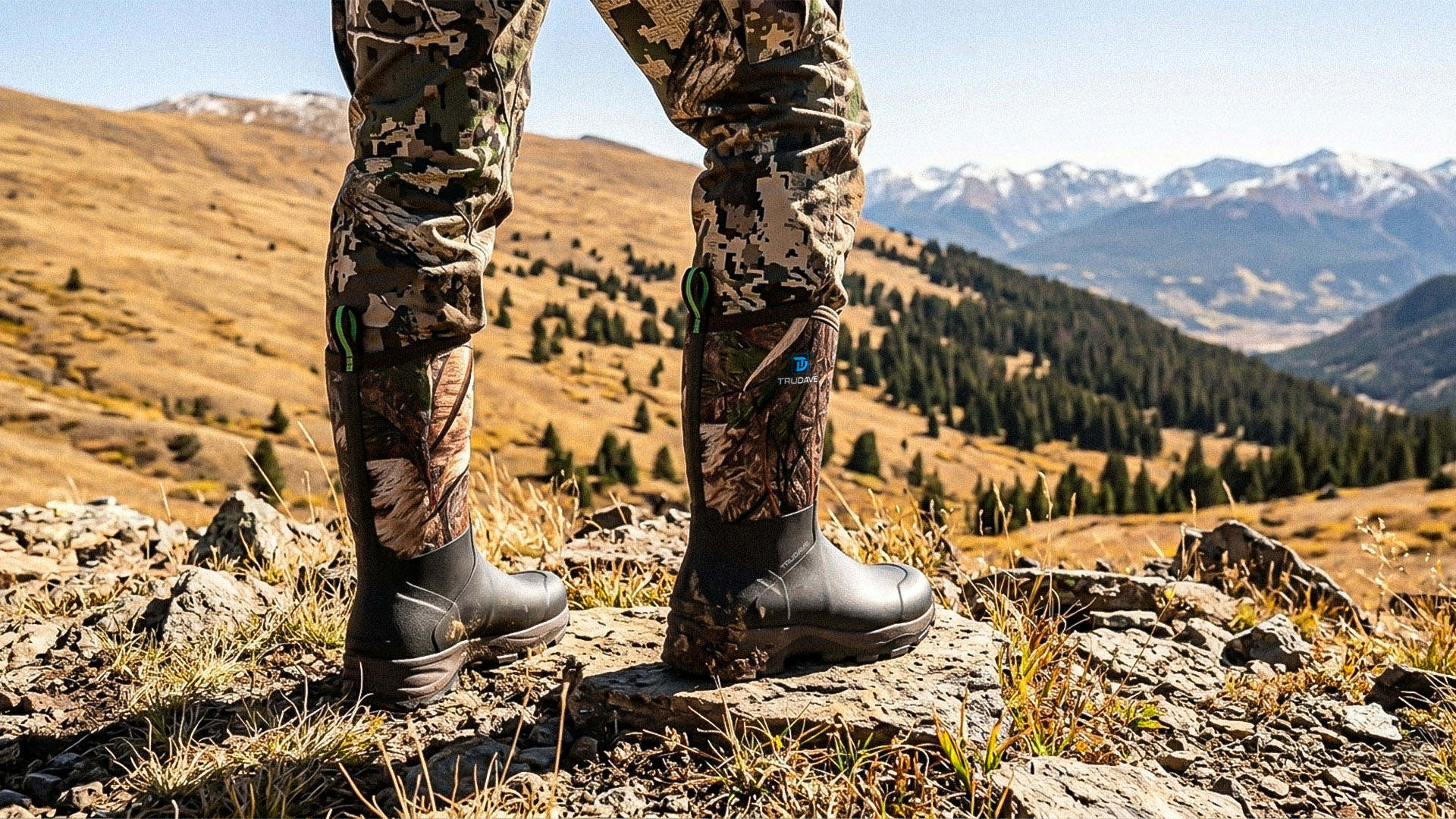
Hunters covering this environment may benefit from waterproof hunting boots for wet meadow bird hunting that provide secure heel retention, dependable mud traction, and sufficient waterproof protection while remaining light enough for constant walking.
Snipe hunting is active.
Heavy footwear becomes tiring.
But boots that leak can make the hunt uncomfortable within the first thirty minutes.
Boot Height Should Match Water Depth
If most habitat contains only wet grass and shallow mud, a moderate-height waterproof hunting boot may be enough.
If the hunt involves:
- Deeper puddles
- Flooded pasture
- Shallow marsh channels
additional height becomes useful.
Study the property before choosing footwear.
There is little benefit in carrying extra boot weight if the water never reaches the ankle.
There is also little benefit in lightweight footwear if every productive patch is six inches deep.
Mud Suction Can Be Exhausting
Soft wetland mud grabs footwear.
Poorly fitted boots may slip at the heel.
That creates:
- Blisters
- Extra fatigue
- Unstable steps
A secure fit matters.
Use shorter strides through soft ground.
Avoid the deepest mud when an equally productive firmer edge exists.
Saving energy keeps hunters focused longer.
Waterproof Boots Still Need Breathability
Wetland hunting can occur during mild or warm weather.
Heavy waterproof footwear may trap sweat.
Choose socks and footwear appropriate for temperature.
Moisture inside the boot can become almost as uncomfortable as water entering from outside.
The ideal system balances:
- Waterproof protection
- Weight
- Breathability
- Fit
Gaiters Can Help With Wet Vegetation
Gaiters may protect against water running down pants into boots.
They can also reduce:
- Seeds
- Mud
- Grass debris
entering footwear.
In warm conditions, choose breathable designs.
Snipe hunters often walk continuously.
Equipment that traps excessive heat can become uncomfortable quickly.
Pasture Mud Hides Holes
Wet agricultural ground can contain:
- Hoof holes
- Drainage cuts
- Tractor ruts
- Soft banks
- Hidden ditches
Watch each step.
Do not stare at the sky while walking across uneven mud.
When birds flush, stop moving before focusing completely on the target.
A twisted ankle ends the hunt faster than a missed bird.
Irrigation Ditches Can Be Deeper Than They Look
Grass often hides ditch edges.
A narrow drainage that appears shallow can drop suddenly.
Use known crossings.
Test uncertain ground.
Never jump blindly because birds flushed to the other side.
A snipe can cross a ditch much more easily than a hunter carrying a shotgun.
Waders Are Sometimes More Than You Need
Chest waders can be useful in deeper wetland situations, but many snipe habitats involve only shallow water.
Waders can become:
- Hot
- Heavy
- Restrictive
during long walking hunts.
Tall waterproof hunting boots may offer greater mobility in shallow wet meadows.
Use the least cumbersome equipment that safely handles the actual water depth.
Rain Gear Should Remain Mobile
Light rain can be productive for wetland bird hunting, but bulky rain clothing may restrict shotgun movement.
Choose outerwear that allows:
- Walking
- Safe gun mounting
- Bending
- Stepping over ditches
Quiet fabric is useful, though snipe hunting usually involves less close-range stealth than some big-game pursuits.
Comfort keeps the hunter in productive habitat longer.
Wind Can Change Bird Location
Strong wind affects wetland conditions.
Birds may favor:
- Protected field edges
- Lower depressions
- Vegetation pockets
- Leeward marsh sections
Wind also makes shooting more difficult.
Watch where birds flush.
If every snipe appears from one protected side, focus your search there.
Let the birds tell you what the weather changed.
Cold Fronts Can Bring New Birds
As migratory birds move seasonally, weather systems can change local numbers.
A wet meadow that produced only a few birds may suddenly hold more after favorable migration conditions.
Keep checking productive habitat throughout the season.
Do not assume a field is finished because one hunt was slow.
Migratory bird hunting rewards repeated scouting.
Pressure Can Move Birds Within a Wetland
After being hunted, snipe may relocate to another portion of the marsh or meadow.
They do not always leave the entire area.
Check:
- More distant corners
- Wetter pockets
- Adjacent fields
- Creek edges
- Areas across drainage ditches
Avoid repeatedly walking the exact same line.
Rotate sections and let pressured habitat rest.
Small Wetlands Can Be Excellent
Do not ignore tiny pieces of habitat.
A roadside-sized depression on legal private property may hold birds if it has:
- Soft mud
- Short vegetation
- Shallow water
- Low disturbance
A ten-acre wet meadow may be easier and more productive than a thousand-acre marsh filled with deep water and tall cattails.
Snipe habitat is about quality, not size.
Public Wildlife Areas Can Hold Snipe
Wetland management areas may provide excellent habitat.
Look for:
- Moist-soil units
- Shallow impoundments
- Drawdown areas
- Wet grassland
- Mud flats
However, these areas may also host:
- Duck hunters
- Goose hunters
- Rail hunters
- Birdwatchers
Know specific area rules.
Respect other users.
Do not walk directly through an occupied waterfowl setup.
Waterfowl Season Can Change Access
Snipe seasons may overlap duck and goose seasons.
Some managed wetlands restrict:
- Access times
- Parking
- Ammunition
- Hunting zones
- Entry routes
Check the property’s current regulations before arriving.
General statewide rules may not tell the whole story.
Area-specific restrictions can be just as important.
Non-Toxic Shot Rules May Apply
Ammunition requirements can vary by location and type of wetland.
Some areas require non-toxic shot for hunting migratory birds or for all hunting on certain managed lands.
Always verify current requirements before the hunt.
Do not assume ammunition legal on private upland ground is automatically legal on every wetland.
Migratory Bird Rules Matter
Wilson’s snipe are migratory game birds.
Hunters should verify current federal and state requirements involving:
- Season dates
- Daily bag limits
- Possession limits
- Shooting hours
- Hunting licenses
- HIP requirements
- Shotgun capacity
- Ammunition rules
- Public-land regulations
Use current official wildlife-agency information.
Do not rely on an older hunting article for legal guidance.
Carry Fewer Things
Snipe hunting involves constant walking.
Heavy packs become annoying quickly.
A practical setup may include:
- Ammunition
- Water
- License
- Small game bag
- Lightweight rain layer
- Basic first aid
- Navigation
- Dog water if applicable
Leave unnecessary gear at the vehicle.
Mobility is one of the pleasures of this style of hunting.
Protect Electronics From Mud
Wetland mud gets everywhere.
Keep phones, keys, GPS devices, and other electronics in protected pockets or waterproof storage.
Do not place equipment directly on wet ground during breaks.
One unexpected step into a deep hole can soak everything at waist level.
Small waterproof bags can prevent large problems.
Clean Boots After the Hunt
Wet meadow mud can pack into outsole tread.
That reduces traction if allowed to dry and harden.
After hunting:
- Rinse off mud
- Remove vegetation
- Dry footwear properly
- Inspect tread
- Follow manufacturer care guidance
Wetland hunting is hard on gear.
Basic maintenance extends useful life.
Clean Firearms After Wet Hunts
Moisture, mud, and wet vegetation can reach metal surfaces easily.
After the hunt, safely inspect and clean firearms according to manufacturer instructions.
Pay attention to:
- Barrel exterior
- Action
- Sling hardware
- Choke area
- Any location exposed to mud
Never allow mud to enter the muzzle.
If the barrel contacts the ground, stop and safely inspect it before continuing.
Common Snipe Hunting Mistakes
Hunting Water That Is Too Deep
Snipe usually prefer shallow wet ground and soft mud.
Walking Every Acre Equally
Focus on moisture and vegetation transitions.
Ignoring Small Muddy Pockets
Tiny feeding zones may hold several birds.
Walking Too Fast
Snipe can hold very tight.
Shooting Before Positive Identification
Wetlands contain many non-game shorebirds.
Wearing Heavy or Leaky Boots
Snipe hunting requires lightweight mobility plus reliable waterproof protection.
Failing to Mark Downed Birds
Small birds disappear easily in wet grass.
Assuming One Empty Hunt Means the Habitat Is Bad
Migration and water conditions change constantly.
Ignoring Managed-Wetland Regulations
Area rules may differ significantly from surrounding land.
Frequently Asked Questions
Where do you find Wilson’s snipe?
Look for wet meadows, shallow marsh edges, muddy pasture, creek floodplains, moist-soil wetlands, and other areas with soft ground and short vegetation.
Is snipe hunting good after rain?
It can be excellent because rain creates soft feeding ground and temporary wet habitat. Extremely heavy rainfall may push birds toward shallower new edges.
Do snipe live in deep marshes?
They are more strongly associated with shallow wet ground and mud where they can probe for food than with deep open water.
Can you hunt snipe without a dog?
Yes. Walking productive wet meadow habitat can flush birds effectively. A trained dog can help locate and recover birds but is not required.
Why are snipe hard to shoot?
Their flush can be sudden, fast, and erratic, with quick directional changes that reward smooth shotgun handling and follow-through.
What boots are best for snipe hunting?
Lightweight waterproof hunting boots with secure fit, good mud traction, and sufficient height for shallow wet ground are useful for long walk-up hunts.
Final Thoughts
Snipe hunting looks random only from a distance.
Once you understand the habitat, patterns begin to appear.
Soft mud matters.
Shallow water matters.
Short vegetation matters.
Fresh rain matters.
A three-inch change in water depth may matter.
The birds are not scattered across every wet acre.
They are choosing the places where feeding is easiest and cover is good enough.
Walk the transitions.
Watch the waterline.
Revisit fields after rain.
Slow down when the mud becomes soft and the grass becomes short.
Identify every bird before shooting.
Wear footwear that lets you stay mobile when the entire landscape is wet.
And when a snipe suddenly explodes from beside your boots and begins zigzagging across the marsh, remember the patch it came from.
That piece of muddy ground is telling you exactly what to look for next.
