
Fresh snow changes predator country overnight.
A creek bottom that looked empty yesterday suddenly becomes covered in information.
Rabbit tracks cross the brush.
Deer trails cut through the timber.
Coyotes leave long, purposeful lines across open ground.
And somewhere near a rocky bank or brushy drainage, a round cat track appears.
No obvious claw marks.
Compact shape.
A trail that seems to move quietly from cover to cover.
Bobcat sign can be surprisingly obvious in snow.
The animal itself usually is not.
Bobcats survive by using terrain, vegetation, patience, and camouflage. They may spend long periods moving through creek corridors, brush piles, rocky edges, clear-cuts, young timber, and rabbit-rich cover without ever exposing themselves for more than a few seconds.
That makes winter one of the most interesting times to learn how they use a landscape.
Snow does not suddenly make bobcats easy.
It simply reveals where they have been.
The hunter’s job is figuring out why.
Start With Prey, Not the Predator
Bobcats go where food is available.
That sounds obvious, but many hunters start by looking for cat tracks instead of asking where the prey lives.
Productive bobcat habitat often contains strong populations of:
- Rabbits
- Hares
- Squirrels
- Rodents
- Ground-feeding birds
- Other small prey
Look for habitat where prey and security cover overlap.
Examples include:
- Brushy creek bottoms
- Young clear-cuts
- Overgrown field edges
- Beaver wetlands
- Rocky draws
- Thick regenerating timber
- Brush piles
- Cedar pockets
- Logging-road edges
A beautiful remote forest with little prey sign may hold fewer bobcats than a rough creek corridor filled with rabbit tracks.
Find the food chain first.
Rabbit Tracks Are One of the Best Clues
Fresh snow makes prey abundance easy to evaluate.
If one drainage is covered in rabbit tracks while another has almost none, the first deserves more attention.
Look for rabbit activity around:
- Briar patches
- Brush piles
- Young conifers
- Alder
- Creek edges
- Old logging cuts
- Field borders
Bobcats do not need to follow every rabbit trail.
But a landscape consistently holding prey gives them a reason to patrol it.
When bobcat tracks appear through the same cover, you begin to see a pattern rather than a random crossing.
Bobcat Tracks Look Different From Coyote Tracks
Bobcat tracks are generally rounder than typical canine tracks.
Depending on snow conditions, you may notice:
- Rounded overall shape
- Four toe impressions
- Broad heel pad
- Little or no obvious claw marking
- Compact stride
Coyotes often leave a more oval track with a straighter, efficient travel pattern.
But snow depth, melting, crust, and animal movement can distort every print.
Do not identify a predator from one poor track.
Follow the trail far enough to see repeated prints and overall movement.
Pattern matters more than one perfect photograph-quality track.
Freshness Is Everything
A bobcat track from three days ago proves a cat used the area.
A track from this morning may tell you where the cat still is.
Study:
- Track edges
- New snowfall inside the print
- Wind drift
- Ice formation
- Tracks crossing vehicle or human prints
- Sun exposure
- Snow kicked around the edges
Fresh tracks often appear sharper and cleaner.
Older tracks become rounded or filled.
Always compare prints in several locations.
A shaded print may look much fresher than the same trail crossing a sunny opening.
Bobcats Often Travel Cover Edges
Bobcats are comfortable moving through dense cover, but they often use edges because edges concentrate prey.
Productive transitions include:
- Timber to field
- Brush to creek
- Clear-cut to mature woods
- Marsh to dry ground
- Cedar to hardwood
- Rock to brush
These locations give a bobcat several advantages.
It can hunt along the edge.
Stay close to escape cover.
Watch openings.
Move between habitat types.
When fresh tracks repeatedly parallel an edge rather than crossing randomly, that edge may be part of a regular hunting route.
Creek Bottoms Are Natural Travel Corridors
Creeks connect habitats.
They also create thick vegetation, prey concentration, water, steep banks, and low travel routes.
Bobcats may use creek systems to move between:
- Bedding cover
- Hunting areas
- Rocky terrain
- Field edges
- Beaver ponds
- Timber patches
After snow, inspect both sides of the drainage.
The cat may walk:
- On the bank
- On a frozen edge
- Through brush above the creek
- Across logs
- Along old animal trails
Do not assume the obvious creek bottom trail is the only route.
Cats often choose slightly elevated edges where travel is easier.
Beaver Wetlands Can Be Excellent Habitat
Beaver activity creates diverse habitat.
Flooded timber.
Brush.
Young willow.
Open water.
Rabbit cover.
Small mammals.
All of this can increase prey availability.
Bobcats may hunt the margins of beaver ponds and old flooded areas.
Look for tracks around:
- Beaver dams
- High banks
- Willow edges
- Abandoned lodges
- Frozen channels
- Brushy pond margins
Do not walk onto uncertain ice because predator tracks cross it.
A bobcat weighs far less than a hunter.
Animal tracks are not proof of safe ice.
Clear-Cuts Can Produce Excellent Winter Sign
Young logging cuts often contain dense regenerating vegetation and abundant small-game habitat.
The thick structure attracts prey.
Bobcats may patrol the edges.
Look for tracks where:
- Logging roads enter the cut
- Brush meets mature timber
- Creek drainages intersect regeneration
- Slash piles create cover
- Young conifers meet open snow
A mature forest can look beautiful.
A messy regenerating cut may contain more food.
Predators usually care about prey, not scenery.
Brush Piles Are Worth Checking
Large piles of logging debris, storm-damaged limbs, or farm brush can hold rabbits and rodents.
Bobcats may investigate them regularly.
Fresh snow around a brush pile may show:
- Rabbit tracks
- Bobcat tracks
- Sitting impressions
- Repeated crossings
Do not crawl into the pile.
Instead, study trails approaching and leaving it.
The best information often lies on the perimeter.
Rocky Terrain Can Attract Bobcats
Bobcats often use rocky habitat for travel, shelter, observation, and security.
Useful terrain may include:
- Rock ledges
- Small cliffs
- Boulders
- Talus edges
- Canyon walls
- Rocky creek banks
A rocky ridge beside rabbit-rich brush can be particularly interesting.
Look for tracks where the rock forces animals through narrow snowy gaps.
Snow may not hold prints on exposed rock, so focus on soft ground immediately before and after the feature.
Tracks That Disappear Into Rock Are Not Gone
A common tracking mistake is assuming the cat vanished.
It did not.
The snow simply stopped recording it.
If tracks end at rock:
- Stop.
- Look ahead for the most natural route.
- Search for snow pockets.
- Check both sides of the terrain feature.
- Look for the trail where soft ground resumes.
Do not wander randomly and destroy sign.
Cats often choose efficient routes through rocky cover.
Think about where you would travel if you wanted to remain concealed.
Bobcats Can Double Back
Predator trails are not always straight.
A hunting bobcat may:
- Circle brush
- Inspect rabbit cover
- Reverse direction
- Pause near logs
- Follow one edge, then cross another
This is different from a coyote traveling efficiently across several miles.
When the bobcat trail begins weaving through high-prey habitat, the animal may be actively hunting rather than simply traveling.
That tells you the area itself has value.
Beds Can Reveal Daytime Cover
Snow may reveal bobcat resting locations.
A bed can appear as a depression beneath:
- Cedar branches
- Rock ledges
- Fallen timber
- Thick brush
- Sunny banks
Fresh beds suggest the animal feels secure in that location.
Study the surrounding habitat.
Ask:
- Is prey nearby?
- Is the area protected from wind?
- Does the cat have visibility?
- Is human disturbance low?
A bedding pocket used repeatedly can help explain daytime movement.
South-Facing Slopes Can Matter in Cold Weather
During cold sunny periods, south-facing slopes may warm earlier.
This can attract prey.
Bobcats may follow.
Look for:
- Brushy sunny banks
- Rocky south slopes
- Field edges receiving morning sun
- Creek bends protected from wind
Fresh tracks appearing along these warmer features can be more meaningful than tracks across exposed windy ridges.
Winter predators respond to the same basic comfort factors as their prey.
Wind-Protected Cover Deserves Attention
Strong wind can reduce movement in exposed terrain.
Search leeward habitat.
That may include:
- Creek bottoms
- Brush behind ridges
- Cedar pockets
- Young timber
- Protected rock faces
A hunter standing on a windy ridge may see nothing.
Fifty yards below, the drainage may contain active tracks.
Use terrain to understand where animals can move comfortably.
Snow Depth Changes Travel
Deep snow forces animals to make energy decisions.
Bobcats may use:
- Packed deer trails
- Logging roads
- Snowmobile tracks
- Creek edges
- Windblown ridges
- Firm crust
These routes reduce effort.
Fresh bobcat tracks joining an established packed trail are especially useful.
The predator may use the same energy-saving corridor repeatedly.
Deep snow concentrates travel more than light powder.
Logging Roads Can Become Winter Highways
Old logging roads provide efficient movement through timber and brush.
Bobcats may use them, especially when snow becomes deep.
Look where roads intersect:
- Creeks
- Clear-cuts
- Young timber
- Rabbit cover
- Rock features
Tracks may follow the road briefly and then disappear into brush.
Do not assume the cat is simply walking roads.
The road may connect several hunting areas.
Human Roads Can Also Create Pressure
Bobcats living near heavily traveled roads may move differently.
Snow can show whether they avoid:
- Main vehicle routes
- Parking areas
- Popular hunting trails
and instead use:
- Old spur roads
- Closed roads
- Brushy parallel routes
Once you find a cat crossing near human activity, check whether it consistently uses the quiet side.
Predators learn disturbance patterns.
Glassing Can Still Help in Timber Country
Bobcat hunting is often associated with close cover, but optics remain useful.
Use binoculars to inspect:
- Clear-cut edges
- Snow-covered creek banks
- Rock ledges
- Logging roads
- Field borders
A stationary bobcat may look like:
- A stump
- A shadow
- A rock
- A clump of brush
Look for shape and subtle movement.
A head turn may be the only clue.
Camouflage Works Because Bobcats Stop Moving
Bobcats are difficult to see because they often freeze when alert.
Their coat breaks up naturally against:
- Brown grass
- Snow shadows
- Rock
- Brush
- Dead leaves
Do not scan only for a complete cat.
Search for:
- Ears
- Eyes
- Short movement
- A horizontal back
- A shape that changes position
The animal may be in plain sight.
Your brain simply has not recognized it yet.
Calling Locations Need Visibility
Where legal and appropriate, predator calling is sometimes used to hunt bobcats.
The setup should prioritize clear identification and a safe background.
Thick brush may feel like excellent predator habitat, but it also makes it difficult to see an approaching animal.
Choose areas where you can observe:
- Creek openings
- Logging roads
- Clear-cut lanes
- Field edges
- Frozen marsh margins
while remaining close to likely travel cover.
The objective is seeing the animal before it is too close for a safe decision.
Bobcats May Approach Slowly
A coyote may appear quickly.
Bobcats can be much more deliberate.
They may:
- Stop frequently
- Sit and watch
- Use cover
- Approach from an angle
- Remain hidden for long periods
Patience matters.
Do not assume nothing is coming because several minutes pass without movement.
Scan every brush edge repeatedly.
A bobcat may have moved only thirty yards during a period when a coyote would have crossed the entire opening.
Movement Gives Hunters Away
Predator hunters often focus heavily on camouflage patterns.
Movement usually matters more.
A bobcat approaching cautiously may watch the setup for extended periods.
Avoid:
- Constant head turning
- Reaching for equipment repeatedly
- Large hand movements
- Shifting position unnecessarily
Prepare before the setup begins.
Keep equipment accessible.
Good concealment allows you to remain still, not move more.
Fresh Snow Helps You Evaluate a Setup
One of the best things about snow is feedback.
After hunting or scouting a location, you may discover tracks showing a bobcat:
- Crossed nearby
- Used a different edge
- Approached after you left
- Circled through cover
That information improves future setup selection.
Snow turns invisible predator movement into evidence.
Use it as a learning tool.
Do Not Overpressure One Small Area
Bobcats are often less numerous than coyotes across a given landscape.
Repeated disturbance around one travel corridor can reduce hunting quality.
Avoid walking every trail repeatedly.
Use low-impact scouting.
Rotate locations.
Let fresh snow reveal movement rather than covering the entire property on foot.
More walking does not always produce more information.
Winter Footwear Matters in Bobcat Country
Following predator sign can take hunters through a mixture of terrain:
- Snow
- Mud
- Creek crossings
- Frozen ground
- Wet brush
- Logging roads
- Rocky slopes
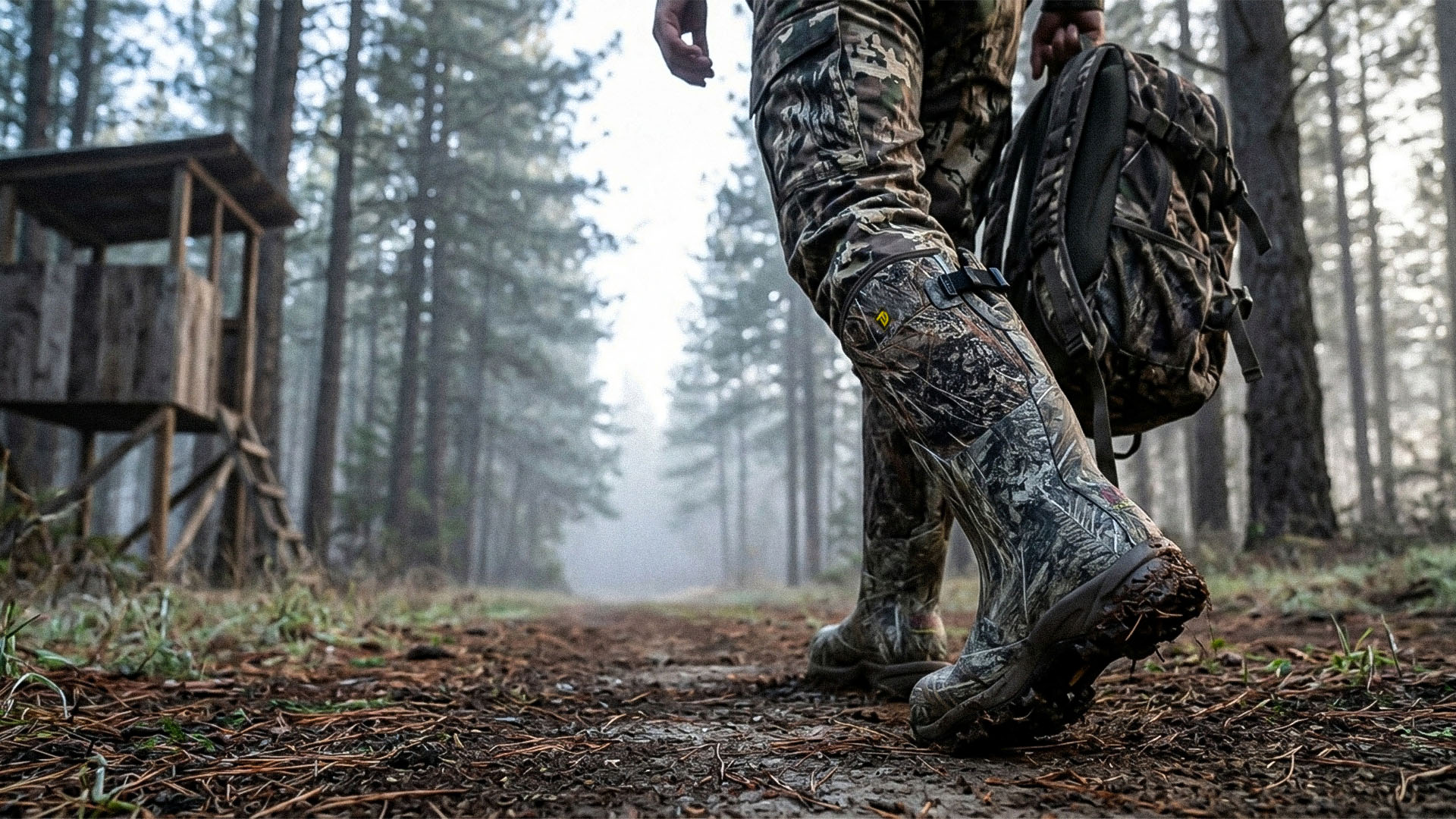
Hunters dealing with these conditions may benefit from waterproof hunting boots for winter predator hunting that provide dependable traction, secure heel fit, and enough warmth for both walking and stationary observation.
The challenge is balance.
A heavily insulated boot may feel comfortable while sitting but become too warm during long tracking sessions.
A lightweight boot may walk well but leave feet cold after an hour of waiting.
Match footwear to the hunt.
Wet Snow Soaks Boots Quickly
Powder snow may brush away easily.
Wet snow behaves differently.
It sticks to:
- Boots
- Pants
- Gaiters
- Brush
and eventually melts.
Waterproof footwear helps prevent the constant freeze-and-melt cycle from reaching socks.
Gaiters can also keep snow from entering over the boot cuff.
Once socks become wet in winter, warmth drops quickly.
Mud Hides Beneath Melting Snow
A warming winter afternoon can turn frozen ground into mud.
Low creek areas may become especially soft.
Expect mixed surfaces.
One mile may contain:
- Powder
- Ice
- Mud
- Rock
- Standing water
A useful predator-hunting boot needs traction across all of them.
Choose footwear based on the worst part of the route, not the parking lot.
Creek Banks Can Be Dangerous
Snow hides the edge of steep banks.
Ice may form underneath.
Move carefully when tracking along drainages.
Avoid stepping directly onto snow-covered overhangs.
Look for gradual crossings.
Never jump into a creek bed simply because the cat did.
The animal is smaller, lighter, and far more agile.
Ice Is Not Automatically Safe
Bobcat tracks may cross ponds, creeks, or frozen wetlands.
Do not follow automatically.
Ice thickness varies with:
- Current
- Springs
- Temperature
- Snow insulation
- Vegetation
Use established ice-safety practices.
Avoid uncertain crossings.
A predator trail is not worth risking cold-water immersion.
Navigation Can Become Difficult in Snow
Fresh snow changes familiar landscapes.
Old roads disappear.
Trails become hidden.
Fog or more snowfall reduces visibility.
Carry reliable navigation.
Mark:
- Vehicle
- Major trail junctions
- Creek crossings
- Property boundaries
Do not depend entirely on your own footprints.
New snow or wind can erase them.
Short Winter Days Affect Planning
Bobcat tracking can consume more time than expected.
A trail that looks easy may lead deep into rough cover.
Monitor daylight.
Leave enough time to return safely.
Carry a headlamp even on day hunts.
Winter darkness arrives early, and a cloudy afternoon can become difficult faster than expected.
Carry Extra Dry Layers
Tracking creates heat.
Stopping creates cold.
Carry insulation that stays dry.
Useful items may include:
- Dry gloves
- Warm hat
- Insulating jacket
- Spare socks
Store them in waterproof protection.
If you sweat during a long track and then sit for an extended period, body temperature can drop quickly.
Do Not Overdress While Walking
Begin slightly cool.
Tracking through snow can be physically demanding.
If you begin wearing every layer, sweat builds quickly.
Vent early.
Remove layers before becoming overheated.
Add them again when you stop.
Moisture management is one of the most important winter-hunting skills.
Bobcat Country Often Overlaps Other Hunting Seasons
Predator seasons may overlap:
- Deer hunting
- Rabbit hunting
- Bird hunting
- Trapping
Know current local seasons.
Expect other people.
Wear appropriate visibility when moving through areas where other hunting activity occurs.
Never assume a remote creek bottom is empty.
Trapping Activity Requires Respect
Bobcat habitat may overlap active trapping areas.
Hunters should never interfere with legal traps or equipment.
If hunting with dogs, understand trapping seasons and local risks.
Stay on known routes when practical.
Communicate with landowners.
Multiple legal outdoor activities often occur on the same property.
Dogs Require Additional Awareness
Some predator and hound traditions involve dogs where legal.
Winter creek country creates hazards including:
- Ice
- Roads
- Traps
- Deep snow
- Cold water
- Wire
Use appropriate tracking equipment and maintain control.
Never allow a dog to pursue wildlife across property boundaries.
Know the rules before the hunt.
Property Boundaries Matter
Bobcats do not recognize land ownership.
Hunters must.
A track may cross:
- Public land
- Private farms
- Timber company land
- State property
- Residential parcels
Do not follow simply because the trail continues.
Use accurate mapping and posted information.
Obtain permission before entering private property.
A fresh track is not permission.
Regulations Vary Widely
Bobcat hunting regulations can differ significantly by state and jurisdiction.
Some areas may have:
- Specific seasons
- Bag limits
- Quotas
- Tagging requirements
- Reporting requirements
- Pelt sealing requirements
- Method restrictions
Other areas may have different management structures.
Always verify current official regulations before hunting.
Do not rely on a general predator article for legal information.
Species Identification Matters
Bobcats may share habitat with:
- Domestic cats
- Lynx in some northern regions
- Coyotes
- Foxes
Positive identification is essential.
In areas where Canada lynx occur, hunters should be especially familiar with legal species identification and current protections.
Do not shoot at movement or a general cat-shaped silhouette.
Know exactly what you are looking at.
Bobcat and Lynx Identification Requires Care
Where ranges overlap, learn differences before hunting.
Relevant characteristics may include:
- Body proportions
- Leg length
- Foot size
- Tail appearance
- Ear tufts
- Habitat
Snow tracks alone should not be the only basis for a final decision.
If you cannot positively identify the animal, do not take the shot.
Wildlife regulations protecting similar species are important.
Common Bobcat Hunting Mistakes
Looking for Bobcats Before Looking for Prey
Rabbit and small-game habitat helps explain predator presence.
Following Old Tracks
Track freshness matters.
Walking Directly Behind Every Trail
Use tracks to understand habitat, not simply to chase.
Ignoring Creek Systems
Drainages often connect productive cover.
Scanning Too Quickly
Stationary bobcats blend extremely well.
Expecting Fast Predator Responses
Bobcats may approach slowly and cautiously.
Wearing the Wrong Winter Boots
Tracking and sitting require a balance of waterproofing, traction, warmth, and mobility.
Following Tracks Onto Unsafe Ice
Animal tracks do not prove the surface is safe for people.
Forgetting Species Identification
Similar animals may have different legal protections.
Frequently Asked Questions
Is fresh snow good for bobcat hunting?
Fresh snow can be extremely helpful for locating tracks, identifying travel corridors, and understanding where bobcats are hunting and resting.
Where should you look for bobcats in winter?
Focus on prey-rich creek bottoms, brushy field edges, young clear-cuts, rocky terrain, beaver wetlands, and thick cover connected by travel corridors.
How do you identify bobcat tracks in snow?
Bobcat tracks are generally round, show four toes, and often lack obvious claw marks. Track shape can vary with snow conditions, so study repeated prints rather than relying on one impression.
Do bobcats follow creek bottoms?
They can. Creek corridors often provide dense cover, prey, water, rocky banks, and efficient travel between different habitats.
Are bobcats active during winter?
Yes. Winter snow can make their movement easier for hunters to study even when the animal itself remains difficult to see.
What boots are best for winter predator hunting?
Waterproof hunting boots with dependable snow and mud traction, secure fit, and enough warmth for both active tracking and stationary observation are a practical choice.
Final Thoughts
Fresh snow makes bobcat country easier to understand.
It does not make the cat easy to see.
Tracks tell you where it crossed.
Rabbit trails explain why it was there.
Brush shows where it hunted.
Rock may reveal where it rested.
A creek can connect all of those things into one route.
The hunter who simply follows tracks may spend the entire day walking behind an animal that is already far ahead.
The hunter who studies the landscape begins to understand the pattern.
Find prey.
Read fresh snow.
Study edges.
Watch creek systems.
Glass slowly.
Protect your feet from snow, mud, water, and frozen ground.
And remember that a bobcat’s greatest advantage is not speed.
It is the ability to become part of the landscape the moment it stops moving.
