
Mountain goat hunting is unlike most other big-game pursuits.
The animal itself is only one part of the challenge.
The real opponent is the mountain.
A hunter may spend hours climbing through steep terrain, crossing loose rock, navigating snowfields, moving through wet alpine vegetation, and searching cliffs where a white shape blends perfectly into the landscape.
The air is thinner.
The weather changes quickly.
Distances are difficult to judge.
A slope that looks close from below may require hours of climbing.
A small mistake in equipment, preparation, or route selection can turn a great hunt into an exhausting struggle.
Successful mountain goat hunters understand that the hunt begins long before spotting an animal.
It begins with learning the mountain.
Mountain Goats Live Where Access Is Difficult
Mountain goats are built for extreme terrain.
Their habitat commonly includes:
- Alpine cliffs
- Rocky ridges
- Steep mountain faces
- High-elevation meadows
- Talus slopes
- Snowfields
- Remote wilderness areas
- Mountain basins
These environments provide security from predators and access to specialized feeding areas.
For hunters, that means the animals are often found in places that require serious physical effort.
Unlike many species that can be located from roads or gentle valleys, mountain goats often demand a true backcountry approach.
The hardest part of the hunt is frequently reaching suitable glassing locations.
Learn to Read Mountain Goat Habitat
Finding mountain goats requires understanding why they choose certain terrain.
They are often associated with areas that provide:
- Escape routes
- High visibility
- Mineral sources
- Alpine vegetation
- Rocky security
- Protection from weather
Look for terrain where goats can feed while remaining close to cliffs or steep escape areas.
A beautiful green meadow alone does not guarantee goats.
The surrounding structure matters.
Ask:
Where can the animal feed?
Where can it escape?
Where can it rest safely?
The combination of food and security creates valuable habitat.
Glassing Is the Foundation of Mountain Goat Hunting
Mountain goat hunting is often a glassing game.
The mountains are too large to search randomly.
Experienced hunters spend significant time behind binoculars and spotting scopes.
Good glassing locations include:
- Opposite ridges
- High viewpoints
- Basin edges
- Mountain shoulders
- Open alpine slopes
Look slowly.
A goat may appear as:
- A small white patch
- A moving shadow
- A shape behind rocks
- A reflection from horns
- A body outline against vegetation
Do not scan quickly.
Mountain environments contain endless visual distractions.
Patience finds animals.
Early Morning and Evening Light Matter
Lighting dramatically changes mountain visibility.
Early and late hours often provide better conditions because:
- Shadows create contrast
- Animals may be more active
- Heat distortion is reduced
- Snow and rocks reveal movement
Midday sunlight can make animals disappear into bright rock and glare.
Plan glassing sessions around changing light.
A hunter who understands lighting can find animals that others overlook.
Weather Changes Everything
Mountain weather is unpredictable.
A clear morning can become:
- Rain
- Snow
- Fog
- High wind
- Freezing temperatures
within hours.
Weather affects:
- Animal movement
- Visibility
- Safety
- Travel speed
- Clothing choices
Always prepare for worse conditions than expected.
The mountain does not care what the forecast promised.
Wind Is One of the Biggest Challenges
Mountain winds can change direction constantly.
A valley may have calm air while a ridge creates strong crosswinds.
Wind affects:
- Scent
- Temperature
- Shooting stability
- Comfort
- Route decisions
When approaching animals, study wind carefully.
A perfect route with bad wind can ruin the hunt.
A longer route with better wind often creates a better opportunity.
Approach Slowly in Open Terrain
Mountain goats live in landscapes where visibility works against hunters.
A goat may detect movement from a great distance.
Avoid:
- Walking ridgelines openly
- Standing on exposed skylines
- Moving quickly across open slopes
Use terrain features:
- Rock formations
- Depressions
- Ridges
- Vegetation changes
Move from cover to cover.
The mountain provides concealment if the hunter learns how to use it.
Distance in Mountains Is Deceptive
Mountain hunters often underestimate distance.
A ridge that looks twenty minutes away may require several hours.
Factors include:
- Elevation gain
- Loose rock
- Vegetation
- Snow
- Terrain obstacles
Never judge a route only by horizontal distance.
Vertical gain changes everything.
Plan movement realistically.
Physical Preparation Matters
Mountain goat hunting requires endurance.
Preparation should include:
- Long-distance hiking
- Elevation training
- Strength exercises
- Pack carrying
- Balance training
The goal is not only reaching the animal.
It is still having enough energy to make good decisions afterward.
Fatigue creates mistakes.
Strong legs and good conditioning increase safety.
Pack Weight Becomes Critical
Every extra item matters in steep terrain.
A mountain hunter may carry:
- Optics
- Clothing layers
- Water
- Food
- Navigation tools
- Emergency equipment
- Weapon
- Field gear
Small unnecessary items become exhausting after thousands of feet of elevation gain.
Choose equipment carefully.
Lightweight does not mean cheap.
It means efficient.
Footwear Can Decide the Hunt
Mountain terrain is demanding on feet.
Conditions may include:
- Wet grass
- Snow
- Mud
- Loose rock
- Ice
- Stream crossings
- Long approaches
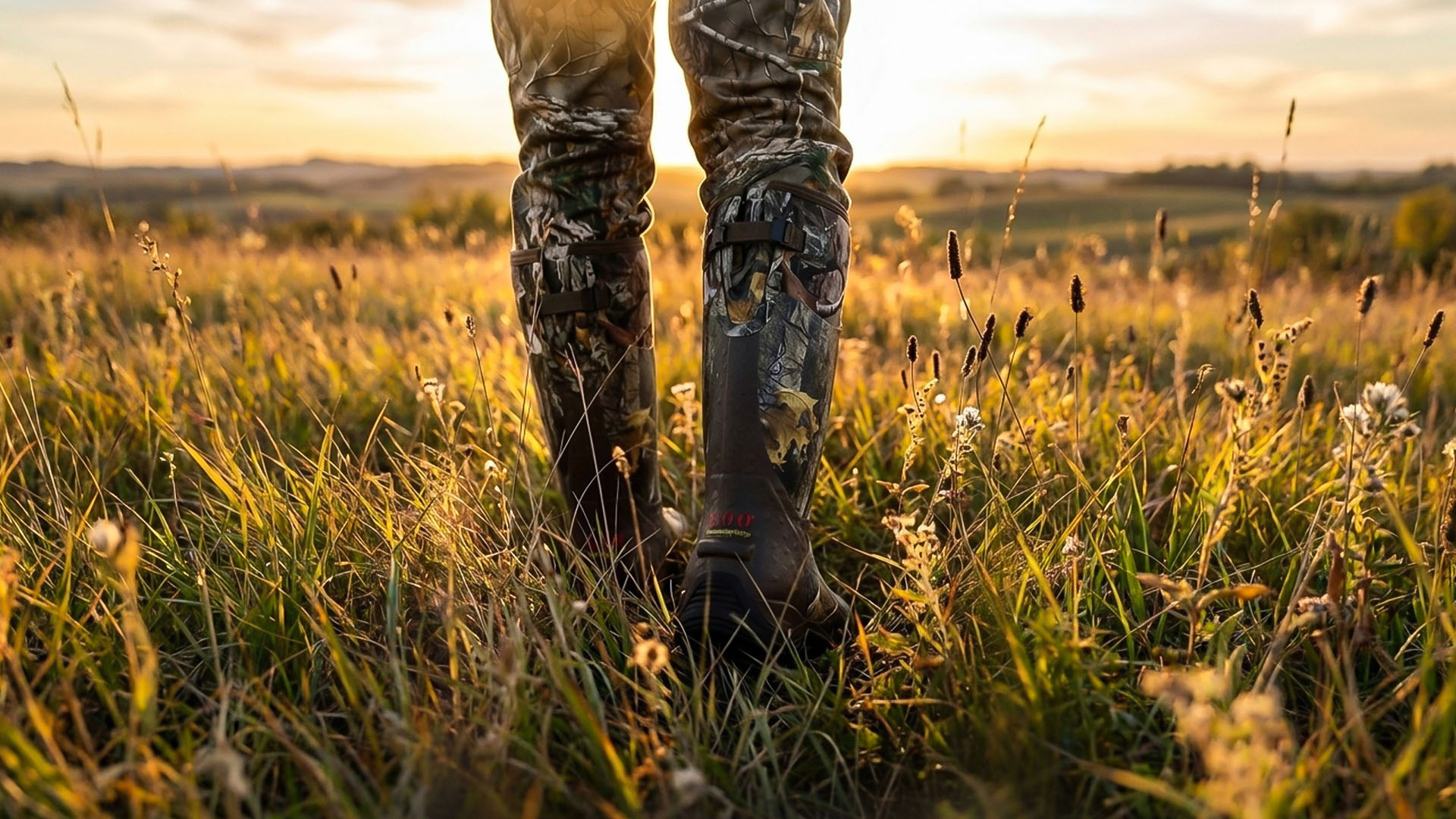
Hunters covering these environments may benefit from waterproof hunting boots for mountain hunting that provide ankle support, reliable traction, moisture protection, and comfort during long climbs.
A poor boot choice can create:
- Blisters
- Slipping
- Wet feet
- Reduced mobility
- Early exhaustion
In remote terrain, footwear is safety equipment.
Waterproof Protection Matters Above Treeline
Alpine weather changes quickly.
Morning frost can become wet snow.
Rain can soak vegetation.
Small stream crossings can appear unexpectedly.
Waterproof boots help maintain comfort and reduce the risk of cold, wet feet during long mountain days.
However, waterproofing should still be balanced with breathability.
Sweat can create moisture inside footwear during steep climbs.
Traction Is Essential on Rocky Terrain
Mountain surfaces change constantly.
One step may be:
- Solid rock
- Loose gravel
- Wet soil
- Snow
- Mud
Good traction improves confidence and reduces slips.
A hunter moving carefully is quieter and safer.
Footwear should support controlled movement rather than forcing every step to be cautious.
Ankle Support Helps on Uneven Ground
Loose rocks and steep slopes create unusual stress on ankles.
A supportive boot can help when carrying weight over uneven terrain.
Especially during descents, fatigue increases the chance of mistakes.
Many mountain injuries happen while going downhill.
Do not underestimate the return trip.
Snow Can Create Opportunity
Fresh snow changes mountain goat behavior.
It can:
- Reveal tracks
- Improve visibility
- Push animals toward certain elevations
- Show travel routes
Snow also creates hazards.
Hunters must consider:
- Avalanche risk
- Hypothermia
- Reduced visibility
- Difficult travel
Snow is information, but it is also danger.
Goat Movement Changes With Seasons
Mountain goats adjust habitat use throughout the year.
Seasonal changes affect:
- Feeding areas
- Elevation
- Group behavior
- Travel routes
A location productive during summer may not hold animals later.
Research local patterns.
Talk with wildlife professionals and experienced hunters.
Understand the seasonal environment rather than relying on one old observation.
Learn to Judge Goat Age and Size
Mountain goat hunting requires careful identification.
Before taking a shot, hunters should evaluate:
- Horn appearance
- Body size
- Animal position
- Legal requirements
Do not rush because the opportunity feels rare.
A mountain goat hunt may represent years of preparation.
Make every decision carefully.
Shot Placement Matters More in Remote Terrain
A poor shot creates serious challenges in steep country.
Before shooting, consider:
- Distance
- Stability
- Animal position
- Recovery route
- Weather
- Safety
A difficult recovery can become dangerous.
Responsible shooting is part of mountain hunting ethics.
Recovery Can Be the Hardest Part
Reaching an animal is only half the hunt.
Recovery may require:
- Steep climbs
- Rope systems
- Multiple trips
- Careful meat handling
- Navigation
Before taking a shot, think about the entire process.
Can you safely reach the animal?
Can you remove the meat?
Can you return before weather changes?
A successful hunt includes successful recovery.
Navigation Skills Are Essential
Mountain environments can become confusing quickly.
Clouds, fog, and darkness remove familiar landmarks.
Carry reliable navigation equipment.
Know:
- Your route
- Emergency exits
- Water locations
- Camp location
- Weather changes
Never depend only on visible landmarks.
The mountain can look completely different during the return trip.
Water Management Matters
High-altitude hunting can create dehydration risks.
Cold temperatures reduce thirst awareness.
Steep climbing increases water needs.
Carry enough water or know reliable sources.
Treat questionable water.
Dehydration reduces judgment and physical performance.
Hypothermia Can Happen Even in Summer
Many hunters associate hypothermia only with winter.
Mountain environments can create dangerous conditions anytime.
Risk increases with:
- Rain
- Wind
- Wet clothing
- Fatigue
- Long exposure
Carry proper layers.
Avoid allowing sweat-soaked clothing to become cold.
Stay prepared.
Respect Wildlife and Regulations
Mountain goat hunting is highly regulated.
Rules may include:
- Limited permits
- Specific seasons
- Harvest requirements
- Reporting requirements
- Weapon restrictions
- Area boundaries
Always verify current regulations before hunting.
Population management is important because mountain goats occupy sensitive environments.
Public Land Requires Extra Planning
Many mountain goat opportunities occur on public land.
Preparation should include:
- Studying maps
- Understanding access
- Checking restrictions
- Planning camps
- Knowing terrain difficulty
Remote does not always mean inaccessible.
Some areas receive significant pressure.
Others require serious effort.
Research determines the difference.
Hunting Pressure Changes Animal Behavior
Experienced mountain goats learn where humans travel.
Animals may avoid:
- Popular trails
- Easy access points
- Visible ridges
- Frequently hunted basins
Remote terrain often requires hunters to leave comfortable routes.
The hardest-to-reach habitat may hold less pressured animals.
Common Mountain Goat Hunting Mistakes
Underestimating Terrain
Distance on a map does not equal difficulty.
Carrying Too Much Gear
Every pound matters uphill.
Ignoring Weather
Conditions change quickly.
Choosing Poor Footwear
Wet, unstable terrain demands reliable boots.
Moving Too Quickly
Mountain animals detect careless movement.
Forgetting Recovery Planning
Getting the animal is only the beginning.
Ignoring Navigation
Fog and darkness remove landmarks.
Frequently Asked Questions
Where do mountain goats live?
Mountain goats typically inhabit alpine environments including cliffs, rocky slopes, high-elevation meadows, and rugged mountain terrain.
Is mountain goat hunting difficult?
Yes. The combination of terrain, weather, physical demands, and remote recovery makes it one of the more challenging big-game hunts.
What gear matters most for mountain goat hunting?
Reliable optics, navigation equipment, layered clothing, and durable waterproof footwear are among the most important pieces of equipment.
Why are waterproof boots important for mountain hunting?
Mountain terrain often includes wet vegetation, snow, mud, and stream crossings. Waterproof boots help keep feet dry while providing traction and support.
How do hunters find mountain goats?
Most hunters rely heavily on glassing from strategic viewpoints and studying alpine habitat rather than walking randomly through terrain.
Final Thoughts
Mountain goat hunting is not only a pursuit of an animal.
It is a test of preparation.
The mountain demands patience.
It demands physical ability.
It demands respect.
The hunter who succeeds is not always the one who climbs fastest.
It is the one who understands the landscape.
Read the ridges.
Study the weather.
Choose every step carefully.
Protect your feet.
Carry the right equipment.
Because in alpine country, the mountain always decides the rules.
The hunter’s job is learning how to follow them.
