
Pronghorn country has a way of humbling hunters.
At first glance, the landscape looks simple.
Wide grasslands.
Rolling hills.
Sparse vegetation.
Long visibility.
Few trees.
A hunter may look across a basin and think, “There is nowhere for an animal to hide.”
Then a pronghorn appears.
A small shape on a distant ridge.
A white patch flashing in the sunlight.
A movement that was invisible for the first hour of glassing.
The hunter slowly realizes the truth.
Pronghorn do not survive because they hide like forest animals.
They survive because they see everything.
They live in open country where distance, eyesight, wind, and patience matter more than thick cover.
Successful pronghorn hunting is not about sneaking through timber or following heavy trails.
It is about understanding the landscape, using optics, controlling scent, and making smart decisions before the stalk even begins.
The open country is not empty.
It is simply honest.
Every mistake is easier for the animal to detect.
The Biggest Challenge Is Distance
Many hunters underestimate how difficult open-country hunting can be.
A mule deer or elk hunter may rely on terrain and vegetation to close distance.
Pronghorn hunters often have fewer advantages.
The animal may spot movement from hundreds of yards away.
A small mistake can end the opportunity:
- Walking too high on a ridge
- Crossing open ground
- Ignoring wind
- Moving too quickly
- Using the same route repeatedly
- Failing to study the herd first
The best pronghorn hunters spend more time observing than walking.
The stalk begins with the binoculars.
Glass Before You Move
The first rule of pronghorn hunting is simple:
Do not rush.
Open country creates the illusion that animals are easy to approach.
They are not.
Before leaving your glassing point, study:
- Number of animals
- Buck-to-doe ratio
- Direction of travel
- Bedding location
- Water sources
- Fence lines
- Roads
- Terrain folds
- Wind direction
- Escape routes
A pronghorn that looks alone may have other animals hidden behind a ridge.
A buck that appears relaxed may have already seen you.
Spend extra time understanding the entire area.
A five-minute observation can save a two-hour failed stalk.
Pronghorn Use Small Terrain Features
Because pronghorn live in open country, hunters often overlook small terrain changes.
A shallow depression can hide movement.
A low ridge can block visibility.
A small drainage can provide enough cover for a careful approach.
Important terrain features include:
- Sagebrush pockets
- Shallow draws
- Creek bottoms
- Low ridges
- Rock outcrops
- Small hills
- Wind breaks
- Fence lines
- Grass depressions
The terrain does not need to be dramatic.
It only needs to break the animal’s line of sight.
A six-foot rise can be the difference between being spotted and reaching a shooting position.
Water Sources Can Concentrate Movement
In dry western environments, water can influence pronghorn movement.
Depending on location and season, animals may use:
- Stock tanks
- Springs
- Small ponds
- Windmill water sources
- Natural seep areas
- Seasonal water holes
Water does not automatically mean success.
A water source surrounded by human pressure may receive little daylight activity.
A hidden water source near feeding areas and secure terrain can be much more valuable.
Scout before hunting.
Look for:
- Tracks
- Droppings
- Trails
- Bedding nearby
- Approach routes
- Time of use
The water itself is only part of the pattern.
The travel route matters just as much.
Tracks Tell the Story
After rain or snow, western ground can reveal movement clearly.
Look for tracks around:
- Water
- Muddy roads
- Fence crossings
- Creek bottoms
- Trail intersections
- Soft soil areas
Fresh tracks can show:
- Herd size
- Direction
- Travel frequency
- Morning or evening movement
- Preferred routes
However, do not hunt a location only because tracks exist.
A trail used at night may not produce a daylight opportunity.
Combine tracks with observation.
Fence Lines Create Travel Routes
Pronghorn are famous for moving across open country, but fences influence their movement.
They may:
- Follow fence lines
- Use existing crossings
- Avoid difficult barriers
- Travel along easier routes
When scouting, inspect:
- Low fence sections
- Gates
- Open corners
- Areas where animals regularly cross
- Trails near water
A fence crossing can reveal movement patterns.
However, always respect property boundaries and never alter fences without permission.
Wind Is More Important Than Cover
Many western hunters say:
“The wind is the cover.”
For pronghorn, this is often true.
A hunter may have perfect terrain and still fail because scent reaches the animal.
Before stalking, consider:
- Wind direction
- Wind changes
- Thermals
- Distance
- Open slopes
- Vegetation movement
- Escape routes
Do not assume the wind will remain constant.
Open country can change quickly.
A morning breeze may become a swirling afternoon wind.
Check frequently.
The Best Stalk Often Looks Longer
A common mistake is choosing the shortest route.
The shortest route may cross:
- Open flats
- Bright grass
- Skylines
- Exposed hillsides
A longer route using terrain may be faster because it keeps the animal unaware.
Good stalk routes use:
- Draw bottoms
- Rolling terrain
- Brush pockets
- Rock cover
- Low ridges
- Hidden approaches
The goal is not reaching the animal quickly.
The goal is arriving without the animal knowing.
Move When the Animal Cannot Watch You
Pronghorn are extremely good at detecting movement.
A stalk should be based on timing.
Move when:
- The animal is feeding
- The animal looks away
- Other animals block visibility
- Terrain hides you
- Wind changes attention
- The herd moves naturally
Stop when:
- Heads come up
- Animals look toward you
- The herd becomes alert
- Wind becomes uncertain
Movement control is often more important than speed.
Use the Landscape Like a Map
Before starting a stalk, create a mental map.
Identify:
- Starting point
- Final position
- Landmarks
- Wind direction
- Escape routes
- Obstacles
- Possible unseen animals
Look behind you too.
Many failed stalks happen because hunters focus only forward and forget that animals may detect them from another direction.
Open country requires awareness in every direction.
Rain Can Improve Western Hunting
Many hunters think rain ruins western hunts.
Sometimes it improves them.
Rain can:
- Reduce dust
- Quiet footsteps
- Refresh tracks
- Improve visibility
- Lower temperatures
- Encourage movement
Wet ground can make long approaches easier.
However, rain also creates challenges:
- Mud
- Slick slopes
- Wet clothing
- Changing wind
- Poor visibility
The best hunters adapt.
They do not simply wait for perfect weather.
Wet Grass Can Be Harder Than It Looks
Western grasslands may look dry from a distance.
After rain, morning dew, or storms, vegetation can hold significant moisture.
Long approaches through wet grass can soak boots and clothing.
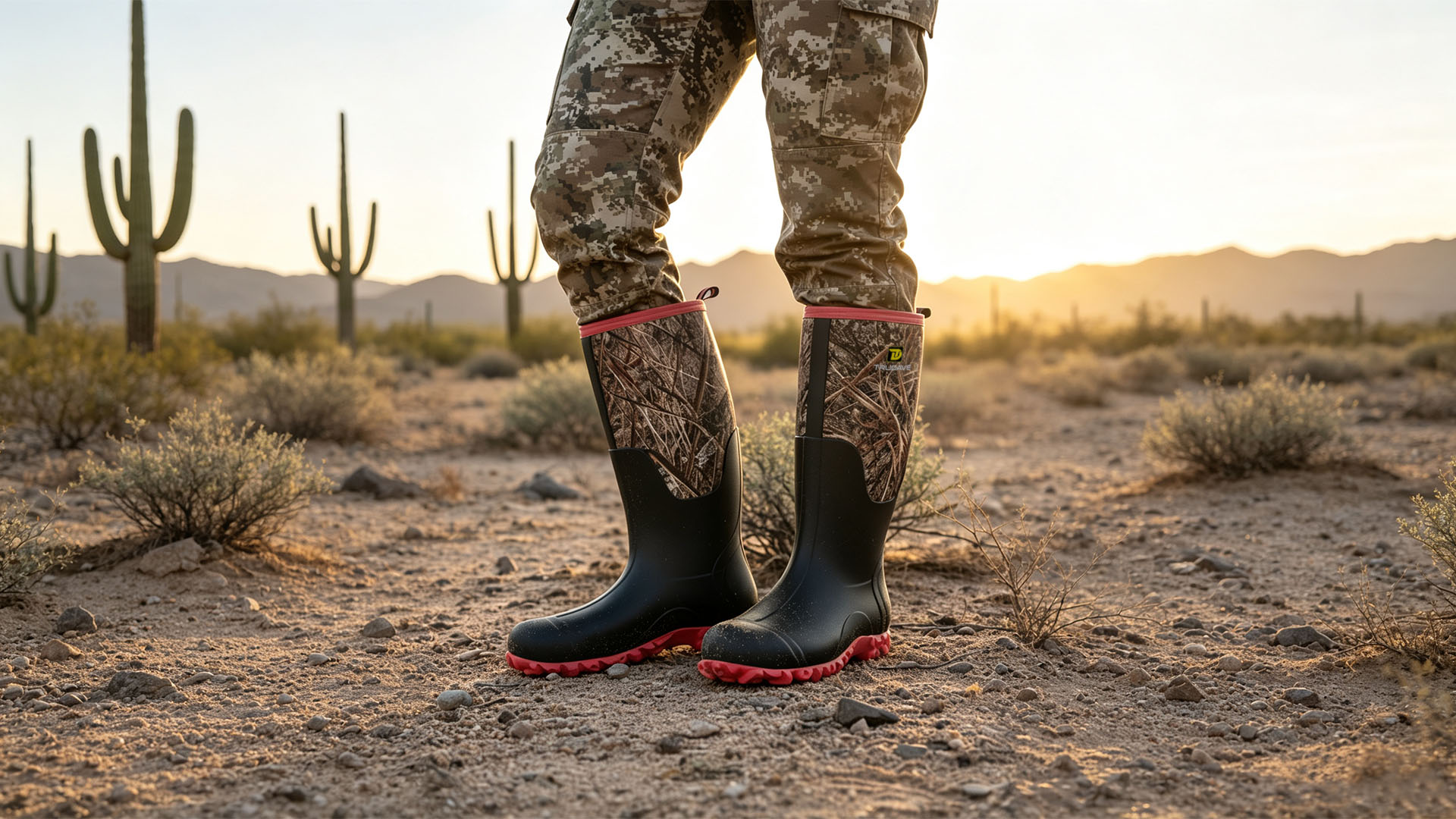
Hunters moving through these conditions may benefit from waterproof hunting boots for western pronghorn hunting that provide moisture protection, traction, and comfort during long glassing sessions and stalks across mixed terrain.
Good footwear matters because pronghorn hunts often involve miles of walking before the final opportunity appears.
Choose Boots for Distance
Pronghorn hunting is different from many other hunts.
You may walk:
- Open prairie
- Rocky slopes
- Muddy roads
- Dry washes
- Grass flats
- Fence lines
- Sagebrush edges
A boot that is too heavy can create fatigue.
A boot without enough support can become painful on uneven ground.
Look for:
- Comfortable fit
- Stable heel
- Good traction
- Waterproof protection when needed
- Durability
- Reasonable weight
The best boot is the one that allows you to keep hunting after several miles.
Glassing Requires Patience
Pronghorn hunting often involves long periods behind optics.
Comfort matters.
A hunter who is cold, wet, or exhausted will glass less carefully.
Good glassing habits include:
- Scan slowly
- Use a grid pattern
- Check shadows
- Recheck areas
- Look for movement
- Compare shapes
- Watch ridgelines
- Rest your eyes
Many pronghorn are found because the hunter noticed something small after looking at the same area several times.
Do Not Ignore Midday Movement
Many hunters focus only on early morning.
Pronghorn may move during midday depending on:
- Temperature
- Pressure
- Water availability
- Season
- Human activity
- Food conditions
Midday can be a valuable time to:
- Glass new areas
- Check water
- Locate hidden groups
- Plan evening stalks
The middle of the day is not always downtime.
Sometimes it is the best scouting period.
Buck Behavior Changes Through the Season
Pronghorn behavior depends heavily on timing.
Early season may involve:
- Feeding patterns
- Territorial behavior
- Visible movement
Later periods may bring:
- Increased buck attention
- More herd movement
- Different use of terrain
- More competition
Do not assume one strategy works all season.
Observe what animals are doing now.
Current behavior matters more than what worked last year.
Avoid Educating Animals
Open-country animals learn quickly.
Repeated pressure can change movement.
Avoid:
- Driving too close repeatedly
- Walking through feeding areas
- Showing your silhouette often
- Approaching from the same direction
- Ignoring wind
A failed stalk does not always end the opportunity.
A careless pattern of pressure can.
Public Land Requires Extra Planning
Western public land can offer excellent opportunities, but access requires preparation.
Before hunting, understand:
- Boundary lines
- Access routes
- Road conditions
- Closed areas
- Private land connections
- Local regulations
- Vehicle restrictions
A pronghorn may stand near a boundary.
Do not assume access.
Know where you can legally hunt and recover an animal.
Weather Changes Roads Quickly
Prairie roads can change from hard-packed to dangerous after rain.
Soft clay, deep mud, and hidden ruts can trap vehicles.
Before driving:
- Check conditions
- Understand soil type
- Avoid unnecessary damage
- Carry recovery equipment
- Know when to walk instead
A stuck vehicle can ruin a hunt and damage access.
Recovery Planning Matters
Pronghorn may fall in places that look easy from a distance.
After the shot, terrain can become complicated.
Consider:
- Distance
- Slope
- Vehicle access
- Weather
- Time remaining
- Land boundaries
- Help available
Plan before the shot.
A successful hunt is not complete until the animal is recovered properly.
Regulations Must Be Verified
Pronghorn seasons, tags, weapon restrictions, access rules, and harvest requirements vary by state and unit.
Before hunting, verify:
- Current season dates
- License requirements
- Tag rules
- Unit boundaries
- Hunter education requirements
- Legal weapons
- Access restrictions
- Reporting requirements
Always use current official wildlife-agency information.
Common Pronghorn Hunting Mistakes
Moving Too Quickly
Pronghorn see movement easily.
Ignoring Wind
Scent can ruin an otherwise perfect stalk.
Hunting Without Enough Glassing
Observation creates opportunities.
Walking the Skyline
Animals notice unnatural movement.
Choosing the Shortest Route
The shortest path is often the most visible.
Wearing Poor Footwear
Long western hunts require comfort, traction, and protection.
Ignoring Small Terrain
Tiny folds can hide animals and hunters.
Failing to Plan Recovery
Open country can still create difficult recoveries.
Frequently Asked Questions
Are pronghorn difficult to hunt?
Yes. Their eyesight, open habitat, and ability to detect movement make them challenging. Success usually comes from patience, glassing, wind control, and careful stalking.
What terrain do pronghorn prefer?
They often use open grasslands, sagebrush flats, rolling hills, shallow draws, and areas near food and water.
Is rain good for pronghorn hunting?
Rain can improve tracking and quiet movement while changing animal behavior. Hunters must adapt to mud, wet conditions, and shifting winds.
How far should you glass for pronghorn?
Many opportunities begin with long-distance glassing. The exact distance depends on terrain, optics, and visibility.
What boots are best for western pronghorn hunting?
Choose boots that balance waterproof protection, traction, comfort, and weight for long walks across prairie, sagebrush, mud, and rocky ground.
Final Thoughts
Pronghorn hunting teaches patience.
The animal is not hidden by trees.
It is hidden by distance.
It survives because it sees first.
The hunter who rushes across open ground loses.
The hunter who studies wind, terrain, water, and movement gains an advantage.
Look longer.
Walk smarter.
Use the small folds in the land.
Respect the weather.
Protect your feet for the miles ahead.
Because in pronghorn country, the difference between success and failure is often not finding the animal.
It is getting close enough without letting the animal know you were ever there.
