
Pronghorn country looks open and uncomplicated from the highway.
Rolling prairie stretches toward the horizon. Fence lines divide grazing pastures, shallow draws cut through the grass, and isolated water tanks sit beneath enormous western skies.
A hunter may assume the animals can travel anywhere they want.
In reality, fences strongly influence how pronghorn move across the landscape.
Unlike deer, pronghorn do not regularly leap over fences when another option is available. They often crawl beneath the bottom wire, pass through damaged sections, use open gates, or follow established routes around fence ends.
That behavior creates predictable crossing points.
Waterholes receive much of the attention in pronghorn hunting, especially during hot and dry conditions. But water is only one part of the animal’s daily movement.
A fence crossing connecting bedding terrain, feeding areas, water, and escape cover can remain active under a wider range of conditions.
Hunters who learn to identify those crossings can reduce unnecessary walking, improve glassing efficiency, and better understand how pronghorn use large pieces of seemingly featureless prairie.
Why Fences Matter in Pronghorn Country
A fence may appear minor to a hunter.
To a pronghorn, it can be a meaningful barrier.
Pronghorn are capable of jumping, but they often prefer moving beneath fences rather than over them. Their bodies are built for speed across open ground, not repeatedly clearing livestock fencing.
This preference concentrates movement around locations where crossing is easier.
Common crossing points include:
- Raised bottom wires
- Washouts beneath fences
- Open gates
- Broken wire
- Low spots in the ground
- Creek channels
- Wildlife-friendly fence sections
- Fence ends near roads or terrain barriers
A crossing becomes more valuable when it connects resources the animals use repeatedly.
One set of tracks beneath a wire may represent a single movement.
A worn trail, hair on the fence, multiple tracks, and droppings suggest more regular use.
Begin by Mapping Fence Networks
Do not study one isolated fence line.
Look at the entire network.
Fences may separate:
- Public and private land
- Grazing pastures
- Water sources
- Agricultural fields
- Bedding terrain
- Road corridors
- Seasonal feeding areas
A crossing in the middle of uniform prairie may receive limited use.
A crossing connecting a dry bedding ridge with a dependable stock pond may become a major travel route.
Satellite imagery does not always show every fence.
Public-land maps, property records, grazing maps, and ground scouting may provide additional information.
Always confirm current ownership and legal access before hunting.
Follow the Fence Before Following the Herd
When pronghorn appear on the wrong side of a fence, hunters often focus only on the animals.
A better approach is studying the barrier.
Use binoculars to scan along the fence in both directions.
Look for:
- Trails approaching the wire
- Animals slowing near one section
- Repeated movement toward a gate
- Washouts in shallow draws
- Places where the bottom wire appears higher
- Tracks visible in bare soil
- Hair caught beneath the wire
Pronghorn may travel hundreds of yards along a fence before reaching a preferred crossing.
Predicting that destination can create a better opportunity than attempting to follow the herd directly.
Gates Can Be More Important Than Water
Livestock gates often provide easy passage.
Some remain open during portions of the grazing season. Others have gaps beside posts or loose wire beneath them.
Pronghorn may develop strong habits around these openings.
Scout gates connecting:
- Water with feeding areas
- Public land with large open pastures
- Agricultural fields with native prairie
- Bedding ridges with low valleys
- Two heavily used grazing sections
Do not block gates, park in front of them, or interfere with ranch operations.
A productive hunting location is never more important than maintaining access for landowners, livestock, and emergency vehicles.
Dry Washes Create Natural Crossing Points
Shallow washes and erosion channels often pass beneath fences.
The lower ground may create additional space under the bottom wire.
Animals can cross without bending as low or contacting the fence.
These locations may also provide concealed travel through open terrain.
Look for washes that connect:
- Water sources
- Broad feeding flats
- Low bedding terrain
- Agricultural ground
- Public-land parcels
The best crossing may be several hundred yards from where the main herd is first observed.
Use terrain to approach without becoming visible.
Look for Hair on the Bottom Wire
Repeated crossings can leave hair on fences.
Inspect the underside of the bottom wire near suspected trails.
Fresh hair, polished wire, disturbed soil, and repeated tracks provide strong evidence of regular use.
Do not alter the fence to improve the crossing.
Cutting, lifting, or damaging wire without permission is illegal and can create livestock and wildlife hazards.
Observe the existing movement and plan around it.
Tracks Beneath a Fence Tell a Better Story
Pronghorn tracks are generally heart-shaped and narrower than many deer tracks.
On dry prairie, tracks can be difficult to see.
Focus on exposed soil around:
- Gates
- Washes
- Cattle trails
- Water tanks
- Road crossings
- Fence corners
- Bare patches beneath wire
Freshness matters.
Wind, sun, livestock, and dry soil can quickly reduce track detail.
Several trails converging on one crossing are more useful than one isolated print.
Fence Corners Can Redirect Movement
Where two fences meet, animals have fewer travel options.
A pronghorn moving along one fence may turn and follow the second line until it reaches a gate or opening.
Corners can create predictable movement, particularly when nearby terrain prevents an easy route around the fence.
Study whether the corner connects to:
- A road
- A stock pond
- A field
- A ridge
- A shallow basin
- A property boundary
Avoid positioning directly at the corner without considering wind, visibility, and safe shooting direction.
The better setup may intercept animals before they reach it.
Fence Ends Can Become Funnels
Some fences end at cliffs, roads, steep cuts, waterways, or property corners.
Animals may move around the end rather than crawl beneath the wire.
A fence ending beside a deep draw can concentrate travel through the narrow strip between the two barriers.
These locations can resemble saddles or creek crossings in deer country.
The fence is man-made, but the funneling effect is the same.
Pronghorn Use Open Terrain Differently Than Deer
A mature whitetail may remain hidden inside timber.
Pronghorn depend heavily on long-distance vision and speed.
They often choose terrain that allows them to see approaching danger.
This means crossing points may sit in locations that appear exposed to hunters.
The animals may tolerate exposure because they can detect threats from a great distance.
Hunters must use:
- Low terrain
- Ridge backs
- Dry creek channels
- Vegetation
- Hay bales where legal and appropriate
- Terrain folds
- Existing structures with permission
Crossing open ground without concealment usually ends the stalk early.
Glass Before Beginning the Approach
Do not start walking as soon as you see a herd near a fence.
Watch.
Determine:
- Direction of travel
- Feeding pace
- Wind
- Herd alertness
- Distance to the crossing
- Available terrain
- Other animals nearby
- Private-property boundaries
A feeding herd may take an hour to reach the fence.
A traveling herd may arrive within minutes.
Understanding behavior helps determine whether to stalk, wait, or relocate.
Watch the Lead Doe
During group movement, one animal often influences the direction of the herd.
A mature doe may approach the crossing first, stop, scan the landscape, and then pass beneath the wire.
The buck may follow later.
Do not focus so heavily on the buck that you ignore the animals responsible for detecting danger.
One alert doe can end the opportunity before the buck reaches range.
Pronghorn May Cross One at a Time
A herd approaching a fence can become compressed around the crossing.
Animals may crawl beneath the wire individually.
This can create a longer opportunity than an open-ground crossing.
It can also produce complicated shot angles.
Wait for a clear, ethical opportunity.
Never fire through wire.
Confirm that no other animals stand behind or beyond the target.
The Crossing May Be Used in Both Directions
A trail beneath a fence does not automatically reveal whether it is a morning or evening route.
Study both sides.
One direction may lead toward water.
The other may lead toward bedding terrain or feeding flats.
Trail-camera use may be restricted on some western public lands or during certain seasons, so verify current regulations before placing one.
When cameras are allowed, angle them to show travel direction rather than only capturing animals directly beneath the fence.
Water Still Influences Fence Movement
Waterholes can strengthen the value of a crossing.
During hot and dry conditions, pronghorn may travel predictable routes toward:
- Stock tanks
- Springs
- Dugouts
- Reservoirs
- Windmill ponds
- Natural seeps
A fence between bedding terrain and water may concentrate this movement.
However, water use varies with weather, grazing activity, livestock presence, and alternative sources.
Confirm current activity rather than relying on a map showing a pond that may be dry.
Livestock Can Change the Pattern
Cattle, sheep, and ranch vehicles influence pronghorn movement.
Livestock may:
- Damage or raise sections of wire
- Create trails
- Concentrate around water
- Block a crossing temporarily
- Disturb bedding areas
- Change grazing pressure
Pronghorn often tolerate livestock but may avoid people working near them.
Communicate with landowners.
Do not hunt in a way that interferes with ranch operations.
A crossing active during one grazing period may become less useful when cattle move into another pasture.
Agricultural Fields Can Attract Pronghorn
Pronghorn may feed around alfalfa, wheat, or other agricultural crops where available.
Fence crossings between native prairie and fields can become highly active.
The animals may approach the field before sunset and leave after sunrise.
Instead of setting up directly at the field edge, study the approach route.
A crossing several hundred yards away may provide more daylight movement and less competition from other hunters.
Hunting Pressure Changes Crossing Use
Once hunters begin using obvious gates and waterholes, pronghorn can adjust.
They may:
- Cross earlier or later
- Use a secondary opening
- Travel farther along the fence
- Avoid roads
- Move toward private land
- Remain farther from water during daylight
Scout multiple crossings.
Do not rely on one location simply because it showed heavy preseason activity.
Opening-week pressure can change the pattern quickly.
Secondary Crossings Can Hold Mature Bucks
The largest trail usually attracts the most attention.
A mature buck may use a smaller crossing away from the main herd.
Look for isolated tracks and fence hair near:
- Small washes
- Ridge dips
- Broken terrain
- Quiet property corners
- Less visible gates
- Areas farther from roads
A secondary crossing may receive fewer animals but provide a better opportunity at an older buck.
Wind Determines the Final Setup
Pronghorn rely heavily on vision, but they can still detect human scent.
Place the hunter downwind or crosswind from the expected route.
Prairie wind can shift because of:
- Terrain folds
- Storm systems
- Heating ground
- Nearby hills
- Vegetation
- Passing weather fronts
Check conditions continuously.
A fence crossing does not move, but the safe setup may change throughout the day.
Heat Creates Strong Air Movement
Sunlight warms open prairie rapidly.
Thermal air movement can become noticeable near draws, ridges, and rock formations.
Morning air may rise from sunlit slopes.
Evening air may settle into low terrain.
These patterns affect scent during close stalks.
Use lightweight wind indicators and observe grass movement at different distances.
The wind at your position may not match conditions near the animals.
Rain Changes Prairie Access
Western prairie is often associated with dry conditions.
After rain, clay roads and open slopes can become extremely muddy.
Two-track roads may become impassable.
Low areas collect water, and gumbo mud packs beneath boot soles.
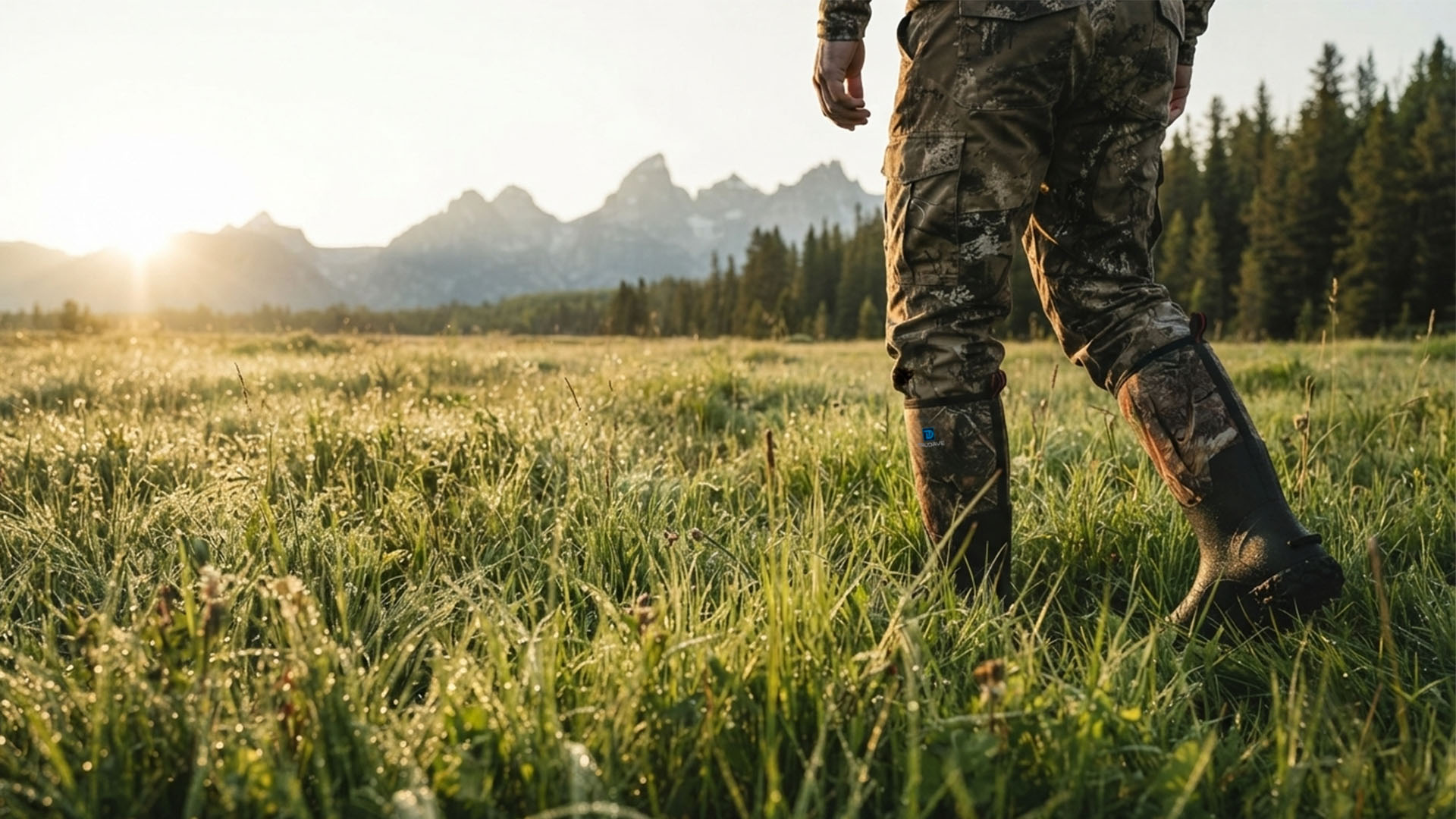
Hunters covering fence lines, stock ponds, and remote public parcels may benefit from lightweight waterproof hunting boots for prairie scouting that provide reliable traction, secure heel retention, and enough flexibility for long approaches.
Heavy mountain boots may be unnecessary on relatively gentle ground, while ordinary hiking shoes may become soaked or clogged with mud.
Match the footwear to current conditions.
Prairie Mud Can Stop Vehicles Before Hunters
A road that looks firm can become unusable after a storm.
Driving on wet roads may:
- Damage the surface
- Create deep ruts
- Lead to getting stuck
- Violate land-management rules
- Block ranch access
Check restrictions.
Park on firm legal ground.
Be prepared to walk farther.
Do not assume four-wheel drive makes every wet road appropriate to use.
Walking Fence Lines Can Be Deceptively Difficult
A fence appears straight and easy to follow.
The ground beside it may contain:
- Badger holes
- Washouts
- Loose wire
- Cactus
- Rocks
- Mud
- Livestock trails
- Sharp metal
Watch every step.
Do not focus entirely on distant animals.
Wear eye protection when moving through sections of loose wire or brush.
Keep dogs controlled where livestock and fencing are present.
Never Crawl Under an Unknown Fence Carelessly
Barbed wire can catch clothing, packs, slings, and skin.
Before crossing a fence:
- Confirm legal access on both sides
- Unload or safely secure the firearm
- Keep the muzzle controlled
- Pass equipment separately
- Use an existing gate when permitted
- Avoid damaging wire
- Check for electric fencing
Never climb a fence while carrying a loaded firearm.
Cross only where legal and safe.
Do Not Assume the Crossing Gives You Access
Pronghorn may move freely between public and private land.
Hunters cannot.
A highly active crossing may lead directly onto private property.
Know the boundary before starting the stalk.
Do not wait until the herd crosses to check the map.
Mapping applications are useful but can contain errors.
Use official information, current signs, and landowner permission.
Corner-Crossing Rules Can Be Complicated
In parts of the West, public parcels may touch only at corners.
Legal access rules and court decisions can be complicated and location-specific.
Do not assume you may cross from one public parcel to another at a shared corner.
Verify current laws and agency guidance for the exact jurisdiction.
When uncertain, choose clearly legal access.
Fence Modifications Belong to Landowners and Managers
Wildlife-friendly fencing can reduce barriers for pronghorn, but hunters should never modify a fence independently.
Do not:
- Cut wires
- Raise bottom strands
- Remove staples
- Open locked gates
- Damage posts
- Create new crossings
Report wildlife entanglement hazards or damaged fences to the landowner or appropriate agency.
Conservation work should occur with permission and proper planning.
Glassing From Roads Has Limitations
Roadside glassing can help locate pronghorn.
Roads also receive hunter traffic.
Animals may recognize vehicles and move away before hunters begin a stalk.
Use legal pullouts.
Do not stop in travel lanes or block gates.
Avoid shooting from, across, or too close to roads where prohibited.
After locating animals, study whether another legal access point provides a less obvious approach.
Use Terrain Before Distance
Pronghorn can detect hunters at extreme distances.
A shorter stalk across open ground may be impossible.
A longer approach through a drainage can be much more effective.
Choose routes that hide:
- Head and shoulders
- Pack movement
- Reflections from optics
- Sudden direction changes
- Skyline exposure
Move slowly when approaching the final position.
The last hundred yards are often more difficult than the first mile.
Avoid Skylining Yourself
A hunter walking along the top of a ridge becomes visible from a long distance.
Stay below the crest.
Cross exposed points quickly and only when the herd is not watching.
Use binoculars from concealed positions.
Even a small terrain roll can hide a crouched hunter from pronghorn below.
Crawling Can Damage Knees and Equipment
Final approaches may require crawling through:
- Cactus
- Sharp rock
- Dry grass
- Mud
- Livestock debris
- Ant hills
Use knee protection where practical.
Keep the firearm muzzle clear.
Inspect the barrel if it contacts soil or vegetation.
Protect binoculars and rangefinders.
Move slowly enough to avoid unnecessary injury or equipment damage.
Range Estimation Is Difficult on Open Prairie
Open terrain lacks familiar size references.
Animals can appear closer than they are.
Use a dependable rangefinder.
Range landmarks before the herd reaches the crossing.
Know distances to:
- Fence posts
- Gates
- Rocks
- Washes
- Trail intersections
Do not wait until the buck appears to begin calculating range.
Fence Wire Can Complicate the Shot
A bullet or arrow striking fence wire can deflect unpredictably.
Never attempt to shoot through a fence.
Wait until the animal is completely clear of the wire.
Confirm the projectile path from the weapon to the target.
Grass and terrain may hide lower strands at distance.
A clear view of the animal does not guarantee a clear path.
Animals Can Bunch at the Crossing
When several pronghorn gather around one opening, they may stand close together.
Avoid shots with overlapping animals.
Wait for the target to separate.
The herd may move quickly after the first animal crosses.
Patience remains essential even when the opportunity appears brief.
Plan Recovery Before the Shot
A buck crossing onto legal public land may run back toward private property after the shot.
Before firing, consider:
- Boundary distance
- Recovery permission
- Terrain
- Vehicle access
- Heat
- Available help
- Meat-cooling equipment
Warm prairie conditions can make game care urgent.
Do not take a shot without a realistic plan for retrieving and cooling the animal.
Warm Weather Requires Fast Meat Care
Many pronghorn seasons occur during relatively warm conditions.
Hunters should prepare:
- Sharp knives
- Game bags
- Coolers
- Ice
- Shade
- Clean transport
- Adequate water
Understand applicable tagging, evidence-of-sex, and meat-salvage rules before the hunt.
Process and cool the animal efficiently according to current regulations and safe field-care practices.
Keep Meat Clean Around Fence Lines
Fence crossings may contain livestock manure, mud, dust, and wire debris.
Move the animal to a clean working area when possible and legal.
Use game bags.
Avoid placing meat directly on contaminated soil.
Carry enough water for the hunter, but do not rely on limited drinking water for extensive cleanup.
Prepare clean materials in advance.
Heat Affects Hunters Too
Long stalks under direct sun can cause dehydration and heat stress.
Carry more water than expected.
Use:
- Sun protection
- Lightweight clothing
- A hat
- Electrolytes when appropriate
- Regular rest
- Shade when available
Early morning glassing can reduce heat exposure.
Know the signs of heat illness and end the hunt when conditions become unsafe.
Afternoon Storms Can Develop Quickly
Western weather can change rapidly.
Lightning, hail, high wind, and heavy rain may reach open prairie with limited shelter.
Monitor forecasts and visible storm development.
Avoid ridgelines, isolated trees, fences, and exposed high points during lightning.
A metal fence can extend across miles of open ground.
Move away and seek appropriate shelter.
Regulations Must Be Verified Locally
Pronghorn hunting is often managed through limited licenses, specific units, and defined seasons.
Rules may include:
- Draw permits
- Unit boundaries
- Weapon restrictions
- Private-land licenses
- Tagging requirements
- Evidence-of-sex requirements
- Legal shooting hours
- Motorized-access restrictions
- Hunter-orange requirements
Always confirm current rules through the responsible state wildlife agency.
Do not rely on older articles or another hunter’s experience in a different state.
Common Pronghorn Fence-Crossing Mistakes
Watching Only Waterholes
Fence crossings can produce predictable travel between multiple resources.
Following the Herd Without Studying the Fence
Animals may travel a long distance before crossing.
Hunting the Largest Trail Automatically
Mature bucks may use smaller secondary crossings.
Starting the Stalk Too Early
Watch direction, pace, and herd behavior first.
Ignoring Property Boundaries
Pronghorn cross land ownership lines freely; hunters cannot.
Shooting Through Fence Wire
Wait until the animal and projectile path are completely clear.
Modifying a Fence
Never cut, lift, or alter fencing without permission.
Underestimating Prairie Mud
Rain can make roads and foot travel extremely difficult.
Taking a Shot Without a Recovery Plan
Boundaries, heat, and distance can complicate game care.
Frequently Asked Questions
Do pronghorn jump fences?
They can, but they often prefer crawling beneath the bottom wire, using gates, moving through washouts, or traveling around fence ends.
How do you find an active pronghorn fence crossing?
Look for tracks, hair beneath the bottom wire, worn trails, disturbed soil, droppings, open gates, low spots, and repeated animal movement.
Are fence crossings good places to hunt pronghorn?
They can be, particularly when they connect bedding, feeding, and watering areas while remaining on land where the hunter has legal access.
Should you sit directly beside a crossing?
Not always. Pronghorn have excellent vision. Terrain, wind, legal access, and shooting distance should determine the setup.
Can hunters raise a fence wire to help pronghorn cross?
Not without permission. Fence modifications should be handled by the landowner or authorized wildlife and land-management personnel.
What boots work well for prairie pronghorn hunting?
Choose lightweight, secure footwear based on distance, mud, terrain, and weather. Waterproof protection can be useful after rain or around stock ponds and wet lowlands.
Final Thoughts
Pronghorn country is not as featureless as it appears.
Fences create structure.
Gates create openings.
Washes create low crossings.
Fence ends create funnels.
Water, food, bedding terrain, and land ownership determine which of those locations matter.
Do not chase the herd immediately.
Watch where it is going.
Study the fence.
Find the worn trail, raised wire, washout, or open gate the animals already trust.
Then use terrain, wind, patience, and legal access to prepare for the crossing.
The best pronghorn opportunity may not happen beside a famous waterhole.
It may happen beneath one ordinary stretch of fence that every animal on the prairie knows how to pass.
