
A recently burned property can look almost empty.
The forest floor is black. Leaves are gone, low brush has disappeared, and familiar trails seem to end in exposed soil and ash. Several stand locations that once felt hidden are now visible from fifty yards away.
To a hunter seeing the property for the first time after the burn, the habitat may appear damaged.
To a whitetail deer, the same area may soon provide tender new vegetation, easier travel, fresh edge habitat, and feeding opportunities close to existing bedding cover.
Prescribed fire does not automatically improve every hunting property, and a recently burned area does not guarantee immediate deer activity. The timing, burn intensity, vegetation type, weather, surrounding cover, and hunting pressure all influence how whitetails respond.
The biggest mistake is assuming the property will continue hunting exactly as it did before the fire.
Old trails may become less important. New food may appear. Bedding cover may temporarily shift, and open ground may change how deer, hunters, wind, and sunlight move through the habitat.
Successful post-burn hunting begins with understanding what changed—and what will grow next.
What Is a Prescribed Burn?
A prescribed burn, sometimes called a controlled burn, is a planned fire used to meet specific land-management goals.
Depending on the property, those goals may include:
- Reducing accumulated leaf litter
- Controlling unwanted vegetation
- Improving wildlife habitat
- Encouraging native plant growth
- Maintaining open woodland structure
- Reducing hazardous fuel buildup
- Restoring fire-dependent ecosystems
A prescribed burn is not the same as an uncontrolled wildfire.
It is conducted under planned conditions by trained people using established boundaries, weather requirements, and management objectives.
Hunters should never enter an active burn area or interfere with fire crews, equipment, firebreaks, or warning signs.
Deer Do Not Need the Woods to Look Pretty
Hunters often judge habitat by appearance.
Tall hardwoods, clean trails, and open visibility look attractive.
Deer judge habitat by what it provides.
They need food, security, bedding cover, water, and safe travel routes.
A blackened forest floor may look unproductive immediately after a burn, but increased sunlight and reduced leaf litter can encourage new growth.
Depending on the region and habitat, this may include:
- Grasses
- Forbs
- Legumes
- Hardwood sprouts
- Blackberry
- Greenbrier
- Native wildflowers
- Low shrubs
- Fresh browse
New vegetation can become more accessible and attractive than mature plants that were previously shaded or difficult to reach.
Timing Determines the Immediate Hunting Value
A burn completed yesterday is different from one completed three months ago.
Immediately after fire, the area may provide limited cover and little new vegetation.
As rain and warm temperatures return, green growth may begin appearing.
The most attractive period depends on:
- Season
- Soil moisture
- Rainfall
- Temperature
- Plant community
- Burn intensity
- Regional climate
Do not follow a universal rule such as “hunt the burn seven days later.”
Scout the actual vegetation and deer sign.
Fresh tracks and browsing activity matter more than the calendar.
Spring Burns Can Create Early Green Growth
In many regions, spring prescribed fire removes old vegetation before the growing season.
As temperatures rise, new plants may emerge in the burned area.
Whitetails often seek fresh, nutrient-rich vegetation during spring and early summer.
A spring burn can become useful for:
- Shed-hunting observations
- Trail-camera inventory
- Summer scouting
- Identifying feeding concentrations
- Monitoring travel between cover and new growth
The exact response depends on what plants return.
A green burned area does not automatically contain preferred deer forage.
Look for actual browsing.
Fall Burns Can Change Hunting-Season Patterns
A burn conducted near hunting season may alter movement more abruptly.
Cover can disappear.
Trails become exposed.
Human activity associated with the burn may temporarily disturb deer.
However, the burn can also reveal tracks, terrain, old roads, and habitat features that were previously hidden.
Hunters should be cautious about drawing conclusions immediately.
Give the area time to settle when appropriate, then evaluate:
- New tracks
- Remaining cover
- Unburned edges
- Current food
- Access routes
- Changes in wind exposure
A favorite stand may need to be moved even if deer continue using the general area.
Burn Intensity Matters
Not every prescribed fire affects the landscape equally.
A low-intensity burn may remove leaves and small plants while leaving much of the overstory and larger woody structure intact.
A hotter burn may reduce more understory cover and create a dramatically different habitat.
Look at what remains.
Ask:
- Are shrubs still standing?
- Did young trees survive?
- Is the canopy open?
- Are brush piles present?
- Did the fire create exposed mineral soil?
- Are unburned pockets nearby?
- Did the burn stop at a creek, road, or firebreak?
These details help explain how deer may use the area afterward.
Unburned Pockets Can Become Immediate Security Cover
Fire rarely affects every square foot equally.
Moist areas, creek bottoms, rock outcrops, dense vegetation, and changes in fuel can leave unburned patches.
These pockets may become important because surrounding cover has been reduced.
Deer can use them for:
- Bedding
- Visual concealment
- Wind protection
- Staging
- Escape routes
Look for fresh trails entering and leaving the remaining cover.
The best setup may be near an unburned island rather than in the open center of the burn.
Burn Edges Often Matter More Than Burn Centers
Habitat edges concentrate resources.
A prescribed burn creates a strong transition between burned and unburned vegetation.
This edge may provide:
- New food on one side
- Security cover on the other
- Defined travel routes
- Rub and scrape opportunities
- Natural stand locations
Mature bucks may remain inside the unburned cover while monitoring the open growth.
Does and younger deer may enter the burn earlier.
Instead of sitting in the middle of the blackened area, consider hunting just inside the cover along a well-used entry trail.
Firebreaks Become New Travel Features
Firebreaks are cleared or disturbed strips designed to help contain a prescribed burn.
They may follow:
- Roads
- Ridges
- Field edges
- Creeks
- Disked soil
- Mowed strips
- Logging trails
After the burn, deer may use these routes because they provide easy walking and new edge growth.
Hunters also use them for access.
This creates a tradeoff.
A firebreak with heavy human traffic may receive mostly nighttime deer movement, while an overlooked section may become a useful daylight corridor.
Search for parallel trails inside nearby cover.
Disked Firebreaks Can Hold Tracks
Exposed soil records movement clearly.
After rain, firebreaks may reveal:
- Deer tracks
- Travel direction
- Predator activity
- Human pressure
- Crossing points
- Trail intersections
Do not assume the most visible tracks identify the best hunting location.
Soft soil can exaggerate activity compared with nearby leaf-covered trails.
Use the tracks to identify where deer leave or cross the firebreak.
Then inspect the surrounding cover.
Old Trails May Become Less Secure
A trail deer used before the burn may remain physically open.
Its value can still change.
If the surrounding vegetation disappeared, deer may feel exposed.
A mature buck might shift ten or thirty yards into remaining cover while traveling in the same general direction.
Check for:
- Parallel tracks
- New edge trails
- Movement behind fallen logs
- Routes through unburned pockets
- Trails along creek buffers
Do not abandon the entire area because one old trail becomes quiet.
The movement may have shifted only a short distance.
New Trails Can Appear Quickly
Deer often take advantage of easier walking.
Burned vegetation and reduced leaf litter can open routes that were previously blocked.
A new trail may connect:
- Bedding cover with fresh growth
- Two unburned pockets
- A creek with the burn edge
- A firebreak with an oak ridge
- A clear-cut with open woodland
Fresh tracks after rain can reveal these adjustments.
Scout several weeks apart to see whether the route becomes established.
Deer May Feed in the Burn and Bed Outside It
Recently burned ground may provide food before it provides enough security for bedding.
Whitetails may enter the burn to browse, then return to thicker cover.
This creates predictable travel between the two.
Identify nearby bedding habitat such as:
- Young timber
- Cedar thickets
- Briar patches
- Creek bottoms
- Clear-cut regeneration
- Dense unburned hardwoods
- Tall grass
The best daylight interception point is often between bedding cover and new growth rather than directly over the food.
Bedding Can Return as Regeneration Thickens
Over time, post-burn vegetation may become dense enough to provide bedding cover.
This depends on management goals and how frequently the property is burned.
A burn maintained as open woodland may remain relatively easy to see through.
Another area may develop thick shrubs and sprouts within several growing seasons.
Monitor habitat development annually.
A location useful only for feeding during the first season may become a bedding area later.
Fire Can Expose Previously Hidden Terrain
Leaves and understory vegetation often hide subtle ground features.
After a burn, hunters may notice:
- Old roadbeds
- Ditches
- Stone walls
- Logging trails
- Small benches
- Creek channels
- Fence lines
- Foundations
- Rock piles
These features can explain deer movement.
Mark them while visibility is good.
Historical human features may also contain hazards, so walk carefully.
Ash Can Hide Holes and Obstacles
A burned forest floor may appear smooth.
It can conceal:
- Stumps
- Root holes
- Loose rock
- Burned branches
- Wire
- Old fencing
- Unstable logs
- Smoldering material after recent operations
Never enter until the area has been officially reopened and declared safe.
Even later, watch every step.
A dark surface can make depth and texture difficult to judge.
Dead Trees and Limbs Require Extra Caution
Fire can weaken trees.
Some damage is obvious.
Other problems appear later.
Inspect for:
- Charred trunks
- Damaged roots
- Cracks
- Dead tops
- Hanging limbs
- Loose bark
- Lean
- Burned cavities
Never place a tree stand in a fire-damaged tree without a careful safety evaluation.
Avoid standing or sitting beneath questionable limbs.
Wind can bring down damaged trees long after the burn.
Old Stand Trees Must Be Reassessed
A stand tree that was safe last season may no longer be suitable.
The fire may have affected roots or bark.
Surrounding trees may be gone, increasing wind exposure.
The stand may now be highly visible.
Before using an old location, ask:
- Is the tree structurally sound?
- Is the approach still concealed?
- Does the wind behave differently?
- Can deer see the stand from farther away?
- Did travel shift?
- Are overhead hazards present?
Do not climb because the stand was historically productive.
Open Ground Changes Wind Behavior
Removing low vegetation can increase airflow near the surface.
The burn may also create temperature differences between open ground and shaded timber.
Wind can move faster across the burn and swirl along its edges.
Check conditions from the actual stand.
A setup that worked before the fire may now send scent toward deer.
Use wind indicators repeatedly throughout the hunt.
Sunlight Can Create Stronger Thermals
Dark burned ground can warm quickly under direct sunlight.
This may create rising air during the morning.
As the ground cools in the evening, thermals can reverse.
The timing depends on weather, slope, shade, moisture, and wind strength.
Hunters near bedding cover should pay attention to vertical scent movement.
A favorable prevailing wind does not guarantee safe thermals.
South-Facing Burns May Green Up Differently
South-facing slopes often receive more sunlight.
They may warm and dry faster than shaded slopes.
Plant response can differ.
Early-season browse may appear sooner, while summer heat may reduce moisture later.
North-facing or shaded burns may retain moisture longer.
Scout both.
Do not assume the first green section remains the most attractive throughout the year.
Rain Can Trigger a Noticeable Habitat Change
A dry burned area may show limited growth.
After several warm rains, vegetation can respond quickly.
Trail-camera activity may increase as new forage develops.
Check the property after meaningful weather changes.
However, avoid repeatedly walking through new feeding areas.
Use distant observation and low-impact camera placement when possible.
Mud Can Become a Major Access Problem
Prescribed burns often expose soil.
Firebreak construction, equipment, and rain can create mud.
Hunters may encounter:
- Soft firebreaks
- Water-filled ruts
- Slippery ash
- Creek crossings
- Eroded slopes
- Saturated low ground
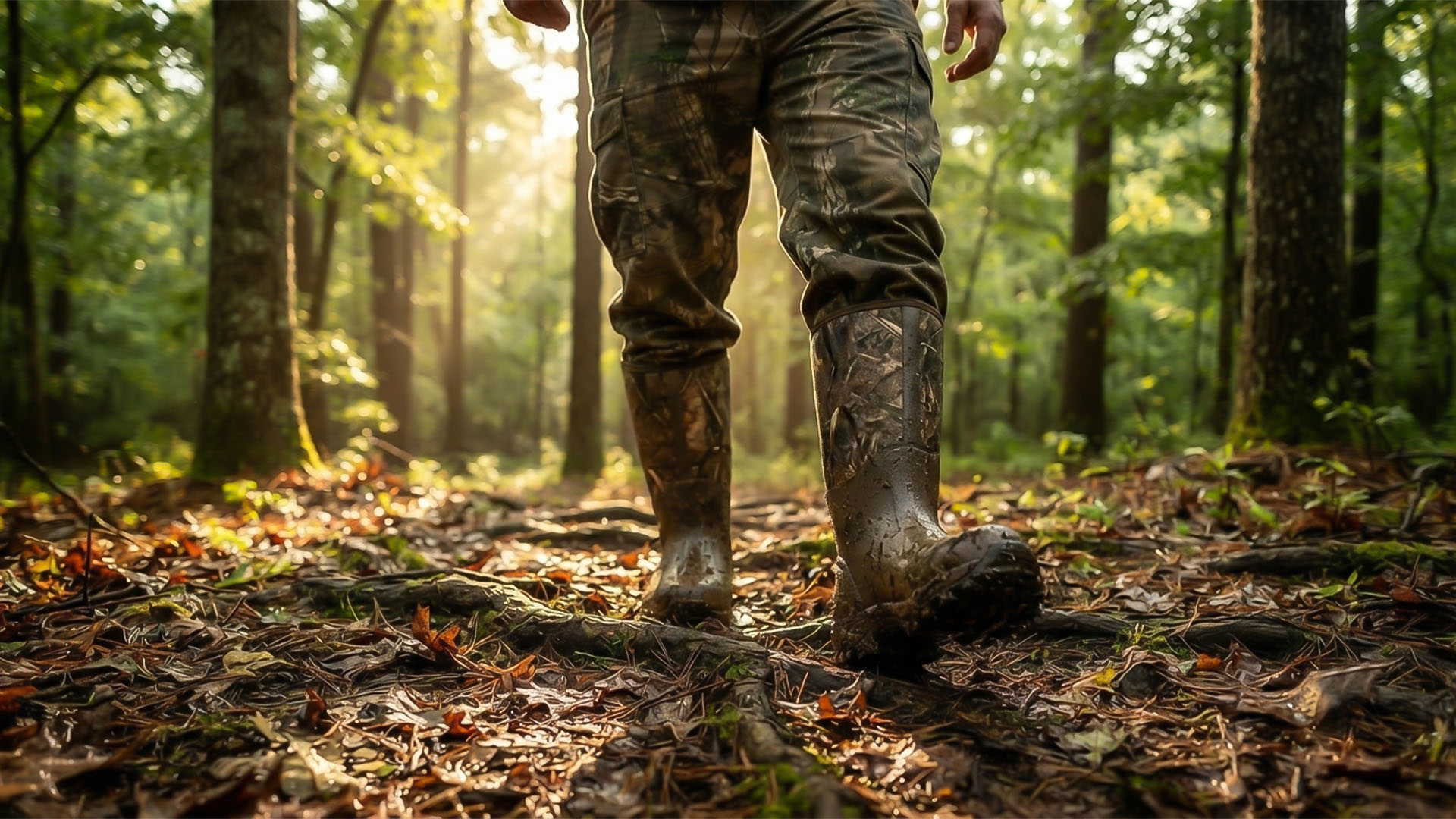
Hunters evaluating these areas may benefit from waterproof hunting boots for muddy post-burn scouting that provide secure heel retention, dependable traction, and enough support for uneven terrain.
Choose footwear based on activity and temperature.
A mobile scouting trip may require less insulation than a late-season stand hunt.
Ash and Mud Can Reduce Traction
Wet ash creates a slick surface.
Clay may pack between outsole lugs.
Burned roots and branches create additional hazards.
Move slowly.
Use short steps on slopes.
Avoid walking directly in deep machinery ruts.
Clean packed mud from the outsole before climbing into a stand or crossing logs.
Soot Can Affect Clothing and Equipment
A recently burned area may leave black residue on boots, clothing, packs, and equipment.
Protect sensitive optics and electronics.
Clean footwear before entering vehicles or indoor storage.
Inspect firearm or bow equipment if it contacts ash or burned debris.
Follow manufacturer care recommendations.
New Growth Can Be Small but Attractive
Hunters sometimes search for large food sources.
Post-burn feeding may focus on low plants only a few inches tall.
Look closely for:
- Freshly clipped stems
- Browsed sprouts
- Tracks around green patches
- Droppings
- Concentrated trail-camera activity
A small patch of preferred forage near cover may be more important than acres of less attractive vegetation.
Not All Green Growth Is Deer Food
A burned area can become green without becoming highly valuable to whitetails.
Plant species matter.
Deer selectively browse certain vegetation.
Confirm use rather than assuming.
Compare plants inside and outside heavily tracked areas.
Look for fresh nipping and repeated feeding.
Land managers or local wildlife biologists may help identify important species.
Oak Production Still Matters
A prescribed burn beneath mature oaks does not eliminate the importance of acorns.
During mast years, deer may feed on acorns throughout the burned woodland.
Reduced leaf litter can make acorns easier to find.
Look for:
- Producing trees
- Disturbed soil
- Fresh tracks
- Droppings
- Feeding areas near cover
A burned oak flat can become especially attractive when it combines mast with fresh low growth.
Burns Can Improve Visibility for Hunters
Reduced understory allows longer sight lines.
This can make the area easier to hunt with a firearm.
It can also make hunters easier for deer to see.
Movement that was hidden before may now be visible across the entire opening.
Use background cover.
Enter slowly.
Avoid crossing exposed ground during daylight.
Improved visibility benefits both sides.
Ground Blinds May Become More Obvious
A blind that disappeared inside brush before the burn may now stand alone.
Relocate or re-brush it when legal and appropriate.
Use remaining cover such as:
- Unburned vegetation
- Fallen trees
- Terrain banks
- Cedar clumps
- Brush piles outside the burn
Place the blind early when possible.
Do not cut new vegetation without permission.
Natural Ground Setups Can Use Burn Boundaries
The line between burned and unburned habitat can provide excellent background cover.
A hunter can sit just inside the darker vegetation while watching deer enter new growth.
Choose a location with:
- Safe shooting lanes
- Stable ground
- Favorable wind
- Quiet access
- No damaged overhead trees
- Enough concealment
Avoid sitting where loose ash or dry debris creates excessive noise.
Trail Cameras Should Monitor Entry Routes
A camera in the center of a burn may capture feeding deer but require intrusive access.
Better locations may include:
- Burn-edge trails
- Firebreak crossings
- Creek buffers
- Unburned islands
- Bedding-cover exits
- Logging-road intersections
Angle cameras along travel routes.
Avoid attaching equipment to fire-damaged trees that may fall.
Check cameras infrequently.
Camera Data Can Show How Quickly Deer Return
Post-burn trail cameras can help answer:
- When did deer reenter the area?
- Which edge receives daylight activity?
- Are deer feeding or traveling?
- Which wind conditions produce movement?
- Are mature bucks remaining in cover?
- Did activity increase after rain?
Compare data over several weeks.
One photo immediately after the burn does not establish a useful pattern.
Rubs May Shift to Surviving Edge Trees
Fire can remove or damage many small trees.
Bucks may concentrate rubbing activity on surviving saplings along the burn edge, firebreak, or creek buffer.
Look for fresh rub lines connecting:
- Bedding cover
- Feeding growth
- Unburned islands
- Travel corridors
- Scrape locations
Avoid interpreting charred or peeled bark as buck sign without confirming fresh rub characteristics.
Scrapes Can Become Easier to See
Reduced leaf litter makes disturbed soil more visible.
Bucks may create scrapes along firebreaks, edges, and trail intersections.
Look for overhanging licking branches.
An apparent scrape without a suitable branch or current tracks may simply be fire or equipment disturbance.
Confirm multiple indicators before treating the location as active deer communication.
The Rut Can Increase Edge Travel
During the rut, bucks move between doe groups and bedding cover.
Burn edges can function as efficient travel routes.
A buck may stay just inside the unburned side while scent-checking the open area.
Search for parallel trails on the downwind edge.
The main feeding trail may carry does.
A mature buck may travel farther inside cover.
Hunting Pressure May Concentrate Around the Burn
Hunters recognize that prescribed burns can improve habitat.
On public land, newly burned areas may attract significant attention.
People may scout the same firebreaks, park at the same gates, and place cameras on obvious trails.
Study human movement.
Look for overlooked sections where:
- Wet ground complicates access
- The burn meets thick cover
- Terrain blocks visibility
- Parking is inconvenient
- A small unburned island remains hidden
Do not assume a remote-looking burn is unpressured.
Small Burns Can Outperform Large Burns
A large burned area creates significant new habitat.
It may also expose deer and attract hunters.
A small burn beside thick bedding cover can provide food without requiring deer to travel far.
Evaluate:
- Size
- Shape
- Edge length
- Nearby security
- Access
- Human pressure
- Plant response
A twenty-acre burn is not automatically better than a five-acre burn.
The surrounding habitat determines its usefulness.
Irregular Burn Shapes Create More Edge
A burn with multiple fingers, pockets, and unburned islands provides more habitat diversity than a simple rectangular opening.
These irregularities can create:
- Funnels
- Staging pockets
- Bedding edges
- Concealed entry routes
- Wind breaks
Study the burn boundary carefully.
The interior corner of an unburned section may become more valuable than the middle of the burn.
Creek Buffers Can Remain Unburned
Moist creek-bottom vegetation may burn differently or be intentionally protected.
The resulting buffer can provide travel cover through open ground.
Look for where the creek corridor:
- Narrows
- Crosses a firebreak
- Reaches a ridge
- Connects bedding and food
- Intersects a logging road
Wind and thermals can be difficult in low terrain.
Scout before hunting aggressively.
Fire Can Change Turkey and Small-Game Use Too
Prescribed burns can affect multiple wildlife species.
Open ground and new plant growth may attract turkeys, rabbits, and other animals.
Hunters pursuing deer should expect overlapping activity and potentially other hunters.
Know current seasons.
Wear required safety clothing.
Never assume movement inside the burn is a deer until the animal is positively identified.
Public-Land Closures Must Be Respected
Managed burns may create temporary closures before, during, or after operations.
Roads, trails, and parking areas can remain restricted.
Check current information from the managing agency.
Do not move barriers or enter closed areas.
A trail visible on a mapping app may not currently be open.
Private-Land Burn Plans Matter
On private property, communicate with the landowner or burn manager.
Ask:
- Which areas were burned?
- What was the management goal?
- Are any hazards present?
- Are roads open?
- Will follow-up work occur?
- Are herbicides or mechanical treatments planned?
- When is access permitted?
Understanding the management plan can improve hunting strategy and prevent interference with ongoing work.
Never Alter Firebreaks
Firebreaks are management infrastructure.
Do not block them with blinds, vehicles, tree stands, or equipment.
Do not plant, dig, or move soil without permission.
Crews may need access for future burns or emergencies.
Use the edges without interfering with their function.
Common Post-Burn Hunting Mistakes
Assuming the Property Is Ruined
New browse and edge habitat may improve deer use over time.
Hunting the Center of the Burn
Mature deer may remain in staging cover along the edge.
Expecting Immediate Green Growth
Plant response depends on timing, rain, temperature, and vegetation.
Trusting Old Deer Trails
Reduced cover may shift movement into parallel routes.
Ignoring Fire-Damaged Trees
Burned roots, trunks, and limbs can create serious hazards.
Using the Same Stand Without Rechecking Wind
Open ground changes airflow and thermals.
Walking Every Firebreak
Human scent can contaminate multiple crossings.
Assuming Every Green Plant Is Preferred Browse
Confirm actual feeding activity.
Entering Before the Area Is Reopened
Respect all closures and fire-management instructions.
Frequently Asked Questions
Is deer hunting good after a prescribed burn?
It can be. Prescribed fire may encourage new browse, create edges, expose travel routes, and improve habitat. Deer response depends on burn timing, intensity, vegetation, and surrounding cover.
How soon do deer return after a controlled burn?
Some deer may return quickly after activity ends, while others take longer. Fresh tracks and camera data provide better local information than a fixed timeline.
Where should you hunt around a prescribed burn?
Focus on burn edges, unburned pockets, firebreak crossings, creek buffers, bedding-cover exits, and routes connecting fresh growth with security cover.
Do deer eat new growth after a burn?
They may browse tender sprouts, forbs, grasses, vines, and shrubs that emerge after fire. Plant species and local preference determine the actual feeding value.
Can deer bed inside a burned area?
Immediately after a burn, security cover may be limited. As vegetation regenerates, some burned areas can develop useful bedding cover.
Is it safe to use old tree stands after a prescribed burn?
Every tree and stand location should be reinspected. Fire can damage roots, bark, trunks, and overhead limbs while increasing wind exposure.
Final Thoughts
A prescribed burn does not simply remove vegetation.
It resets the habitat.
Old trails become exposed.
New food develops.
Edges appear.
Unburned pockets gain security value.
Wind and thermals change.
Hunters gain visibility while deer lose some cover.
The property may hunt poorly if you continue using last season’s assumptions.
Scout the burn edge.
Find the surviving cover.
Monitor new growth.
Watch how deer enter and leave.
Recheck every stand tree.
Respect closures and management infrastructure.
Most importantly, let fresh sign determine when the burned area has become useful.
The black ground may look empty today.
After rain, sunlight, and a few weeks of growth, it may become one of the most active feeding areas on the property.
