
A beaver pond looks like an obvious place to hunt deer.
Fresh tracks cover the muddy shoreline. Several trails enter the flooded timber, and a narrow dam connects two pieces of higher ground. Rubs appear along the edge of the water, and aerial imagery shows thick cover surrounding the entire wetland.
The temptation is to place a stand directly beside the pond.
Sometimes that works.
More often, the best daylight deer movement occurs farther from the water than hunters expect.
Whitetails may drink from a beaver pond, cross the dam, and travel along the shoreline. But the wetland’s greater value often comes from the way it shapes security cover, hunter access, bedding locations, wind behavior, and travel between patches of dry ground.
A beaver pond is not simply a water source.
It is a terrain feature that can reorganize the entire surrounding habitat.
Hunters who understand that influence can identify overlooked funnels and bedding areas without setting up directly over the most visible tracks.
Why Beaver Ponds Attract Whitetails
A functioning beaver pond changes the landscape.
Water floods low timber.
Brush grows along the shoreline.
Fallen trees create horizontal cover.
Sediment forms muddy flats.
Abandoned channels develop thick vegetation.
These changes provide several things whitetails use:
- Drinking water
- Security cover
- Browse
- Bedding habitat
- Reduced hunting pressure
- Predictable crossing points
- Travel corridors around deep water
The pond itself may not be the main attraction.
The surrounding edge habitat often matters more.
Where wet ground meets dry timber, deer gain food, cover, and travel options within a relatively small area.
Water Creates Natural Barriers
Deer can swim.
They can cross shallow flooded ground.
They can move through terrain that stops many hunters.
However, whitetails usually travel efficiently when they have a choice.
Deep water, soft mud, steep banks, and fallen timber create resistance.
Deer often move around these obstacles rather than directly through them.
That movement can produce funnels.
Look for places where:
- The pond narrows
- A ridge reaches the shoreline
- Dry ground pinches between water and steep terrain
- A dam connects two sides
- An old road crosses the wetland
- A creek enters or exits the pond
- High ground forms an island
These features may concentrate deer movement much more consistently than a random section of shoreline.
Start by Identifying Dry Ground
The most important feature around many beaver ponds is not the water.
It is the dry ground.
Small elevation changes become significant in wet habitat.
An old logging road may sit only a foot above the surrounding marsh but remain dry enough for regular travel.
A narrow ridge may extend into flooded timber.
A small island may provide bedding cover.
Study topographic maps, aerial imagery, and wetland layers before scouting.
Look for:
- Elevated points
- Roadbeds
- Levees
- Creek banks
- Timber islands
- Narrow ridges
- Old railroad grades
- Higher field corners
Then confirm the conditions on foot.
Digital maps do not always show current water levels or recent beaver activity.
Beaver Dams Can Become Deer Crossings
A beaver dam may provide one of the easiest routes across a wetland.
Deer can walk over packed sticks, mud, and vegetation rather than swimming or moving through deep water.
Tracks on a dam can be impressive.
That does not automatically make the dam the best stand location.
Beaver dams are often narrow.
Wind can be difficult.
Human access may leave scent directly on the crossing.
A hunter walking over the dam can contaminate the same route deer use.
Instead of sitting directly beside the crossing, identify where deer enter and leave the dam.
The better setup may be fifty to two hundred yards away inside cover, where multiple trails combine before reaching the water.
Study Both Ends of the Dam
Deer rarely approach a dam from every direction equally.
One side may connect to bedding cover.
The other may lead toward food.
Tracks can reveal direction and frequency.
Look for:
- Rubs
- Droppings
- Muddy hoofprints
- Worn trails
- Browsed vegetation
- Parallel routes
- Fresh beds nearby
The end with the heaviest tracks is not automatically the best hunting side.
Consider wind, access, time of day, and where deer are likely to be before reaching the crossing.
Shoreline Trails Can Be Misleading
A muddy shoreline records tracks clearly.
That makes shoreline trails look more active than trails on dry leaves.
A few deer can leave dozens of visible prints along soft mud while a heavily used trail twenty yards inside the timber appears faint.
Do not choose a setup based only on track visibility.
Walk parallel to the shoreline and search inside cover.
A secondary trail may provide more secure daylight movement.
Mature bucks often avoid walking directly along exposed water edges when thicker cover is available nearby.
Look for Parallel Trails Inside Cover
The obvious shoreline trail may receive nighttime movement.
A less visible trail inside brush may hold daylight activity.
Check areas ten to fifty yards from the pond.
Look for routes that:
- Follow the same general direction as the shoreline
- Connect bedding cover with crossings
- Pass through brush or young timber
- Stay on slightly higher ground
- Avoid open mud flats
- Intersect rub lines
Parallel trails become especially important after hunting pressure increases.
Deer may continue using the wetland while shifting farther into security cover.
Flooded Timber Creates Bedding Security
Standing water discourages hunters.
Mud slows access.
Fallen trees make travel difficult.
Dense regrowth blocks visibility.
These features can create excellent bedding security.
Deer may bed on:
- Dry hummocks
- Small islands
- Raised root systems
- Old roadbeds
- Brushy points
- Elevated creek banks
- Beaver lodges’ surrounding high ground
- Timber edges above the flood line
A bedding area does not need to be large.
One patch of dry ground surrounded by difficult access can provide enough security for several deer.
Mature Bucks May Bed Near Water Without Being Beside It
A buck may use water as a security barrier.
Instead of bedding directly on the shoreline, it may choose a point, bench, or island that limits the directions from which danger can approach.
The buck can monitor dry-ground access with wind and visibility while the wetland protects another side.
Search for beds where:
- Wind moves from dry ground toward the pond
- The deer can see approaching trails
- Thick cover protects the rear
- Multiple escape routes exist
- Human access is difficult
These locations can be challenging to hunt.
Finding a bed does not mean you should immediately set up beside it.
Wetlands Can Hide Hunting Pressure
Hunters often assume difficult wet terrain receives no pressure.
That is not always true.
Beaver dams, old roads, and visible high ground attract people because they provide obvious access.
A remote-looking pond may still receive regular foot traffic from anglers, trappers, duck hunters, hikers, or deer hunters.
Look for:
- Boot tracks
- Cut branches
- Trail markers
- Flagging tape
- Tree-stand straps
- Shell casings
- ATV tracks
- Disturbed mud
Human sign helps explain deer movement.
A trail with excellent habitat but heavy pressure may produce limited daylight activity.
Access Can Make or Break the Setup
The best stand location around a beaver pond may be impossible to hunt without crossing active deer trails.
Plan the entire approach.
Ask:
- Where are deer likely to bed?
- Where will they feed?
- Which crossing will they use?
- Can I stay downwind?
- Can I avoid walking the shoreline?
- Will water levels change?
- Can I leave after dark safely?
A route through wet ground may provide concealed access.
It may also create noise, mud, scent, and safety problems.
The correct route is the one that reaches the setup without disturbing the deer you expect to hunt.
Water Levels Change Quickly
Beaver ponds are not permanent in shape.
A damaged dam can lower water.
Fresh construction can flood new timber.
Heavy rain can raise the pond.
Drought can expose mud flats.
A crossing used during summer scouting may become too deep by hunting season.
Visit the location more than once.
Check it after major storms.
Monitor:
- Dam condition
- Water depth
- New channels
- Flooded roads
- Bank stability
- Alternative crossings
A hunting plan based on outdated water conditions can fail before the hunt begins.
Mud Can Reveal Current Movement
Soft ground records fresh deer activity.
Check:
- Dam entrances
- Creek banks
- Muddy roadbeds
- Narrow shoreline gaps
- Field entrances
- Trails around flooded cover
Fresh tracks provide direction and timing clues.
However, rain and fluctuating water can erase sign quickly.
Combine tracks with rubs, beds, droppings, and trail-camera information.
One track proves a deer crossed.
Repeated sign suggests a pattern.
Trail Cameras Need Careful Placement
A trail camera directly over a dam may capture many deer.
It can also require intrusive visits.
Every camera check places scent on the crossing.
Consider locations farther from the water where trails converge.
Useful camera positions may include:
- High-ground funnels
- Logging-road intersections
- Bedding-cover edges
- Staging areas
- Secondary shoreline trails
- Creek crossings above the pond
Angle the camera along the trail rather than directly across it when possible.
Reduce visits during hunting season.
Food Around Beaver Ponds Changes Seasonally
Wetlands produce diverse food.
Depending on region and season, deer may use:
- Willow
- Dogwood
- Greenbrier
- Aquatic vegetation
- Young hardwood growth
- Acorns along higher edges
- Agricultural crops nearby
- Regenerating clear-cuts
- Browse exposed after flooding
The most productive side of the pond may change as food availability changes.
During early season, green vegetation may attract deer.
During fall, an oak ridge above the pond may become more important.
Late-season deer may focus on protected browse close to bedding cover.
Scout current food, not last month’s sign.
Rub Lines Can Reveal Buck Travel
Bucks often rub trees along habitat edges.
A line of rubs above a beaver pond may show how a buck travels between bedding cover and food.
Look for rubs on:
- Elevated points
- Creek banks
- Logging roads
- Dam approaches
- Transitions between wet and dry cover
- Trails below ridge tops
One rub is interesting.
Several fresh rubs forming a line provide stronger information.
Study which side of the trees was rubbed and how the route connects surrounding habitat.
Scrapes May Appear on High Ground
Scrapes require suitable ground.
Flooded and muddy shoreline areas may not provide the right location.
Look on nearby high ground, especially where trails intersect beneath overhanging branches.
A scrape line above the pond may reveal staging behavior before deer enter open feeding areas.
Avoid checking active scrapes too frequently.
Approach with favorable wind and minimize disturbance.
Wind Around Water Can Be Complicated
Hunters often expect open water to create predictable airflow.
Terrain and temperature can make conditions more complex.
Cold air may settle into the pond basin.
Morning sunlight can warm nearby slopes at different rates.
Creek channels can redirect wind.
Dense timber can create swirling air.
Check wind from the actual setup.
Use lightweight indicators that show both horizontal and vertical movement.
Do not rely entirely on the forecast.
Evening Thermals Can Pull Scent Toward the Pond
As the ground cools, air often moves downhill.
A stand above the pond may seem safe under the prevailing wind, but falling thermals can carry scent toward shoreline trails and bedding cover.
Consider how the setup behaves during the final hour of daylight.
A location that works in the afternoon may become risky as temperatures drop.
Monitor conditions throughout the hunt.
Leave when scent begins moving toward deer.
Morning Access Through Low Ground Can Be Risky
Before sunrise, cold air often settles into wetland basins.
A hunter using the creek bottom for hidden access may unknowingly send scent throughout the low ground.
The route may be visually concealed but thermally poor.
Test the air.
Consider approaching from higher terrain when possible.
Access strategy should reflect both visibility and scent movement.
Flooded Habitat Demands Suitable Footwear
Scouting and hunting around beaver ponds often involves mud, shallow water, wet vegetation, unstable banks, submerged branches, and saturated logging roads.
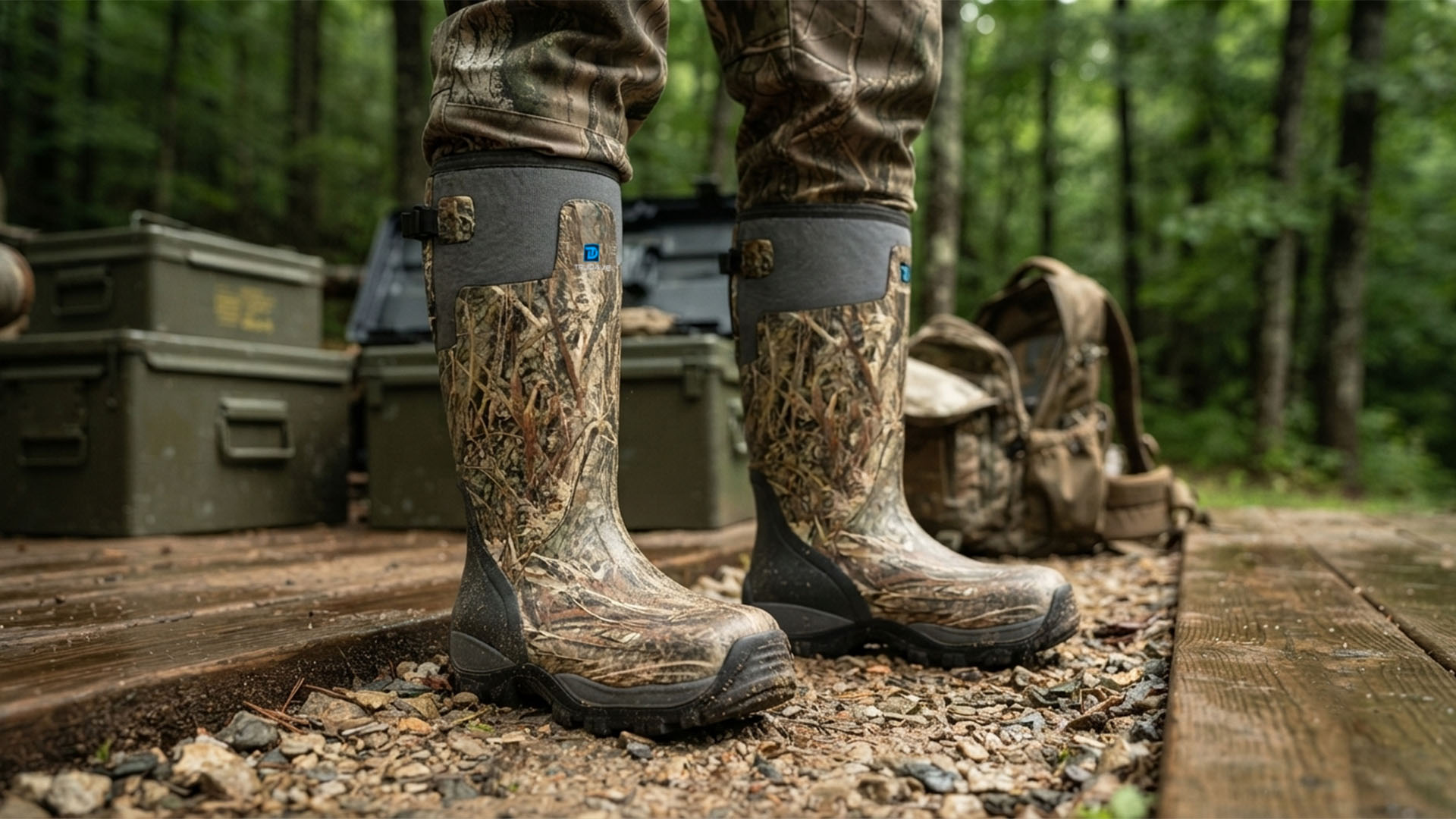
Hunters repeatedly entering these conditions may benefit from waterproof hunting boots for flooded deer habitat that provide secure heel retention, dependable outsole traction, and enough shaft height for the expected water depth.
The footwear should also match the walking distance and temperature.
A heavy insulated boot may be useful for short late-season sits but uncomfortable during long early-season scouting trips.
Waterproofing matters, but fit and mobility remain equally important.
Test Water Depth Before Crossing
Dark water hides changes in depth.
A shallow edge can drop quickly.
Mud may create suction.
Submerged logs can roll beneath the foot.
Use a walking stick or trekking pole.
Test each step before transferring full weight.
Avoid crossing unfamiliar flooded ground in complete darkness.
Mark safe routes during daylight.
Never assume deer tracks prove a crossing is safe for a person.
Do Not Walk Directly Across an Active Dam
A dam may provide the easiest human route.
It may also be the most important deer crossing.
Repeated walking leaves scent and visual disturbance.
Use another access route when possible.
When crossing is unavoidable, reduce unnecessary visits and choose timing carefully.
One scouting trip may provide useful information.
Multiple weekly trips can alter deer behavior.
Watch for Unstable Beaver Structures
Beaver dams and lodges are working wildlife structures.
Sticks can shift.
Mud can collapse.
Hidden channels may exist beside them.
Do not climb directly on active lodges.
Use caution on dams.
A surface that supports a deer may not safely support a person carrying hunting equipment.
Avoid damaging the structure or disturbing wildlife unnecessarily.
Beaver Ponds Can Create Duck-Hunting Conflicts
Some beaver ponds are used by waterfowl hunters.
Deer movement may change when duck season begins.
Shots, dogs, boats, and repeated morning access can push deer away from the immediate shoreline.
Study overlapping seasons and property use.
A stand that produces before waterfowl pressure may become less effective later.
Deer may shift toward the opposite side or use the pond primarily at night.
Trapping Activity Can Affect Access
Beaver ponds may also receive legal trapping activity.
Do not interfere with traps, sets, equipment, or marked areas.
Keep hunting dogs under control.
Communicate with landowners and other legal users when possible.
Multiple outdoor activities can occur on the same property.
Understanding them improves both safety and hunting strategy.
Small Ponds Can Be Better Than Large Wetlands
Large wetlands attract attention.
Small beaver ponds may receive less pressure.
A pond covering only a few acres can still create:
- A bedding island
- A dam crossing
- A shoreline funnel
- Thick browse
- A wet access barrier
Do not judge a location only by water size.
Study how the pond affects the surrounding terrain.
A small obstruction in the right place may concentrate movement more effectively than a large open swamp.
Abandoned Beaver Ponds Remain Valuable
When beavers leave and the dam fails, the water may drain.
The former pond becomes a meadow, mud flat, or brushy opening.
These abandoned ponds can provide:
- Browse
- Bedding cover
- Edge habitat
- Openings inside timber
- New travel routes
Deer use may increase as vegetation develops.
Historical aerial imagery can reveal old pond boundaries and former flooded timber.
What looks like a random brushy opening today may have been created by beavers years earlier.
Hunt the Transition, Not the Middle
The center of a drained beaver meadow may provide food.
The edge often provides better daylight security.
Focus on where:
- Brush meets timber
- Wet ground meets dry ground
- Young growth meets mature forest
- A creek enters the meadow
- A point reaches the opening
- Thick cover narrows movement
Transitions provide deer with several habitat options while keeping escape cover close.
Field Edges Near Wetlands Can Become Staging Areas
Agricultural fields beside beaver ponds create strong habitat combinations.
Deer may bed in wet cover and stage along the timber edge before entering the field.
Instead of hunting directly over the crop, study the route between flooded cover and food.
Look for:
- Rubs
- Scrapes
- Parallel trails
- High-ground funnels
- Creek crossings
- Brushy corners
The best daylight opportunity may occur well before deer reach the open field.
Snow Can Reveal Hidden Travel Routes
Winter snow makes wetland movement easier to understand.
Tracks show which dams, islands, roadbeds, and creek crossings remain active.
Look for trails that connect:
- Bedding islands
- Evergreen cover
- Late-season food
- Dry ridges
- Field edges
Do not follow tracks onto unsafe ice.
Frozen water should never be assumed safe based on animal movement.
Deer distribute weight differently and may cross places that cannot support a hunter.
Ice Changes Access and Risk
A thin layer of ice can hide water and mud.
Shoreline rocks become slippery.
Dams may appear solid while remaining unstable.
Avoid walking on pond ice unless it has been evaluated according to appropriate safety practices.
When uncertain, stay off.
Plan land-based routes.
No stand location is worth risking a fall through ice.
Tree-Stand Placement Can Be Difficult
Wetland edges may contain poor stand trees.
Trunks can lean.
Roots may be unstable.
Flooding can damage trees.
Dead limbs may hang overhead.
Inspect every tree carefully.
Avoid trees showing:
- Root damage
- Rot
- Dead tops
- Loose bark
- Severe lean
- Flood-related instability
- Overhead hazards
Ground blinds or natural ground setups may provide safer alternatives when tree conditions are poor.
Ground Setups Need Background Cover
A hunter sitting near a beaver pond can disappear into fallen timber, brush, and bank vegetation.
Choose a setup with:
- Solid background cover
- A safe shooting direction
- Visibility toward likely trails
- Wind protection
- Dry, stable ground
- Quiet access
Do not sit directly on an active crossing.
Move far enough away that deer remain focused on the route rather than the hunter’s location.
Practice Close-Range Shooting
Dense wetland cover can create short, fast opportunities.
Branches limit visibility.
Deer may appear at twenty yards without warning.
Practice from realistic positions.
Understand how clothing, seated posture, and vegetation affect the shot.
Never fire through brush without a clear path and safe background.
Wetlands may contain other hunters, anglers, livestock, buildings, or roads that are not immediately visible.
Common Beaver-Pond Hunting Mistakes
Setting Up Directly Beside the Water
The best daylight trail may be farther inside cover.
Trusting the Most Visible Muddy Trail
Soft ground exaggerates how active shoreline routes appear.
Ignoring Small Areas of High Ground
Minor elevation changes can create bedding and travel funnels.
Walking Across the Dam Repeatedly
Human scent can contaminate a key crossing.
Scouting Using Outdated Water Levels
Beaver activity and storms change the habitat quickly.
Assuming Wind Will Be Simple Near Open Water
Terrain, thermals, and creek channels can create unexpected airflow.
Entering Flooded Ground Without Testing It
Water hides mud, holes, logs, and sudden drop-offs.
Hunting the Same Stand After Waterfowl Pressure Begins
Other outdoor activity can change deer movement.
Ignoring Abandoned Ponds
Drained wetlands often become productive browse and bedding habitat.
Frequently Asked Questions
Are beaver ponds good places to hunt deer?
Yes. Beaver ponds can create bedding cover, browse, travel barriers, crossings, and areas receiving reduced hunting pressure.
Do deer cross beaver dams?
Deer frequently use stable beaver dams as crossings when the structure provides an easier route across water or mud.
Where should you place a deer stand near a beaver pond?
Focus on high-ground funnels, dam approaches, parallel trails inside cover, bedding-area exits, and routes connecting the wetland with food. Avoid assuming the shoreline is always best.
Do deer bed in flooded timber?
Deer may bed on dry islands, hummocks, roadbeds, points, and elevated ground surrounded by flooded cover.
How does a beaver pond affect deer movement?
The pond can block direct travel and concentrate movement around dams, narrow shorelines, high ground, old roads, creek crossings, and dry islands.
Is it safe to cross a beaver dam?
Beaver dams can be unstable and may contain hidden channels, loose sticks, mud, and deep water. Evaluate every crossing carefully and use another route when conditions are uncertain.
Final Thoughts
A beaver pond should not be treated as one large water hole.
It is a system of barriers, crossings, bedding cover, browse, high ground, and changing access.
The obvious shoreline trail may not hold the best daylight movement.
The dam may be more valuable as a funnel than as a stand location.
A one-foot rise in elevation may create the most secure bedding area on the property.
Study the dry ground.
Find the approaches to the dam.
Search for parallel trails.
Watch how food and hunting pressure change throughout the season.
Monitor water levels.
Test every crossing.
Respect unstable structures and ice.
Most importantly, plan access without contaminating the same routes deer depend on.
The best hunting location near a beaver pond is often not where the tracks are easiest to see.
It is where wet ground quietly forces deer through the one piece of secure cover most hunters never reach.
