
You’ve checked the weather three times.
The forecast says a steady northwest wind.
You choose a stand that has worked in the past with exactly that wind.
Everything seems perfect.
Then, halfway through the morning, a mature buck suddenly lifts its nose, stares directly toward your position, and quietly slips away without ever offering a shot.
What happened?
Many hunters immediately blame an unpredictable breeze.
In reality, the problem may have been thermals rather than the prevailing wind.
Thermals are small-scale air movements caused by changing temperatures across the landscape. They can carry human scent uphill, downhill, or through drainages even when the general wind direction remains constant.
Learning to recognize thermal movement is one of the most valuable skills a whitetail hunter can develop.
Wind and Thermals Are Not the Same Thing
The weather forecast usually reports prevailing wind.
That is the large-scale movement of air across a region.
Thermals are different.
They are influenced by:
- Sunlight
- Terrain
- Temperature changes
- Shade
- Elevation
- Time of day
A steady west wind can exist while thermals carry scent downhill through a nearby drainage.
Both air movements matter.
Why Morning Thermals Rise
As the sun warms the landscape, air near the ground begins to heat up.
Warm air becomes lighter and starts moving uphill.
This upward movement is commonly called a rising thermal.
In hilly or mountainous country, morning thermals can transport scent much farther uphill than many hunters expect.
That means a deer feeding above your stand may detect you even when the forecasted wind appears favorable.
Evening Thermals Reverse Direction
As daylight fades, the ground cools.
Cooler air becomes heavier.
Instead of rising, it begins flowing downhill.
This process often continues after sunset.
Hunters positioned above bedding areas or creek bottoms should remember that evening thermals may carry scent directly into locations where deer are traveling.
Planning for this transition is just as important as checking the wind forecast.
Terrain Creates Airflow
Flat farmland behaves differently than mountain country.
Pay close attention to:
- Drainages
- Creek bottoms
- Saddles
- Benches
- Ridge points
- Deep hollows
Each feature influences how air moves.
Two stands only a few hundred yards apart can experience completely different scent conditions because of terrain.
Shade Slows Temperature Changes
Thermals don’t change everywhere at exactly the same time.
North-facing slopes often remain cooler longer.
Heavy timber delays warming.
Open fields heat rapidly.
This creates localized differences in air movement throughout the morning.
Understanding these subtle changes helps explain why scent sometimes behaves unexpectedly.
Don’t Assume the Forecast Is Wrong
Many hunters believe the weather changed unexpectedly.
Often, the forecast remained accurate.
The local terrain simply redirected air movement near the ground.
Think of the forecast as the big picture.
Thermals explain the details.
Creek Bottoms Require Extra Attention
Waterways naturally collect cooler air.
Morning hunts near creeks may experience complex scent movement as rising thermals interact with drainage airflow.
Avoid assuming scent remains where you expect.
Observe actual conditions whenever possible.
Test Conditions Before Climbing
Carry a simple wind indicator such as unscented powder or lightweight natural fibers.
Release small amounts periodically.
Watch where the air actually moves.
Repeat throughout the hunt.
Thermals change as temperatures change.
One check before sunrise isn’t enough.
Bedding Areas Demand Precision
Many mature bucks bed where terrain allows them to monitor both wind and thermals.
A buck may position itself with prevailing wind protecting one side while rising or falling thermals protect another.
This combination helps explain why older deer often survive multiple hunting seasons.
Hunters must be equally careful when approaching these areas.
Access Routes Matter
Stand location isn’t the only concern.
Your access route leaves scent too.
Crossing the wrong hillside during changing thermals can contaminate travel routes long before reaching your stand.
Plan entry and exit based on expected thermal movement—not simply compass direction.
Weather Changes Thermal Strength
Cloud cover.
Rain.
Strong wind.
Rapid temperature shifts.
These conditions can weaken or alter thermal patterns.
On heavily overcast days, thermals may behave differently than during clear sunny mornings.
Observe conditions instead of relying on assumptions.
Mobility Starts at Ground Level
Hunting steep ridges, benches, and creek drainages often means covering uneven ground before daylight.
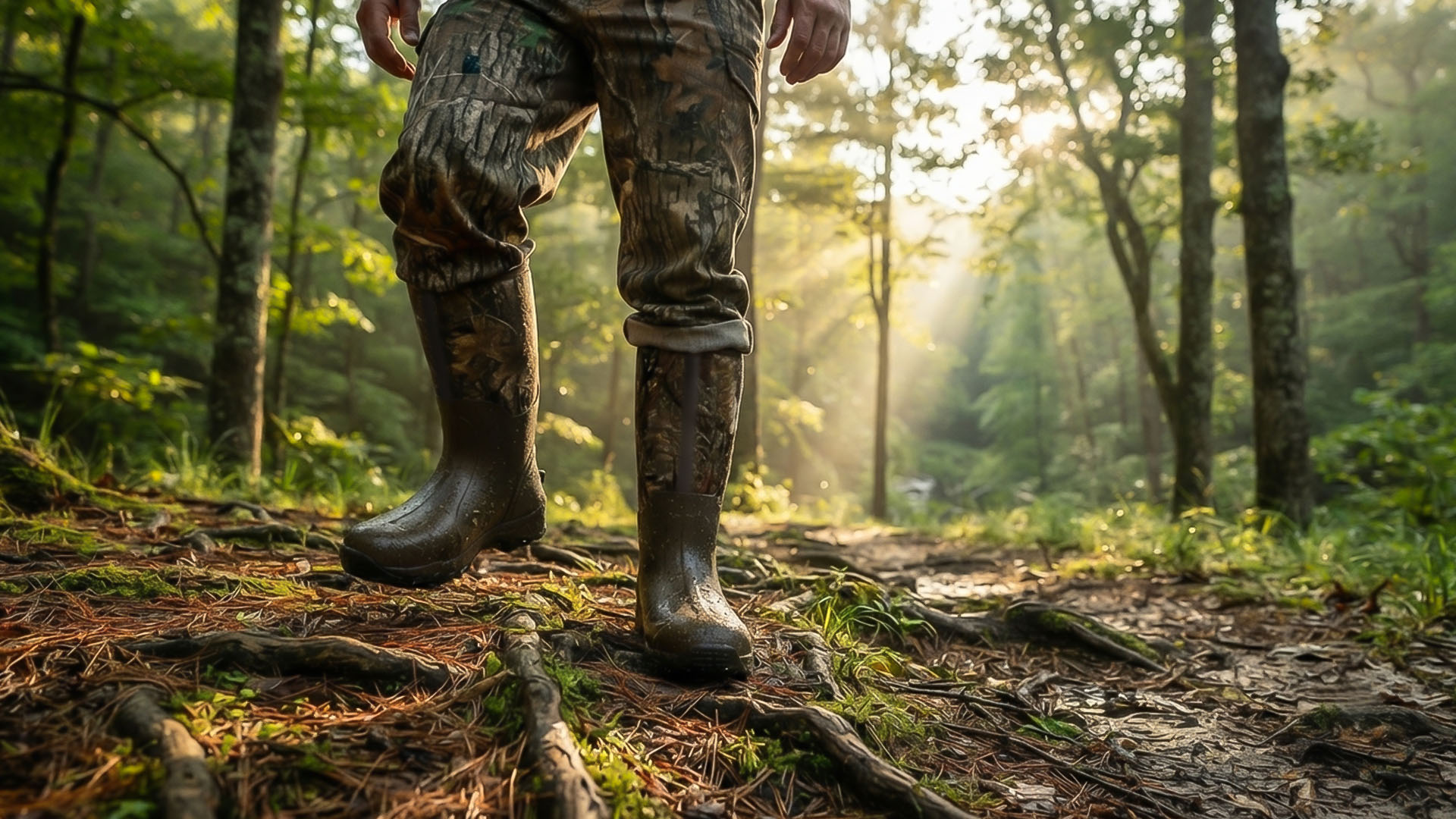
Many hunters choose waterproof hunting boots for steep hunting terrain because dependable traction and dry feet make it easier to navigate hillsides safely while adjusting stand locations to changing wind and thermal conditions.
Comfort encourages hunters to remain flexible instead of forcing a poor setup.
Midday Can Become More Stable
Once temperatures stabilize, thermal movement often becomes less dramatic.
That doesn’t eliminate scent concerns.
It simply changes how different air movements interact.
Continue checking wind throughout the day.
Conditions rarely remain completely constant.
Learn From Every Hunt
Each hunt provides valuable information.
Ask yourself:
- When did deer react?
- What was the terrain?
- How did the wind indicator behave?
- When did sunlight reach the slope?
- Did thermals change before or after sunrise?
Building personal experience over time is far more valuable than memorizing general rules.
Common Thermal Hunting Mistakes
Trusting Only the Weather Forecast
Prevailing wind is only part of the story.
Ignoring Terrain
Hills dramatically influence scent movement.
Checking Wind Once
Conditions evolve throughout the day.
Approaching Bedding Areas Carelessly
Thermals can spread scent before the hunt even begins.
Assuming Deer Reacted to Noise
Sometimes they reacted to scent instead.
Hunting Yesterday’s Conditions
Weather changes every day.
Forgetting the Exit Route
Evening thermals affect how you leave as much as how you arrive.
Frequently Asked Questions
What are thermals in deer hunting?
Thermals are local air movements caused by temperature differences across terrain that influence how human scent travels.
Do thermals rise in the morning?
In many situations, warming ground causes air to rise after sunrise, particularly on hillsides and mountains.
What happens to thermals in the evening?
As temperatures cool, air often begins flowing downhill toward lower elevations.
Are thermals stronger than wind?
Neither is always stronger. Both interact, and terrain determines how they influence scent movement.
How can hunters monitor thermals?
Many hunters use lightweight wind indicators and regularly observe actual air movement throughout the hunt.
Final Thoughts
A favorable wind forecast doesn’t guarantee favorable scent conditions.
Terrain constantly shapes how air moves through the landscape.
Morning thermals rise.
Evening thermals fall.
Shade delays warming.
Drainages redirect airflow.
Understanding these patterns helps explain why mature bucks sometimes avoid hunters who believed the wind was perfect.
Study the terrain before hunting.
Observe the air instead of assuming.
Adjust stand locations when conditions change.
And remember that successful scent management isn’t just about watching the weather app—it’s about learning how the landscape moves the air beneath it.
