
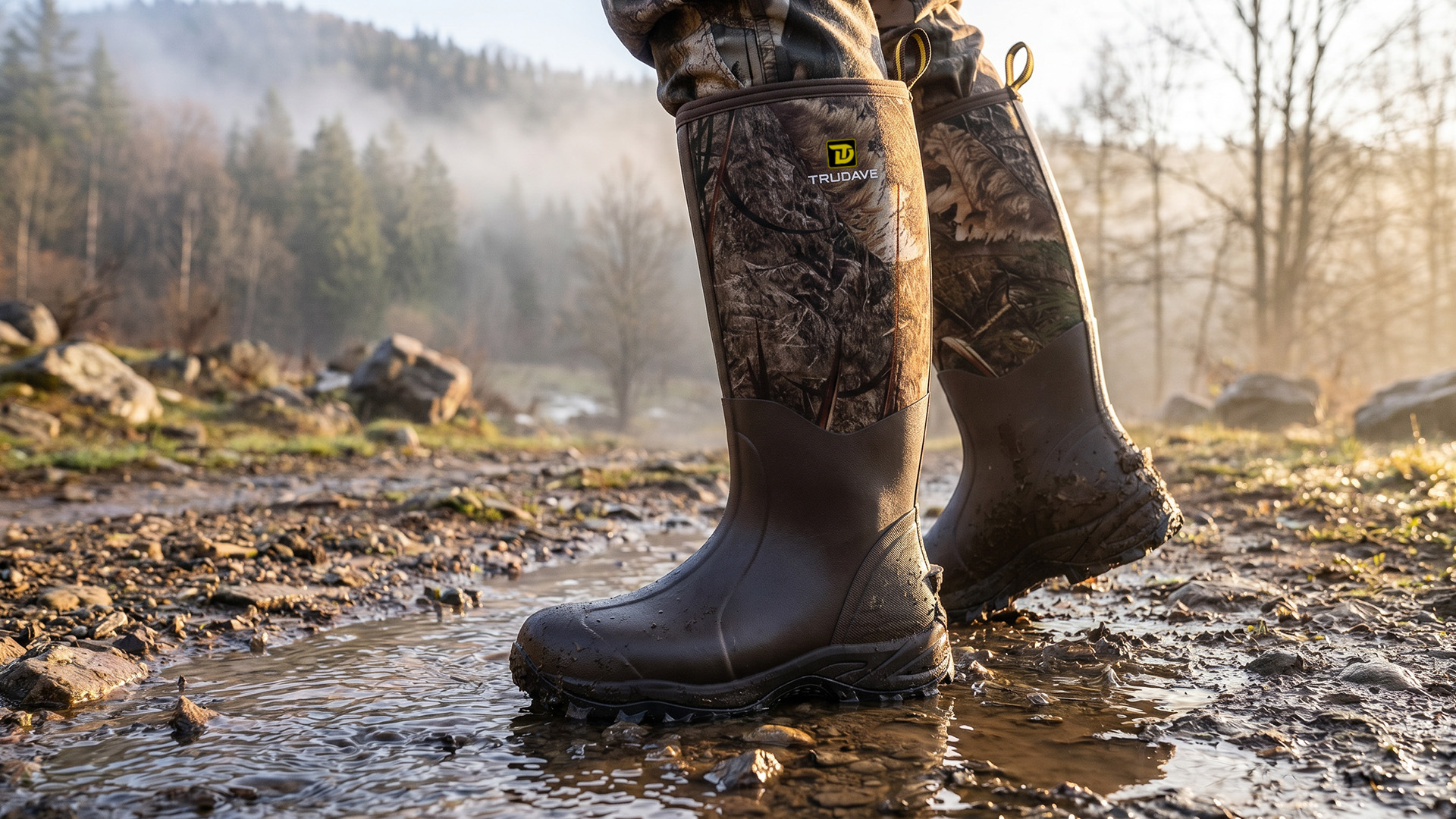
Introduction: The Best Investment You’ll Ever Make in Your Gear
You’ve done the research. You’ve chosen the right Trudave boot for your hunt—the fleece-lined TrailGuard for frozen December sits, the breathable WildGuard for the soggy November marsh, or the lightweight DryFlow for those September scouting miles. You know the materials inside and out: vulcanized natural rubber, 5mm insulating neoprene, EVA midsoles that don’t pack out. You’ve invested in a tool built to last.
But every tool needs maintenance. The best hunting boot in the world, neglected, will fail. Vulcanized rubber left caked in mud will stiffen and crack. A neoprene liner stored damp will breed bacteria and odor. An EVA insole never removed will compress into a flat, uncomfortable slab. Heat, sunlight, and salt—the three mortal enemies of rubber—will age a boot prematurely, robbing you of seasons of reliable service.
The care your Trudave boots need isn’t complicated. It takes two minutes after a hunt, an hour once a month, and a little attention when the season ends. The reward is a boot that can last five, six, even seven seasons, maintaining the same waterproof seal, the same insulating warmth, and the same quiet step as the day you pulled them on. This manual is your guide to that reward, covering everything from the daily post-hunt rinse to repairing a puncture, conditioning rubber against the elements, and storing your boots so they’re as ready for next fall as you are.
1. The 2-Minute Post-Hunt Protocol
The single most important thing you can do for your boots takes less than two minutes and requires nothing but a hose and a soft brush. Trudave’s official care advice is clear: rinse off mud and debris with clean water after each hunt, use a mild soap if necessary, and let them air dry in the shade. Avoid heat and sunlight to preserve the neoprene’s flexibility and the rubber’s waterproof integrity.
Step 1: Rinse Thoroughly
As soon as you’re back from the field—whether to the truck, the garage, or the backyard—blast the boots with cold or lukewarm water. Pay special attention to the outsole. The aggressive lugs and self-cleaning channels on your WildGuard, TrailGuard, or DryFlow have been doing their job all day, ejecting mud as you walked, but some clumps will cling on. A hose with a spray nozzle or a sink sprayer can clear the treads in seconds. Use a soft-bristled brush (an old dish brush works perfectly) to loosen anything stubborn. Never use hot water, which can damage the neoprene’s closed-cell structure.
Step 2: Mild Soap for Stubborn Grime
If plain water isn’t cutting it—especially after a hunt in sticky clay or manure-rich soil—add a small amount of mild dish soap. Avoid harsh degreasers, bleach, or any cleaner containing solvents. These strip the natural oils from the vulcanized rubber and accelerate cracking. For the camo finish on the WildGuard, be especially gentle; a soft brush and diluted soap will lift dirt without fading the pattern.
Step 3: Dry Smarter, Not Harder
Remove the insoles and set them aside to dry separately. Wipe the boots’ exterior with a clean rag, then stuff the shafts with crumpled newspaper. The paper wicks moisture out of the neoprene or fleece liner, speeding up drying and preventing the musty odor that develops when boots are put away damp. Stand the boots upright in a well-ventilated room at ambient temperature.
The Golden Rule: Never, under any circumstances, place your boots near a radiator, a wood stove, a campfire, a heat register, or in direct summer sunlight to dry them. Heat is the mortal enemy of vulcanized rubber. It breaks down the polymer cross-links that give the material its strength and flexibility, causing brittleness, cracks, and the eventual death of the waterproof seal. If you forget everything else in this guide, remember this: air dry only.
2. The Monthly Deep Clean and Odor Defense
Even with diligent rinsing, hunting boots can develop odors from sweat, bacteria, and the organic matter they encounter. Once a month during heavy use, or after a particularly muddy or bloody hunt, give your boots a deeper clean.
Interior Odor Control
The non-porous rubber and neoprene of Trudave boots don’t absorb moisture, but they can trap odor-causing bacteria in the liner and insole. Once a month, fill each boot about a third of the way with warm water and a capful of enzymatic cleaner (the kind used for pet stains, or a specialized boot cleaner). The enzymes break down the organic compounds causing the smell without harming the rubber or neoprene. Let the boots sit for an hour or two, then drain, rinse thoroughly with clean water, and dry as above. The newspaper trick is especially important here to pull the cleaning solution and any lingering moisture out of the liner.
Exterior Rubber Care and Bloom Management
Over time, you may notice a white, chalky film developing on the surface of the boots. This is called “bloom.” It’s a completely normal process in high-quality natural rubber: insoluble particles rise to the surface over time, especially when the rubber is exposed to ozone or UV light. Bloom is cosmetic, not structural, and it’s actually a sign that the rubber still contains its protective plasticizers. To remove it, wipe the boots down with a damp cloth and a mild rubber conditioner. The conditioner will restore the rich matte finish and add a layer of UV protection.
Every two to three months during hunting season, apply a silicone-free rubber conditioner to the entire exterior of the boot. Avoid products like Armor All that leave a greasy, slippery film. A dedicated rubber boot conditioner, applied with a clean cloth, keeps the rubber supple, prevents drying and cracking, and extends the boot’s life. Focus on the flex points—the toe crease and the ankle—where the rubber bends most.
3. Insole Maintenance: The Foundation of Comfort
The EVA insoles in your Trudave boots are the primary interface between your foot and the ground. They provide arch support, shock absorption, and insulation from the cold. They are also removable, which is a feature you should exploit.
Daily: Remove the insoles after every hunt and let them air dry separately. This prevents the moisture buildup that compresses the foam over time and cultivates odor.
Monthly: Inspect your insoles. If they’ve compressed to the point where they no longer feel supportive, it’s time to replace them. Trudave’s ToughCush Comfort Insoles are a direct upgrade, featuring high-density foam, ergonomic arch support, and a shock-absorbing heel pad. They can be trimmed for a perfect fit and are compatible with all Trudave hunting boot models. For hunters with specific orthotic needs, the removable insole design means you can substitute a custom-molded insert without affecting the boot’s waterproof seal.
Seasonally: At the end of the season, remove the insoles, clean them with mild soap and water, let them dry completely, and store them outside the boots. This prevents any remaining moisture from being trapped inside the boot during the off-season.
4. Storage: The Art of the Off-Season
How you store your boots from February to September determines how they’ll perform on opening day. Improper storage can ruin a pair of boots as effectively as a season of hard hunting.
The Non-Negotiables:
- Upright: Always store boots upright. Never fold or crumple the shafts, which creates permanent crease points that will eventually crack.
- Cool, Dark, and Dry: A basement closet is ideal. An uninsulated garage, attic, or shed is not. Temperature swings cause the rubber to expand and contract, stressing the material. Extreme heat accelerates the curing of the rubber, making it brittle.
- Shape Preservation: Use boot trees, a rolled-up piece of cardboard, or even a plastic soda bottle cut to size to help the shafts hold their shape during storage. This is especially important for the tall neoprene uppers of the TrailGuard and WildGuard.
Pre-Storage Prep Checklist:
- Clean the boots thoroughly, inside and out.
- Ensure they are 100% dry. Any residual moisture will breed mold and mildew in storage.
- Remove and separately dry the insoles.
- Apply a final coat of rubber conditioner to the exterior.
- Stuff with newspaper or use a boot tree.
- Place in a breathable bag (not plastic) in a cool, dark location.
A simple ritual, but it makes the difference between boots that are ready to go on opening morning and boots that have developed a mysterious crack over the summer.
5. Field Repairs: When the Trail Bites Back
No matter how well you care for them, hunting boots can suffer damage in the field. A sharp rock can puncture the sidewall. A stray piece of barbed wire can slice the rubber. The good news is that vulcanized rubber is eminently repairable, and a small repair kit in your hunting pack can save a hunt.
The Repair Kit:
- A tube of flexible waterproof adhesive (Shoe Goo or Aquaseal SR).
- A few alcohol wipes.
- A piece of fine-grit sandpaper or an emery board.
Repairing a Puncture or Small Cut:
- Clean the damaged area thoroughly with an alcohol wipe. It must be completely clean and dry for the adhesive to bond.
- Lightly rough the surface around the damage with sandpaper. This gives the adhesive more grip.
- Apply the adhesive to the cut, press the edges together, and smooth a layer over the top, extending about a quarter-inch beyond the damage.
- Let it cure undisturbed for a minimum of 12 hours, preferably 24. The repair will be flexible, waterproof, and nearly as strong as the surrounding rubber.
Cracks at the Flex Point:
If you notice hairline cracks forming at the toe crease, address them immediately. Clean the area, apply the same adhesive, and let it cure. This prevents the crack from deepening into a full-blown leak. If multiple deep cracks have already formed, the rubber has lost its elasticity, and the boot is nearing the end of its serviceable life.
When to Let Go:
A boot is no longer safe or effective to hunt in when:
- The outsole tread is worn smooth and the siping channels are gone. Traction is compromised.
- The vulcanized bond between the rubber lower and the neoprene upper is separating across more than an inch. This is a structural failure.
- You can feel the ground through the boot—the EVA midsole has compressed completely and the insole is no longer cushioning the impact. Your knees and back will pay the price.
6. Series-Specific Care Notes
While the fundamentals are the same, each Trudave hunting boot has characteristics that deserve special attention.
TrailGuard (Fleece-Lined Neoprene): The fleece liner is the warmest option but also the most absorbent. Extra care must be taken to dry it completely after each hunt. The newspaper-stuffing technique is essential here. An enzymatic cleaning once or twice a season will keep the fleece fresh. The rubber heel tab is reinforced for easy off, but avoid using it to kick against sharp, abrasive surfaces that could gouge the rubber.
WildGuard (Breathable Liner & Camo Finish): The breathable liner dries faster than fleece, making the WildGuard a bit lower-maintenance during the season. The camo finish is embedded in the rubber, not painted on, so it won’t flake off, but harsh chemical cleaners can cause it to fade prematurely. Stick to mild soap and water.
DryFlow (Industrial-Grade, Uninsulated Rubber): The DryFlow has no neoprene or fleece to absorb moisture, so it dries the fastest. Its primary care concern is the oil-resistant outsole. After hunting in areas with fuel, oil, or chemical runoff, rinse the soles especially thoroughly. The structured heel cup benefits from a periodic check to ensure no debris has become lodged between the heel and the cup.
Conclusion: The Quiet Ritual
Caring for your boots is a ritual that pays dividends. That two-minute rinse after a long, cold day is an act of respect for a tool that served you well. The monthly deep clean, the off-season conditioning and storage, the small repair that prevents a big problem—these are the habits that turn a good hunting boot into a companion for a decade of seasons.
Trudave Gear built your WildGuard, TrailGuard, and DryFlow boots to withstand the worst the wild can throw at them. Give them that small bit of care in return, and they’ll keep delivering the dry, warm, silent steps that get you closer to your quarry, year after year.
To explore Trudave’s replacement insoles, care products, and the complete hunting boot lineup, visit trudavegear.com.
