
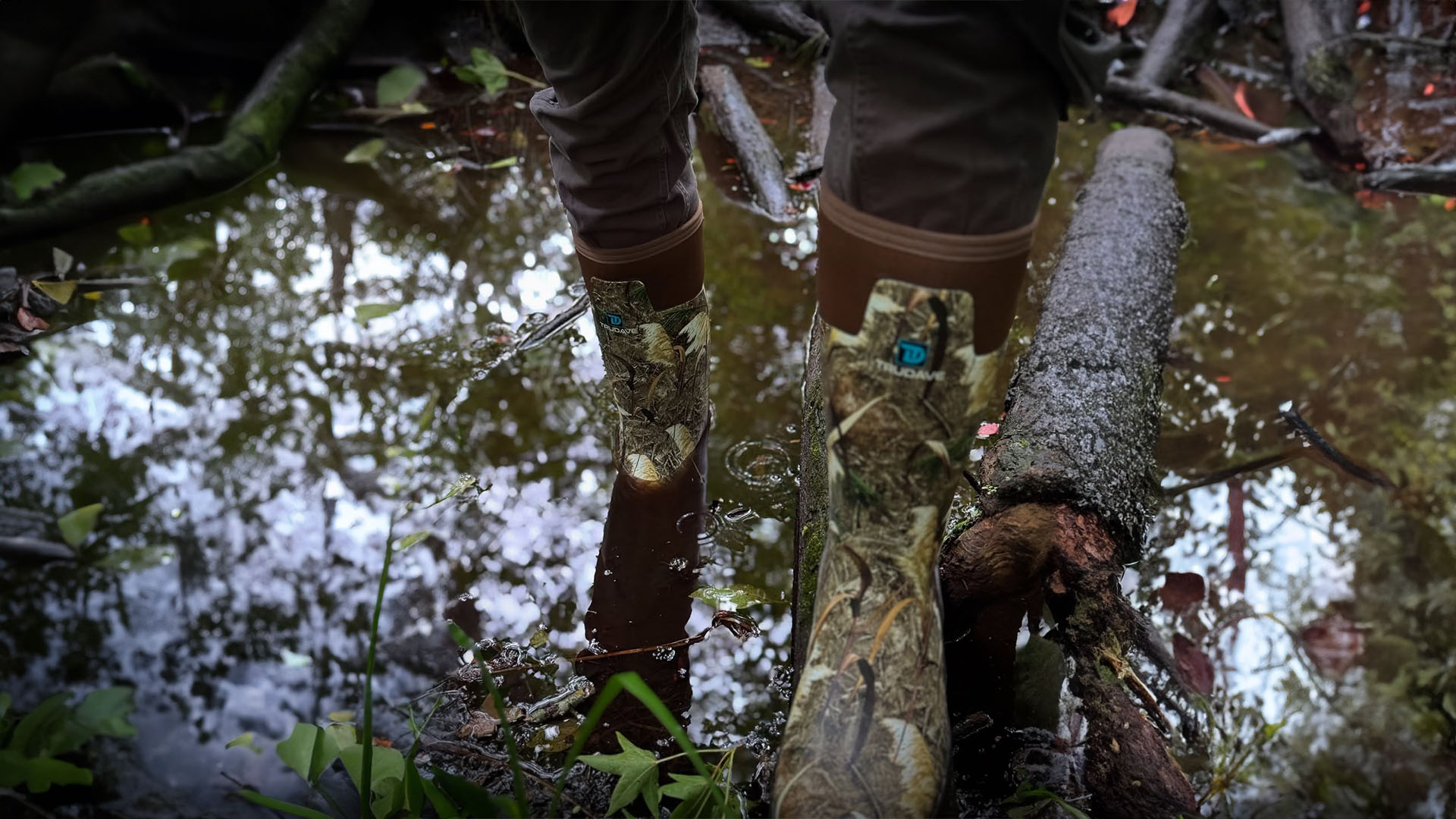
I used to believe that hunting boots were essentially disposable.
Buy a pair for $150, wear them for a season, watch the rubber crack at the toe flex point, and repeat the cycle the following year. That was just “the cost of doing business” in the outdoors. Or so I thought.
Then I met Chris Laflamme.
Chris isn’t a sponsored athlete or a social media influencer. He’s a guy who repairs laboratory instruments for a living—oil, chemicals, and messy environments every single day. Outside of work, his boots are still on his feet—whether he’s doing yard work, heading out to camp, or just going about his day. When we asked him which boots he reaches for every morning, he didn’t hesitate: “Those are the camp boots I wear daily. The brown ones”.
No qualifiers. Not for photos. Not just for weekends. These are the boots that go on every morning.
His boots see more than just dirt: “I get oil, chemicals, and bad stuff on them. I just clean them off”. That’s it. No special treatment. No worrying about scuffs or stains. They’re meant to get dirty—and they’re meant to keep working.
Over time, one pair wasn’t enough. Chris now owns multiple pairs of Trudave boots—steel toe safety boots, steel shank boots, deck boots, camp boots. But here’s what really got my attention: his very first pair? “They’re still in great shape. Dirty as hell—and they stink”. That’s not a complaint. That’s proof of use.
So here’s the question I kept coming back to: if a pair of boots can handle daily chemical exposure, yard work, and still get worn every single morning—why can’t that same boot handle a hunting season?
Spoiler alert: it can.
The 7‑Day Torture Test That Proved the Point
Most gear reviews you read online are written by guys who took a pair of boots out of the box, walked around their manicured lawn, snapped a few photos, and called it a “field test”. That doesn’t cut it for us.
Trudave did something different. They put on a brand new pair of Trudave boots on Monday morning and didn’t take them off for anything other than sleeping for the next seven days. Field scouting, truck driving, warehouse work, and trudging through flooded timber—these boots had to do it all. Here is the unedited, gritty field journal of what happens when you live in a single pair of boots for a week straight.
Day 1 — The Break‑In Myth: “Right out of the box, the flexibility of the upper and the EVA midsole felt completely dialed in”. After 8 hours on concrete and a 2‑mile gravel hike: zero hot spots or blisters.
Day 3 — The Mud & Water Assault: Knee‑high wet grass, thick clay mud, and standing water. The tester intentionally stood in a creek for ten minutes. The aggressive tread pattern cleared the thick mud with every step, preventing the boots from turning into heavy, slick bowling balls. Socks? Bone dry.
Day 5 — The “Sweat Box” Check: Fast‑paced hiking in 75°F weather. The moisture‑wicking lining pulled sweat away from the skin, avoiding the dreaded “swamp foot” that plagues many 100% waterproof boots.
Day 7 — The Aftermath: After 168 hours, the boots were beaten to crap visually—covered in dried mud, scuffs, and dust. But a garden hose revealed an upper that was fully intact. No blown seams. No peeling soles. No cracked rubber at the toe flex point.
The final verdict? “A 7‑day continuous wear test is stupid. You should rotate your boots to let them dry and recover. But this test proved exactly what we built Trudave gear to do: survive when you don’t have the luxury of a backup plan”.
What the 2026 Gear Guides Are Saying
Trudave isn’t just getting attention from their own tests. Multiple 2026 gear roundups consistently place them alongside established brands.
In a roundup of the 5 Best Rugged Lightweight Hunting Boots for 2026, Trudave boots “provide insulated warmth and durable outsoles” and “balance comfort, traction, and durability to keep you agile all day”. The combination of waterproof rubber and 5mm neoprene insulation keeps feet dry and warm.
For mild weather rubber hunting boots, Trudave’s insulated boots add camouflage for better concealment, with reinforced toes, easy on/off designs, and reliable grip for wet or muddy terrain. Their waterproof rubber exterior prevents moisture from seeping in, while 5mm neoprene insulation effectively locks in warmth.
For warm weather hunting boots, Trudave was ranked as a top pick. Their waterproof rubber boots with steel shank and 5mm neoprene camo insulation offer practical protection against wet conditions.
And for standing all day, Trudave’s insulated models excel alongside brands like TIDEWE, MUCK, and ROCKY.
The Feature That Matters Most: The Steel Shank
One detail keeps appearing across every gear guide and product listing: the steel shank.
Most cheap hunting boots have flat rubber footbeds. Nothing between your foot and whatever’s beneath you. Step on a nail, a sharp rock, or a thorn, and you’re going to feel it.
Trudave solves this with a steel shank embedded between the insole and outsole. This piece of steel provides underfoot puncture protection, arch support, and sole stability. The anti‑slip outsole has extra regular tooth depth, is abrasion‑resistant, and is self‑cleaning for super grip while hunting.
A note on steel toe claims: Some purchasers have noted confusion about steel toe advertising. Trudave’s standard hunting boots feature a steel shank for underfoot puncture protection—they are not certified steel toe for workplace impact safety. If your job requires ASTM‑certified steel toe protection, verify specific certifications before purchase.
The 6mm Neoprene Difference
Here’s something that might surprise you. Many standard boots from established brands use 5mm neoprene insulation. Trudave offers 6mm neoprene in several of their models.
What does that extra millimeter mean? When you’re standing still in cold weather—waiting for a dog, checking fence lines, or working in a barn—your body isn’t generating much heat. You need the boot to trap warmth from the inside. That extra millimeter of neoprene makes a noticeable difference.
The 6mm neoprene boots feature heat‑resistant insulation that “prevents radiated body heat from escaping, keeps your feet dry and warm”. They’re designed for “heavy‑duty insulation and steel shank support” that keeps “feet warm and stable during hours of winter chores or barn work”.
One reviewer called them “a good, budget‑friendly pick” that’s “perfect for farmers, hunters, campers, or anyone who needs tough, waterproof footwear that can handle messy jobs”.
The Trudave Hunting Boot Lineup
Trudave offers multiple hunting boot series, each optimized for different conditions.
TrailGuard Series — The Cold-Sit Specialist. Built for long sits and stealthy approaches. These boots are fully waterproof, made from premium rubber and sealed seams to keep your feet dry during hunting in wetlands, rain, or muddy terrain. They feature 5mm neoprene insulation and a fleece lining that provide excellent warmth and comfort during cold‑weather hunts—ideal for deer, duck, or late‑season hunting. The deep‑lug outsole locks onto wet ladders, metal rungs, and soft ground, giving you reliable traction when setting stands or tracking game.
WildGuard Series — The Concealment Specialist. Designed to blend seamlessly with timber, reeds, or brush, the camo finish keeps you hidden while the deep‑lug outsole grips confidently on wet logs, rocky trails, and uneven ground. These boots are 100% waterproof, made from 5mm neoprene and a tough rubber shell that keeps feet dry in marshes, mud, and wet woods. The 5mm neoprene insulation with a breathable liner traps warmth without overheating—perfect for early morning or winter hunts in cold, wet conditions.
StreamTrek Series — The All-Rounder. Built for hunters who need one boot to cover multiple scenarios. Uses a hybrid construction: a flexible neoprene shaft bonded directly to a durable rubber shell, creating a continuous waterproof barrier up to the calf. The outsole uses deep, multi‑directional lugs designed to shed mud instead of packing it in. The adjustable calf gusset and buckle system solves the common problem of tight calves in tall rubber boots.
What Real Hunters Are Saying
Across Trustpilot, verified owners consistently report the same experience. Trudave holds a 3.7/5 rating based on real feedback.
Dry feet (the consistent win across hundreds of reviews):
“We purchased waterproof boots back in May for working on our little farm as we were constantly dealing with wet, muddy and otherwise soiled shoes while tending our livestock. The boots have made our jobs and lives sooo much better and easier. And best of all, our feet stay DRY!!! It has been about two months now and these boots are still going strong and keeping our feet protected. Would recommend these boots 100%”.
Build quality and comfort:
“Bought some boots from Trudave, These boots are well made and comfortable. The size is slightly larger, but with socks they fit well and comfortably. A size smaller would be too tight”.
“Great shoe. Just what I was looking for. The heels rub. That would be my only comment”.
Heavy‑duty validation:
“Merchandise was delivered in a timely manner, and it’s exactly what I had ordered and I’ll definitely recommend ordering from them. They’ve got good colors especially if you’re in The Pressure Washing Industry and the boots are comfortable”.
Sizing advice from the field:
“I order from Amazon twice and got the wrong size both times. I order from Trudave and got the right size First time”.
“Sizing Chart was correct. Medium fit me perfect and I am 5’10”, 185 lbs with a standard build”.
The value verdict from an independent reviewer:
“If you’re hunting, working long shifts outdoors, or just need a reliable pair of waterproof boots that won’t break the bank, Trudave delivers surprisingly solid value—just don’t expect premium-brand polish. What you trade in price, you gain in practicality”.
Common patterns from verified feedback:
- Sizing runs slightly large. Most owners recommend wearing medium‑to‑heavy socks for optimal fit.
- Dry feet is the consistent win. Across reviews, the one feature everyone agrees on is that Trudave boots keep feet dry.
- Heels can rub with thin socks—easily addressed by wearing proper sock thickness.
- Order directly from Trudave rather than third‑party retailers for accurate sizing.
How to Keep Your Boots Alive
Proper care doubles the lifespan of any boot. Here’s the simple routine that works across all Trudave hunting boot series:
Rinse after every hunt. A quick hose‑down removes mud, manure, and debris before they dry and degrade the rubber.
Air dry naturally—never use heat. Never put rubber boots on a radiator, in a dryer, or in direct sunlight. Heat cracks rubber and ruins the waterproof seal.
Use mild soap only. For heavy dirt, use mild dish soap and a soft brush. Avoid degreasers, bleach, or harsh chemicals—these strip essential oils from the rubber and cause premature cracking.
Store upright in a cool, dry place away from direct sunlight. Don’t fold or crease the boots, which creates weak points.
Check your tread periodically. When the lugs wear down and the sole feels hard like plastic instead of grippy rubber, it’s time for new boots.
The Bottom Line: Gear That Refuses to Quit
Here’s the honest truth about hunting boots in 2026.
You can spend $200 on a pair of boots that only work for one thing. Or you can spend $70–$85 on a pair of Trudave boots that work for everything—work, chores, pre‑season prep, and the hunt itself.
Chris Laflamme wears his Trudave boots every single day. They handle oil, chemicals, yard work, and camp life. His first pair is still going strong—”dirty as hell, but still in great shape”.
The 7‑day torture test proved these boots can handle the abuse. The 2026 gear guides consistently place Trudave alongside brands that cost twice as much. And across hundreds of verified reviews, the consistent verdict is dry feet, good comfort, and surprising longevity.
The deer don’t care what logo is on your boots. The ducks don’t check the brand tag. They only care if you’re still in the field when they finally move—warm, dry, and planted on the ground.
Trudave keeps you there. Without emptying your wallet.
Now stop reading and go get in the woods. Your boots will handle the rest.
