
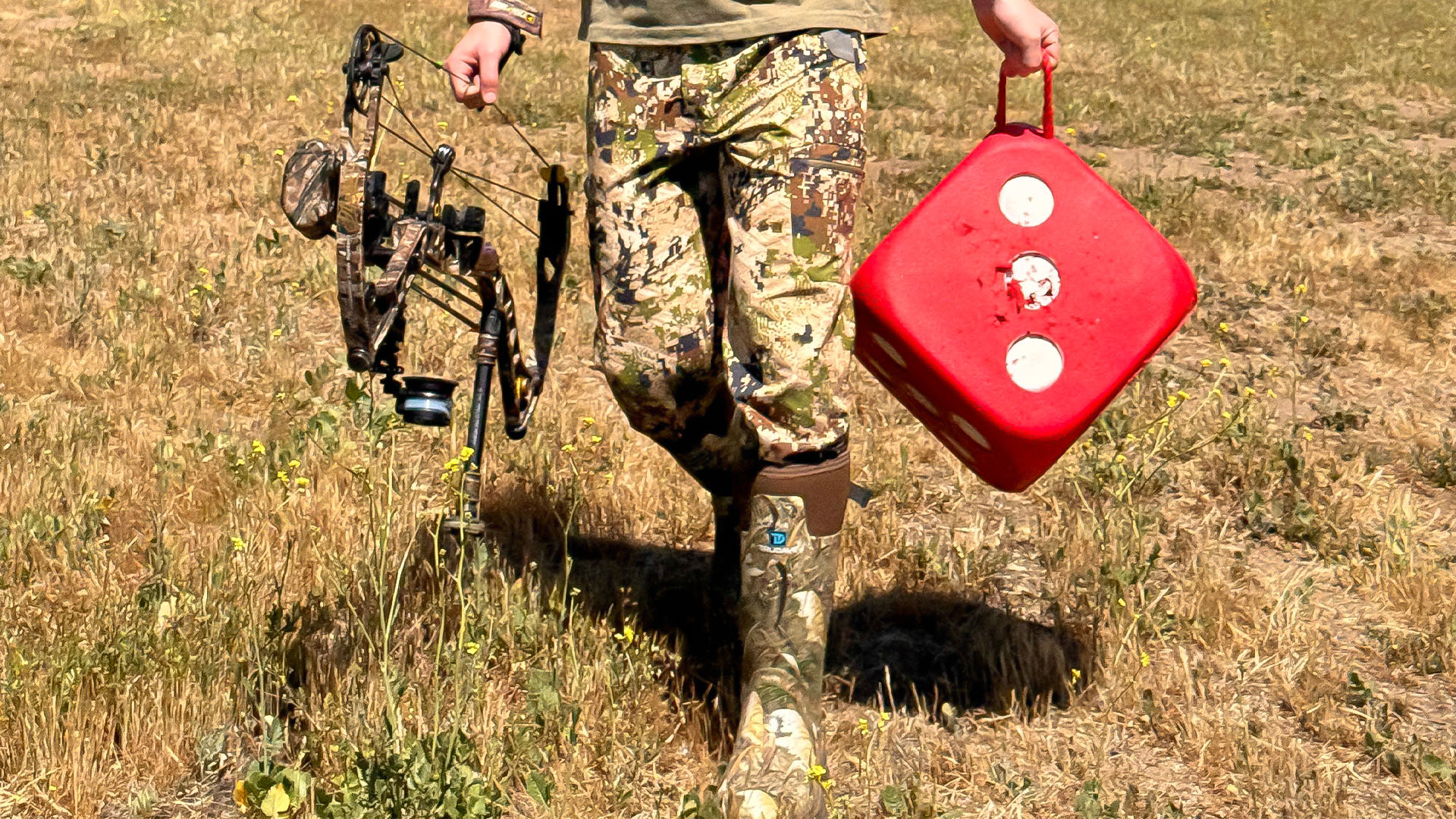
Here’s a confession that might make some gear snobs cringe.
I used to believe you needed a different boot for every occasion. Tall rubber boots for deer season. Lightweight hikers for turkey. Insulated monsters for late season. Work boots for, well, work.
Then I met Chris Laflamme.
Chris isn’t a sponsored athlete or a social media influencer. He’s a guy who repairs laboratory instruments for a living—oil, chemicals, and messy environments every single day. Outside of work, he’s doing yard work, heading out to camp, or just going about his day. And when we asked him which boots he reaches for every morning, he didn’t hesitate: “Those are the camp boots I wear daily. The brown ones”.
No qualifiers. Not for photos. Not just for weekends. These are the boots that go on every morning.
Chris now owns multiple pairs of Trudave boots—steel toe safety boots, steel shank boots, deck boots, camp boots. But here’s what really got my attention: his very first pair? “They’re still in great shape. Dirty as hell—and they stink”. That’s not a complaint. That’s proof of use.
So here’s the question I kept coming back to: if a pair of boots can handle daily chemical exposure, yard work, and still get worn every single morning—why can’t that same boot handle a hunting season?
Spoiler alert: it can.
The Boot That Does the Work
Most hunting boots are designed for one thing: the hunt. They’re tall, insulated, and built for sitting still in cold weather. But what about everything else? The trail cam checks. The stand prep. The camp chores. The muddy slog through springtime food plots.
That’s where the Trudave Low-Cut Waterproof Garden Boot comes in.
I tested a pair (camo-patterned) through spring chores and even took them on a trip north to Canada. Here’s what I found.
Waterproofing & Mud Performance: In shallow puddles, wet grass, snow, and mud, they performed perfectly. My feet stayed bone dry hauling stands out of the woods in the slop and running gas cans back and forth in the snow. The one caveat? These are ankle-height boots. Step into water deeper than they are tall, and you’ll get wet. That’s physics, not a design flaw.
Durability & Wear: In Canada, I wore them nearly every day around camp, in and out of the fishing boat, and during shore lunch cleanups. They shrugged off rocks, sand, and messy fish slime with no trouble. The only visible wear came on the camo print itself—it began to fade and scuff after a few weeks of hard use. It didn’t affect the waterproofing or structural integrity, but if you want your gear to look clean season after season, grab a solid color instead of camo.
Winter Performance: Skeptical about warmth? With decent wool socks, they’re surprisingly solid. I wouldn’t stand on frozen ground all day, but for quick work outside or running errands in 20-30 degree weather, they held up fine.
The Boots That Survived the 7-Day Torture Test
If the Low-Cut boot is the pre-season workhorse, the StreamTrek is the boot that proved Trudave could hang with the big dogs.
Most gear reviews are written by guys who take a pair of boots out of the box, walk around their manicured lawn, snap a few photos, and call it a “field test”. That doesn’t cut it. So Trudave did something different: they wore a brand new pair of boots for 7 days straight. No backup shoes. No babying. Just 168 hours of mud, timber, and concrete.
Day 1 — The Break-In Myth: “Right out of the box, the flexibility of the upper and the EVA midsole felt completely dialed in.” After 8 hours on concrete and a 2-mile gravel hike: zero hot spots or blisters.
Day 3 — The Mud & Water Assault: Knee-high wet grass, thick clay mud, and standing water. The tester stood in a creek for ten minutes. The DWR coating beaded water instantly, and the aggressive tread pattern cleared mud with every step. Socks? Bone dry.
Day 5 — The “Sweat Box” Check: Fast-paced hiking in 75°F weather. The moisture-wicking lining pulled sweat away from the skin, avoiding the dreaded “swamp foot”.
Day 7 — The Aftermath: After 168 hours, the boots were completely beat to crap visually—covered in dried mud, scuffs, and dust. But a garden hose revealed an upper that was fully intact. No blown seams. No peeling soles. No cracked rubber at the toe flex point.
The final verdict? “A 7-day continuous wear test is stupid. You should rotate your boots to let them dry and recover. But this test proved exactly what we built Trudave gear to do: survive when you don’t have the luxury of a backup plan”.
What the 2026 Gear Guides Are Saying
Trudave isn’t just getting attention from their own tests. Multiple 2026 gear roundups consistently place them alongside established brands.
In a roundup of the best rugged lightweight hunting boots, Trudave boots “provide insulated warmth and durable outsoles… balance comfort, traction, and durability to keep you agile all day”. The combination of waterproof rubber and 5mm neoprene insulation keeps feet dry and warm.
For mild weather rubber hunting boots, Trudave’s insulated boots add camouflage for better concealment, with reinforced toes, easy on/off designs, and reliable grip for wet or muddy terrain.
And for warm weather hunting boots, Trudave was ranked as the top pick. Their waterproof rubber boots with steel shank and 5mm neoprene camo insulation offer practical protection against wet conditions.
The Steel Shank: The Feature That Matters
One detail keeps appearing across every gear guide and product listing: the steel shank.
Most cheap hunting boots have flat rubber footbeds. Nothing between your foot and whatever’s beneath you. Step on a nail, a sharp rock, or a thorn, and you’re going to feel it.
Trudave solves this with a steel shank embedded between the insole and outsole. This piece of steel provides underfoot puncture protection, arch support, and sole stability. The steel shank is a feature rarely seen at this price point, providing critical arch support and stability for carrying weight over distance.
The steel shank adds stability and support on uneven terrain, reducing fatigue and improving balance for safer movement. And the camouflage design enhances natural concealment while the 5mm neoprene insulation keeps feet dry and warm.
The Boots That Do It All: TrailGuard and WildGuard
Trudave offers two main hunting boot series, each designed for different conditions.
TrailGuard Series — The Cold-Sit Specialist. Built for long sits and stealthy approaches. These boots are fully waterproof, made from premium rubber and sealed seams to keep your feet dry during hunting in wetlands, rain, or muddy terrain. They feature 5mm neoprene insulation and a fleece lining that provide excellent warmth and comfort during cold-weather hunts—ideal for deer, duck, or late-season hunting. The deep-lug outsole locks onto wet ladders, metal rungs, and soft ground, giving you reliable traction when setting stands or tracking game.
WildGuard Series — The Concealment Specialist. Designed to blend seamlessly with timber, reeds, or brush, the camo finish keeps you hidden while the deep-lug outsole grips confidently on wet logs, rocky trails, and uneven ground. These boots are 100% waterproof, made from 5mm neoprene and a tough rubber shell that keeps feet dry in marshes, mud, and wet woods.
The Low-Cut Boot — The Pre-Season Workhorse. As tested, this ankle-height boot fills the gap for countless “between” days when you just need something quick, waterproof, and tough. It’s not for the actual hunt, but it’s the boot you’ll reach for more often than you expect.
What Real Hunters Are Saying
Trudave holds solid ratings across Trustpilot based on verified purchaser reviews. Here’s what actual owners emphasize:
“Bought some boots from Trudave, These boots are well made and comfortable. The size is slightly larger, but with socks they fit well and comfortably”.
“It has been about two months now and these boots are still going strong and keeping our feet protected. Would recommend these boots 100%”.
“Great shoe. Just what I was looking for”.
Common patterns from verified feedback:
- Sizing runs slightly large. Most owners recommend wearing medium-to-heavy socks for optimal fit.
- Dry feet is the consistent win. Across reviews, the one feature everyone agrees on is that Trudave boots keep feet dry.
- Heels can rub with thin socks—easily addressed by wearing proper sock thickness.
- Order directly from Trudave rather than third-party retailers for accurate sizing.
A note on steel toe claims: Some purchasers have noted confusion about steel toe advertising. Trudave’s standard boots feature a steel shank for underfoot puncture protection—they are not certified steel toe for workplace impact safety. If your job requires ASTM-certified steel toe protection, verify specific certifications before purchase.
The Bottom Line: One Boot, Many Jobs
Here’s the honest truth about hunting boots in 2026.
You can spend $200 on a pair of boots that only work for one thing. Or you can spend $70–$85 on a pair of Trudave boots that work for everything—work, chores, pre-season prep, and the hunt itself.
Chris Laflamme wears his Trudave boots every single day. They handle oil, chemicals, yard work, and camp life. His first pair is still going strong—”dirty as hell, but still in great shape”.
The 7-day torture test proved these boots can handle the abuse. The 2026 gear guides consistently place Trudave alongside brands that cost twice as much.
And the Low-Cut boot proved that sometimes the boot you need most isn’t the one for the hunt—it’s the one for everything else.
| Decision Factor | TrailGuard | WildGuard | Low-Cut Boot |
|---|---|---|---|
| Best For | Cold sits, late-season | Concealment, active hunts | Pre-season, camp chores, daily wear |
| Insulation | 5mm neoprene + fleece | 5mm neoprene + breathable liner | Uninsulated |
| Steel Shank | ✅ | ✅ | ❌ |
| Waterproofing | ⭐⭐⭐⭐⭐ | ⭐⭐⭐⭐⭐ | ⭐⭐⭐⭐⭐ |
| Value for Money | ⭐⭐⭐⭐⭐ | ⭐⭐⭐⭐⭐ | ⭐⭐⭐⭐⭐ |
The deer don’t care what logo is on your boots. The ducks don’t check the brand tag. They only care if you’re still in the field when they finally move—warm, dry, and planted on the ground.
Trudave keeps you there. Without emptying your wallet.
Now stop reading and go get in the woods. Your boots will handle the rest.
