
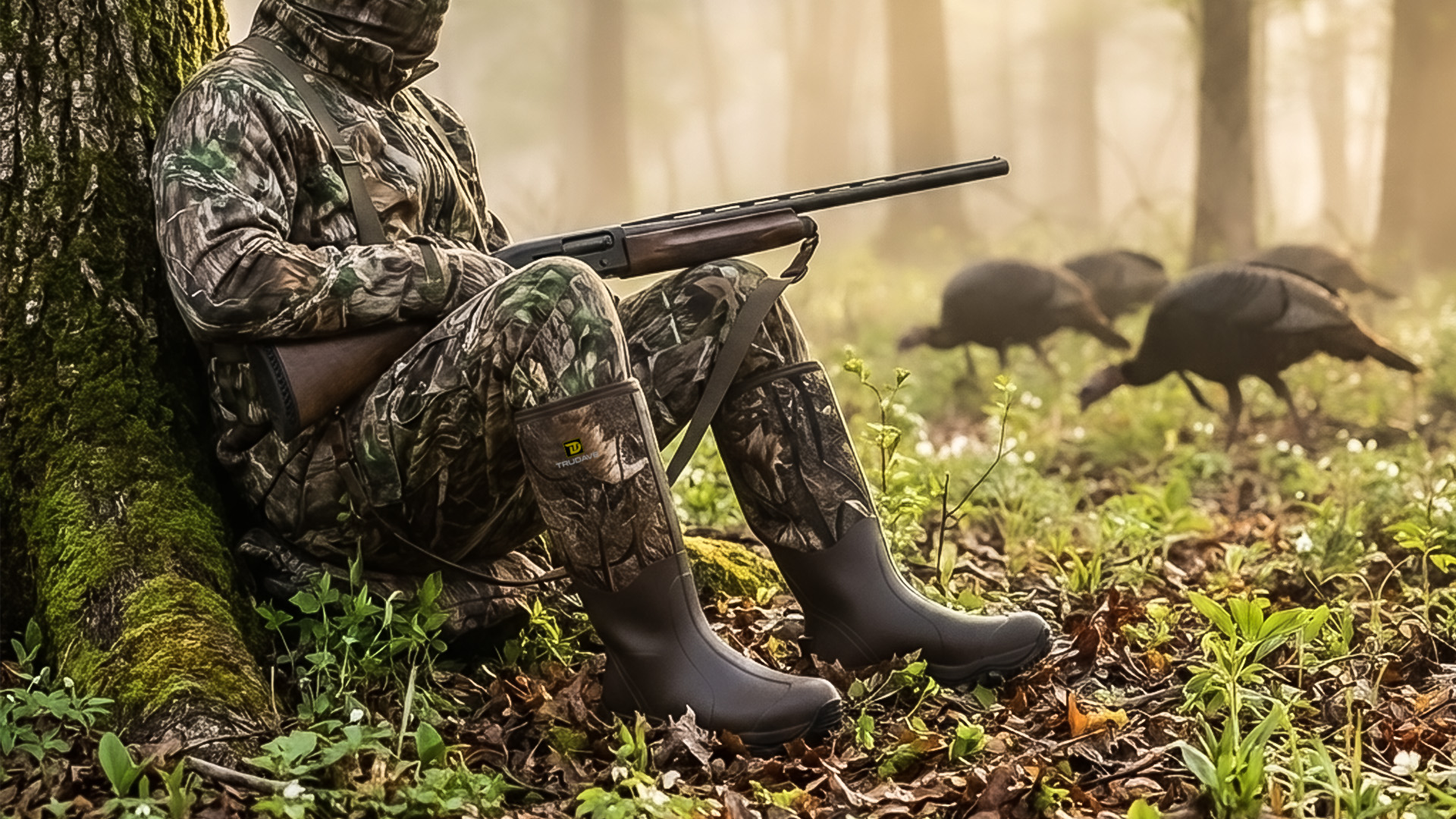
Hunting Target Audience: Elk hunters, big game hunters, Northern US/Rocky Mountain hunters Suggested Slug: elk-hunting-boots-northern-terrain-trudave-gear-guide-2026
Let me tell you something about elk hunting that nobody puts on the gear review websites: the boot failure doesn’t happen on day one.
It happens on day four.
Day one, you’re fresh. The pack is manageable. Your feet feel decent. You cover seven miles of mixed timber and scree above 9,000 feet in northern Idaho, and you come back to camp tired but functional. Night two, you notice a hot spot on your right heel. Day three, that hot spot is a full blister. Day four, the blister has popped, you’ve got raw skin against the boot lining, and every step on steep descent is something you have to negotiate with yourself to keep taking.
You don’t tag out. Not because the elk weren’t there. Because you physically couldn’t push into the basin where the bulls were holding. And the reason — the real reason — is that you put on the wrong boots six months earlier when you were sitting at a computer making a gear decision that felt abstract at the time.
Elk hunting is the most demanding boot test in North American hunting. Full stop. The elevation changes are extreme. The terrain shifts from pine duff to talus to creek crossings to snow-dusted ridge lines, sometimes within a single hour of movement. You’re doing it with a pack that weighs 40 pounds minimum. You’re doing it for five to ten consecutive days. And unlike deer hunting, where a bad boot decision means a miserable morning stand and a story to tell later, a bad boot decision in elk country means a failed hunt and a plane ticket home.
This is a guide to making that decision correctly — and to understanding where Trudave Gear’s hunting boot lineup fits in elk country.
What Makes Elk Country Different From Every Other Boot Environment
Most hunting boot guides talk about insulation ratings, waterproofing membranes, and outsole lug patterns in the abstract. That’s useful, but it misses the elk-specific demands that actually matter.
Elevation and temperature swing. A September archery elk hunt in Montana might start at 35°F at 4 AM and climb to 65°F by 2 PM. Your boots need to manage perspiration during active movement and retain warmth during glassing sessions where you’re sitting still at altitude for two hours. This temperature swing is wider than almost any other hunting context, which means a heavily insulated boot is often counterproductive for active elk hunting.
Sustained mileage on technical terrain. Elk hunters in serious country routinely cover 8 to 15 miles per day, much of it off-trail. The outsole needs genuine grip on wet rock, loose shale, and steep side slopes — not just the agricultural traction pattern that works fine in a flat cornfield. The midsole needs to protect your feet from rock strike without being so rigid that it creates foot fatigue over 10-mile days.
Creek crossings and wet basin work. Elk live near water. Any plan to locate and close on elk in the Northern Rockies or the Pacific Northwest will involve creek crossings, wet meadow approaches, and early morning dew-soaked brush. A boot that fails on waterproofing fails on elk hunts — and the failure will come at the worst possible time, when you’re 6 miles from camp and have a long wet day ahead of you.
Multi-day use without drying time. In camp, you don’t have a boot dryer. You hang your socks near the stove and hope for the best. A boot with a liner that absorbs moisture and stays wet overnight is a boot that starts the next day’s punishment already compromised. Rubber and neoprene constructions shed moisture instead of absorbing it, giving you a real fighting chance to start day five in a functional boot.
Pack weight and ankle load. With a 40+ pound pack, your boots are carrying more load than in any other hunting context. The shank — the rigid support plate in the midsole — needs to be substantial enough to prevent outsole torque on off-camber terrain. An undershanked boot on a steep side slope with a loaded pack is an ankle waiting to happen.
The Boot Categories for Elk Hunting and Where They Each Fail
Understanding why most elk hunters eventually land in a specific boot category requires knowing why the alternatives don’t fully work.
Leather mountaineering-style boots (e.g., Kenetrek Mountain Extreme, Crispi Nevada): These are the traditional gold standard for technical elk country. They’re bomber, they support heavy loads on extreme terrain, and they last for years. They also weigh 4+ pounds per pair, require a significant break-in period, and cost $400 to $700. For hunters doing serious backcountry elk at elevation above 10,000 feet, this is often the right tool. For hunters working mixed terrain below treeline in the Northern Rockies, it’s more boot than most situations demand.
Fabric/Gore-Tex hunting boots (e.g., Irish Setter, Danner, Lacrosse Alpha): These are the most common elk hunting boot choice. Light, comfortable, reasonably waterproof out of the box. The problem: Gore-Tex membranes fail under sustained immersion, which elk country guarantees. The fabric absorbs camp smells, ground smells, and human odor over a multi-day hunt. And when the lining gets wet — which it will — it stays wet overnight.
Rubber/neoprene construction (e.g., Muck, Lacrosse Alphaburly, Trudave): Dismissed by many elk hunters as “farm boots” or “duck hunting boots.” That dismissal is worth reexamining, particularly for the lower-elevation, high-moisture elk hunting that dominates the Northern US and Pacific Northwest.
The Case for Rubber Hunting Boots in Elk Country: Where It Actually Works
Here’s the honest breakdown of where rubber construction makes sense for elk hunting, and where it doesn’t.
Where rubber wins:
Early September archery hunting in the Northern Rockies, from roughly 6,000 to 8,500 feet elevation, in timber and mixed terrain near creek drainages. This is wet-ground hunting. Morning approaches cross dew-soaked meadows and shallow creek crossings. Afternoon bull activity happens near water sources. A rubber-and-neoprene boot keeps you dry through all of it without the membrane degradation of Gore-Tex under sustained moisture exposure.
Late October and November rifle hunting in the Great Lakes states, Upper Midwest, and Northern Plains. This isn’t technical Rocky Mountain terrain — it’s rolling timber, river bottom draws, and agricultural edge habitat. The terrain demands change completely. What you need here isn’t a mountaineering boot; it’s a waterproof, warm, durable boot that handles all-day wear in cold, wet conditions. This is rubber’s home court.
Public land access hunts where terrain is moderate. A huge percentage of Northern US elk hunting happens on national forests and BLM land in terrain that would be considered “moderate” by Rocky Mountain standards — nothing above 9,000 feet, no significant technical sections, primarily timbered slopes and drainages. For this hunting, rubber construction is a legitimate choice that many hunters overcomplicate.
Where rubber struggles:
Technical elevation above 10,000 feet. The ankle support profile of most rubber hunting boots isn’t designed for sustained use on loose talus, cliff bands, or steep shale slopes above treeline. If your elk hunt involves significant time in technical alpine terrain, you need a stiffer shank and more ankle support than rubber construction typically provides.
Heavy daily mileage (10+ miles) with full pack weight. Rubber soles are heavier than modern synthetic midsole constructions, and over the course of a 12-mile day with a loaded pack, that weight difference is something your hips and knees will notice. Light is right in backcountry elk hunting, and this is one area where the tradeoff matters.
Where Trudave Gear Fits the Elk Hunting Picture
Trudave Gear’s hunting boot lineup was built around the demands of farmers, ranchers, and serious outdoor workers in the Northern United States. That background — rather than limiting their relevance to elk hunting — turns out to be exactly the right foundation for a specific but substantial segment of elk hunting terrain.
The construction logic transfers directly:
Full vulcanized rubber shell. The same property that keeps livestock manure and chemical exposure from degrading the boot keeps creek water, morning dew, and eight-hour wet-terrain contact from compromising waterproofing. No membrane to degrade. No treatment to reapply. Waterproof because of material, not coating.
Neoprene lining for thermal management. Neoprene’s thermal properties are well-suited to the temperature swing of a September or October elk hunt. It retains body heat during sit periods and manages moisture from perspiration during movement better than foam insulation. The neoprene liner in Trudave’s insulated hunting boot dries faster overnight than a waterlogged fabric boot liner — meaningful when you’re at a backcountry camp without a dryer.
Outsole grip for wet terrain. Trudave’s multi-directional lug pattern handles wet rock, mud, and creek crossings effectively. It’s not a Vibram Mountaineer sole designed for granite scrambling, but for the wet timbered terrain and creek-bottom approaches that define lower-elevation Northern elk hunting, it performs well.
Durability over a multi-day hunt. This is where agricultural-grade construction pays off for hunting. A boot built to handle 12-hour days of farm work is a boot that can handle five consecutive days of elk hunting at moderate elevation without the structural breakdown that cheaper hunting-specific boots sometimes show mid-hunt.
The Trudave Elk Hunting Boot Setup: A Practical Recommendation
For hunters doing Northern Rockies elk at moderate elevation (below 9,000 feet), Great Lakes or Upper Midwest elk hunting, or September archery hunting in wet timbered terrain:
Boot: Trudave Waterproof Rubber Hunting Boot — the neoprene-lined model for hunts where temperatures will drop below 25°F overnight; the uninsulated model for early September archery hunting where temperatures stay above 30°F.
Sock system: Mid-weight Merino wool (Darn Tough or Smartwool) as the base layer. Add a heavyweight wool over-sock for cold stand periods. Carry a backup pair in your daypack and swap mid-day if conditions are wet. The sock system matters as much as the boot on a multi-day elk hunt.
Sizing: Size up half a size for hunting applications. Heavy wool socks need room. Tight boots in cold weather cut circulation, which kills warmth regardless of how much insulation the boot has.
Break-in: None required. Full rubber construction has no stiff leather to condition. You can hunt in Trudave boots the day they arrive.
Care on a multi-day hunt: Rinse with water to remove debris at the end of each day. The rubber shell dries completely overnight, which is an advantage that most fabric-lined hunting boots can’t claim.
The Honest Bottom Line for Elk Hunters
Trudave Gear isn’t a backcountry technical mountaineering boot. If you’re planning a 12-day spike camp hunt above 11,000 feet in the Bob Marshall Wilderness with serious elevation gain and loss, you need Kenetrek or a comparable alpine hunting boot.
But if you’re hunting Northern Rockies elk below 9,000 feet, Great Lakes states elk, or any Northern US elk habitat that mixes timbered terrain with creek drainages and wet ground — and you want a boot that stays waterproof, handles multi-day use without degrading, and doesn’t require a second mortgage — Trudave’s hunting boot lineup deserves a serious look.
The mountain will test your gear. Your boots are the first thing it tests.
Explore the full Trudave Gear hunting boot lineup at trudavegear.com.
