
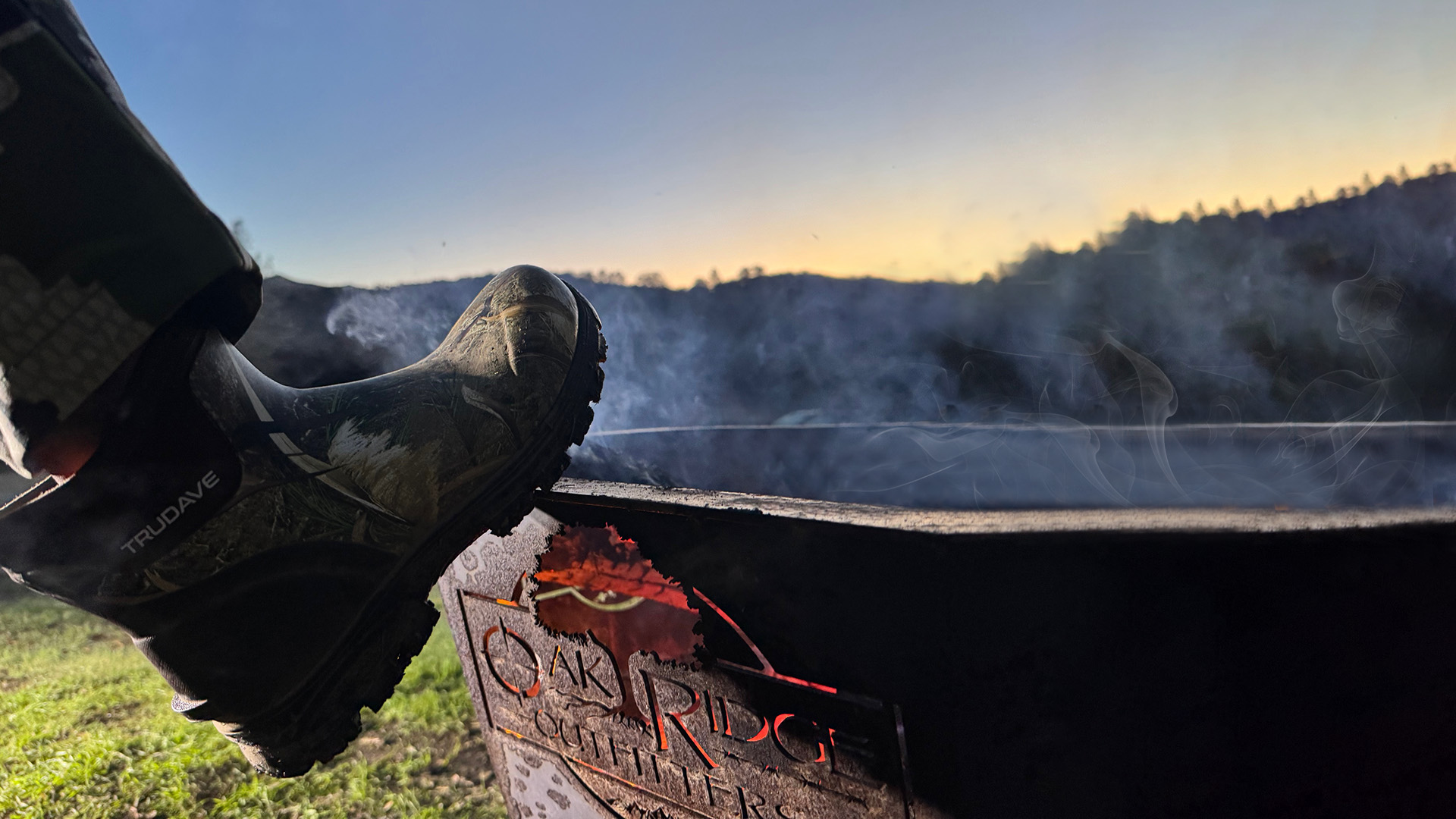
Every hunter who’s chased spring gobblers or early-season whitetails knows the dilemma. You start walking in 40-degree darkness, and by 10 a.m. it’s 70 degrees. In heavily insulated boots, your feet are drenched in sweat before you’ve even settled into your first calling setup. That sweat doesn’t just feel unpleasant—it creates blisters, softens skin, and, when the temperature drops again in the evening, it makes your feet colder than if you’d worn no insulation at all.
The industry’s answer to this has usually been “wear lighter socks,” but that’s a band-aid on a bullet wound. If the boot itself traps heat, your body’s natural thermoregulation—releasing excess warmth through your extremities—gets overridden, and you end up with hot, wet, miserable feet regardless of what’s between them and the boot.
I wanted to test a boot that took the opposite approach. No insulation. No fleece lining. Nothing between your foot and the outside world except a vulcanized rubber shell and a moisture-wicking liner. The Trudave Gear DryFlow Series is built explicitly for active hunters who generate their own heat and need a boot that gets out of the way. It promises waterproof protection without the thermal burden, plus a steel shank for arch support and an aggressive outsole for varied terrain.
I wore one pair from the final week of turkey season through the first frost of early bow season. Here’s what happened when you commit to a boot that refuses to coddle your feet—and in doing so, actually makes them happier.
Spring Turkeys: The First Sweat Test
My first outing with the DryFlow boots was in late May, chasing Eastern turkeys in rolling hardwood hills. Mornings started around 48 degrees, climbing to the mid-70s by late morning. I’d walk two to three miles of ridges and creek bottoms before 9 a.m., then sit against a tree for an hour, then walk again. Classic high-output, stop-and-go activity.
The first thing I noticed was the weight—or lack of it. Without insulation or bulky linings, the DryFlow boots weigh significantly less than my insulated neoprene boots. That difference accumulates over miles. By the end of a six-mile morning, my legs felt noticeably fresher.
The second thing I noticed was breathability. Now, let’s be clear: a rubber boot cannot be “breathable” in the way a mesh hiking shoe is. Rubber is an impermeable membrane. But the DryFlow’s design choices make a real difference. There’s no insulating layer trapping heat against your skin. The moisture-wicking lining actively moves sweat away from your foot toward the outer shell, where it can evaporate more readily (or at least not pool in your sock). Combined with a merino wool sock, my feet stayed dry and comfortable through the entire temperature swing. When I sat still and my body cooled down, my feet cooled too—but they didn’t get cold, because they weren’t wet.
The outsole earned its keep on the creek crossings. The DryFlow features a deep-lug, multi-directional tread pattern that’s aggressive enough to bite into soft mud but not so deep that it clogs instantly. I crossed a half-dozen shallow streams, stepping on slick, moss-covered rocks, and never felt a slip. The rubber compound is oil-resistant and non-marking—a nice touch that matters if you ever wear these around a garage or a boat ramp.
Summer Scouting: The Shank Test
June and July meant hanging trail cameras, clearing shooting lanes, and scouting new public land parcels. This is unglamorous, hard work—carrying heavy loads, climbing steep ridges, and walking miles in 80-degree heat.
This is where the steel shank proved its worth. Unlike standard rubber boots, which can flex and twist on uneven terrain, the DryFlow has a rigid shank built into the midfoot. When you’re side-hilling across a steep slope with a 40-pound pack of cameras, batteries, and hand tools on your back, that torsional rigidity stops your foot from twisting inside the boot. The result is less fatigue in your arches and reduced risk of plantar fasciitis or arch strain over a long day.
The cushioned EVA insole provides shock absorption without being overly soft. It’s a supportive, not pillowy, feel. After a full day of scouting—8 hours, 11 miles, 2,500 feet of elevation gain—my feet were tired in a good way: muscle fatigue from exertion, not the sharp ache of inadequate support. That’s a distinction worth paying attention to.
Waterproofing continued to hold. I deliberately stood in a creek for five minutes while setting up a camera near a water source. The vulcanized rubber shell and sealed seams did not leak. The shaft height—mid-calf—was enough for shallow water crossings and dewy morning grass. For deeper water, you’d want a taller boot, but for most scouting, it was perfect.
Early Bow Season: The Stealth Test
September arrived, and with it, early archery season. The leaves were still thick, the temperatures still mild, and the deer were on predictable feeding patterns. I hunted a mix of ground blinds and spot-and-stalk, moving frequently through crunchy leaves and dry twigs.
This is where the DryFlow’s low-profile design shone in an unexpected way: noise. Heavily insulated, thick-neoprene boots can have a dull, muffled footfall that sounds unnatural in the woods—like a dull thud. The DryFlow’s thinner, more flexible rubber construction allowed for quieter foot placement. I could feel the ground through the sole, which gave me better feedback for picking silent steps through dry leaves. The flexible ankle also allowed for a more natural, rolling stride rather than the clunky, flat-footed walk that stiff rubber boots enforce.
Scent control was another advantage. With no fabric panels and no leather, the entire boot is non-porous. It doesn’t absorb foot odor, and it doesn’t leave a ground-scent trail the way fabric boots do. I walked the same entry path to my stand for a week without any deer spooking at the trail. It’s a small thing that adds up over a season.
I killed a doe on the seventh day of the season—a 25-yard shot from a ground blind after a half-mile stalk through a creek bottom. I was in those boots from 5 a.m. to noon, moving, sitting, and finally dragging. My feet were dry, comfortable, and completely unremarkable in my awareness. That’s the goal.
The First Frost: Where Insulation Becomes Necessary
In late October, a cold front dropped morning temperatures to the mid-20s. I went out with the DryFlow boots and a pair of heavyweight merino socks. The first hour in the stand was fine—the socks did their job. By the second hour, sitting motionless, my toes started to feel the cold. The steel shank, which had been an asset all summer, now conducted cold up from the frozen ground. By hour three, I was stomping my feet.
This is the line where the DryFlow’s design philosophy reaches its limit. It’s a boot for active, warm-to-cool weather hunting. When you’re stationary in freezing temperatures, insulation becomes a requirement, not a luxury. Trudave’s WildGuard or TrailGuard series would have been the correct choice for that sit. The DryFlow is not a cold-weather stand boot, and it doesn’t pretend to be.
Final Verdict: Who Should Buy the Trudave Gear DryFlow
After five months of hard use across three seasons and three completely different hunting styles, here’s my assessment:
Buy the DryFlow if:
- You hunt early-season whitetails, turkeys, or spot-and-stalk game where you’re moving more than sitting.
- You hunt in warm-to-cool temperatures and generate your own body heat through activity.
- You need a lightweight, waterproof boot with genuine arch support (the steel shank) for uneven terrain and heavy pack loads.
- You value scent control and quiet footfalls on dry ground.
Pair with thick merino socks and consider a backup insulated boot if:
- Your season extends into freezing, stationary hunting. The WildGuard or TrailGuard are the right tools for that job.
For the active, mobile hunter who’s tired of sweaty, heavy boots sabotaging early-season success, the DryFlow is a purpose-built tool that does exactly what it promises—and then gets out of your way.
