
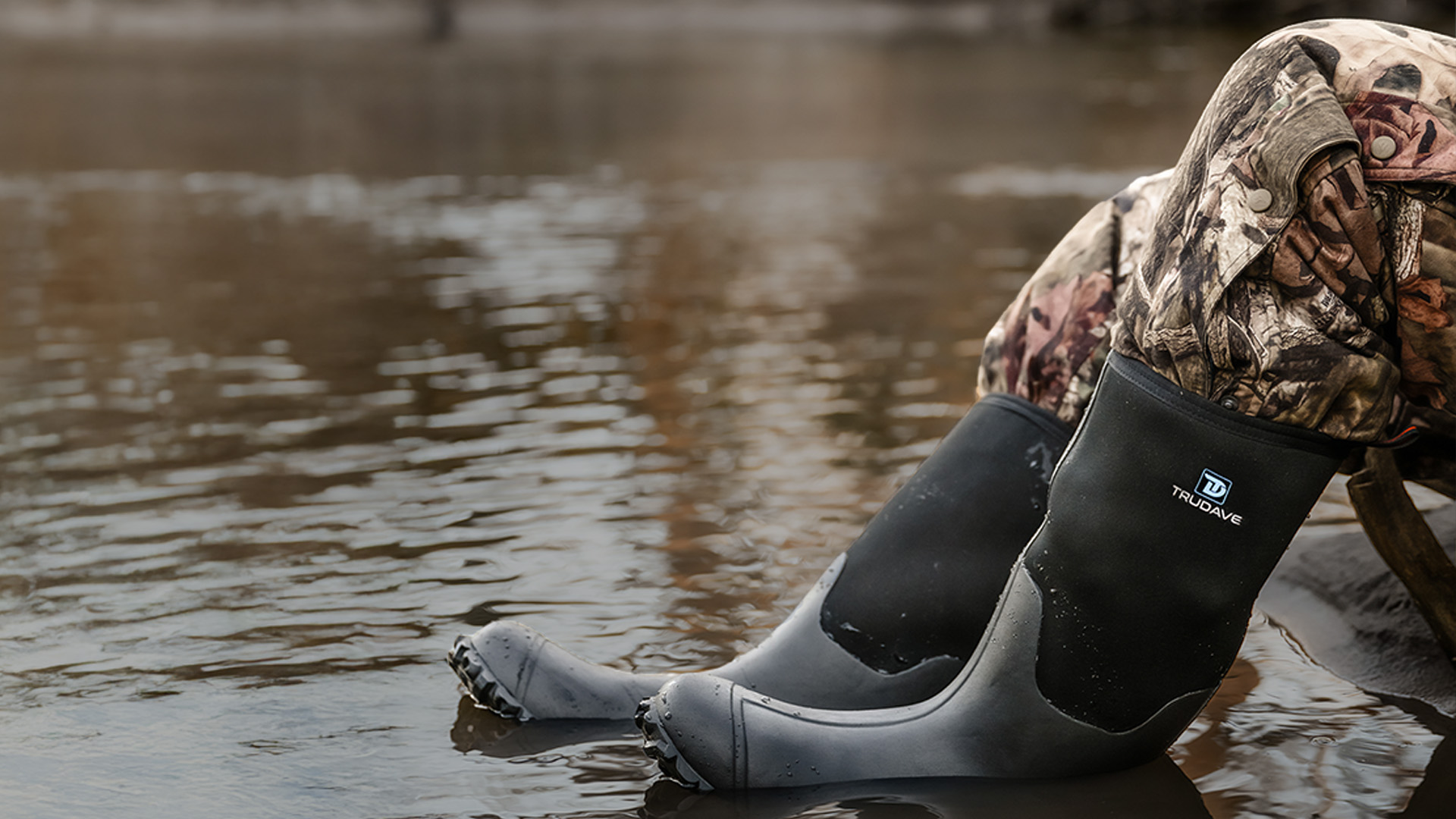
Meet two hunters. The first one is Dave. Dave hunts whitetails in Ohio. His routine is predictable: wake up at 4:30, drive 45 minutes to his lease, walk a little over a mile through mixed timber and CRP grass to his ladder stand, and then sit. For four, five, sometimes six hours. The temperature might start at 28 degrees and climb to 40 by noon. Dave’s biggest physical challenge isn’t distance or elevation — it’s the slow, creeping cold that starts in his toes and works its way up.
Now meet Mike. Mike chases elk in Colorado. His routine is anything but predictable. He’s up at 3:30, hiking three miles up a ridge in the dark with 2,000 feet of elevation gain, a pack that weighs 40 pounds, and terrain that alternates between loose scree, packed snow, and ankle-turning rock. By 10 AM, Mike has already covered more ground than Dave will cover all week. Mike’s biggest challenge isn’t the cold — it’s the cumulative fatigue of miles on his feet and the constant demand for stability on uneven ground.
Same sport. Completely different footwear requirements. Yet for decades, the hunting industry has largely sold the same boots to both of these guys.
This isn’t just a comfort issue. Wearing the wrong boots for your hunting style doesn’t just make you miserable — it can actually make you a worse hunter. Cold feet make you fidget in the stand. Fatigued feet make you cut your stalk short. Boots that are too stiff make you loud when you need to be silent. Boots that are too flexible leave you unstable when you need support. Let’s break down what each style of hunting actually demands from your footwear — and how to match the boot to the body of work you’re asking it to do.
Part 1: The Stand Hunter — Insulation, Scent Control, and the Art of Staying Still
Stand hunting — whether for whitetails in the Midwest, black bears over bait, or turkeys in a ground blind — makes a very specific set of demands on your boots. Understanding these demands is the first step to choosing correctly.
Demand #1: Insulation That Works When You’re Not Moving
This is the big one. When you’re walking, your body generates heat — enough that an uninsulated boot with a good sock can keep you comfortable down to surprisingly low temperatures. But when you stop moving and sit still for hours, that internal heat production drops dramatically. Your circulation slows. Your feet, being the furthest extremity from your heart, are the first to feel it.
For whitetails, you’ll need insulation (800–1200g Thinsulate) for warmth in tree stands, along with moisture-wicking liners to prevent sweat chill during inactivity. The key word there is “inactivity.” A boot that feels perfectly warm when you’re hiking in at 5:30 AM might leave your toes numb by 8:00 once you’ve been sitting motionless. Insulation is critical for sedentary, cold-weather hunts. For stationary treestand hunters, maximum warmth is the priority, and a heavier boot is an acceptable trade-off.
Demand #2: Scent Control at Ground Level
Deer don’t look down at your boots. But they absolutely smell where you’ve walked. When you’re approaching a stand location — especially if you’re hunting the wind — every step leaves a scent signature. Rubber and neoprene boots are non-porous. They don’t absorb foot odor and they don’t release it into the ground as you walk. For the whitetail hunter, this is worth more than any camo pattern.
Demand #3: Waterproofing for Wet Ground Approaches
Even if you’re not hunting in a swamp, the approach to your stand often involves wet grass, shallow creek crossings, and mud. Wet feet before you even climb into the stand is a hunt-ruiner. The waterproofing needs to be absolute, not conditional.
The Trudave Solution for Stand Hunters: The WildGuard Series was essentially designed for this exact hunting profile. The 5mm neoprene insulation retains heat during long sits without overheating during the walk in. The breathable liner manages moisture. The rubber-and-neoprene construction naturally contains scent. And the tall shaft with adjustable gusset keeps water out during wet approaches. For late-season stand hunters dealing with genuinely cold conditions, the TrailGuard Series steps up the insulation with a fleece lining while maintaining the same waterproof construction.
Part 2: The Spot-and-Stalk Hunter — Weight, Stability, and the Art of Covering Ground
If stand hunting is a test of patience, spot-and-stalk hunting is a test of endurance. The physical demands are completely different, and they demand completely different things from your boots.
Demand #1: Weight Matters — Every Ounce Counts
Every ounce on your feet feels like a pound on your back after miles of hiking. For elk hunters covering steep ridges, weight balance is key. Elk boots should aim for 3.5–4.5 lbs per pair, with strong ankle support, firm midsoles, and grippy outsoles for shale and scree slopes. The math is brutal: over 10 miles of hiking with 10,000 steps, lifting a boot that’s just 4 ounces heavier means lifting an extra 2,500 pounds cumulatively over the course of a day. That’s energy you need for glassing, stalking, and the shot itself.
Demand #2: Ankle Support and Torsional Rigidity
Elk terrain means rocks, snow, and steep grades — look for deep multi-directional lugs and Vibram outsoles for traction and durability. A stiff, supportive boot is critical for navigating steep, uneven terrain with a heavy pack. It provides stability and protects your ankles. The boot needs to resist twisting (torsional rigidity) so that when you plant your foot on an uneven surface, the boot provides a stable platform rather than collapsing under your weight.
Demand #3: Breathability for High-Output Activity
Unlike the stand hunter who needs maximum insulation, the spot-and-stalk hunter generates enormous body heat through continuous movement. A boot that’s too heavily insulated will cause profuse sweating, which leads to blisters and, counter-intuitively, colder feet when you finally stop. For elk, prioritize breathable waterproof membranes — crucial when trekking through wet brush or snow — with layered insulation that won’t overheat on climbs but keeps you warm at camp. Breathable, uninsulated boots are ideal for active, warmer hunts but are completely inadequate in the cold — understanding this balance is key to making the right choice.
The Trudave Solution for Spot-and-Stalk Hunters: The DryFlow Series is Trudave’s answer to the active hunter. It’s built on industrial-grade waterproof rubber with sealed seams — no insulation to overheat you — and features a steel shank for the arch support and torsional rigidity that steep terrain demands. The oil-resistant, non-slip outsole provides confident grip on mixed surfaces, and the moisture-wicking lining helps manage the sweat that comes with high-output activity. For hunters who cover ground in milder conditions or who layer their own insulation via sock choice, the DryFlow provides a lightweight, flexible, yet protective platform without the weight and heat penalty of a heavily insulated boot.
Part 3: The Hybrid Hunter — When Your Hunt Changes Mid-Season
Here’s where things get complicated. A lot of hunters — probably most hunters — don’t fit neatly into either category. Maybe you’re a whitetail hunter who spends early bow season still-hunting through timber, then switches to stand sitting when the rifle season cold sets in. Maybe you hunt elk in September and whitetails in November. Maybe you’re in the Midwest, where a single season can span 50-degree afternoons and single-digit mornings.
The boot required for a frigid, late-season hunt in deep snow is fundamentally different from the one needed for a warm, early-season archery hunt over rocky terrain. If you hunt across seasons and styles, you might genuinely need two pairs of boots. That’s not gear addiction — it’s matching the tool to the job.
Trudave’s lineup makes this surprisingly accessible because of the direct-to-consumer pricing. A pair of WildGuards for the cold sit and a pair of DryFlows for the active stalk costs less combined than a single pair of premium-brand “do-it-all” boots that don’t actually do either job particularly well.
Part 4: The Decision Matrix — Match Your Boot to Your Body of Work
Here’s a practical framework to cut through the confusion:
| Your Hunting Profile | Primary Demand | Trudave Match |
|---|---|---|
| Whitetail stand hunter, cold mornings, wet ground | Maximum insulation + scent control | WildGuard Series |
| Late-season stand hunter, freezing temps | Enhanced insulation for stillness | TrailGuard Series |
| Spot-and-stalk hunter, varied terrain, high mileage | Lightweight + torsional support | DryFlow Series |
| Multi-season hunter (early bow + late rifle) | Versatility across temps | WildGuard (cold) + DryFlow (warm) |
| Duck hunter, flooded timber, standing water | 100% waterproof + warmth in wet cold | WildGuard Series |
This isn’t about finding the “best” hunting boot. It’s about finding the boot that’s best for the specific body of work you’re asking it to do. The hunter who figures out which camp they belong in — and buys accordingly — will be warmer, more comfortable, and more effective than the guy who spent twice as much on a boot that was designed for someone else’s hunt entirely.
Conclusion: The Boot That Stays in the Truck Doesn’t Help You
At the end of the day, the most expensive hunting boot in the world is worthless if it’s so uncomfortable that you find excuses to cut your hunt short. The right boot — matched to your terrain, your climate, and your hunting style — is the one you forget you’re wearing. It does its job so well that your attention stays where it belongs: on the timberline, on the sound of approaching hooves, on the moment that makes every frozen toe and every exhausted mile worth it.
Trudave Gear didn’t set out to build the most expensive hunting boot on the market. They set out to build boots that solve specific problems for specific hunters — and they priced them so that having the right tool for the job doesn’t require a second mortgage. For the stand hunter who needs warmth and silence, for the stalk hunter who needs stability and breathability, and for the hybrid hunter who needs both at different times of the year, there’s a Trudave boot that fits the work.
Know your hunt. Choose accordingly. Stay out there longer.
