
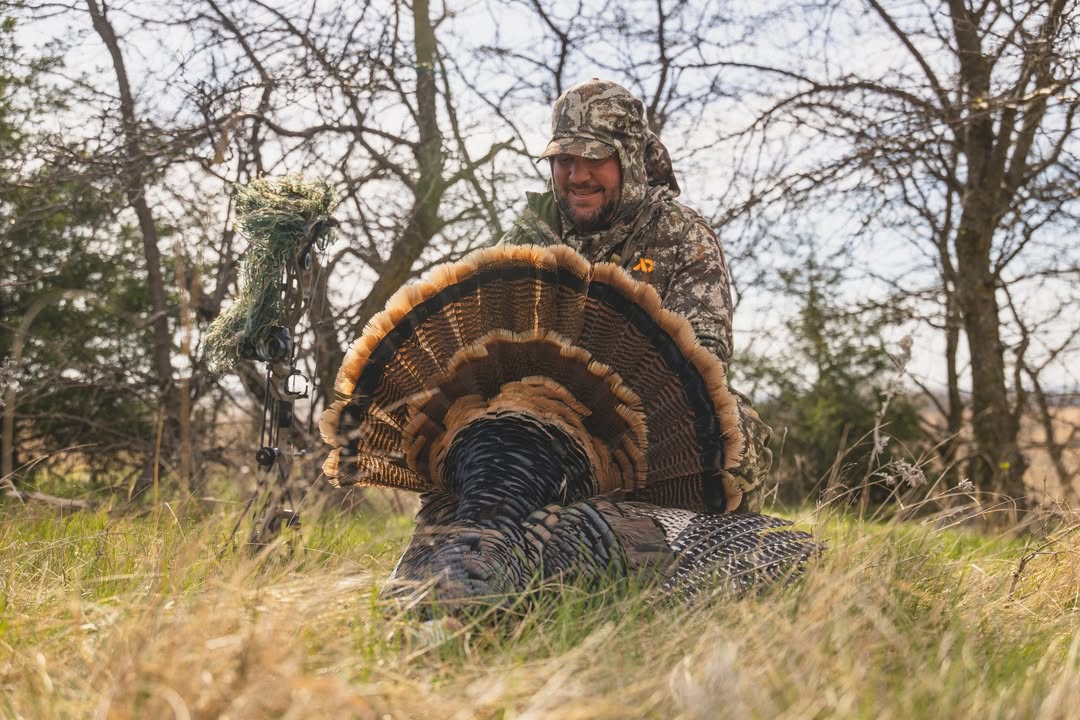
Late-season turkey hunting introduces one of the most frustrating scenarios a hunter can face: you know the gobblers are there, but they simply won’t respond while you’re in the area.
You don’t hear a single gobble. No shock calls. No hens cutting you off. Yet the moment you leave, tracks appear, birds move through, and cameras (if you use them) suddenly light up.
This isn’t bad luck.
It’s a behavioral pattern.
Silent gobblers that only move after you leave are not uncatchable—they’re just reacting to pressure in a very specific way.
Once you understand why it happens, you can adjust your strategy and turn these “invisible birds” into consistent opportunities.
Why Gobblers Go Silent When You’re Around
When turkeys stop responding in your presence, it usually comes down to one thing:
They’ve associated your presence—or hunting pressure—with danger.
This doesn’t always mean they’ve seen you directly. Turkeys are extremely sensitive to:
- Sound patterns
- Movement in their core areas
- Repeated intrusion routes
- Changes in terrain pressure
Over time, they learn:
“When this zone feels different, stay quiet and move later.”
That’s why they often:
- Go completely silent when you’re set up nearby
- Avoid open calling zones
- Hold tight until they feel safe again
The “After You Leave” Pattern Explained
Many hunters notice the same frustrating cycle:
- You set up in a known area
- Nothing responds
- You leave quietly after a few hours
- Birds show up later or move through after dark or the next day
This is classic pressure-delay movement behavior.
Gobblers don’t abandon the area—they simply:
- Wait for silence
- Wait for pressure to disappear
- Then resume normal movement patterns
In other words:
They are not avoiding the location—they are avoiding you in that moment.
Why Calling Makes This Pattern Worse
When dealing with silent, pressure-sensitive gobblers, calling often becomes counterproductive.
Here’s why:
1. They don’t need encouragement
Late-season gobblers often already have hens or are patterning movement routes. Calling adds no value to them.
2. Sound becomes a warning signal
Repeated calling from pressured areas teaches birds:
- “This is not a safe travel zone right now.”
3. They prefer confirmation, not curiosity
If they cannot visually confirm safety, they won’t commit—no matter how good your calling sounds.
Where These Gobblers Go When You Leave
Understanding post-pressure movement is the key to solving this puzzle.
Once you’re gone, gobblers often:
- Resume ridge travel routes
- Move toward feeding edges
- Rejoin hens in adjacent cover
- Use known safe corridors they avoided earlier
They don’t vanish—they simply wait for:
A “reset” in pressure.
The Real Strategy: Hunt the Window, Not the Presence
To consistently kill these birds, you need to stop focusing on when they are quiet and start focusing on when they feel safe.
That means shifting your hunting approach in three ways:
1. Hunt Before and After Pressure Windows
Instead of sitting all day in one spot, focus on:
- Early morning movement before intrusion pressure builds
- Midday transition periods when birds reposition
- Late afternoon travel when hunting pressure fades
Gobblers that avoid you during active hunting hours often move freely during these windows.
2. Set Up on Exit Routes, Not Core Areas
If birds disappear when you arrive, you are likely:
- Hunting too close to core bedding or strut zones
- Sitting directly inside their pressure-sensitive area
Instead, focus on:
- Ridge escape routes
- Secondary travel paths
- Saddles and low crossings outside the core zone
You’re not trying to be where they are—you’re trying to be where they go after they leave you.
3. Use “Clean Entry” and “Clean Exit” Tactics
Pressure-sensitive gobblers are extremely aware of intrusion patterns.
To reduce detection:
- Enter the area before first light or from downwind cover
- Avoid repeated human scent paths
- Leave without backtracking through key zones
Even if you don’t see birds immediately, you are building long-term success by keeping the area “clean.”
4. Let Silence Work in Your Favor
When dealing with these birds:
- Less calling is more effective
- Extended silence often outperforms aggressive setups
- Patience becomes a weapon
Remember:
If they only move when you’re gone, your job is not to talk to them—it’s to disappear from their decision-making process.
5. Use Sign Instead of Sound
Since gobblers won’t talk when you’re present, rely on physical indicators:
- Fresh tracks along travel corridors
- Droppings near ridge lines or field edges
- Dusting areas in secluded cover
- Strut marks in soft ground
These confirm movement without needing vocal feedback.
The Psychology Behind Silent Movement
Gobblers that behave this way are not random. They operate on a simple principle:
“Avoid risk first. Move second.”
When pressure is present:
- They freeze behavior
- Reduce vocalization
- Delay movement
When pressure disappears:
- They immediately resume normal travel
- Often using the same predictable routes
This is why they seem to “only appear after you leave.”
The Most Important Mindset Shift
Most hunters interpret silence as failure.
But in reality:
Silence is often confirmation that you are close—but not tolerated.
Instead of forcing interaction, the solution is:
- Reduce footprint
- Adjust timing
- Intercept movement outside pressure zones
You are no longer trying to “call in” a gobbler.
You are positioning yourself for the moment he returns to normal behavior.
Final Thoughts
Silent gobblers that only move after you leave are not unkillable—they are simply reacting to pressure in a way most hunters never fully recognize.
Once you understand their pattern:
- They avoid you, not the land
- They pause, not disappear
- They return once pressure resets
And that creates a major opportunity:
If you stop trying to force interaction and start hunting the absence of pressure instead, these same gobblers become highly predictable.
Because in late-season turkey hunting, the real action doesn’t always happen when you’re there—
It often happens right after you’ve learned when to leave. 🦃
