
Lesser scaup country can look enormous.
A reservoir stretches for miles.
Open water reflects a gray winter sky.
One rocky point extends into the lake.
A protected bay sits behind it.
Several groups of diving ducks rest far offshore.
At first, everything looks the same.
Then the birds begin moving.
One flock slides toward a shallow shoal.
Another group follows the shoreline.
Several dozen ducks lift from open water and swing toward a wind-protected bay.
That is lesser scaup hunting.
These birds often use large waters where success depends on understanding:
- Depth
- Food
- Wind
- Shoreline shape
- Current
- Pressure
- Open-water structure
The biggest challenge is not simply finding ducks.
It is learning why they choose one section of a huge reservoir instead of another.
Lesser Scaup Are Open-Water Diving Ducks
Lesser scaup are commonly called:
- Bluebills
- Scaup
- Lesser scaup
They often use large freshwater and brackish systems during migration and winter.
Productive habitat may include:
- Reservoirs
- Large lakes
- River impoundments
- Coastal bays
- Open marsh water
- Protected coves
Unlike many dabbling ducks, scaup frequently feed in deeper water.
Think Underwater
The best scaup habitat is often defined by what hunters cannot see from shore.
Below the surface may be:
- Aquatic invertebrates
- Mollusks
- Submerged vegetation
- Other diving-duck food
Bird Location Can Reveal Underwater Structure
If large groups repeatedly dive in one section of a reservoir, that area likely provides better feeding conditions.
Do Not Simply Record “Scaup on the Lake”
Record whether birds are using:
- One shoal
- One point
- One bay
- One depth zone
Exact Position Matters
A reservoir covering thousands of acres may contain only a few consistently productive feeding zones.
Shoals Can Be Excellent
A shallow underwater rise surrounded by deeper water can concentrate food.
Birds May Feed Along the Edge
The transition between:
- Shallow water
- Deeper water
can be especially useful.
Submerged Points Matter Too
A shoreline point may continue underwater far beyond what is visible.
Watch Where Birds Dive
Repeated activity can help map invisible habitat.
Protected Bays Can Hold Birds
Strong wind can make open water uncomfortable.
Scaup may move toward:
- Leeward bays
- Protected coves
- Shoreline corners
But Food Still Matters
A calm bay with no feeding value may hold few birds.
The Best Habitat Combines Food and Protection
That combination is more important than either one alone.
Wind Is One of the Biggest Factors
Open-water hunting changes dramatically with wind.
Strong Wind Moves Birds
Flocks may reposition toward:
- Protected shorelines
- Downwind points
- Calmer water
Wind Also Changes Flight Height
Diving ducks may fly lower over rough water.
Crosswinds Can Shift Travel Lanes
A point that produced yesterday may be wrong today.
Watch Actual Bird Movement
Do not rely only on theory.
Calm Conditions Create Different Problems
Scaup may sit far offshore and move less.
They Can Also Inspect Setups Longer
Concealment and natural positioning matter more.
Reservoir Wind Can Become Dangerous
Large inland waters can build significant waves.
Do Not Underestimate Inland Water
A reservoir can behave like a much larger lake when wind increases.
Boat Safety Comes Before Hunting
If conditions exceed experience or equipment:
Do not launch.
Scaup Often Travel in Flocks
This creates both opportunity and challenge.
Large Flocks Can Appear Suddenly
One moment the horizon is empty.
The next, a group may be crossing low over the water.
Stay Ready
But do not rush.
Pick One Bird
Do not swing through an entire flock.
Target Discipline Matters
Especially with low-flying diving ducks.
Scaup Can Mix With Other Diving Ducks
Possible companions include:
- Ring-necked ducks
- Redheads
- Canvasbacks
- Goldeneyes
- Other scaup
Mixed Flocks Require Careful Identification
Never assume every bird in the group is the same species.
Lesser and Greater Scaup Can Be Difficult to Separate
Hunters should study:
- Head shape
- Body proportions
- Wing patterns
- Range and habitat
before hunting areas where both occur.
Do Not Depend on One Feature
Lighting, angle, and distance can change appearance.
Females Are More Difficult
Brown-plumaged hens require more careful identification.
Learn Females Before the Season
Do not study only adult drakes.
Positive Identification Comes First
If unsure:
Let the bird pass.
Reservoir Points Can Create Natural Flight Lines
Birds may follow:
- Shoreline contours
- Island edges
- Long points
during daily movement.
Glass Before Setting Up
Binoculars can save hours.
Watch Multiple Flights
One passing flock means little.
Repeated use indicates a pattern.
Islands Can Be Important
Small islands may provide:
- Wind protection
- Resting water
- Flight references
Downwind Sides Can Hold Ducks
especially during strong weather.
But Islands Also Create Safety Concerns
Other hunters may be hidden from view.
Know the Entire Area
Large Bays Can Contain Several Micro-Habitats
One side may be:
- Mud bottom
Another may be:
- Rock
Another may contain:
- Vegetation
Scaup May Favor Only One Section
River Impoundments Can Add Current
Some reservoirs still have strong flow near:
- Inlets
- Channels
- Dam areas
Current Changes Feeding Habitat
Birds may use areas where:
- Moving water
- Slower water
meet.
Current Breaks Can Be Productive
especially where food concentrates.
But Current Adds Boat Risk
Anchoring and retrieving become more difficult.
Avoid Strong Water Beyond Your Experience
Scaup Hunting Is Often a Boat-Oriented Hunt
Boats can provide access to:
- Offshore water
- Islands
- Large points
- Distant bays
Boat Size Should Match the Water
A small craft that works in a marsh may not be suitable for a windy reservoir.
Do Not Overload
Hunters may carry:
- Decoys
- Anchors
- Waders
- Dogs
- Heavy clothing
Weight Adds Quickly
Heavy Gear Changes Boat Handling
Keep capacity and freeboard in mind.
Wear Appropriate Flotation Equipment
Especially in cold weather.
Cold Water Greatly Increases Consequences
A short swim in winter water can become an emergency.
Keep Safety Gear Accessible
Do not bury it beneath hunting equipment.
Boat Ramps Can Be Hazardous
Late-season ramps may contain:
- Ice
- Mud
- Snow
- Algae
Walk Carefully
Launching Is Part of the Hunt
Many accidents happen before hunters reach open water.
Vehicle Traction Matters
Steep ramps can become slick quickly.
Check Conditions Before Backing Down
Ice Can Block Ramps
Do not assume a ramp will remain usable all day.
Freezing Spray Can Create Problems
Water on:
- Decks
- Rails
- Seats
may freeze.
Keep Walking Surfaces Clear
Ice Adds Weight Too
Accumulation on boats and gear can affect handling.
Reservoir Water Levels Can Change
Managed reservoirs may rise or fall.
A Ramp That Worked Last Month May Be Different Today
Shorelines Can Become Muddy
Falling water can expose:
- Soft clay
- Deep mud
- Unstable banks
Scout New Access Carefully
Mud Can Trap Vehicles
Do not drive onto exposed reservoir bottom without knowing conditions.
Walking Shorelines Can Be Difficult
Mud may look dry on top but remain soft underneath.
Test Footing
Rocky Shorelines Create Different Challenges
Loose rock, wet stone, and ice can reduce traction.
Wet Rock Is Slippery
Algae Makes It Worse
Short Steps Improve Control
Snow Can Hide Rocks
Move slowly.
Diving Duck Hunting Is Hard on Footwear
A typical scaup hunt may involve:
- Muddy reservoir banks
- Gravel
- Snow
- Icy ramps
- Shallow water
- Wet grass
- Rocky shoreline
- Long gear carries
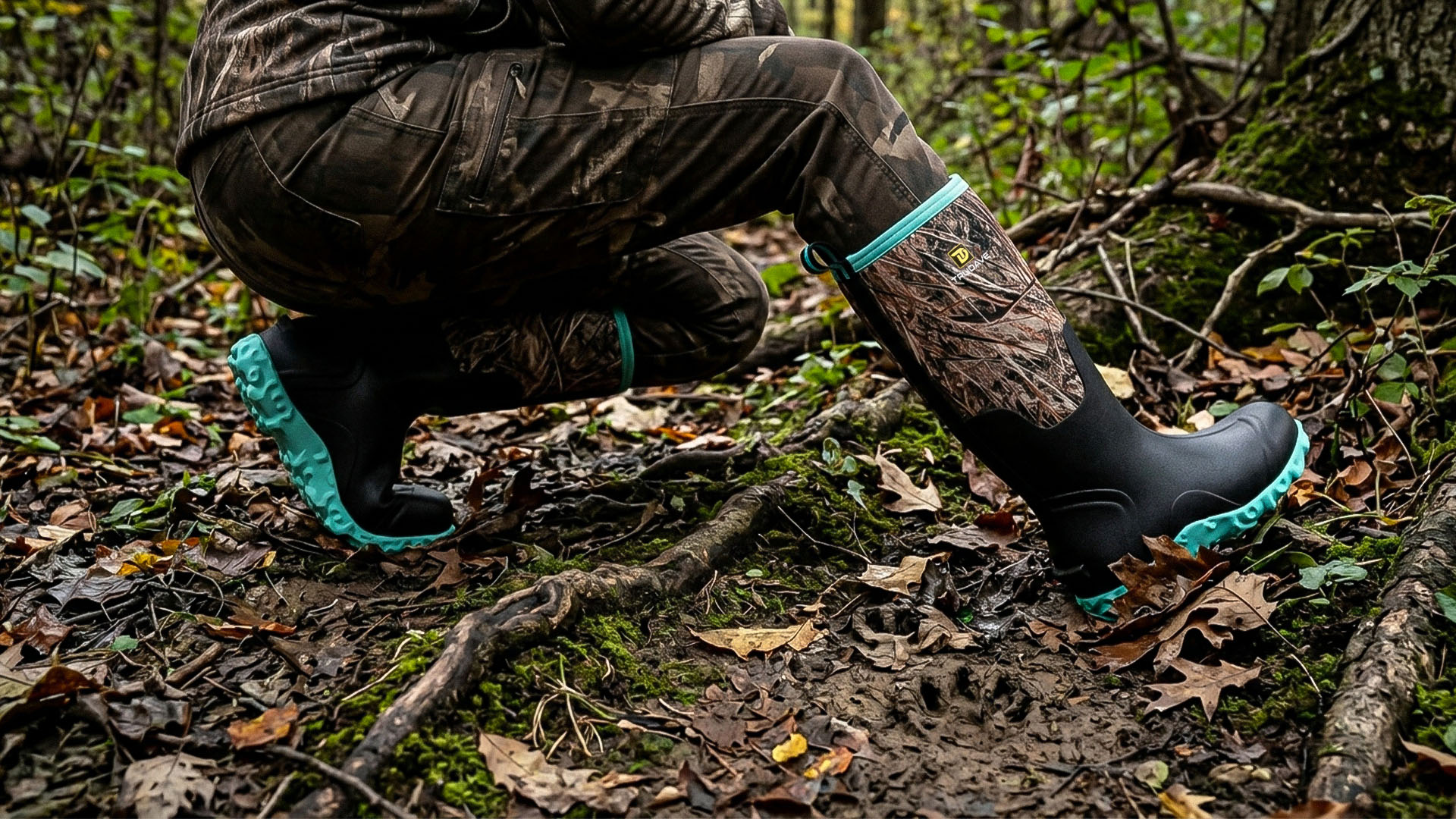
Hunters may benefit from waterproof hunting boots for diving duck hunting that provide secure heel retention, dependable traction, and enough insulation for cold open-water conditions without becoming excessively heavy.
Waterproofing Matters
Even when hunting mostly from a boat, hunters encounter:
- Spray
- Mud
- Slush
- Shallow shoreline water
Tall Rubber Boots Can Be Excellent
They work well around:
- Boat ramps
- Muddy banks
- Shallow water
Insulated Rubber Boots Can Help in Cold Weather
Especially when standing or sitting for long periods.
But Fit Still Matters
Loose boots create fatigue during setup.
Secure Heel Retention Is Important
Mud and steep banks expose poor fit quickly.
Lace-Up Waterproof Boots Can Be Better on Rocky Ground
They may offer:
- Better ankle control
- More precise fit
- More secure footing
Choose Boots for the Entire Hunt
Think about:
- Parking
- Ramp
- Shore
- Boat
- Temperature
No Boot Makes Ice Safe
Traction aids may be appropriate for certain conditions.
Use Them Carefully and Where Suitable
Waders May Be Useful
Hunters may need waders for:
- Launching
- Decoy placement
- Shoreline setup
Properly fitted hunting waders can provide useful waterproof protection
when water depth requires them.
Waders Are Not Flotation Devices
They Do Not Make Deep Water Safe
Use a Wading Belt Correctly
Follow manufacturer guidance.
Avoid Deep Water
Especially around:
- Drop-offs
- Boat channels
Reservoir Bottoms Can Fall Away Quickly
One step may be shallow.
The next may not be.
Use a Wading Staff
where appropriate.
Mud Bottoms Can Be Deep
Rocky Bottoms Can Shift
Cold Water Raises Every Risk
Move slowly.
Scaup Recovery Can Be Difficult
Diving ducks may continue moving after being hit.
They Can Dive
A wounded scaup may disappear underwater.
Watch Every Bird to the Surface
Mark the Last Seen Position
Use fixed landmarks such as:
- Point
- Island
- Shoreline tree
- Boat position
Begin Recovery Promptly
Wind Can Move Birds
Open water pushes a downed duck quickly.
Current Can Move Them Too
especially in river-fed reservoirs.
Boat-Based Recovery Can Be Effective
But keep the boat under control.
Do Not Chase a Bird Into Unsafe Water
Safety remains the priority.
Dogs Can Be Valuable Retrievers
A trained retriever may improve recovery.
But Open-Water Diving Duck Hunting Is Demanding for Dogs
Cold water and distance create serious risk.
Do Not Send Dogs on Excessively Long Retrieves
Wind Can Push Dogs Off Course
Waves Increase Workload
Cold Water Can Chill Them Rapidly
Watch for:
- Shivering
- Weakness
- Slow response
Provide a Dry, Wind-Protected Resting Area
Dog Vests May Be Appropriate
depending on fit and conditions.
Carry Towels
Drying between retrieves helps.
Carry Fresh Drinking Water
Cold weather does not eliminate hydration needs.
Check Paws
Icy ramps and sharp rocks can damage pads.
Positive Identification Is Especially Important in Diving Duck Groups
Scaup hunting areas may contain several similar species.
Study Common Comparisons
Hunters should know differences among:
- Lesser scaup
- Greater scaup
- Ring-necked duck
- Redhead
Drakes Are Easier Than Hens
But hunters must know both.
Wing Patterns Can Help
Study official identification materials before the season.
Flight Profile Can Support Identification
but should not be the only factor.
Low Light Makes Identification Hard
Do not shoot silhouettes.
Species-Specific Limits May Apply
Scaup limits can be more restrictive than general duck limits.
Know the Current Number Before Hunting
Do Not Assume Last Year’s Limit Is Current
Migratory bird regulations can change.
Scaup Are Migratory Game Birds
Before hunting, verify current official:
- Season dates
- Daily bag limits
- Possession limits
- Scaup-specific limits
- Shooting hours
- License requirements
- Migratory-bird requirements
- Non-toxic ammunition requirements
Different Zones May Have Different Season Structures
Check the exact area.
Public Reservoirs Can Have Additional Rules
Possible restrictions include:
- No-hunting zones
- Boat-access rules
- Refuge areas
- Shoreline closures
Open Water Does Not Mean Open Hunting
Dam Areas May Be Restricted
Stay clear of:
- Safety zones
- Infrastructure
- Navigation restrictions
Bridges May Have Legal Setbacks
Check local rules.
Shoreline Ownership Can Be Complicated
Reservoirs often border:
- Public land
- Private property
- Developed shoreline
Water access does not automatically provide land access
Do Not Cross Private Shoreline Without Permission
Parking Can Also Be Restricted
Use designated areas.
Do Not Block Boat Ramps
Other users need access.
Scouting Large Water Requires Patience
One short observation may miss the pattern.
Watch Bird Movement Over Time
Pay attention to:
- Where birds feed
- Where they rest
- Which direction they leave
Morning May Not Be the Only Flight
Scaup can move throughout the day.
Midday Wind Changes Can Trigger Movement
Boat Traffic Can Push Birds
Weather Can Reposition Entire Flocks
Rescout After Strong Fronts
Migration Can Change Numbers Overnight
Large groups may appear suddenly.
Freeze-Up Can Concentrate Birds
As smaller wetlands close, reservoirs may hold more diving ducks.
But Severe Ice Can Eventually Push Them Out
Watch the Regional Pattern
Do Not Hunt Old Reports
Current birds matter.
Hunting Pressure Changes Scaup Behavior
Repeated disturbance can push flocks:
- Farther offshore
- Into protected zones
- Toward quieter bays
Easy-access points may become less productive
later in the season.
Quiet Shorelines Can Improve
But food must still be present.
Distance Alone Does Not Create Habitat
Open-Water Decoy Equipment Can Be Heavy
Transport itself becomes part of the challenge.
Long Lines and Anchors Add Weight
Keep gear organized.
Loose Line Is a Safety Hazard
especially around:
- Feet
- Dogs
- Boat motors
Keep Decks Clear
Cold Hands Make Line Management Harder
Use gloves that allow safe control.
Anchors Need Appropriate Weight
Wind and wave conditions change holding requirements.
Never use anchoring systems beyond your skill level
Keep emergency release options accessible
Weather Forecasts Matter
Open-water hunting should begin with current conditions.
Pay Attention to:
- Wind speed
- Wind direction
- Temperature
- Visibility
- Storm timing
Conditions Can Change Faster Than Expected
Fog Is Particularly Dangerous
A large reservoir can become disorienting.
Do Not Depend Only on Shoreline landmarks
Carry Reliable Navigation
Know how to use it.
Mark the boat ramp
Carry Backup Power
Cold weather reduces battery performance.
Darkness Adds Risk
Late-season daylight is short.
Set a Conservative Return Time
Headlamps Should Be Accessible
Backup lights matter
Rain Can Change Reservoir Hunting
Rain may alter:
- Water level
- Visibility
- Shore access
Scaup Hunting After Rain Can Be Productive
Weather may move birds toward protected bays.
But muddy banks become more difficult
Roads and ramps may become slick
Heavy rain plus wind can make boating unsafe
Shore-Based Hunting Can Reduce Risk
In suitable locations, hunters may find productive:
- Points
- Breakwaters
- Bays
reachable on foot.
Scout Legal Shore Access
Concealment Can Be Easier on Rocky Points
But safety and background remain critical.
Low-flying ducks can pass close to the surface
Never shoot toward:
- Boats
- Houses
- Roads
- Other hunters
Water is not a backstop
Partner Positions Must Stay Clear
Open-water setups can spread hunters out
Maintain communication.
Common Lesser Scaup Hunting Mistakes
Hunting the Biggest Open Water Without Studying Food
Large water is useless if birds are feeding elsewhere.
Ignoring Underwater Shoals
Submerged structure can explain flock concentration.
Treating Every Bay the Same
Depth, food, wind, and pressure create major differences.
Underestimating Reservoir Wind
Large inland waters can become dangerous quickly.
Wearing Warm Boots With Poor Grip
Cold-water hunts still require safe traction on rock, mud, and ramps.
Assuming Waders Make Drop-Offs Safe
They do not.
Failing to Study Lesser vs. Greater Scaup
Identification can be difficult.
Forgetting Scaup-Specific Limits
Always verify current regulations.
Frequently Asked Questions
Where do lesser scaup usually live during hunting season?
Lesser scaup commonly use reservoirs, large lakes, river impoundments, open marsh water, and coastal bays containing suitable diving food.
Are reservoirs good for scaup hunting?
Yes. Reservoirs can provide open water, underwater shoals, rocky points, protected bays, and abundant diving habitat.
What do lesser scaup eat?
Scaup commonly dive for aquatic invertebrates, mollusks, and other available underwater food, depending on habitat and season.
Does wind affect scaup hunting?
Yes. Wind can change flight lines, flock position, wave conditions, and which bays or shorelines birds prefer.
Is scaup hunting good after a cold front?
Cold fronts and freeze-up can shift migrating scaup onto larger open waters, though current bird numbers should always be confirmed through scouting.
What boots are best for diving duck hunting?
Waterproof hunting boots with secure heel fit, dependable traction on mud, gravel, rock, snow, and ramps, plus insulation appropriate to the season are practical.
Are rubber boots good for scaup hunting?
Insulated rubber boots can work very well around muddy shorelines, ramps, slush, and shallow water. Rocky or steep shore access may favor supportive waterproof lace-up boots.
Are waders necessary for scaup hunting?
Not always. Boat and shoreline hunts may only require waterproof boots. Properly fitted hunting waders can be useful for launching, decoy placement, or shallow-water access but do not make deep or cold water safe.
Can retrievers help hunt scaup?
Yes. Retrievers can improve recovery, but cold water, wind, waves, distance, ice, and open-water exposure require conservative dog management.
Do lesser scaup hunting regulations vary?
Yes. Seasons, daily limits, possession limits, scaup-specific restrictions, licenses, shooting hours, ammunition rules, and public-water regulations vary by jurisdiction and year. Hunters should verify current official regulations before hunting.
Final Thoughts
Lesser scaup hunting teaches hunters that large water becomes understandable only when it is broken into smaller pieces.
One underwater shoal provides food.
One rocky point creates a flight line.
One protected bay blocks the wind.
One current break concentrates feeding birds.
One cold front pushes new flocks onto open reservoir water.
From shore, the lake may look endless.
To the ducks, it is a map of depth, food, structure, wind, and security.
Glass before launching.
Watch where birds dive.
Study points and shoals.
Respect wind.
Know the forecast.
Treat cold water conservatively.
Plan recovery before the shooting starts.
Wear boots that let you cross muddy reservoir banks, wet grass, gravel, rocky points, icy ramps, slush, snow, and shallow shoreline water without making soaked feet, poor traction, or cold discomfort the reason the hunt ends early.
Use properly fitted waders when shallow-water access or decoy placement actually requires them.
And when a flock of bluebills ignores miles of open reservoir and repeatedly drops over one underwater point beside a protected bay, remember the lesson.
They are not choosing the biggest water.
They are choosing the exact piece of water where depth, food, wind, and security work together.
Find that piece.
That is where the scaup are likely to be.
