
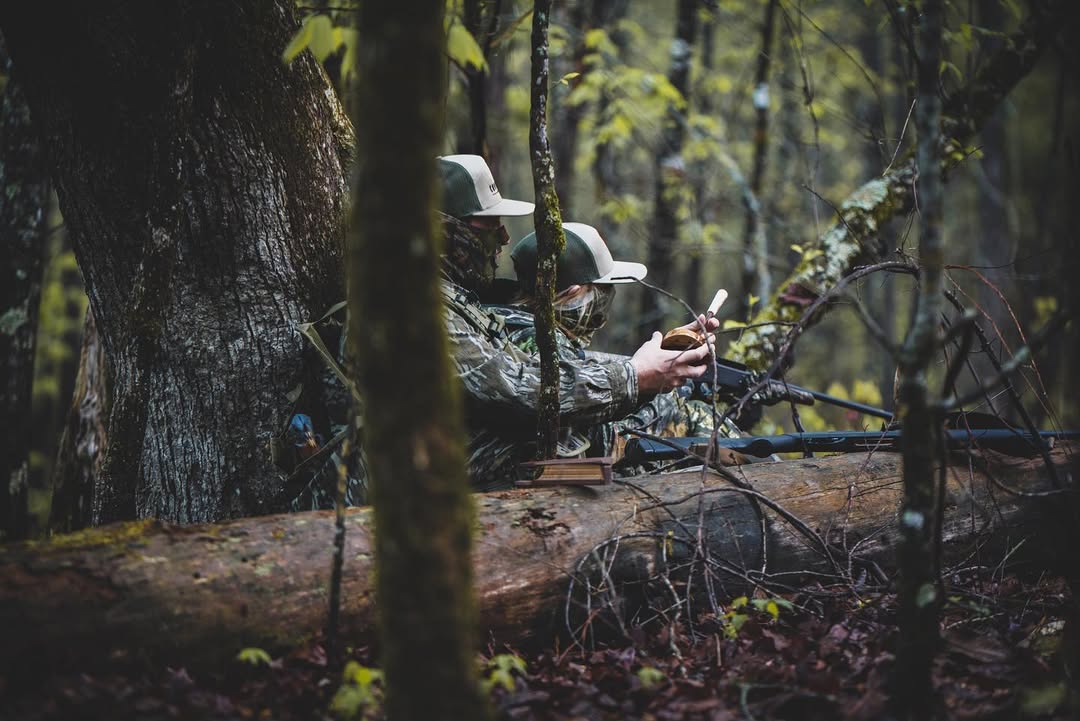
Spring turkey hunting can test even the most experienced hunters. Few situations are more frustrating than calling in a mature gobbler, only to watch him hang up just out of range every single time. He gobbles, he answers, he even shows interest—but he refuses to commit.
This is one of the most common behavioral patterns in pressured spring turkeys, and it’s also one of the most misunderstood. The good news? A hung-up gobbler is not a lost opportunity—it’s a setup problem you can fix.
In this guide, we’ll break down exactly why gobblers hang up and how to adjust your setup, calling strategy, and positioning to finally close the distance.
Why Gobblers Hang Up in the First Place
Before you can fix the problem, you need to understand it. A gobbler that hangs up isn’t ignoring you—he’s evaluating risk.
1. He Has “Seen Enough” Before
Older toms don’t survive by being aggressive all the time. If something feels slightly off—call timing, location, or terrain—they stop just outside the danger zone.
2. He’s Waiting for the Hen to Come to Him
In spring breeding behavior, dominant gobblers often expect hens to approach. If your setup suggests the hen is too close, too loud, or too aggressive, he may stall.
3. He’s Stuck on a Boundary Line
Many gobblers hang up at:
- Field edges
- Creek crossings
- Ridge tops
- Property lines or open clearings
These natural “decision points” make them pause and evaluate safety before moving forward.
4. Your Setup Is Too Exposed
If he can’t clearly identify where the sound is coming from—or sees something unnatural—he’ll freeze and circle instead of committing.
The Biggest Setup Mistake Hunters Make
Most hunters set up where they hear the gobbler, not where the gobbler is going.
That’s the key difference.
A hung-up bird is already telling you:
“I don’t like this final approach.”
If you sit directly in his vocal response zone, you’re often setting yourself up for failure. You need to anticipate his movement, not react to his gobble.
How to Re-Position for Hanging Gobblers
The solution is almost always setup relocation and angle control, not louder calling.
1. Get Off the Direct Line
Never set up directly between:
- Roost tree and your position
- Gobbler and field opening
- Ridge crest and low ground approach
Instead, move 10–40 yards off the predicted line of travel.
This forces the gobbler to:
- Change direction slightly
- Commit to a visual approach
- Break his “stall point” behavior
2. Set Up on the “Last Comfortable Stop”
A hanging gobbler usually stops at a consistent point.
Look for:
- Edge of timber before a field
- Crest before a downhill slope
- Thick cover transition to open space
Set up where he last feels safe before hesitation, not where he currently is.
3. Use Terrain to Hide Your Final Approach
Good setup locations include:
- Slight dips in terrain
- Inside corners of fields
- Blowdowns or brush clusters
- Creek bends or low points
You want the gobbler to:
Hear you before he sees you
Adjust Your Calling Strategy
Calling too aggressively is one of the fastest ways to make a gobbler hang up permanently.
1. Reduce Volume as He Closes
If he’s responding but not committing:
- Start loud (to locate him)
- Then quickly reduce intensity
- Shift to soft clucks and purrs
This creates the illusion of a relaxed hen—not a pressured one.
2. Stop Calling at the Wrong Time
When a gobbler is close but hesitant:
- Silence can be more powerful than sound
- Let him search for you instead of tracking you
Many birds break the hang-up pattern only when they lose certainty.
3. Use “Relocation Calls”
Instead of constant calling:
- Call once, then reposition slightly
- Wait 5–10 minutes
- Call again from a different angle
This simulates a moving hen and forces a response.
Break the “Stare and Stall” Behavior
When a gobbler hangs up, he often enters a visual confirmation phase. He’s looking for movement, shape, or behavior that confirms safety.
To beat this:
Stay Completely Still
Even small movements can lock him into hesitation mode.
Avoid Silhouettes
Never position yourself on:
- Ridge tops
- Field edges without cover
- Open skylines
Use Natural Cover Wisely
Brush, logs, and trees should break your outline—not hide your entire body.
When to Change the Entire Setup
Sometimes the bird isn’t coming because the setup is fundamentally wrong.
Change locations if:
- He hangs up in the same spot twice
- He refuses to close distance after multiple setups
- He shifts direction away from you consistently
In these cases, reposition to:
- His travel corridor instead of his calling position
- His exit route rather than entry point
- A secondary approach path he might use
Advanced Strategy: “Cut the Distance Without Calling More”
One of the most effective techniques for hung-up gobblers is silent repositioning.
Instead of calling harder:
- Move 50–100 yards closer while staying hidden
- Re-establish a new setup point
- Call softly once to re-engage
This forces the gobbler into a closer encounter range where hesitation often breaks.
Why This Works
Hung-up gobblers aren’t confused—they’re cautious. They are operating on three instincts:
- Safety
- Visibility
- Control of distance
Once you remove their comfort zone without alerting them, they are far more likely to commit.
You’re not convincing them to come closer—you’re removing their reasons not to.
Final Thoughts
A gobbler that hangs up every time is not unbeatable—it’s predictable. Once you understand where and why he stops, you can adjust your setup, control his approach angle, and break his hesitation cycle.
The difference between frustration and success often comes down to a simple shift:
Stop reacting to the gobble—and start predicting the stop.
When you do that, hung-up gobblers don’t stay hung up for long.
