
Introduction: One Country, a Thousand Hunts
The United States is a continent masquerading as a single nation, and nowhere is that more apparent than in its hunting culture. The whitetail stand hunter in Michigan’s Upper Peninsula, motionless at -10°F in a snow-covered hemlock, shares almost nothing in common with the spot-and-stalk mule deer hunter glassing ridges in the Arizona desert at 65°F. The duck hunter wading through a flooded Arkansas timber flat faces a completely different set of demands than the elk hunter climbing 3,000 vertical feet in the Colorado Rockies with a 50-pound pack.
Yet for decades, the hunting boot industry has largely sold the same boots to all of them. A heavily insulated, rubber-and-neoprene boot that excels in a frozen Wisconsin swamp becomes a sweat-soaked liability on a New Mexico archery hunt. A lightweight, uninsulated boot that’s perfect for a September Colorado scouting trip leaves a Maine stand hunter’s toes dangerously numb by mid-October.
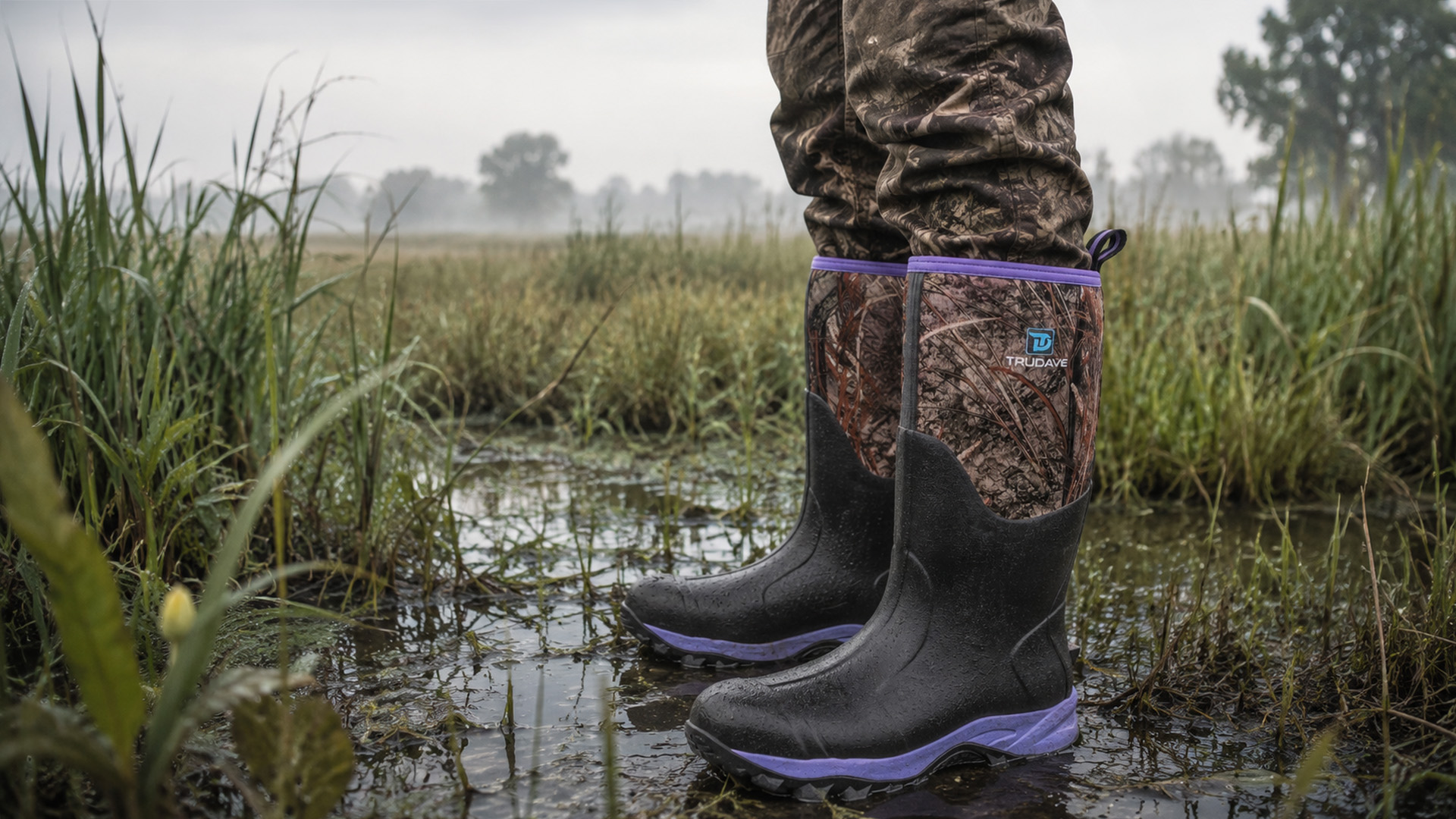
Trudave Gear’s hunting boot lineup—the WildGuard, TrailGuard, and DryFlow—is built on the recognition that a hunter’s location, terrain, and climate should dictate their footwear. Each boot is engineered for a specific set of conditions, and the key to staying warm, dry, and comfortable is matching the boot to the body of work your region demands. This guide breaks down the major hunting regions of the United States, identifies the unique challenges each presents to your feet, and pairs you with the Trudave boot that’s purpose-built for your corner of the map.
Part 1: The Upper Midwest and Great Lakes — The Frozen Stand
Stretching from the Michigan mitten through Wisconsin, Minnesota, and the Dakotas, this region is the heart of American whitetail country. The season here is defined by cold—real, bone-deep, sub-zero cold that seeps through inferior boots within an hour of a stationary sit. Lake-effect snow buries the woods. The ground freezes into jagged, ankle-turning ruts. The wind howls across open agricultural fields and cuts through timber stands.
Hunters here walk moderate distances—a mile or less is typical—and then sit for hours, often from before dawn until mid-morning or later. The primary challenge is not miles on your feet but hours of stillness in freezing temperatures. Your body stops generating meaningful heat once you settle into the stand, and your boots become your only defense against the cold that creeps up through the frozen ground and the metal platform beneath you.
The Regional Demands:
- Maximum static insulation for prolonged sits in sub-zero temperatures
- 100% waterproofing for snow, slush, and the half-frozen muck of late-season approaches
- Aggressive traction on frozen ground, crusted snow, and icy patches
- Scent control for pressured, late-season deer that have been hunted since September
The Trudave Solution: TrailGuard
The TrailGuard is the boot for this region. Its dual-layer insulation system—5mm neoprene combined with a fleece liner—is engineered specifically for static warmth. The neoprene traps body heat in millions of closed-cell air pockets, and unlike synthetic fiber insulations, it continues to work even if it gets wet from a creek crossing or accumulated sweat. The fleece liner wicks moisture away from the skin and provides immediate warmth against the foot.
The vulcanized natural rubber lower shell is 100% waterproof and scent-proof. Rubber is non-porous, so it doesn’t absorb or release human odor, a critical advantage when walking the same entry path to a stand every day in late season. The self-cleaning deep-lug outsole bites into frozen mud and crusted snow, shedding debris with every step so you’re not carrying five pounds of frozen muck on each boot by the time you reach your stand. In field conditions, the TrailGuard has been validated at extremes—one reviewer stayed warm and comfortable at -8°F after a mile-long walk in.
Pair With: A two-layer sock system—a thin synthetic moisture-wicking liner against the skin and a heavyweight merino wool outer sock—for maximum insulation. The TrailGuard’s generous interior volume is designed specifically to accommodate these thick socks without cutting off circulation.
Regional Tip: The self-cleaning tread isn’t just about mud. In this region, snow can pack into the lugs during the walk in, then freeze into a solid block that turns the outsole into a ski. The TrailGuard’s widely spaced lugs prevent that buildup, maintaining traction even as temperatures fluctuate around the freezing point.
Part 2: The Northeast and New England — Ice, Slush, and Salt
From the Adirondacks of New York through the Green Mountains of Vermont to the North Woods of Maine, the Northeast combines the bitter cold of the Midwest with the wet, coastal-influenced weather of the Atlantic. Nor’easters bury the woods in heavy, wet snow. The freeze-thaw cycle creates treacherous ice patches hidden beneath fresh powder. Road salt, sand, and de-icing chemicals coat every parking area and trailhead, eating away at inferior rubber.
The terrain is rugged—rocky ridges, dense hardwood forests, and steep, root-tangled approaches. Hunters here may walk a mile or more into their stands, gaining elevation over uneven ground. The primary challenge is managing variable conditions: deep cold in the mornings, warming temperatures by midday, and the constant presence of moisture in the form of snow, slush, and the high humidity of the Atlantic coast.
The Regional Demands:
- Insulation that handles sub-freezing sits without causing overheating during active approaches
- Rubber that stays flexible in freezing temperatures (unlike PVC, which stiffens and cracks)
- Chemical resistance to road salt and de-icing agents
- Traction on wet, icy, rocky terrain
The Trudave Solution: TrailGuard (Deep Cold) or WildGuard (Variable Conditions)
For the dedicated late-season stand hunter in northern Maine or the Adirondacks, the TrailGuard’s fleece-lined insulation is the right tool when temperatures stay below 25°F for the entirety of the hunt. For the more variable conditions of southern New England, the WildGuard provides 5mm neoprene insulation with a breathable liner that prevents overheating during longer, more active approaches. Both boots feature vulcanized natural rubber that stays supple in freezing temperatures—unlike PVC, which becomes brittle and dangerous.
The salt factor is critical here. Road salt and de-icing chemicals will degrade rubber over time if left on the surface. Trudave’s care protocol—a thorough freshwater rinse after every hunt—prevents salt crystals from working their way into microscopic pores and causing cracks. The dense, vulcanized rubber is inherently more resistant to chemical damage than cheaper materials.
Pair With: Heavyweight merino wool socks for the TrailGuard, midweight for the WildGuard. A silicone-free rubber conditioner applied every few months during the season adds an extra layer of protection against salt and moisture.
Regional Tip: The freeze-thaw cycle is the enemy of glued seams. Water seeps into microscopic gaps during the day when temperatures rise above freezing, then expands as ice at night, prying the seams apart. Trudave’s vulcanized construction eliminates this failure mode entirely—there are no glued seams to separate, no stitches to rot. The boot is a single continuous waterproof unit.
Part 3: The Southeast and Gulf Coast — Heat, Humidity, and Hurricanes
Hunting in the Southeast—from the whitetail woods of Georgia and Alabama to the swamps of Louisiana and the pine flats of Florida—is defined by water, warmth, and unpredictability. The temperatures during deer season can range from the 30s at dawn to the 70s by midday. The humidity is relentless, and rain is a constant companion. The terrain is often wet underfoot: creek bottoms, flooded timber, marshy edges, and saturated soil that never fully dries.
This is a region where heavy insulation is a liability for most of the season. A 1000-gram Thinsulate boot designed for an Iowa winter will have your feet swimming in sweat by 9 a.m. on a Georgia November morning. The primary challenge is staying dry—from external water and from your own sweat—while maintaining traction on greasy mud and submerged logs.
The Regional Demands:
- 100% waterproofing for constant exposure to standing water, mud, and rain
- Breathability to manage internal moisture in warm, humid conditions
- Insulation that’s appropriate for mild cold, not extreme freezes
- Traction on slick, organic mud and submerged obstacles
- Camouflage for the tight quarters of thick southern cover
The Trudave Solution: WildGuard (Cool Season) or DryFlow (Warm Season)
The WildGuard is the ideal boot for the core of the southern deer season. Its 5mm neoprene upper provides enough insulation for 35-degree mornings without the suffocating heat of a heavier boot. The breathable liner manages moisture during the walk in, and the vulcanized rubber shell keeps the constant water of swamps and creek crossings out completely. The camo finish blends into the browns and greens of southern hardwood bottoms and marsh edges.
For early bow season—September and October, when temperatures still climb into the 70s and 80s—the DryFlow is the better tool. Its zero-insulation design is a deliberate advantage: no trapped heat, no sweat buildup, just 100% waterproof industrial-grade rubber that keeps the dew and the creek water out while your body manages its own temperature. It’s the lightest boot in the Trudave lineup, ideal for the long walks into public land that define early-season southern hunting.
Pair With: Lightweight merino wool socks for the DryFlow, midweight merino wool for the WildGuard. In the South, sock management is critical—a spare pair in your pack lets you swap out sweat-soaked socks at midday and prevent the blisters and maceration that warm, wet conditions accelerate.
Regional Tip: The mud in the South is different from the mud in the North. It’s often a greasy, organic, decomposing muck that’s more like a lubricant than a solid. The WildGuard’s deep, widely spaced lugs are designed for this—they bite into the soft ground and release it cleanly with every step, while a tightly spaced tread would pack full and become a slick, useless platform.
Part 4: The Mountain West — Elevation, Exertion, and Everything in Between
The Rocky Mountain states—Colorado, Wyoming, Montana, Idaho, and the high country of Utah and New Mexico—present a set of demands that no other region can match. Altitude amplifies every physical effort. A hunter climbing from 8,000 to 11,000 feet to glass a basin is burning oxygen and calories at a rate that makes weight on the feet disproportionately punishing. The terrain varies from loose scree to packed dirt to wet alpine meadows, often in the same drainage.
The weather is famously fickle. A September morning might start in the low 30s and produce a drenching thunderstorm by 2 p.m., followed by a snow squall at dusk. Early-season bowhunting and rifle hunts here demand versatility above all else. Late-season hunts, often in November at high elevation, are brutally cold and snowy.
The Regional Demands:
- Lightweight construction for the long, steep approaches that define western hunting
- Waterproofing for creek crossings, alpine snowfields, and sudden storms
- Traction on rock, scree, and hard-packed dirt
- Insulation appropriate to the season—minimal for September, substantial for November
- Support and stability for side-hilling and uneven terrain
The Trudave Solution: DryFlow (Early Season) and TrailGuard (Late Season)
For the early-season western hunter—September archery elk, mule deer spot-and-stalk, pronghorn on the plains—the DryFlow is the specialist. Its zero-insulation design acknowledges that the western hunter’s body is a furnace, generating enormous heat through exertion at altitude. The boot’s job is to keep water out without trapping heat in. The industrial-grade vulcanized rubber is completely waterproof, and the aggressive cleated outsole pushes mud out with every step while gripping on rock and hard-packed dirt. At roughly 25-30% lighter than the insulated Trudave boots, the DryFlow saves meaningful energy over the course of a ten-mile day.
When the snow flies and the late-season hunts begin, the TrailGuard takes over. Its fleece-lined 5mm neoprene provides the static warmth needed for glassing sessions in freezing temperatures, and the self-cleaning outsole handles snow and frozen mud. For the hunter who packs into a high basin and sits for hours behind a spotting scope, the TrailGuard is the deep-cold anchor.
Pair With: Lightweight merino socks for the DryFlow in warm conditions, midweight for cool mornings. For the TrailGuard in late season, a heavyweight merino sock or a two-layer system. The DryFlow’s roomy interior accommodates the foot swelling that occurs at altitude.
Regional Tip: At elevation, every ounce on your feet matters more than it does at sea level. The reduced oxygen means your muscles are working harder just to move you forward, and the additional weight of a heavy boot compounds that effort. The DryFlow’s lightweight construction is not a compromise—it’s a genuine performance advantage in the thin air of the high country.
Part 5: The Pacific Northwest — Rain, Rain, and More Rain
From the temperate rainforests of the Olympic Peninsula to the steep, brush-choked canyons of the Coast Range, the Pacific Northwest is defined by moisture. Rain is not an occasional event—it’s the baseline condition. Hunters here pursue Roosevelt elk, blacktail deer, and black bears in an environment where the ground is rarely dry, the vegetation is thick and dripping, and staying dry is the single greatest challenge.
Unlike the frozen cold of the Midwest or the humid warmth of the Southeast, the Northwest’s climate is characterized by persistent, cool, drizzling rain that soaks through inferior gear within hours. Temperatures during the fall hunting season typically range from the mid-30s to the low 50s—not extremely cold, but perpetually damp. The terrain is steep, brushy, and often requires crawling through salal and devil’s club.
The Regional Demands:
- Absolute waterproofing for constant rain, wet brush, and creek crossings
- Insulation that works when wet (because everything gets wet eventually in the Northwest)
- Traction on wet logs, mossy rocks, and greasy mud
- Durability against the abrasive, brush-choked terrain
- Quick-drying capability for multi-day backcountry hunts
The Trudave Solution: WildGuard
The WildGuard is practically purpose-built for the Northwest. Its 5mm neoprene upper provides insulation that, critically, continues to work even when wet—a property that synthetic fiber insulations cannot match. The vulcanized rubber lower shell is absolutely waterproof, and the vulcanized bond between the neoprene and rubber is permanent, with no glued seams to separate after repeated soaking.
The camo finish blends into the dark, wet timber and brush. The deep-lug outsole grips on the mossy, slick surfaces that define the Northwest—wet logs, algae-covered rocks, and the perpetually saturated soil of the forest floor. The mid-calf height protects against the constant wet brush and shallow creek crossings without the bulk of a knee-high boot.
Pair With: Midweight to heavyweight merino wool socks. Even in moderate cold, the persistent damp of the Northwest can chill your feet faster than dry cold. Merino wool’s ability to insulate when wet makes it essential. Pack an extra pair of socks for multi-day hunts.
Regional Tip: In the Northwest, your boots will be submerged—not just in creek crossings, but in the constant dripping of wet brush and the saturated moss that covers every log. The WildGuard’s vulcanized construction means water literally cannot get in at the seams because there are no seams to penetrate. After the hunt, remove the insoles, stuff the boots with newspaper, and let them air dry—never with heat, which damages the rubber. The boots will be dry and ready by morning.
Part 6: Building Your Regional Boot System
The hunters who benefit most from a regional approach are those who understand their local conditions and match their boots accordingly. Here’s the quick-reference framework:
| Your Region | Primary Conditions | Best Trudave Boot | Key Advantage |
|---|---|---|---|
| Upper Midwest / Great Lakes | Sub-zero cold, deep snow, frozen ground | TrailGuard | Fleece-lined 5mm neoprene for maximum static warmth |
| Northeast / New England | Variable freeze-thaw, ice, road salt | TrailGuard (deep cold) or WildGuard (variable) | Chemical-resistant rubber, cold-flexible compound |
| Southeast / Gulf Coast | Mild cold, high humidity, standing water | WildGuard (cool) or DryFlow (warm) | Breathable warmth, 100% waterproof, camo finish |
| Mountain West | High elevation, steep terrain, variable weather | DryFlow (early) or TrailGuard (late) | Lightweight for miles, insulated for glassing |
| Pacific Northwest | Constant rain, wet brush, cool temps | WildGuard | Insulation that works when wet, absolute waterproofing |
The Multi-Region Hunter
If your season takes you across regions—say, an early-season Colorado elk hunt followed by a late-season Michigan whitetail sit—a two-boot system is not a luxury. It’s matching the tool to the task. A DryFlow for the high country in September, a TrailGuard for the frozen stand in December. At Trudave’s direct-to-consumer pricing, owning two purpose-built boots costs less than a single pair of premium boots from a legacy brand sold through traditional retail.
Conclusion: The Right Boot for Your Backyard
A whitetail stand in Wisconsin and a mule deer ridge in Arizona may both be American hunting, but they share almost nothing in terms of what they ask from a boot. The hunter who understands their region—the cold that creeps up from frozen ground, the rain that never stops, the elevation that punishes every ounce—is the hunter who arrives at the stand or the glassing knob with dry, warm, comfortable feet.
Trudave Gear’s WildGuard, TrailGuard, and DryFlow are not one-boot-fits-all compromises. They are purpose-built tools for specific conditions, engineered from vulcanized natural rubber, 5mm neoprene, and EVA midsoles that deliver premium performance at direct-to-consumer prices. Know your region. Know your conditions. And choose the boot that was built for the ground you walk on.
To explore the complete Trudave Gear hunting boot lineup and find the right pair for your region, visit trudavegear.com.
