
Introduction: The Moment of Truth
The shot was true, the recovery is complete, and the celebration has faded. Now, with a heavy pack of meat on your back or a deer sled dragging behind you, the real physical test of your gear begins. This is the part of the hunt that separates genuine performance from marketing promises. A boot that felt comfortable on the casual walk in can become an instrument of torture under a 100-pound load. An outsole that gripped well on dry pine needles can slip treacherously on a muddy, blood-slicked slope. The miles back to the truck are harder than the miles in, and every weakness in your footwear is amplified with every step.
Packing out game is the ultimate stress test for a hunting boot. It demands maximum support and cushioning to handle the load, relentless traction on unpredictable terrain, absolute waterproofing for creek crossings and marshy ground, and a level of durability that withstands sharp rocks, hidden roots, and the sheer abrasion of dragging a heavy sled. Trudave Gear’s WildGuard, TrailGuard, and DryFlow boots are built to handle this precise challenge. Their EVA midsoles, self-cleaning outsoles, and vulcanized rubber construction aren’t just features for the approach—they’re the tools that get you and your harvest home safely. Here’s how they perform when the pack comes on and the miles stretch out.
1. The Physics of Packing Out: Why Support and Cushioning Suddenly Matter More
Adding a heavy pack changes everything. Your foot strikes the ground with far greater force, and the impact travels up through your ankles, knees, hips, and lower back. The cushioning that felt perfectly adequate during the unloaded walk in is now bottomed out, leaving your joints to absorb the shock directly. Over miles, this leads to deep fatigue, sharp pain, and an increased risk of injury.
Trudave replaces the heavy, inflexible steel shanks of traditional work boots with an EVA (ethylene-vinyl acetate) midsole. EVA is the same shock-absorbing foam found in high-performance running shoes. It compresses on impact to absorb energy, then rebounds to return it, cushioning every step. Under a heavy load, this active cushioning prevents the midsole from collapsing completely and protects your skeleton from the cumulative pounding of a long pack-out.
Equally important is arch support. When you’re carrying a deer quarter or a loaded pack, the natural arch of your foot flattens more than usual. Without proper support, the plantar fascia becomes overstretched and inflamed, leading to the sharp, stabbing heel pain of plantar fasciitis. The WildGuard, TrailGuard, and DryFlow all feature cushioned EVA insoles with built-in arch support that help maintain the foot’s natural structure under load. The insoles are removable, so hunters with specific orthotic needs can swap in a custom insole—or Trudave’s own ToughCush Comfort Insole—for even more targeted support during the heavy haul.
The structured heel cup on the DryFlow locks the foot in place, preventing the internal slip that causes blisters and forces the toes to grip the footbed. When you’re side-hilling with a heavy pack, a secure heel is essential for stability and control.
2. Traction When Every Step Counts
The terrain on a pack-out is rarely ideal. You’re often taking the most direct route back to the truck, which means navigating steep slopes, loose rock, mud, and hidden obstacles. The consequences of a slip are greater now—with a heavy pack, a twisted ankle or a fall can be catastrophic.
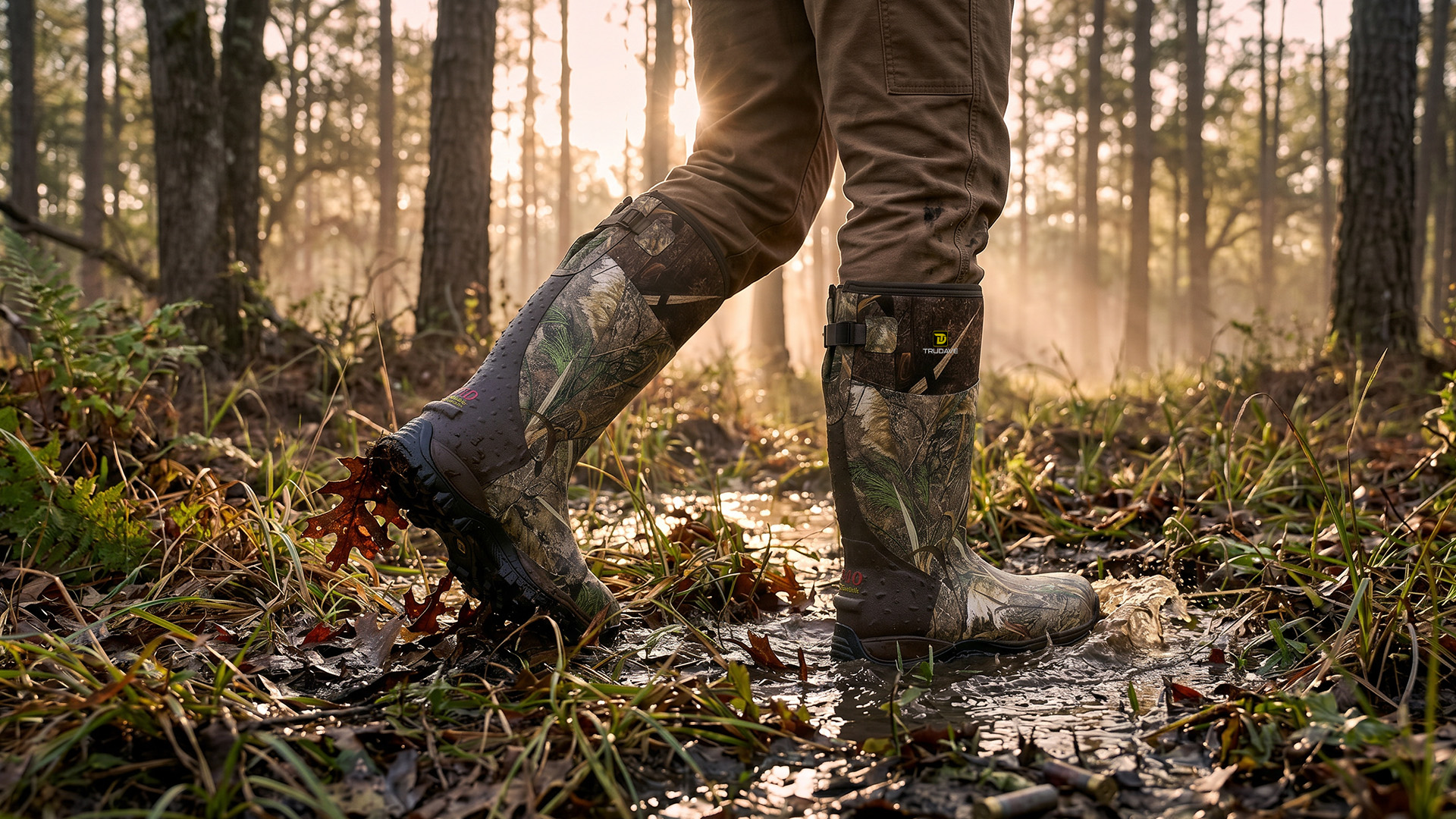
Trudave builds a different outsole for each hunting boot series, tuned to the terrain it’s designed to handle. The WildGuard’s deep, widely spaced lugs are ideal for the muddy, uneven ground of a creek-bottom recovery. They bite into soft earth and release it cleanly with each step, preventing the buildup of slick mud that turns a boot into a skate. The multi-directional pattern provides grip when you’re climbing over a fallen tree or bracing on a side-slope with 80 pounds of venison on your back.
For the frozen ground and crusted snow of a late-season pack-out, the TrailGuard’s aggressive lugs and deep siping come into play. The siping—thousands of razor-thin slits in the rubber—creates hundreds of additional biting edges that grip ice and frozen mud. The rubber compound stays flexible in sub-zero temperatures, so the outsole maintains its grip when cheaper rubbers turn into slick, hard plastic.
For the early-season hunter packing out a boned-out elk from a high basin, the DryFlow’s cleated outsole pushes mud out with every step and provides constant ground contact on the mixed surfaces—gravel, rock, and hard dirt—that define western backcountry recoveries. Its aggressive, oil-resistant rubber compound grips confidently on wet rock and loose scree.
Regardless of the series, the self-cleaning tread spacing is a critical asset. Mud and debris that pack into a tight tread pattern will turn the outsole into a heavy, slippery platform within a few hundred yards. Trudave’s widely spaced lugs eject that debris, maintaining traction and saving you the energy of lifting several extra pounds of caked mud on each foot.
3. Waterproofing That Can’t Fail During a Recovery
A pack-out often means crossing creeks, slogging through marshes, or dragging a sled through half-frozen slush. Wet feet aren’t just uncomfortable—they’re dangerous. Water softens skin, leading to blisters and maceration. Cold water rapidly pulls heat from your body, increasing the risk of hypothermia.
Trudave boots are built with vulcanized natural rubber, a material that creates a single, continuous, 100% waterproof barrier. The seams are chemically fused at the molecular level, not glued. There are no stitches to rot, no adhesive bonds to separate under the stress of heavy loads and repeated flexing. The waterproof seal is the boot itself. Whether you’re standing in a creek to wash blood off your hands or walking through a snow-fed puddle on the way back to the truck, your feet stay dry. This absolute waterproofing is a safety feature as much as a comfort feature during the long, demanding hours of a pack-out.
4. Real-World Scenarios: Trudave Boots Under Load
Imagine a whitetail hunter in the Upper Midwest, dragging a sled loaded with a mature buck through six inches of wet snow. The temperature is 25°F. The hunter is wearing TrailGuards with heavyweight merino wool socks. The fleece-lined neoprene insulation keeps his feet warm during the long, slow drag, while the aggressive all-terrain outsole bites into the snow and frozen mud beneath it. The self-cleaning tread sheds the heavy, wet snow, and the vulcanized rubber shell keeps the slush out completely.
Or consider a bowhunter in the Rockies, who has just packed out an elk quarter over five miles of steep, rocky trail. He’s wearing DryFlows with midweight merino socks. The lightweight, zero-insulation design prevents overheating during the strenuous climb out of the basin. The cleated outsole grips the loose scree and holds firm on the exposed rock ledges, while the structured heel cup prevents his feet from sliding forward in the boots on the punishing descents. At the truck, his feet are tired but dry and blister-free.
In the flooded timber of Arkansas, a duck hunter drags a heavy sled of decoys and harvested birds through knee-deep water and thick mud. He’s wearing WildGuards, and the 5mm neoprene insulation is warm even when the boots are submerged. The deep-lug outsole grips the hidden, submerged logs and releases the sticky muck with every step. The boots never leak, never delaminate, and after the long slog back to the boat ramp, they rinse clean in seconds.
5. Post-Hunt Boot Care: Recovering Your Boots After the Hardest Miles
A pack-out is rough on boots. Mud, blood, salt from sweat, and the sheer physical stress of carrying heavy weight all take their toll. A simple, immediate care routine ensures your Trudave boots are ready for the next hunt.
Rinse the boots with clean water as soon as possible. Blood, in particular, is corrosive and should not be left to dry on the rubber. Use a mild soap and a soft brush for stubborn grime. Remove the insoles and let them dry separately—the EVA foam will dry quickly, but leaving them in the boot traps moisture that breeds bacteria and degrades the material over time. Stuff the boots with crumpled newspaper to wick moisture from the neoprene or fleece lining, and let them air-dry at room temperature, away from direct heat. Heat is the enemy of vulcanized rubber; it causes the material to stiffen and crack.
Inspect the boots for damage. A sharp rock or a piece of bone can puncture even the toughest rubber. Small cracks or punctures can be sealed with a flexible waterproof adhesive like Shoe Goo or Aquaseal SR. Clean the area, lightly rough it with sandpaper, apply the adhesive, and let it cure for 24 hours. The repair will be flexible, waterproof, and nearly invisible. Catching a small problem early prevents it from becoming a leak later.
6. Building a Pack-Out Ready System
A Trudave boot is the foundation of a pack-out system that includes socks, insoles, and a small repair kit.
Socks: Merino wool is the only choice for pack-outs. It wicks moisture, insulates even when damp, and resists the odor that builds up during long, sweaty miles. Choose heavyweight socks for late-season TrailGuards, midweight for WildGuards in variable conditions, or lightweight for early-season DryFlows. Always pack a spare pair in your kill kit—changing into dry socks before the pack-out begins can prevent the blisters that might otherwise develop over the next several miles.
Insoles: If you know you’ll be packing heavy, upgrade to the ToughCush Comfort Insole before the season. The additional arch support and heel cushioning will pay for themselves on the first heavy haul.
Repair Kit: A small tube of flexible adhesive, a few alcohol wipes, and a piece of sandpaper weigh almost nothing and can salvage a boot—and a hunt—if a puncture occurs in the field.
Conclusion: The Boot That Goes the Distance
The shot is the moment of success, but the pack-out is the moment of truth. It’s when your gear proves itself or fails. Trudave’s WildGuard, TrailGuard, and DryFlow boots are engineered to handle the worst: the weight, the mud, the water, the miles. Their cushioned EVA midsoles protect your joints under heavy loads. Their self-cleaning outsoles grip when it matters most. And their vulcanized rubber shells keep your feet absolutely dry, no matter what you wade through on the long road home.
When you’re bent under a load of meat, every step is a commitment. Make sure your boots are up to it.
To explore the complete Trudave Gear hunting boot lineup and find the right pair for your next hunt, visit trudavegear.com.
