
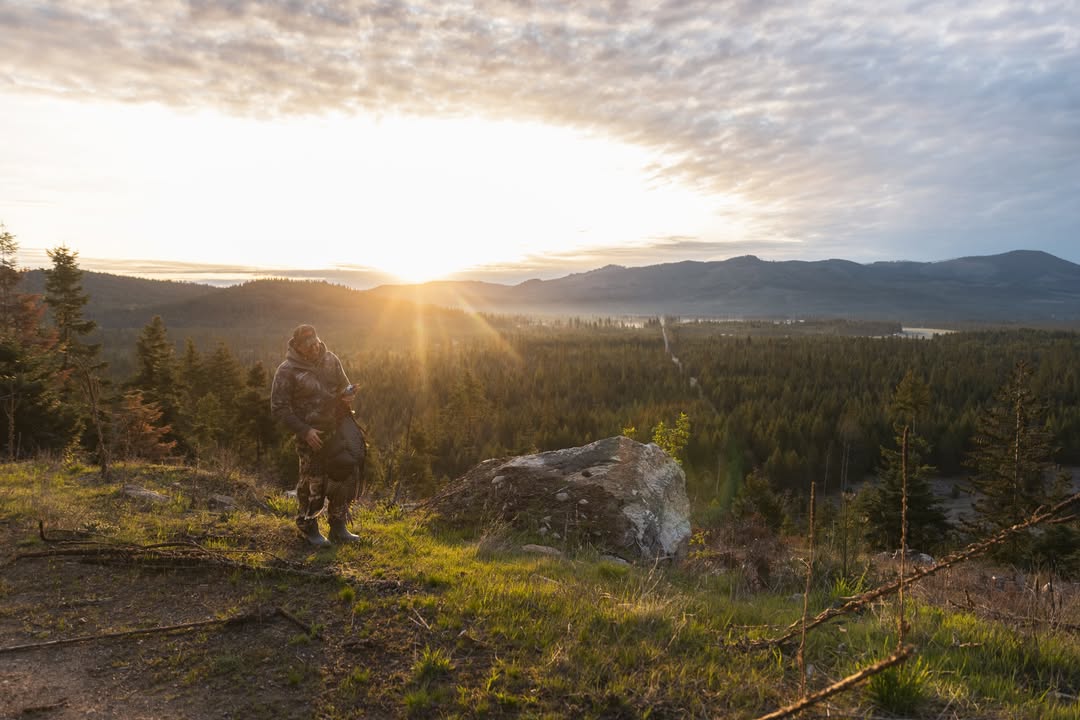
As summer heat intensifies across the United States, deer behavior changes dramatically. Hunters who rely on spring scouting patterns or early-season food movement often notice something frustrating: deer seem to vanish during daylight hours, trail camera activity drops, and once-active travel routes suddenly go cold.
But deer are not disappearing. They are adapting to heat by restructuring their movement around one of the most important survival resources in summer: shade.
Understanding how shade influences deer movement is one of the most overlooked yet powerful advantages a hunter can develop during peak summer conditions. In hot weather, shade is not just comfort—it becomes a critical part of bedding security, temperature regulation, scent control, and movement efficiency.
Why Shade Becomes a Primary Movement Factor in Summer
During cooler months, deer movement is strongly influenced by:
- Food availability
- Breeding behavior
- Hunting pressure
In peak summer, however, environmental stress changes everything.
1. Heat Conservation Becomes a Survival Priority
Whitetails and other game animals must regulate body temperature carefully during extreme heat.
In high temperatures:
- Excess movement increases energy loss
- Open sunlight exposure raises thermal stress
- Water loss through respiration increases
To compensate, deer drastically reduce unnecessary exposure and movement.
2. Dense Vegetation Changes the Entire Landscape
By mid-summer:
- Forest canopies fully develop
- Brush and undergrowth thicken
- Cooler air pockets form beneath heavy cover
These shaded areas become microclimates where deer can:
- Stay cooler
- Conserve energy
- Avoid direct sunlight
3. Shade Improves Scent Security
Shade zones are often associated with:
- Stable airflow
- Cooler thermal currents
- Reduced wind turbulence
This allows deer to monitor scent conditions more effectively while remaining hidden.
Key Insight: Deer use shade not only for cooling, but for survival-level security advantages.
How Shade Alters Deer Movement Patterns
Shade affects where deer:
- Bed
- Travel
- Pause during movement
- Enter feeding zones
Once temperatures spike, deer movement becomes heavily “shade-linked.”
1. Deer Prefer Connected Shade Corridors
In summer, deer rarely cross large exposed areas during daylight unless necessary.
Instead, they move through:
- Tree-lined creek edges
- Timber strips
- Thick brush corridors
- Shadow-covered terrain transitions
These connected shade systems create low-risk movement routes.
2. Shade Reduces Daytime Exposure
Direct sunlight creates:
- Higher body temperature stress
- Increased visibility
- Faster dehydration
Because of this, deer often:
- Delay movement until shadows expand
- Travel only inside covered terrain
- Minimize open-area crossings
This is why many hunters see little midday activity in exposed locations.
3. Bedding Areas Shift Toward Cooler Thermal Zones
In summer, bedding location selection becomes highly temperature-sensitive.
Common shade-oriented bedding locations include:
- North-facing slopes
- Dense cedar pockets
- Creek-bottom cover
- Thick pine stands
- Areas with consistent afternoon shade
These zones provide:
- Lower temperatures
- Better airflow
- More predictable thermals
Understanding “Shade Timing” in Deer Movement
Shade movement is not static—it changes throughout the day.
Morning Movement
Early in the day:
- Deer return from feeding areas
- Long shadows still cover open edges
- Temperatures remain manageable
Movement often follows:
- Shadow lines
- Low-light corridors
- Covered terrain edges
Midday Behavior
During peak heat:
- Deer movement drops sharply
- Activity shrinks into bedding zones
- Shade becomes almost non-negotiable
Most deer remain:
- Deep inside cover
- Near stable thermal pockets
- Close to water or airflow corridors
Evening Movement
As sunlight weakens:
- Shade expands outward
- Ground temperatures drop
- Deer regain movement flexibility
Travel begins again along:
- Timber edges
- Brush corridors
- Transition zones between bedding and feeding areas
How Hunters Can Use Shade-Based Patterns
Understanding shade movement creates far more predictable summer hunting opportunities.
Step 1: Hunt the Shade Network, Not the Food Source
Many hunters focus only on:
- Food plots
- Crop edges
- Open feeding areas
But in summer, the real movement often happens between shaded security zones.
Better approach:
Identify:
- Continuous shade corridors
- Covered terrain transitions
- Thermal-safe travel lanes
Step 2: Focus on Afternoon Shade Expansion
One of the best summer strategies is tracking where shade grows during evening hours.
As shadows lengthen:
- Deer begin transitioning outward
- Exposed ground becomes safer
- Movement windows open briefly
Key Insight:
Evening movement is often tied more to shadow coverage than actual clock time.
Step 3: Target Thermal-Friendly Terrain
Shade and thermals work together.
Look for:
- Side slopes with steady airflow
- Creek systems with cool air drainage
- Ridge edges protected from direct sun
These areas create ideal travel conditions during hot weather.
Step 4: Avoid Over-Pressuring Shade Corridors
In summer, deer rely heavily on predictable cover routes.
Too much intrusion:
- Disrupts movement immediately
- Pushes deer deeper into cover
- Alters daylight activity patterns
Low-impact access is critical.
Why Trail Cameras Often “Go Dead” in Summer
Many hunters think deer disappear in heat waves because:
- Cameras show reduced activity
- Food sources become quiet
- Open movement stops
In reality:
- Deer shift into shaded internal movement systems
- Travel becomes shorter and more concealed
- Movement timing compresses dramatically
The deer are still nearby—you’re simply watching the wrong zones.
Common Mistakes Hunters Make
1. Hunting open food sources during high heat
Deer often wait until near-dark to expose themselves.
2. Ignoring internal shade corridors
Most summer daylight movement happens inside cover.
3. Overestimating movement distance
Summer deer movement is often extremely localized.
4. Treating all shade equally
Not all shaded areas offer:
- Stable thermals
- Cooling airflow
- Security cover
The best shade combines all three.
Real-World Example
A hunter notices a sharp decline in trail camera photos along a soybean field during July.
After scouting:
- Deer trails shift into creek-bottom timber
- Movement follows dense shaded cover
- Evening activity begins only when shadow coverage reaches the field edge
By repositioning closer to internal shade corridors:
- Daylight encounters increase
- Movement timing becomes predictable
- Deer appear consistently despite heat
Why it worked: The hunter followed shade-based security movement instead of open feeding patterns.
Final Thoughts
Peak summer deer behavior is shaped less by open feeding opportunities and more by environmental survival strategies. Shade becomes a complete movement system—controlling bedding, travel timing, scent protection, and exposure risk.
Hunters who understand shade-based movement stop chasing random sightings and begin identifying predictable low-stress travel routes hidden inside summer terrain.
Because during the hottest part of the year, successful hunting is not about where deer want to eat—
it’s about where deer can move comfortably, safely, and invisibly.
