
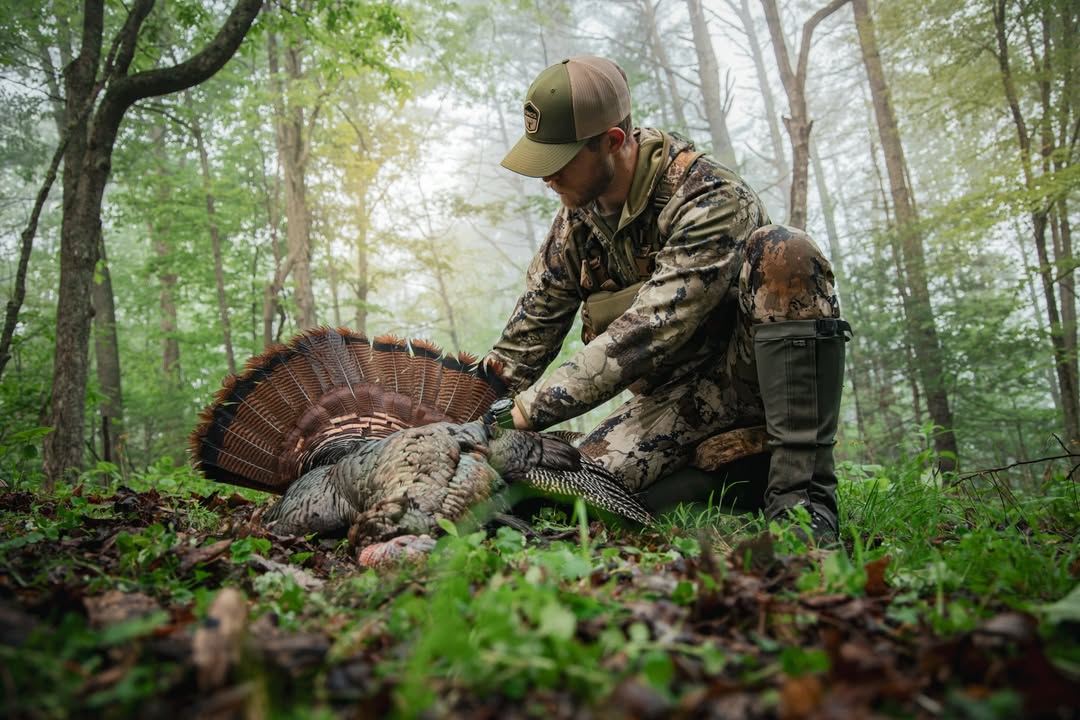
In spring turkey hunting, the first hour of daylight can make or break your hunt. It’s the time when gobblers are most vocal, most responsive, and most predictable—if you’re set up correctly.
But here’s the reality: many hunters are in the woods early… yet still struggle to get birds to respond. The difference isn’t just being there—it’s how and where you set up before the woods wake up.
Why Early Morning Is the Prime Window
At first light, gobblers are still on the roost and actively trying to locate hens. This creates a unique opportunity:
- Birds are naturally vocal and responsive
- Sound travels farther in calm morning air
- Gobblers are deciding where to go once they fly down
If your setup is right, you can influence that decision. If it’s wrong, you may never even hear a gobble.
Step 1: Get Close—But Not Too Close
One of the most important factors in early morning success is distance.
- Set up within 100–150 yards of the roost if possible
- Avoid getting directly underneath the bird
- Use terrain or cover to stay concealed during your approach
Too far away, and your calls won’t carry effectively. Too close, and you risk spooking the bird before the hunt even begins.
Step 2: Use the Terrain to Your Advantage
Turkeys rely heavily on sight, especially after fly-down. Your setup should give the bird confidence to approach.
Look for:
- Slight rises or ridges where a gobbler must step into view
- Open shooting lanes within 30–40 yards
- Natural travel routes like logging roads, field edges, or ridge tops
Avoid setting up where thick brush blocks visibility—if a gobbler can’t see the “hen,” he may hang up.
Step 3: Start Subtle, Not Aggressive
Many hunters make the mistake of calling too loudly, too early.
Instead:
- Begin with soft tree yelps or clucks
- Match the natural tone of a hen still on the roost
- Wait and listen for a response before increasing intensity
Early morning birds are already primed to respond—you don’t need to force it.
Step 4: Time Your Calling With Fly-Down
The transition from roost to ground is critical.
As fly-down approaches:
- Increase your calling slightly to simulate a hen getting active
- Add wing flaps or leaf scratching if possible to create realism
- Be ready—this is when gobblers often commit quickly
If you sound like the first “hen” ready to move, you become the most attractive option.
Step 5: Stay Ready for Silent Approaches
Not every gobbler will announce his arrival.
- Some birds will respond once, then come in quietly
- Others may approach from unexpected angles
- Pressured birds often avoid gobbling altogether
Always assume a bird is coming and stay alert. Movement at the wrong moment can end the hunt instantly.
Step 6: Position Yourself for the Shot Before Calling
Before making your first call, ask yourself:
- Do I have a clear shooting lane?
- Am I concealed from multiple angles?
- Can I adjust slightly if the bird comes from the side?
Your setup should be complete before you start calling—because once a gobbler commits, things happen fast.
Common Early Morning Setup Mistakes
Even experienced hunters make errors that cost them opportunities:
- Calling too aggressively too soon
- Setting up without clear visibility
- Ignoring wind and sound direction
- Moving after calling and alerting nearby birds
Avoiding these mistakes alone can dramatically increase your success rate.
Why This Setup Works
The early morning setup isn’t about luck—it’s about timing and positioning.
By:
- Getting close without being detected
- Using terrain to control visibility
- Calling naturally and at the right time
You align your strategy with how turkeys already behave at daylight.
Instead of chasing birds, you’re letting them come to you.
Final Thoughts
The hunters who consistently get birds talking at first light aren’t doing anything complicated—they’re just doing the basics extremely well.
Early morning success comes down to preparation, patience, and understanding how gobblers think in those first critical moments of the day.
The key takeaway:
If you want birds talking fast at sunrise, your setup has to be right before the first call is ever made.
