
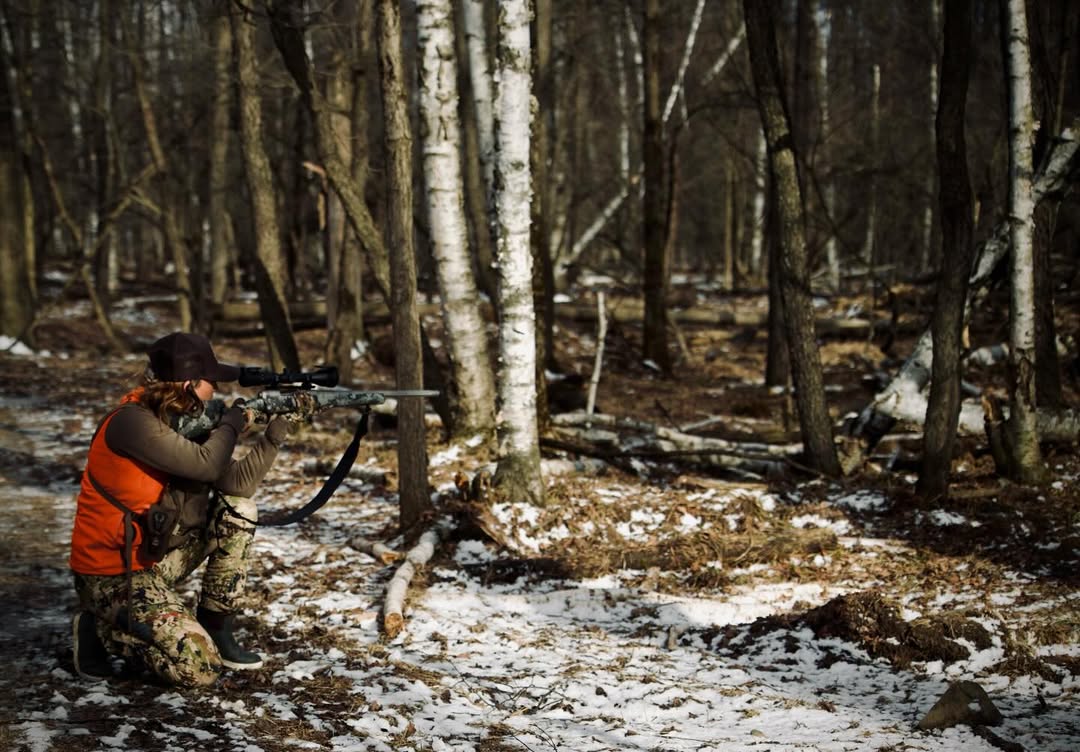
Early spring offers a short but powerful advantage for hunters:
You can see the woods the way animals actually use it.
Before leaves fill in, grasses grow tall, and underbrush thickens, the landscape is open and readable. Travel corridors—the routes deer, turkeys, and other game animals rely on daily—are easier to identify now than at any other time of year.
Miss this window, and those same routes become hidden, forcing you to guess later in the season.
This guide breaks down how to locate, understand, and use travel corridors now—so you can hunt smarter when fall arrives.
What Is a Travel Corridor?
A travel corridor is a consistent route animals use to move between key areas, such as:
- Bedding areas
- Feeding zones
- Water sources
- Seasonal habitat shifts
These paths are not random. They are shaped by:
- Terrain
- Cover
- Safety
- Efficiency
Animals choose the path of least resistance—and they tend to reuse it.
Why Early Spring Is the Best Time to Find Them
1. Visibility Is at Its Peak
Before vegetation explodes:
- You can see deeper into timber
- Ground sign is exposed
- Subtle trails become obvious
Once spring growth takes over:
- Trails disappear under grass
- Movement patterns become harder to read
- Sign gets covered or scattered
2. Sign Is Fresh and Undisturbed
After winter:
- Trails are still clearly defined
- Tracks and droppings are visible
- Soil is often soft, preserving detail
You’re seeing real movement patterns from recent months, not just guessing based on theory.
3. You Can Access Areas Without Pressure
In early spring:
- There’s less hunting pressure
- Animals are less sensitive to intrusion
- You can scout without disrupting fall patterns
This is your chance to learn without educating the animals.
How to Identify Travel Corridors
1. Look for Consistent Ground Disturbance
The most obvious sign is repeated use.
Watch for:
- Worn-down paths
- Flattened vegetation
- Exposed soil
- Tracks in the same direction
If a trail looks “used,” it probably is.
2. Find Funnels and Pinch Points
Animals naturally narrow their movement through certain areas.
Common funnels include:
- Narrow strips between thick cover
- Areas between water and high ground
- Gaps in fences or natural barriers
- Saddle points between ridges
These are high-percentage locations because animals have fewer options.
3. Follow the Terrain
Terrain dictates movement more than most hunters realize.
Focus on:
- Ridge lines (easy travel)
- Side hills (efficient movement)
- Creek crossings (limited access points)
- Low points between elevations
Animals rarely move straight up or down steep terrain if they can avoid it.
4. Identify Edges
Edges are where two habitat types meet:
- Timber and field
- Thick cover and open woods
- Wet areas and dry ground
These zones provide:
- Security
- Food access
- Visibility
Travel corridors often run along or connect these edges.
5. Connect Bedding to Feeding Areas
To understand a corridor, think in terms of purpose.
Ask:
- Where do animals rest?
- Where do they feed?
- What is the easiest, safest route between the two?
Once you answer those questions:
The corridor becomes obvious.
Using Maps to Confirm What You See
Digital mapping tools can give you an advantage.
Look for:
- Topographic lines (to identify ridges and saddles)
- Water features
- Field edges
- Terrain transitions
Use maps to:
- Predict movement
- Confirm on-the-ground observations
- Identify additional corridors nearby
How to Mark and Save These Corridors
Don’t rely on memory.
When you find a good travel route:
- Drop pins on a GPS or mapping app
- Take photos for reference
- Note direction of travel
By fall:
- Vegetation will hide these paths
- Your notes become your advantage
How to Turn Corridors Into Hunting Success
1. Set Up Off the Trail
Don’t sit directly on a trail.
Instead:
- Set up slightly off to the side
- Use cover to stay hidden
- Position for a broadside shot
2. Hunt the Downwind Side
Animals rely heavily on scent.
Position yourself:
- Downwind of expected movement
- With wind blowing from the trail to you
3. Focus on Intersections
Where multiple trails meet:
- Movement increases
- Shot opportunities improve
- Animal traffic is more consistent
4. Avoid Over-Pressuring the Area
Even the best corridor can go cold if pressured.
- Limit how often you hunt it
- Keep entry and exit routes clean
- Avoid unnecessary disturbance
Common Mistakes to Avoid
- Waiting until fall to look for corridors
- Ignoring subtle trails
- Focusing only on open, obvious areas
- Walking directly through core travel routes
- Not marking locations for later use
Why This Matters for Fall Hunting
By the time hunting season arrives:
- Vegetation hides most sign
- Movement becomes harder to read
- Pressure changes animal behavior
But if you’ve already done the work:
You’re not guessing—you’re hunting known movement patterns.
The Real Advantage
Most hunters scout when it’s already too late.
The ones who succeed consistently:
- Learn the land early
- Identify movement before it’s hidden
- Build a strategy before the season starts
Early spring scouting creates fall confidence.
Final Thoughts
Travel corridors don’t disappear—they just become harder to see.
Right now, you have a clear window to:
- Identify real movement
- Understand how animals use the land
- Build a plan that works months later
Take advantage of it.
Because once vegetation takes over…
The hunters who didn’t scout early are left guessing—while you already know exactly where to be.
