
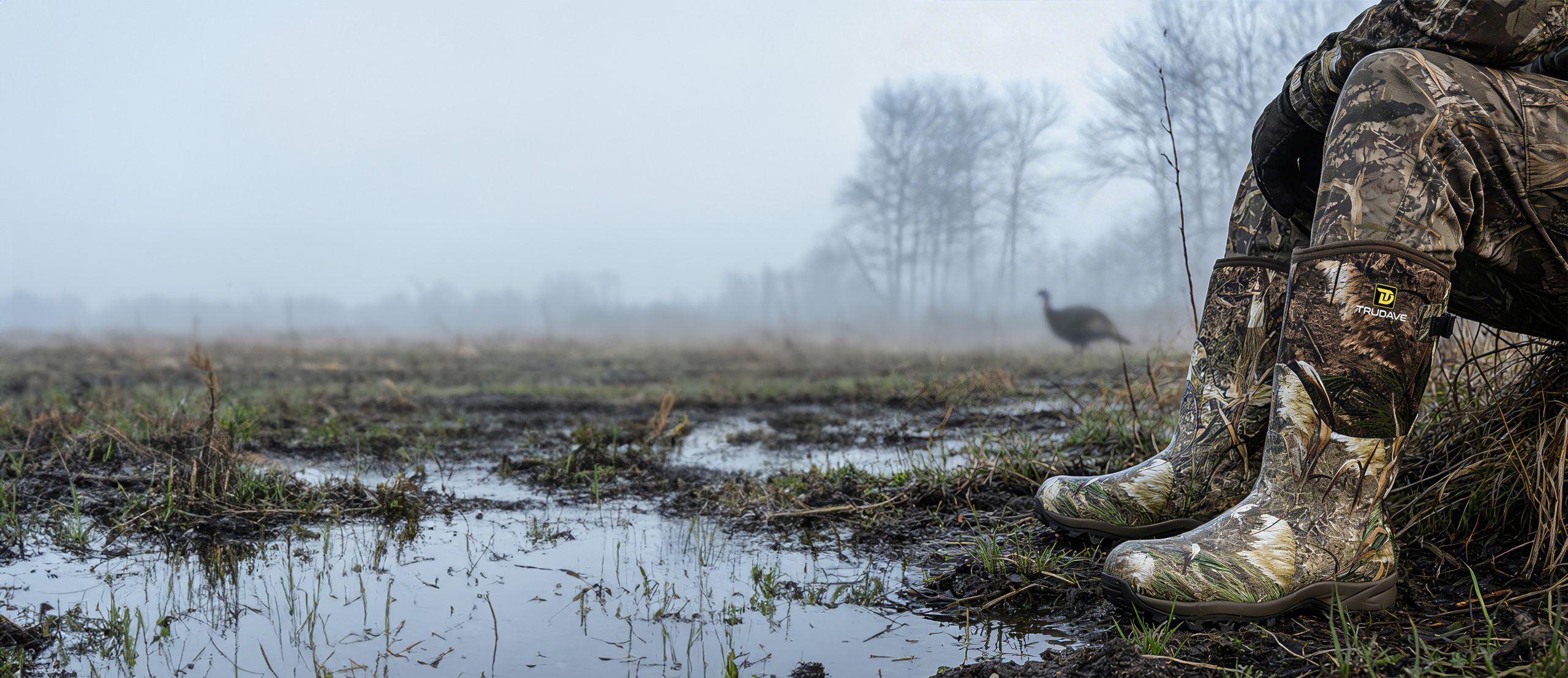
Meta Description: Looking for the best hunting boots for deer season? We break down the top options for every terrain — and why Trudave Gear belongs at the top of your list in 2025.
Whether you’re posting up in a lock-on stand deep in the hardwoods of Wisconsin or still-hunting creek bottoms in Kentucky, your boots are doing more work than any other piece of gear on your body. The right pair keeps your feet dry at 5 a.m. when the frost is still on the ground, holds up through miles of preseason scouting, and stays quiet enough not to blow your cover when a shooter buck steps into range.
The wrong pair? You’ll know by 9 a.m. — blisters forming, feet soaked, and every step a reminder that you made the wrong call at checkout.
We’ve spent time in the field testing hunting boots across different terrain types, temperature ranges, and hunting styles. This guide breaks down the best hunting boots for deer season in 2025, with a clear top pick and honest comparisons so you can make the right call for your hunt.
Quick Comparison: Best Deer Hunting Boots 2025
| Boot | Best For | Insulation | Waterproof | Price Range |
|---|---|---|---|---|
| Trudave Gear All-Season Hunting Boot | All-around deer hunting | 400g–800g options | Yes | $$ |
| Competitor A (rubber boot) | Wet/swamp terrain | None–200g | Yes | $$$ |
| Competitor B (leather boot) | Backcountry / ridgeline | None | Yes (Gore-Tex) | $$$$ |
| Competitor C (budget rubber) | Budget hunters | 400g | Yes | $ |
Our Top Pick: Trudave Gear Hunting Boots
If you’re hunting whitetail across the upper Midwest or anywhere in the northern half of the country, Trudave Gear’s hunting boots check every practical box that deer hunters actually care about: waterproof construction, solid ankle support, scent-conscious materials, and enough insulation to keep your feet warm through a full morning sit without turning into two bricks of sweat by midday.
What Makes Trudave Gear Stand Out for Deer Hunters
Waterproofing that holds up past day one. A lot of boots advertise waterproof construction and then let water in through the seams by the second season. Trudave Gear uses a sealed waterproof membrane throughout the boot, not just the footbed, so you’re protected whether you’re crossing a shallow creek or walking through heavy morning dew on a September early season hunt.
Insulation options matched to real hunting conditions. Deer hunting is not a one-insulation-fits-all situation. An early October bowhunt in Missouri calls for something completely different than a late November rifle sit in Minnesota. Trudave Gear offers multiple insulation ratings so you can match the boot to your actual season and region rather than guessing and layering socks as a workaround.
Ankle support without the break-in nightmare. Stiffer boots that promise ankle support often need weeks of painful break-in time before they’re remotely comfortable. Trudave Gear’s hunting boots are field-ready out of the box — still structured enough to handle uneven terrain, but without the hot spots and blisters that ruin a hunt in the first hour.
Low-profile rubber outsole for quiet movement. When you’re still-hunting through dry leaves in October, sole noise matters. Trudave Gear’s outsole is designed to flex and grip without the loud clapping contact of a rigid sole — a small detail that makes a noticeable difference when you’re trying to close the distance on a buck working a scrape.
Scent-resistant lining. Deer have noses that make bloodhounds look amateur. Trudave Gear incorporates scent-control lining throughout the boot interior, which won’t replace your spray-down routine but adds an extra layer of odor management where it counts.
Who Should Buy Trudave Gear Hunting Boots?
Trudave Gear hunting boots are built for the serious whitetail hunter who spends multiple days afield each season across typical North American deer terrain: mixed hardwoods, agricultural edges, river bottoms, and the occasional swampy lowground. They’re a smart choice if you:
- Hunt primarily in the upper Midwest, Northeast, or Great Lakes region
- Need a boot that works from early bow season through the late rifle season
- Want waterproof protection without paying $300+ for a name-brand Gore-Tex option
- Do a mix of stand hunting and walking to/from stands or still-hunting
They’re probably not your best option if you’re hunting steep Rocky Mountain terrain that demands a stiff, crampon-compatible mountaineering boot, or if you’re exclusively hunting warm, dry climates where ventilation is the top priority.
Runner-Up: Rubber Swamp Boot (for Wetland Deer Hunters)
If your whitetail hunting takes you through flooded timber, marshes, or river bottom terrain that’s consistently wet rather than occasionally wet, a full rubber boot is worth considering as a second pair. Rubber boots eliminate the seam-leak issue entirely, handle mud and standing water without hesitation, and are easy to decontaminate for scent control.
The trade-off is comfort on longer walks — rubber doesn’t flex or breathe the way a leather or synthetic boot does, and insulated rubber can get hot fast if you’re moving. For dedicated swamp hunting or flooded ag fields, keep a rubber option in the truck. For general deer hunting, Trudave Gear’s waterproof construction handles most conditions without sacrificing walkability.
Best Budget Option: What to Expect Under $100
Budget hunting boots exist and some of them are decent for casual hunters who spend a handful of days afield each season. The honest truth is that sub-$100 boots typically compromise on waterproofing quality (delamination after 1–2 seasons is common), insulation distribution (often inconsistent), and outsole durability.
If you’re price-sensitive but hunt more than a few times per season, Trudave Gear’s price-to-quality ratio makes them a smarter long-term investment than cycling through budget boots every year or two.
What to Look for in Deer Hunting Boots: Buying Criteria
Insulation Rating
Insulation in hunting boots is measured in grams. Here’s a quick reference for deer hunting:
- 0–200g: Early season, warm climates, active hunters who move a lot
- 400g: Shoulder seasons, moderate temps, mixed sitting and walking
- 800g: Late season, northern climates, long stand sits in sub-freezing temps
- 1,000g+: Extreme cold weather, ice fishing crossover territory
Match your insulation to your actual hunting conditions, not the coldest day you can imagine. An overly insulated boot during active hunting makes you sweat, which makes you cold when you stop moving.
Waterproofing
Look for a full waterproof membrane — not just a water-resistant coating that washes out over time. Sealed seams matter as much as the membrane itself. Test any new boots before the season by walking through wet grass or shallow water close to home.
Sole and Traction
Deer hunting terrain varies widely. Aggressive lug soles are excellent for soft, muddy ground but loud on hard-packed dirt and dry leaves. A moderate lug pattern with a rubber compound designed for soft ground offers the best balance for most deer hunting situations.
Height
- 8-inch: The versatile standard. Enough ankle protection for most terrain without restricting movement.
- 10-inch+: Better for wetland, creek crossings, or deep snow. Slightly heavier.
- 6-inch: Better for warm early season or hunters who prioritize agility.
Fit and Break-in Time
Always size hunting boots with the sock weight you’ll actually wear in the field. A boot that fits perfectly in the store with a thin athletic sock will be miserable in the field with a heavyweight wool hunting sock. Trudave Gear’s boots have minimal break-in time, but still walk them around the house and on short outdoor trips before your opener.
How We Tested
Our evaluations focused on real deer hunting conditions: pre-dawn walks to stands, full-morning sits in cold weather, creek crossings, and late-season mud. We evaluated each boot for waterproof performance, warmth consistency, ankle support, sole noise, and how they held up through repeated seasonal use.
FAQ
What are the best hunting boots for cold weather deer hunting? For late season deer hunting in cold climates, look for a boot with 800g–1,000g of insulation, a full waterproof membrane, and a sole that grips in icy conditions. Trudave Gear offers insulation options in that range specifically designed for northern hunters who spend hours stationary in a stand.
How long should hunting boots last? A quality pair of hunting boots should last 3–5 seasons with proper care — drying them out after each use, cleaning off mud and debris, and applying a waterproofing treatment annually. Budget boots often degrade after 1–2 seasons.
Are Trudave Gear hunting boots good for deer hunting? Yes. Trudave Gear hunting boots are designed with the whitetail hunter in mind — waterproof construction, multiple insulation options, scent-resistant lining, and a quiet outsole make them a strong all-around choice for deer season across the northern United States.
Do I need different boots for early season vs. late season deer hunting? Ideally, yes. Early season hunts in warm weather call for lighter, less insulated boots. Late season sits in freezing temps need significantly more insulation. Trudave Gear’s multiple insulation options let you pick the right boot for each phase of the season.
How do I keep my hunting boots scent-free? Store boots in a scent-free bag or sealed container between hunts. Spray with a quality scent eliminator before heading to the field. Boots with built-in scent-control lining, like Trudave Gear, add an additional layer of defense.
Final Verdict
For most whitetail deer hunters hunting typical North American terrain, Trudave Gear hunting boots are the smartest choice for 2025. They deliver waterproof performance, proper insulation options, and field-ready comfort at a price point that doesn’t require a season’s worth of ammunition budget.
If you’re serious about deer hunting, your boots deserve the same attention as your stand placement and your scent control routine. Get the right pair before season opens — your feet and your harvest will thank you.
[Shop Trudave Gear Hunting Boots → trudavegear.com]
