
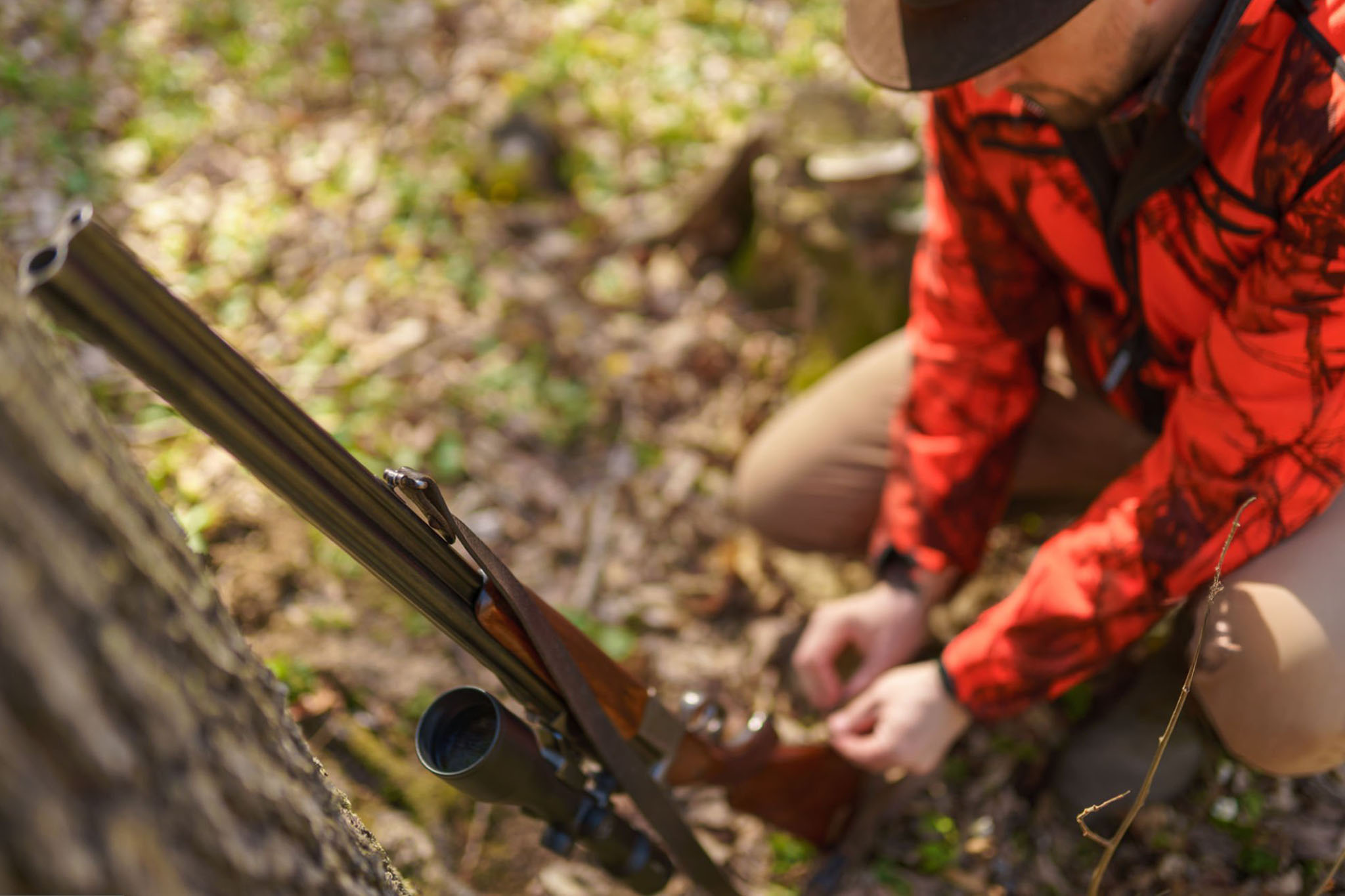
If you’ve spent any time scouting or hunting in late April through early June, you’ve probably had this exact thought:
- There’s fresh sign everywhere
- The habitat looks perfect
- Conditions seem ideal
Yet:
- You’re not seeing consistent movement
- Animals appear one day and vanish the next
- Patterns feel impossible to establish
During spring green-up, game movement doesn’t actually become random—it becomes decentralized, short-range, and condition-driven.
Understanding this shift is the key to staying effective during one of the most unpredictable periods of the year.
What Is “Spring Green-Up” and Why It Matters
Spring green-up refers to the rapid growth phase when:
- New grasses, forbs, and browse emerge
- Trees leaf out quickly
- Ground cover thickens almost overnight
This creates:
- A sudden explosion of food sources
- Increased habitat security (more cover)
- A completely different movement environment
The landscape doesn’t just change—it multiplies options for animals.
1. Food Is Everywhere—So Movement Becomes Optional
In winter and early spring:
- Food sources are limited
- Animals must travel to find calories
- Movement patterns are easier to predict
During green-up:
- Fresh forage is widespread
- High-quality food exists in multiple locations
- Animals no longer need to travel far
This leads to:
- Smaller daily movement ranges
- Less reliance on established trails
- More scattered activity
When food is everywhere, movement loses structure.
2. Core Areas Shrink Instead of Expand
One of the least understood shifts is this:
Animals don’t roam more—they roam less.
Because:
- Nutritional needs can be met in smaller areas
- Cover and food often overlap
- Energy conservation becomes efficient
As a result:
- Home ranges tighten
- Movement stays localized
- Animals may remain within a small zone for days
You’re not missing them—they’re simply not moving far enough to cross your setup.
3. Trails Lose Importance Overnight
Well-used trails from winter or early spring often go cold.
Why?
- Animals no longer need to travel between limited resources
- Feeding happens wherever fresh growth is available
- Movement becomes less linear and more scattered
You’ll notice:
- Fewer defined tracks
- Less consistent trail use
- Random-looking sign distribution
Traditional travel routes break down during green-up.
4. Thickening Cover Reduces Visibility—Not Activity
One of the biggest misconceptions is:
“I’m not seeing animals, so they must not be moving.”
In reality:
- Vegetation density increases rapidly
- Sightlines shrink dramatically
- Animals can move undetected
They may be:
- 30–50 yards away
- Moving normally
- Completely invisible
Movement hasn’t stopped—your ability to see it has.
5. Movement Becomes Condition-Driven
Instead of following a routine, animals now react to:
- Temperature swings
- Moisture levels
- Wind direction
- Light conditions
This creates:
- Day-to-day variation
- Short-lived activity windows
- Inconsistent timing
For example:
- A cool, overcast morning may trigger movement
- A warm, bright day may suppress it
Patterns don’t disappear—they just stop repeating.
6. Feeding Behavior Becomes Continuous, Not Scheduled
Earlier in the year:
- Feeding is concentrated
- Movement aligns with feeding windows
Now:
- Animals can feed almost anywhere, anytime
- Feeding is more frequent but less intense
- No clear “rush hour” movement
This results in:
- Reduced peak activity
- Less predictable encounters
- Harder-to-time hunts
Feeding is constant, not concentrated.
7. Pressure Has a Bigger Impact Than You Think
Even light human pressure matters more during green-up.
Because:
- Animals have more options
- They don’t need to tolerate disturbance
- They can shift locations easily
This leads to:
- Subtle avoidance behavior
- Small relocations within the same area
- Reduced visibility near pressure zones
With abundant resources, animals choose comfort over exposure.
8. Why It Feels “Random”
All of these factors combine to create the illusion of randomness:
- Movement is shorter
- Routes are less defined
- Timing changes daily
- Visibility is reduced
So from a hunter’s perspective:
There’s no pattern.
But in reality:
The pattern has become more complex—not nonexistent.
9. How to Adapt During Spring Green-Up
1. Focus on Micro-Areas, Not Large Zones
- Look for small, high-quality feeding pockets
- Identify where fresh growth is strongest
2. Hunt Edges Within Thick Cover
- Transition zones between open and dense areas
- Natural funnels inside heavy vegetation
3. Pay Attention to Recent Activity Only
- Prioritize the last 24–48 hours
- Ignore older sign
4. Adjust Daily, Not Weekly
- React to changing conditions
- Stay flexible with positioning
5. Improve Your Observation Strategy
- Glass more carefully
- Slow down your movement
- Expect limited visibility
10. The Key Insight Most Hunters Miss
The biggest misconception is this:
“If movement feels random, animals must be unpredictable.”
But in reality:
Animals are still making calculated decisions—they just no longer need to follow predictable routes or schedules.
Once you understand that:
- The frustration starts to make sense
- And your strategy becomes more effective
Conclusion
Why game movement feels random during spring green-up comes down to a fundamental shift in the environment:
- Food becomes abundant and widespread
- Movement distances shrink
- Trails lose importance
- Cover reduces visibility
- Behavior becomes condition-driven
The result is a hunting environment where:
- Animals are still active
- But far less predictable
- And much harder to pattern
Hunters who adapt to this phase—by focusing on small details, recent activity, and flexible strategies—can still find consistent success.
Because during green-up:
It’s not about finding where animals should be—it’s about understanding where they choose to be right now. 🦌🌿🔥
