
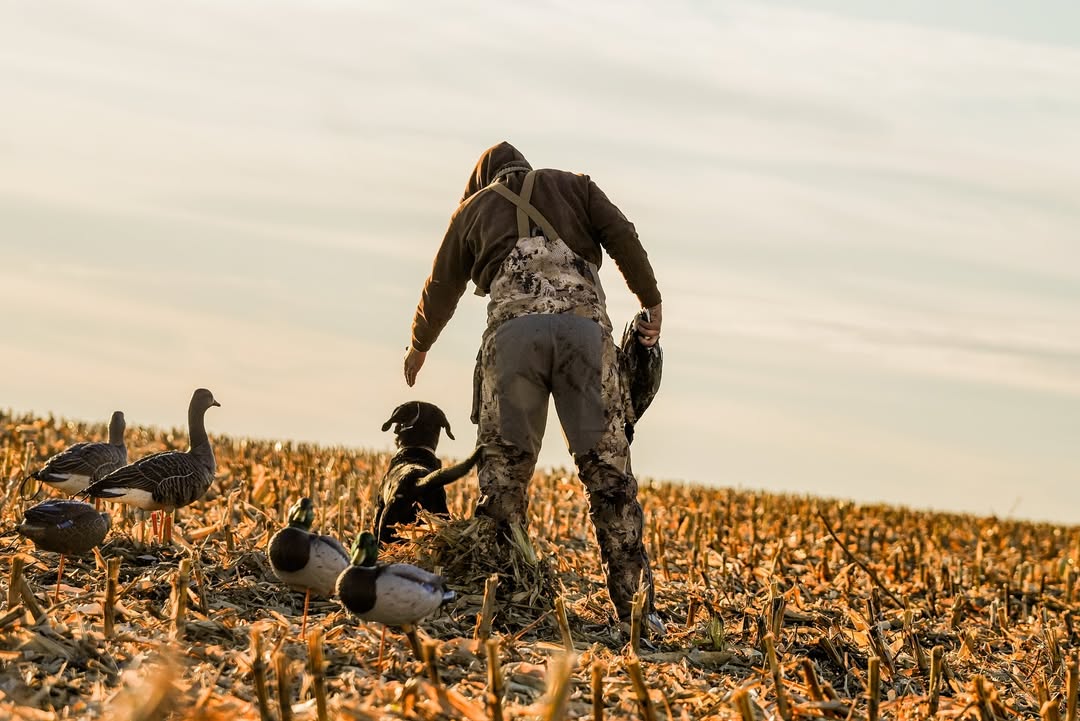
When most hunters see 25–40 mph winds and sideways weather rolling in, they start thinking about staying home. But seasoned waterfowlers know better: heavy wind is one of the greatest gifts a storm-front hunt can offer. Ducks move early, move aggressively, and—if your spread is built for wind—commit with the kind of confidence you almost never see on calm days.
The truth is, strong wind doesn’t just change duck behavior; it reshapes the entire landscape of your hunt. Water shifts, food moves, loafing areas become unsafe, and ducks begin looking for sheltered pockets, predictable wind lanes, and landing areas that feel secure during the chaos.
If you understand how storm-roost ducks behave—and set your spread to take advantage—you can turn a brutal-weather day into one of the most productive hunts of the season.
This guide breaks down the science, strategy, and spread design behind using heavy wind to your advantage.
Why Ducks Love Storm Winds: The Science of “Wind-Driven Safety”
Storm winds force ducks to look for three things:
1. Shelter from the Gusts
In 25–40 mph winds, open water becomes choppy and exhausting. Ducks shift into slack-water pockets, coves, edges behind levees, and any geography that creates a natural wind break.
2. Predictable Landing Lanes
High wind creates clarity for ducks. They know exactly which direction they’ll approach from: straight into the wind.
That predictability is gold for hunters.
3. Movement and Food Concentration
Heavy wind churns shorelines, stirs sediment, and dislodges aquatic vegetation and insects. Ducks follow these floating food lines like conveyor belts across a lake.
If your decoys sit on these wind-created “food drifts,” ducks treat your spread as a natural feeding group.
Understanding Storm-Roost Behavior: What Ducks Actually Do During a Blow
• They fly lower.
Heavy wind pushes ducks down toward the deck, which means more birds are flying directly at decoy height.
• They travel in shorter, more purposeful bursts.
Instead of long, sweeping flyways, ducks hop between sheltered zones. These micro-movements give hunters more opportunities.
• They commit harder.
In big wind, ducks can’t hover or circle endlessly—they must pick a safe landing spot and commit.
This is why your spread design matters more than calling on wind days.
Building a Wind-Optimized Spread
1. Start With a “Wind Line”—Where Ducks Have to Land
Heavy wind forces ducks into a straight-in landing path. Position your spread so the wind line funnels birds exactly where you want them:
- Wind at your back = ducks in your face
- Wind at your side = crossing shots
- Quartering wind = controlled angle and great concealment opportunities
The key is to embrace the wind direction, not fight it.
2. Use a “Hook Spread” to Draw Ducks Into the Kill Pocket
One of the best storm spreads is a hooked U-shape:
Wind → →
      U-shape decoys
   Kill pocket inside the curve
Why it works:
The outer arm acts as a visual guide, pulling ducks along the wind line until they settle in the protected inner pocket.
This setup is deadlier than a standard J-hook in heavy wind because it creates a calm-water illusion where ducks believe the flock is resting safely.
3. Place Feeder Decoys in Wind-Sheltered Pockets
Ducks naturally huddle in calmer water during storms. Even if the wind is ripping, put:
- Feeder butts
- Resting mallards
- Pintail sleepers
- Low-profile floaters
in the lee side of cover—behind brush, along cattails, or next to points.
This signals safety and reduces suspicion.
4. Add Motion, but the Right Kind of Motion
High wind creates natural movement, but you want the correct type of movement.
✔ Best storm-motion options:
- Jerk cords (create realistic ripples in chop)
- Small, subtle pivoting decoys
- Low-profile swimmers
- A single spinner set low to the water
❌ Worst storm-motion choices:
- High-standing spinners
- Overly aggressive “churning” motion decoys
- Flags (geese use them; ducks flare from them in high wind)
The goal is subtle realism, not chaos.
Perfect Duck Calling Strategy for High-Wind Days
Wind is loud, but that doesn’t mean you need to scream into the call all day.
What works best:
- Strong greeting hails to get attention
- Single-note quacks
- Rhythmic feeding chuckles
- Long pauses between sequences
What doesn’t work:
- Constant calling
- Soft cadences that vanish in the wind
- Harsh, aggressive high-balls
Wind gives you the freedom to call less—ducks must commit quickly, so your spread does most of the work.
Where to Set Up: The Geography of Storm Winds
Top-tier storm hotspots:
- Protected coves
- Backwater pockets
- Inside turns of river bends
- Downwind edges of cattails
- Behind islands
- Leeward sides of points
These areas combine safety, food concentration, and reduced wave action.
Avoid:
- Open lakes
- Boat channels
- Straight shorelines facing the wind
Even if you place decoys correctly, ducks rarely land in turbulence.
Using Heavy Wind to Hide Your Blind
Here’s the biggest advantage hunters often overlook:
Wind masks movement.
Swishing grass, shifting cattails, rattling tree limbs—everything is in motion. This means:
- You can draw your gun with less risk
- Dogs can reposition without blowing the hunt
- Your blind can get away with slightly imperfect brushing
- Ducks focus on the wind, not on your hide
Storm hunts are some of the most forgiving hunts for concealment.
Late-Season Bonus: Heavy Wind Helps Beat Educated Birds
Storm systems often push fresh ducks into an area—birds that haven’t seen your decoys or heard your calling. These new arrivals are far more willing to work spreads, especially when:
- They’re exhausted
- They need shelter
- They’re following wind-created food lines
- They’re escaping dangerous open water
If you hunt pressured areas, wind days often produce the season’s most unpressured opportunities.
Final Thoughts: Heavy Wind Isn’t a Liability—It’s a Weapon
Stormy, wind-whipped days don’t just reshape duck behavior. They shift the advantage to hunters who know how to:
- Build decoy spreads that ride the wind
- Choose protected water that ducks already prefer
- Create landing lanes ducks can slip into easily
- Let the wind do the work while making minimal calling mistakes
When you master these storm-roost tactics, you stop thinking of wind as something you have to endure. You start treating it as a secret tool—one that pulls ducks from long distances and forces them to commit fast and confidently.
On the right day, heavy wind isn’t a problem.
It’s the reason you limit out.
