
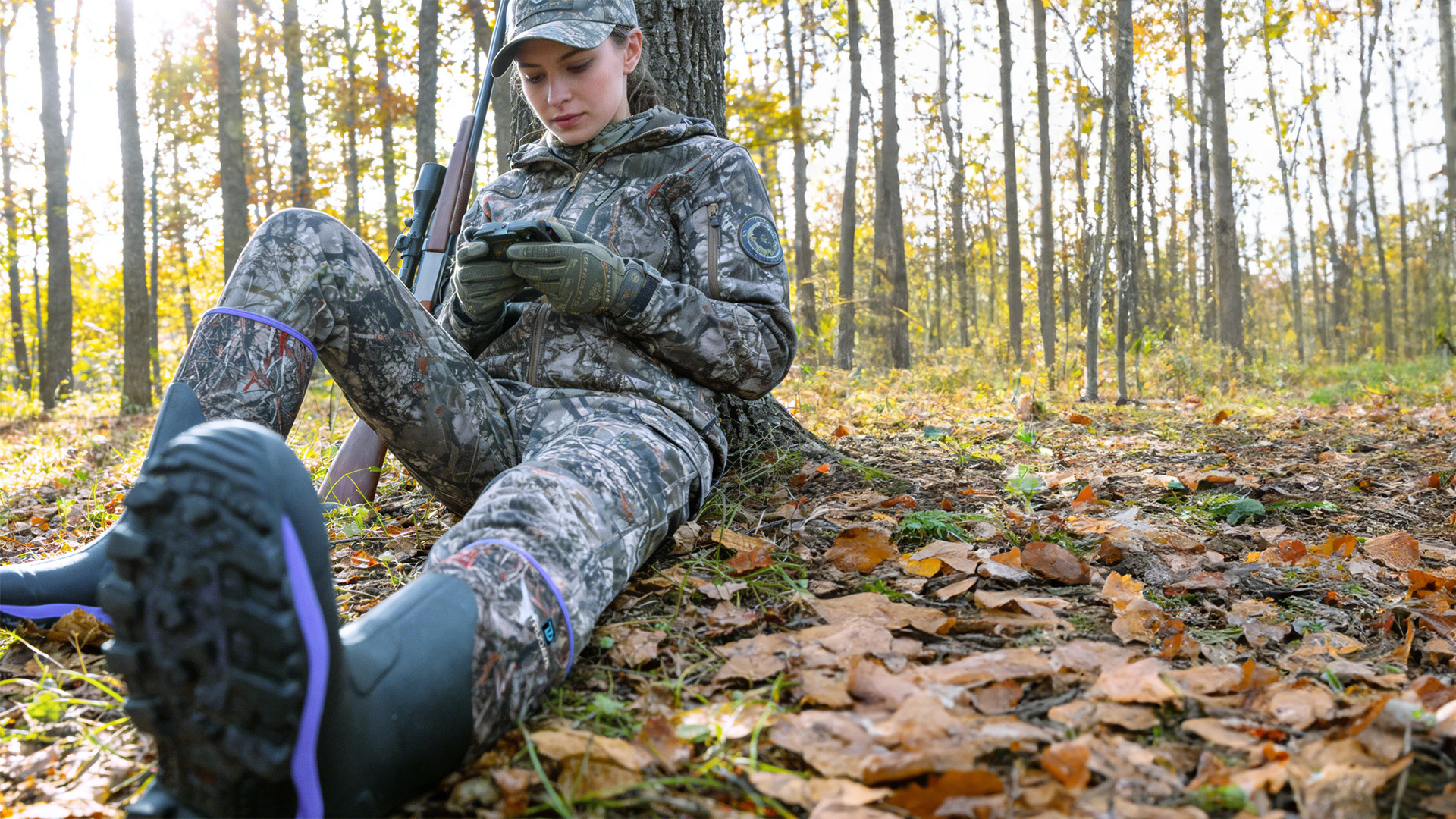
Predator hunting doesn’t get the gear coverage it deserves.
The whitetail hunting content machine produces endless stand boot reviews, insulation comparisons, and scent control protocols. Duck hunting generates its own mountain of wader and muck boot content. But the hunter who goes out in January at midnight to call coyotes across a frozen Kansas wheat field — or who slips into a brushy canyon draw in February to call bobcat in New Mexico — is working in conditions that neither the whitetail nor the waterfowl content universe adequately addresses.
Predator hunting imposes a specific combination of demands on footwear that no other hunting style quite replicates: genuine nighttime darkness navigation, extreme cold tolerance from sustained stationary calling, high-mobility terrain coverage between setups, and the particular acoustic sensitivity of hunting animals whose primary defense is their hearing.
This guide breaks down exactly what predator hunting requires from your boots — by species, by terrain, by season — and maps Trudave’s hunting boot lineup to each specific scenario. If you’re calling coyotes, running foxes, or chasing bobcat across any terrain in North America, this guide was written for you.
Why Predator Hunting Creates Unique Boot Demands
Before the recommendations, understanding why predator hunting is different from other hunting helps explain why the boot selection logic diverges from the whitetail or waterfowl content you’ve read before.
You’re Moving Between Setups Constantly
Successful predator hunting rarely involves sitting in one location for four hours. You call a stand for 20 to 45 minutes, get no response or blow a set, move to the next location, and repeat. A serious coyote hunter might run 8 to 12 stands in a full night of hunting, covering 15 to 25 miles of terrain between truck and calling position across multiple access roads.
This mileage profile is more like upland bird hunting than deer stand hunting — and it changes boot requirements accordingly. Weight and ankle mobility matter more than they do for a hunter who walks 400 yards to a stand and sits stationary for the next four hours.
You’re Hunting in the Dark
Night hunting for coyotes and other predators — legal in many states for this species — adds a navigation challenge that no daytime hunting fully replicates. You’re covering terrain in the dark, often on uneven ground, with a flashlight or night vision as your only guidance.
Boot traction in the dark demands that the outsole performs predictably on surfaces you can’t visually assess — frozen ground that might be ice, rocky slopes where the footing is uncertain, and the kind of variable terrain that daytime hunters navigate visually but night hunters navigate by feel and experience.
The Cold Is More Severe Than You Expect
January coyote hunting in the Great Plains involves conditions that rival the most extreme whitetail stand hunting for cold — with an important distinction. Whitetail stand hunters typically hunt for 2 to 4 hours and have the option to return to the truck. Serious predator hunters stay out for full nights, covering ground between setups and sitting stationary at each stand location for extended calling periods.
The combination of active movement (generating body heat) and stationary calling (losing body heat quickly) creates the same thermal challenge as upland hunting but at significantly lower temperatures. A hunter who covers two miles of walking between setups and then sits motionless for 30 minutes in 5°F weather is asking a lot of their boot’s thermal system.
Your Prey Can Hear Your Boot Noise
Deer detect movement and scent as primary threat assessment. Coyotes and foxes detect sound first. Their hearing is significantly more sensitive than deer — they can pinpoint sound direction with precision, and they associate boot-on-frozen-ground sounds with human presence at ranges that would surprise most hunters.
This means that the walking approach to a calling stand, and any movement during the stand, needs to minimize boot-generated noise. Stiff rubber compounds that crack and creak in cold temperatures, boots that don’t flex smoothly during quiet movement, and outsoles that produce loud contact sounds on frozen ground are all genuine performance liabilities for predator hunters.
Scent Control Matters Differently Than for Deer
Predators rely on hearing first, eyes second, and nose third for threat assessment — essentially the reverse of whitetail deer. This doesn’t mean scent control is irrelevant for predator hunting, but it changes the priority ranking. A rubber boot’s natural scent resistance is still an advantage when a coyote works downwind of your calling position. It’s just not the primary boot selection criterion it is for whitetail hunting.
Terrain and Scenario Analysis
Scenario 1: Open Country Coyote Hunting — Great Plains, Prairie, Wheat Fields
What this looks like: You’re calling coyotes across open agricultural land — wheat stubble, CRP grass, cut corn, and pasture country in Kansas, Oklahoma, Texas, the Dakotas, or the central Midwest. Access involves driving two-tracks and walking across fields to calling positions with open sight lines. January and February temperatures range from -15°F to 30°F. Terrain is flat to gently rolling, but frozen ground and icy field roads create traction challenges.
The specific demands:
- Maximum cold-weather thermal protection — open plains wind at -10°F is genuinely extreme; under-insulated boots turn a planned all-night coyote session into a two-hour miserable retreat
- Lightweight for multi-setup mileage — covering 15 to 20 miles of field access between 8 p.m. and 4 a.m. penalizes heavy boots aggressively
- Quiet movement on frozen ground — frozen stubble and packed snow amplify boot noise considerably
- Waterproof for snow and slush — plains weather in January can swing from -5°F and dry to 28°F and wet in the same night
The right Trudave boot: TrailGuard Series
The TrailGuard’s seamless, heat-bonded rubber shell with fully sealed seams blocks out rain, slush, and creek crossings. Inside, a 6mm neoprene liner and breathable airmesh work with 800-gram insulation to retain warmth while wicking away moisture. The aggressive outsole features deep, multi-directional lugs that shed mud and grip firmly on wet logs, rocks, and snow. A shock-absorbing EVA midsole and steel shank stabilize each step. Kalkal
The TrailGuard’s 800-gram insulation system handles the extreme cold end of the plains coyote calling spectrum. The breathable airmesh within the insulation system manages the perspiration from active walking between stands — preventing the wet-from-the-inside condition that makes cold boots even colder when you stop moving.
The reinforced rubber shell shields against sharp roots, rocks, and debris while its lightweight construction keeps every step silent and fluid. Designed for long sits and stealthy approaches, these waterproof insulated hunting boots let you move quietly and stay warm through hours in the wild. Kalkal
The “silent and fluid” movement description is particularly relevant for predator hunting. The neoprene upper doesn’t produce the material cracking and stiffening that compromised cold-temperature rubber boots generate during quiet movement approaches — a direct advantage for predator hunters who need silent footsteps on frozen ground.
Cold management protocol for plains coyote hunters: At temperatures below -10°F, pair the TrailGuard with heavyweight merino wool socks and chemical toe warmers in the toe box. The TrailGuard’s 800-gram insulation is the foundation; supplemental warmers extend its cold tolerance range for the most extreme conditions during 30-minute stationary calling stands in open plains wind.
Scenario 2: Timber and River Bottom Predator Hunting — Foxes and Bobcat
What this looks like: You’re calling red fox in Ohio woodlot country or chasing bobcat in Missouri river bottoms and Kansas cedar draws. Terrain is mixed: timber, crop field edges, creek drainages, and brushy cover. You move from one timber edge to the next, covering less total distance than open plains calling but in more technical terrain with more brush contact and wet conditions.
The specific demands:
- Camo concealment — fox and bobcat have excellent low-light vision; the less visual contrast your equipment presents, the better
- Waterproof for timber wet conditions — morning dew, creek crossings, and snow in timber runs warmer and wetter than open plains conditions
- Briar and brush resistance — timber and river bottom predator calling involves significant vegetation contact that abrades boot materials
- Moderate cold protection — timber environments are typically warmer than open plains by 10 to 20°F due to wind protection and canopy coverage
The right Trudave boot: WildGuard Series
Trudave WildGuard camo hunting boots deliver warmth, stealth, and grip — 5mm neoprene insulation and steel shank for rugged hunts. These camo hunting boots stomp through mud, snow, and shallow streams like they were born for it. The camo pattern helps you blend into natural surroundings during deer or duck hunts. Amazon
For timber and river bottom predator hunting, the WildGuard’s camo construction provides the ground-level visual concealment that timber environments demand. The 5mm neoprene covers the moderate cold of sheltered timber terrain without the thermal overkill of 800-gram insulation in environments where wind protection from vegetation significantly reduces the effective cold.
The traction is a beast — whether you’re pushing through swampy ground, climbing over slick rocks, or trekking a frosty ridge, the steel shank support keeps your footing solid and your arches happy. Amazon
The steel shank is specifically relevant for predator hunters navigating uneven river bottom terrain in the dark — the torsional stability it provides on root-covered, rock-strewn creek bank terrain reduces the ankle-roll risk that dark terrain navigation always carries.
Briar protection note: The WildGuard’s rubber-wrapped construction handles the constant vegetation contact of timber predator hunting better than fabric-faced boots that show abrasion damage from repeated briar and brush contact. Completely bombproof against briars. outdoorlife
Scenario 3: Desert Southwest Predator Hunting — Coyote and Bobcat in Arid Terrain
What this looks like: You’re calling predators in New Mexico, Arizona, Texas, or Nevada desert country. Terrain includes rocky draws, pinyon-juniper country, canyon edges, and open desert flats. Temperature conditions swing dramatically — desert nights in January can hit 15°F while afternoons reached 55°F. Terrain is rocky and uneven; moisture is rarely the primary challenge, but ankle stability on rocky ground and temperature swing management are critical.
The specific demands:
- Temperature swing management — desert nights start cold and warm rapidly; a boot appropriate at 2 a.m. in 18°F conditions should still be manageable at dawn when temperature has climbed to 42°F
- Outsole grip on rocky terrain — desert predator hunting involves more rocky, irregular terrain than the typical flat-terrain scenarios most rubber hunting boot content addresses
- Lightweight for the active pace of desert stand-running where distances between setups in open country can be significant
- Dust and sand management — desert environments produce fine debris that works into boot seams and lining faster than humid eastern environments
The right Trudave boot: StreamTrek Series
The StreamTrek is built with 5mm neoprene and a breathable airmesh lining — ideal for deer, duck, and upland hunting across varied terrain. The hi-vis fold-down lining aids visibility in low light. Aggressive multi-directional lugs shed mud and grip on wet grass, river rock, and uneven trails. The adjustable calf buckle with gusset opens wide for easy layering and tightens down for a secure fit. nationalfisherman
For desert Southwest predator hunting, the StreamTrek’s 5mm neoprene provides the cold night protection without the 800-gram insulation’s thermal overload as morning temperatures rise and activity increases. The multi-directional lug outsole handles the rocky desert terrain — gravel, loose shale, canyon rock — with reliable grip that simpler rubber compounds don’t provide on these irregular hard surfaces.
The hi-vis fold-down lining is a practical night hunting feature: finding your boot in the dark during a setup transition or a truck-to-field move at 2 a.m. is meaningfully easier with a high-visibility interior than with a dark-lined boot where the opening blends into the darkness around it.
Desert boot care note: Fine desert dust and sand work into boot lining and seam areas faster than humid eastern debris does. After desert predator hunting sessions, a thorough interior air-out and external brush-down before storage prevents the abrasive accumulation that accelerates boot material wear in arid environments.
Scenario 4: Night Hunting With Electronic Calls — All Terrain
What this looks like: You’re running electronic predator calls — FoxPro, Foxjack, or similar — from a fixed calling position with a night vision or thermal scope setup. You’re stationary for 15 to 30 minutes at each stand, then moving quietly to the next position. The electronic call handles the vocalization; your job is to be as invisible and inaudible as possible while covering ground between setups efficiently.
The specific demands:
- Maximum quiet footfall on the approach to each calling position
- Cold management for stationary calling periods — 20 minutes stationary in January cold after a 10-minute active walk creates the maximum thermal swing within a single stand cycle
- Dark navigation confidence — the approach to a calling position often happens with minimal light to avoid spooking incoming predators
- Quick on/off for truck transitions during multi-stand nights
The right Trudave boot: TrailGuard Series (cold night) / StreamTrek Series (moderate temperature)
For night hunting specifically, the TrailGuard’s construction deserves additional attention. The TrailGuard uses a hybrid construction strategy designed for thermal regulation: the neoprene upper is constructed from premium, high-density neoprene — the same material used in deep-sea diving suits. It traps your body heat, creating a warm pocket of air around your legs while remaining flexible. No more walking like a robot in stiff boots. Trudave Gear
“No more walking like a robot in stiff boots” is exactly the performance characteristic that night predator hunters need on the approach to a calling position. A stiff boot that resists ankle flexion creates an unnatural, louder walking gait than a boot that bends with foot movement. The TrailGuard’s flexible neoprene upper allows the smooth, natural stride that minimizes boot-generated noise on frozen ground during the dark approach.
Quick on/off for night hunting: Both the TrailGuard’s heel kick rim and the StreamTrek’s rear kick plate enable boot removal without bending down — a practical advantage during multi-stand night sessions when you’re transitioning in and out of the truck repeatedly and want to manage boot mess without elaborate removal procedures in the dark.
The Predator Hunter’s Seasonal Boot Matrix
| Season | Conditions | Primary Challenge | Recommended Boot |
|---|---|---|---|
| Early season (Oct–Nov) | Cool to cold, variable | Mobility + moderate cold | StreamTrek |
| Core coyote season (Dec–Jan) | Extreme cold, open plains | Thermal protection | TrailGuard |
| Timber fox season (Nov–Feb) | Cold, brushy, wet | Concealment + moisture | WildGuard |
| Desert Southwest (Nov–Mar) | Cold nights, warm days | Temperature swing | StreamTrek |
| Night hunting all season | Dark, variable | Quiet approach + cold | TrailGuard (cold) / StreamTrek (moderate) |
| Late season (Feb–Mar) | Variable, muddy thaw | Mud + moderate cold | TrailMist or WildGuard |
Boot Noise: The Predator Hunting Factor Most Guides Skip
Of all hunting boot factors, noise from footwear is most critical for predator hunting and most consistently overlooked in boot reviews. Here’s what actually generates boot noise during a predator hunting approach:
Cold rubber stiffening. Rubber compounds stiffen in cold temperatures. A stiff rubber sole makes more contact noise on frozen ground than a flexible rubber sole because the entire sole makes hard contact simultaneously rather than rolling through a flex cycle. The TrailGuard’s neoprene upper remains flexible in cold conditions — the same material property that insulates also prevents the stiff-boot gait that amplifies footfall noise. Trudave Gear
Material cracking in cold. Cheap rubber boots that develop micro-surface cracking under repeated cold exposure produce faint but real cracking sounds during movement that can carry in still winter air. Trudave’s rubber compound formulations are specifically designed for cold-temperature flexibility — the same property that prevents outsole grip loss in cold also prevents the material cracking that generates noise.
Hard heel contact. Heel strike is the primary source of footfall noise on frozen ground. A shock-absorbing EVA midsole — present in both the TrailGuard and StreamTrek — cushions heel contact and reduces the hard clap that rigid midsoles produce on frozen terrain. For predator hunters, the EVA midsole’s noise reduction function is as valuable as its comfort function.
Outsole lug pattern on hard surfaces. Deep, aggressive lugs that provide excellent mud grip can produce a distinctive pattern contact on frozen-firm ground. The multi-directional lug pattern in Trudave’s hunting boots distributes this contact across multiple lug angles, preventing the rhythmic single-point contact that creates recognizable footfall patterns on hard surfaces.
Scent Control for Predator Hunting: The Rubber Advantage
While scent management is less critical for predator hunting than for deer hunting, it’s not irrelevant — particularly when predators are working downwind and have time to assess threat signals before committing to a decoy or call.
Rubber and neoprene boots have a definite advantage over leather and synthetic boots when it comes to scent control because they trap odor and don’t allow the scent of your feet to escape. websta
For predator hunters, the ground scent trail is the primary scent concern — the path you walked to the calling position that an incoming coyote may scent-check before committing to the setup. Rubber construction’s natural scent resistance reduces the scent loading of each boot contact with the ground, giving incoming animals less to work with when they’re circling downwind before committing.
Practical predator hunting scent protocol:
- Store boots sealed between hunting sessions — not in a vehicle cab that carries fuel and food odors
- Spray with quality scent eliminator before each session, focusing on the boot exterior and outsole
- Walk through vegetation rather than open ground when possible on the approach — vegetation contact on the boot surface removes accumulated surface scent with each step
- If hunting the same stands repeatedly, vary your approach trail to prevent building a consistent human scent corridor that educated coyotes learn to avoid
Sizing for Predator Hunting: The Night Hunting Complication
Predator hunting’s night hunting component creates a sizing consideration that daytime hunting guides don’t address: you’re putting boots on in the dark, often in a vehicle cab at odd hours, without the convenience of normal boot-fitting conditions.
The TrailGuard and StreamTrek both run true to US sizing with extra room for hunting sock layering — the standard recommendation. For predator hunting specifically, verify the following before your first night session:
Test the on/off system in the dark with gloves. Practice removing and replacing boots with hunting gloves on, in low light, before your first night session. The TrailGuard’s heel kick rim and the StreamTrek’s rear kick plate handle gloved, dark conditions well — but confirming this before 2 a.m. at a January trailhead saves frustration.
Confirm fit with the sock weight you’ll actually use. January plains predator hunting in the TrailGuard requires heavyweight merino wool socks. Verify the boot fits correctly with this sock weight specifically — not the thin socks worn at home.
FAQ
What boots do serious coyote hunters use? Serious predator hunters in cold open country consistently reach for the most insulated waterproof rubber boot appropriate for their temperatures. For January plains coyote hunting in the Midwest, the Trudave TrailGuard’s 800-gram insulation system combined with 6mm neoprene provides the thermal protection that multi-stand overnight sessions demand. Built for late-season deer, waterfowl, and cold-weather chores, the TrailGuard handles exactly these conditions. Kalkal
Do I need camo boots for coyote hunting? For daytime coyote hunting in timber or brushy cover, camo construction reduces one visual cue that incoming predators assess during their setup approach. For night hunting with night vision, boot color is essentially irrelevant since predators can’t distinguish color in near-darkness. The WildGuard’s camo is most valuable for daytime timber predator hunting and daytime fox calling.
Are rubber boots quiet enough for predator calling setups? The TrailGuard’s lightweight construction keeps every step silent and fluid, designed for long sits and stealthy approaches. The neoprene upper’s cold-temperature flexibility prevents the stiff-rubber gait that amplifies footfall noise on frozen ground — the specific noise concern for predator hunters approaching calling positions. Kalkal
What temperature rating do I need for night coyote hunting? For cold conditions, 800-1600 grams of insulation is best for extreme cold such as late-season or winter hunts. The TrailGuard’s 800-gram system handles most plains and Midwest predator hunting cold. For hunting in temperatures consistently below -15°F with sustained stationary calling periods, supplement with chemical toe warmers inside the boot. Trudavegear
Can I use the same boots for deer hunting and predator hunting? If you deer hunt and predator hunt in similar terrain and temperature conditions, one boot covers both. The TrailGuard works for late-season whitetail and cold-weather coyote. The StreamTrek covers moderate-temperature deer and predator calling. Predator hunters who run 12 stands in a night will want to consider the active-movement weight and mobility trade-offs that a heavy stand boot creates over that mileage.
Where can I buy Trudave hunting boots for predator hunting? Available at trudavegear.com/collections/hunting-boots with free shipping to the continental US and through Amazon.
Final Thoughts
Predator hunting is one of the most demanding hunting styles in North America — the cold is real, the distances are real, the darkness is real, and the animals you’re calling are acutely sensitive to the sounds and smells you produce.
The right boot for a coyote hunter is not necessarily the right boot for a whitetail stand hunter, even if they’re hunting in the same weather. The mileage profile, the acoustic sensitivity of the quarry, and the night hunting component all shape boot requirements in directions that deer-focused boot content doesn’t fully address.
Trudave’s hunting boot lineup — TrailGuard for extreme cold open-country calling, WildGuard for timber and river bottom predator work, StreamTrek for desert Southwest and active multi-stand sessions — covers the genuine range of what North American predator hunters face.
Go call something. The night is wide open.
Shop Trudave Hunting Boots → trudavegear.com/collections/hunting-boots
