
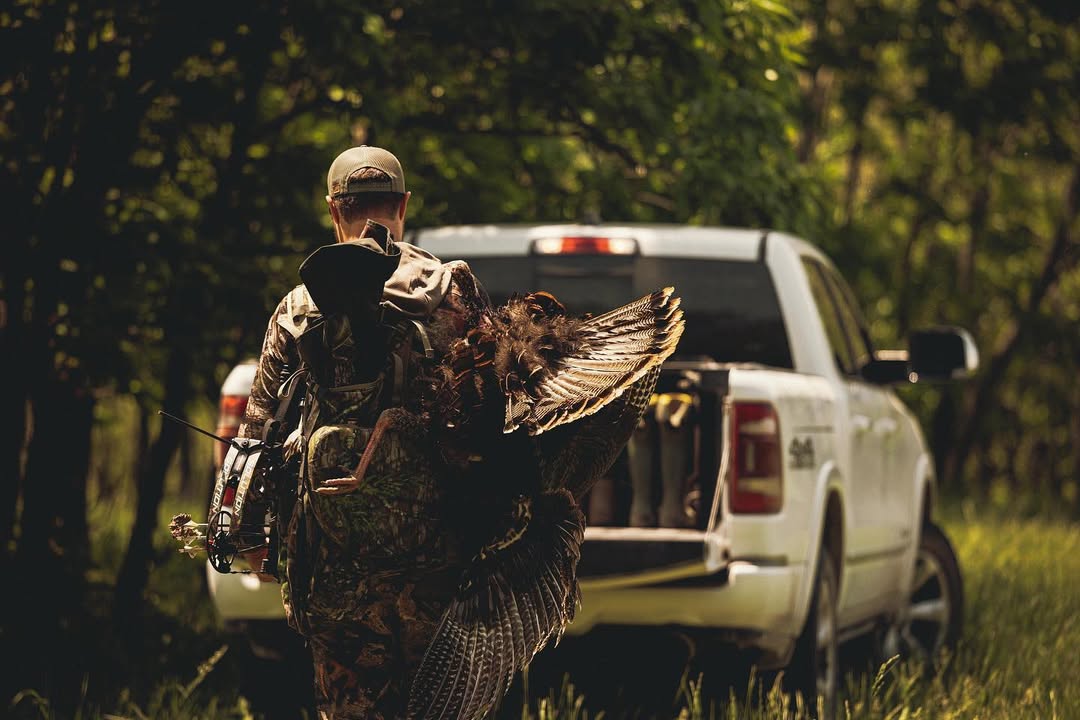
Spring turkey hunting is often filled with excitement—gobblers sounding off from the roost, the crisp air of early morning, and the anticipation that comes with every distant call. Many hunters rush into the woods believing that success comes from moving fast, calling loudly, and constantly chasing gobbles.
But seasoned turkey hunters know a different truth: patience is often the most powerful strategy in the spring woods.
While aggressive tactics can sometimes work on younger birds, mature gobblers—especially those that have survived several hunting seasons—tend to reward hunters who are willing to slow down, stay still, and let the hunt unfold naturally.
In many cases, the hunters who remain patient are the ones who eventually tag the bird.
The Nature of a Spring Gobbler
To understand why patience matters so much, it helps to understand how gobblers behave during the spring breeding season.
Male turkeys are focused on attracting hens and defending their territory. Early in the morning, gobblers often sound extremely vocal while they are still on the roost. However, once they fly down and hens join them, their behavior can change quickly.
A gobbler that was calling aggressively at sunrise may suddenly:
- Stop gobbling altogether
- Follow hens in the opposite direction
- Move slowly through the woods without making a sound
For impatient hunters, this silence can be frustrating. Many assume the bird has left the area and start moving. But experienced hunters know that the gobbler may still be nearby—and may eventually circle back.
Patience allows you to stay ready when that moment happens.
Mature Gobblers Are Naturally Cautious
Older toms have survived multiple hunting seasons. Over time, they learn to recognize danger and avoid situations that feel unnatural.
When a gobbler hears a hen calling repeatedly from the same spot, he may become suspicious. Instead of rushing in, he might:
- Stand quietly and observe
- Circle downwind to investigate
- Wait for the hen to approach him
If the hunter becomes impatient and moves too soon, the opportunity disappears.
Remaining still gives the gobbler time to make the final move.
Silent Approaches Are Common
One of the most surprising lessons new turkey hunters learn is that not every gobbler announces his approach.
Many birds come in silently, especially later in the morning. They may slip through the woods quietly, watching and listening before committing to the call.
A patient hunter who stays ready can capitalize on these silent approaches.
But hunters who constantly shift positions, check their phone, or fidget in their seat may miss the moment entirely.
Patience Works Especially Well Late in the Morning
While early morning receives the most attention, late morning can be one of the most productive times to hunt turkeys.
By this time of day, many hens have left gobblers to lay eggs or begin nesting. When that happens, toms often become more responsive to calls again.
However, these birds may approach slowly while searching for the “hen” they heard earlier.
Hunters who remain patient in a good setup often find that a gobbler eventually appears—even after long periods of silence.
Good Setups Reward Patience
A major part of patience in turkey hunting is choosing the right location and trusting it.
A good setup usually includes:
- Natural cover to conceal movement
- A tree or large object at your back
- Clear shooting lanes in front
- Visibility along likely travel routes
When positioned in the right spot, there is often no need to rush. Gobblers traveling through the area may eventually pass within range.
The key is allowing the natural movement of the woods to work in your favor.
Overcalling Can Ruin Opportunities
Another reason patience leads to success is that it prevents overcalling.
Many hunters believe they must constantly call to keep a gobbler interested. But in reality, too much calling can make a bird suspicious.
Wild hens rarely call nonstop. Their vocalizations tend to be subtle and spaced out.
Patient hunters often call sparingly, allowing the gobbler’s curiosity to build naturally.
Sometimes a few soft yelps followed by long periods of silence are all it takes to bring a tom within range.
The Power of Staying Put
One of the biggest mistakes in turkey hunting is moving too often.
When hunters chase every distant gobble, they risk:
- Bumping unseen birds
- Making noise that alerts turkeys
- Leaving areas where gobblers were already approaching
In contrast, patient hunters who stay in one location longer often discover that turkeys eventually move through the area.
The woods are full of natural travel routes—ridge lines, field edges, logging roads, and creek bottoms—that gobblers regularly follow.
If you’re sitting near one of these travel paths, patience can allow the hunt to come to you.
The Psychological Challenge of Patience
Remaining still and quiet for long periods can be difficult. The mind begins to wonder whether moving might produce better results.
But many successful hunters remind themselves of a simple truth: turkeys cover ground throughout the day.
Just because you haven’t seen a bird yet doesn’t mean one isn’t nearby—or on the way.
Confidence in your setup makes patience much easier.
Learning from Experienced Hunters
If you spend time listening to experienced turkey hunters share their stories, a common theme often appears.
Many successful hunts include moments like:
- “I sat there for almost an hour before he showed up.”
- “He never gobbled again, but suddenly he was standing at 30 yards.”
- “I almost stood up to leave when I saw movement.”
These stories highlight how patience often turns an ordinary hunt into a successful one.
Patience Improves Observation Skills
Another advantage of slowing down is that it helps hunters become more aware of their surroundings.
When sitting quietly in the woods, you begin to notice subtle details such as:
- Squirrels reacting to movement
- Leaves rustling under slow footsteps
- Distant wingbeats or scratching sounds
These small clues sometimes reveal the presence of a gobbler before you ever see him.
Patient hunters develop sharper awareness simply because they spend more time observing the woods.
Final Thoughts
Spring turkey hunting is often portrayed as an aggressive pursuit filled with loud calling and fast movement. While those tactics can sometimes work, the hunters who consistently tag mature gobblers often rely on a different strategy.
They move carefully, choose smart setups, call sparingly—and most importantly, remain patient.
In the unpredictable world of spring turkey hunting, patience gives gobblers the time and confidence to approach naturally.
And when a silent tom finally steps into view after a long wait, patient hunters understand something that every experienced outdoorsman eventually learns:
Sometimes the most important move in turkey hunting is simply staying still and letting the woods work in your favor.
