
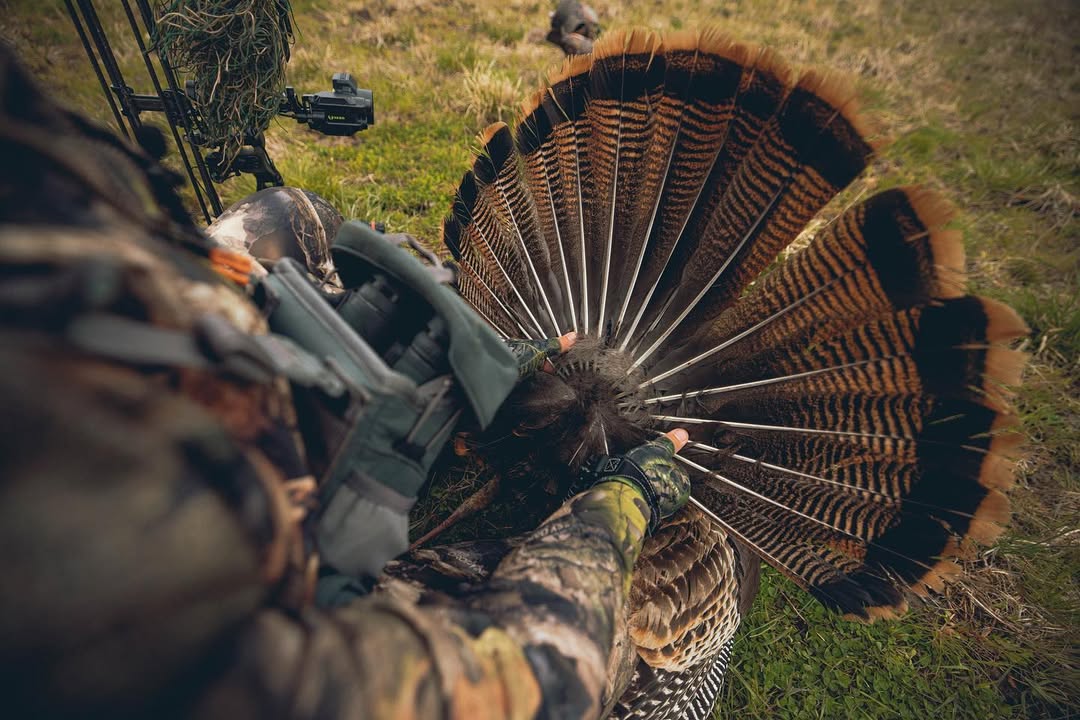
For serious turkey hunters, opening morning success rarely happens by accident. The hunters who tag birds early in the season are usually the ones who spent the weeks beforehand learning the land, locating birds, and understanding how spring gobblers move through their territory.
Spring turkey hunting is unique because gobblers become highly vocal and predictable during the breeding season. However, that predictability only helps hunters who have already done their homework before the season begins.
Learning how to locate gobblers before opening day allows you to start the season with a clear plan rather than guessing where birds might be. When you know where turkeys roost, travel, and feed, the odds of a successful hunt increase dramatically.
Why Pre-Season Scouting Matters
Spring gobblers follow daily routines that revolve around three key needs:
- Roosting safely at night
- Finding hens during breeding season
- Feeding throughout the day
While these patterns can shift with weather and pressure, turkeys often use the same general areas year after year. Pre-season scouting helps hunters identify these core areas before hunting pressure changes their behavior.
Another advantage of scouting early is that birds are less pressured and more vocal, making them easier to locate. Once the season opens, hunting activity can quickly push gobblers into quieter or less accessible areas.
By scouting beforehand, hunters can identify productive spots without having to search for birds while other hunters are already in the woods.
Understanding Spring Gobbler Behavior
During early spring, male turkeys begin establishing dominance and competing for hens. This is when gobblers become most vocal, often responding to natural sounds in the environment.
Typical gobbler behavior includes:
- Gobbling from the roost at sunrise
- Traveling to feeding areas shortly after fly-down
- Following hens throughout the morning
- Becoming more vocal again later in the day
Because of these predictable patterns, hunters who scout during early mornings or evenings can often locate birds without needing to enter their core areas.
Listening for Gobbles at Daybreak
One of the most effective ways to locate spring gobblers is simply listening at first light.
Before sunrise, gobblers often announce their presence from the roost. This natural gobbling helps them attract hens and establish dominance over nearby males.
To locate birds using this method:
- Arrive well before daylight.
- Position yourself on a ridge, field edge, or open area where sound travels clearly.
- Remain quiet and listen carefully as the woods begin to wake up.
Often, multiple gobblers will sound off across the landscape, revealing the general areas where they are roosting.
Because sound carries far in the calm morning air, hunters can sometimes hear gobbles from half a mile or more away.
Locating Roost Trees
Once you hear a gobbler, the next step is determining where the bird is roosting.
Turkeys typically choose roost trees that provide safety and visibility. Common roost locations include:
- Large mature trees along ridges
- Timber edges near open fields
- Trees overlooking creek bottoms
- Hillsides that offer wide views of the surrounding area
Roost trees are often located near feeding areas so birds can quickly move to food sources after flying down.
Signs that indicate nearby roost sites include:
- Droppings beneath large branches
- Feathers on the ground
- Tracks in soft soil
- Scratch marks where birds feed
Identifying these areas before the season begins allows hunters to plan safe approaches without disturbing the birds.
Evening Fly-Up Scouting
Another effective scouting method is watching turkeys return to their roost sites in the evening.
In the hours before sunset, turkeys begin moving toward their preferred roosting areas. Gobblers may travel alone or with hens during this time.
Hunters can locate birds by:
- Glassing open fields where turkeys feed
- Watching travel routes leading toward timber
- Listening for gobbles just before dark
Often, gobblers will fly up into roost trees shortly before sunset, sometimes gobbling several times after reaching their perch.
Evening scouting can confirm roost locations without entering the birds’ core areas.
Identifying Feeding and Travel Areas
Beyond roost sites, successful turkey hunters also identify where birds spend the rest of their day.
Spring turkeys frequently use areas that provide both food and visibility.
Common feeding locations include:
- Newly planted agricultural fields
- Pastures with fresh grass growth
- Oak flats with leftover acorns
- Logging roads and open timber
Turkeys often follow predictable travel routes between feeding and roosting areas. These routes may include:
- Ridge tops
- Field edges
- Logging roads
- Open hardwood ridges
By identifying these travel corridors, hunters can plan setups that intercept gobblers naturally moving through the landscape.
Using Locator Calls Responsibly
While listening naturally is often enough, hunters sometimes use locator calls to encourage gobblers to reveal their position.
Common locator sounds include:
- Owl hoots
- Crow calls
- Coyote howls
These sounds can trigger a “shock gobble,” where a gobbler responds suddenly to a loud or unexpected noise.
However, locator calls should be used sparingly during pre-season scouting. Excessive calling can educate birds and make them more cautious once hunting season begins.
The goal is simply to confirm a gobbler’s location—not to interact with the bird repeatedly.
Avoiding Pressure Before the Season
One of the biggest mistakes hunters make is pushing too close to turkeys during scouting.
Walking directly through feeding areas or roost sites can alarm birds and cause them to abandon those locations.
Instead, successful hunters scout from a distance by:
- Listening from ridges or high ground
- Using binoculars or spotting scopes
- Observing fields from roadways or property edges
Maintaining distance allows hunters to gather information without altering the birds’ natural behavior.
Remember: the goal of scouting is to learn where gobblers feel safe—not to disturb them.
Marking Key Locations
As you scout, it’s helpful to mark important observations using mapping tools or hunting apps.
Key locations to record include:
- Roost tree areas
- Gobbling locations
- Feeding fields
- Travel routes
- Potential setup locations
Over time, these notes can reveal patterns that make opening morning much easier to plan.
Hunters who keep organized scouting records often discover that turkeys use similar areas year after year.
Preparing for Opening Morning
Once you’ve identified gobbler locations, the next step is planning a smart opening day approach.
Successful setups usually involve:
- Positioning close enough to the roost without disturbing birds
- Setting up along likely travel routes
- Staying quiet and letting the gobbler come naturally
Because you’ve already located birds beforehand, opening morning becomes less about searching and more about executing a well-planned strategy.
This preparation often leads to faster success and fewer mistakes.
Final Thoughts
Locating spring gobblers before the first opening morning is one of the most valuable skills a turkey hunter can develop. By scouting early, listening for gobbles, identifying roost trees, and observing feeding patterns, hunters can build a detailed understanding of where birds spend their time.
The hunters who consistently fill their tags are usually the ones who invested time before the season ever began.
When opening morning arrives, they already know where the gobblers are—and that knowledge makes all the difference.
