
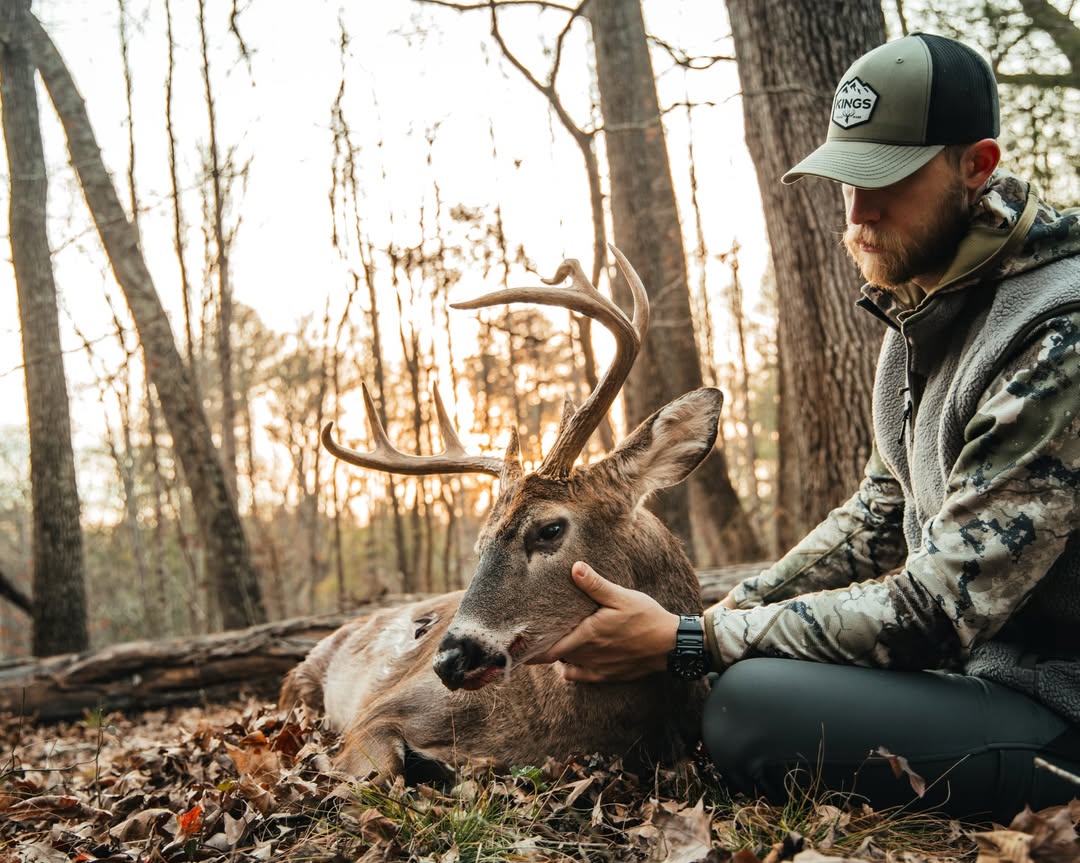
Every fall, the same pattern plays out across whitetail country: opening week hits, pressure spikes, and mature bucks seemingly vanish overnight. They don’t disappear. They relocate—using pre-established escape routes that allow them to avoid danger while staying inside their core home range.
Early spring is the best time of year to identify those escape routes.
Before summer vegetation hides trails and before human intrusion reshapes movement, the landscape tells a clear story. If you learn to map deer escape routes now, you can predict how bucks will react once hunting pressure returns in the fall.
This is not guesswork. It’s strategic, terrain-based scouting.
Why Escape Routes Matter More Than Feeding Areas
Food sources change. Crop rotations shift. Acorns fail some years. But security and escape terrain remain constant.
When pressured, mature bucks prioritize three things:
- Immediate cover
- Wind advantage
- A low-energy exit path
Most hunters focus on where deer feed. Smart hunters focus on where deer go when something feels wrong.
Those escape routes often become your highest-odds rut and post-pressure stand locations.
What Creates a True Escape Route?
An escape route is not just a random trail leading away from danger. It has structure and purpose. Typically, it includes:
- Terrain that limits human visibility
- A wind advantage for scent detection
- Quick access to thicker cover
- A path of least resistance
Common examples include:
- Downwind sides of ridges
- Sidehill trails below crest lines
- Creek bottoms with thick edge cover
- Brushy draws connecting bedding to remote timber
- Saddles leading into overlooked security zones
In spring, these features are easier to see because:
- Trails are exposed
- Leaves haven’t returned
- Ground disturbance remains visible
- Winter movement patterns are still readable
Step 1: Start at Primary Bedding Areas
Every escape route originates from security.
Identify likely bedding zones first:
- Leeward ridge points
- South-facing slopes
- Thick regrowth cuts
- Remote terrain knobs
- Areas difficult for human access
From those bedding areas, ask a critical question:
If a hunter approached from the most common access point, which direction would a buck exit?
Walk that direction carefully and look for:
- Defined sidehill trails
- Multiple tracks traveling one direction
- Terrain that gradually drops into thicker cover
- Consistent trail width indicating repeated use
Escape trails are often subtle—but consistent.
Step 2: Identify Pressure Points
To predict fall behavior, you must understand where pressure originates.
Common pressure sources include:
- Parking areas
- Trailheads
- Field edges
- Property boundaries
- ATV paths
- Logging roads
Now connect those access points to bedding areas.
Deer rarely flee randomly. They typically move:
- Downwind of pressure
- Toward thicker terrain
- Into areas with fewer human entry routes
Mapping pressure origin points allows you to anticipate escape direction months before season.
Step 3: Look for Terrain-Assisted Evasion
Mature bucks prefer escape routes that give them advantage.
These include:
Sidehill Trails
Deer avoid skyline exposure. Sidehill movement keeps them hidden and scent-protected.
Terrain Benches
Benches halfway down ridges act as safe travel corridors.
Drainages and Ditches
These allow deer to drop elevation quickly and disappear.
Creek Crossings
Waterways break scent trails and discourage human pursuit.
If you find a trail that hugs terrain contour while leading to thick cover, you’ve likely found an escape corridor.
Step 4: Confirm With Sign Clusters
Escape routes show repeated use over time.
Look for:
- Consistent track direction
- Old rub lines parallel to the trail
- Secondary trails merging into one primary exit
- Droppings concentrated along sidehill paths
- Shed antlers near transition points
Clusters of sign confirm habitual use—not random movement.
Step 5: Follow the Route to the Secondary Security Zone
Many hunters stop at the first trail.
Don’t.
Follow escape routes until they end in:
- Remote bedding pockets
- Swamp edges
- Overgrown clear-cuts
- Steep, hard-to-access terrain
These “secondary sanctuaries” are where pressured bucks relocate during gun season or high-traffic weekends.
Mark these zones carefully.
Few hunters scout this deep in spring.
How Escape Routes Become Fall Opportunities
Once you’ve mapped escape routes, you can build strategic setups around them.
Early Season
Escape routes matter less unless early pressure occurs.
Mid-Season
Light pressure begins shifting daylight movement toward security edges.
Rut
Bucks use escape routes to travel between bedding areas when avoiding hunters.
Gun Season
Escape corridors become prime ambush locations as deer flee predictable human access points.
The key is positioning yourself along the route—not inside the bedding area.
Intercept movement without educating the deer.
Stand Placement Strategy
Ideal stand locations along escape routes include:
- 50–100 yards off bedding exits
- Terrain pinch points along sidehills
- Creek crossings used as escape breaks
- Saddles leading into remote cover
- Trail merges where multiple escape paths converge
Wind direction is critical. Always set up:
- Crosswind to expected travel
- Downwind of likely human pressure
Escape-route hunting works best when deer feel they are moving safely.
Why Spring Is the Only Time to See the Full Picture
In summer:
- Vegetation hides trails
- Movement shifts toward food
- Human recreation alters patterns
In fall:
- Hunting pressure already changes behavior
- You risk educating deer while scouting
Spring offers:
- Clear visibility
- Minimal disturbance
- Honest movement sign
- Predictable terrain-based patterns
This is when deer are not reacting to you.
They are simply living.
Common Mistakes When Mapping Escape Routes
Avoid these errors:
- Walking directly through bedding cover
- Ignoring subtle sidehill trails
- Assuming deer flee in straight lines
- Over-focusing on food sources
- Scouting too late when vegetation hides detail
Escape routes are subtle highways—not obvious roads.
Turning Spring Scouting Into Fall Success
Create a layered map that includes:
- Bedding areas
- Pressure sources
- Primary escape trails
- Secondary security zones
- Terrain funnels along routes
With this information, you can rotate stands strategically throughout the season instead of guessing.
When opening week pressure hits and other hunters complain that deer “disappeared,” you’ll know exactly where they went.
Final Thoughts
Mapping deer escape routes before hunting pressure returns is one of the most overlooked advantages in whitetail strategy.
Food attracts deer.
Ruts excite deer.
But pressure moves deer.
If you understand where mature bucks feel safest when danger appears, you hold the blueprint to consistent fall success.
Spring reveals that blueprint.
The trails are visible.
The terrain is honest.
The sign is clear.
The question is simple:
Will you map it now—or chase it later?
