
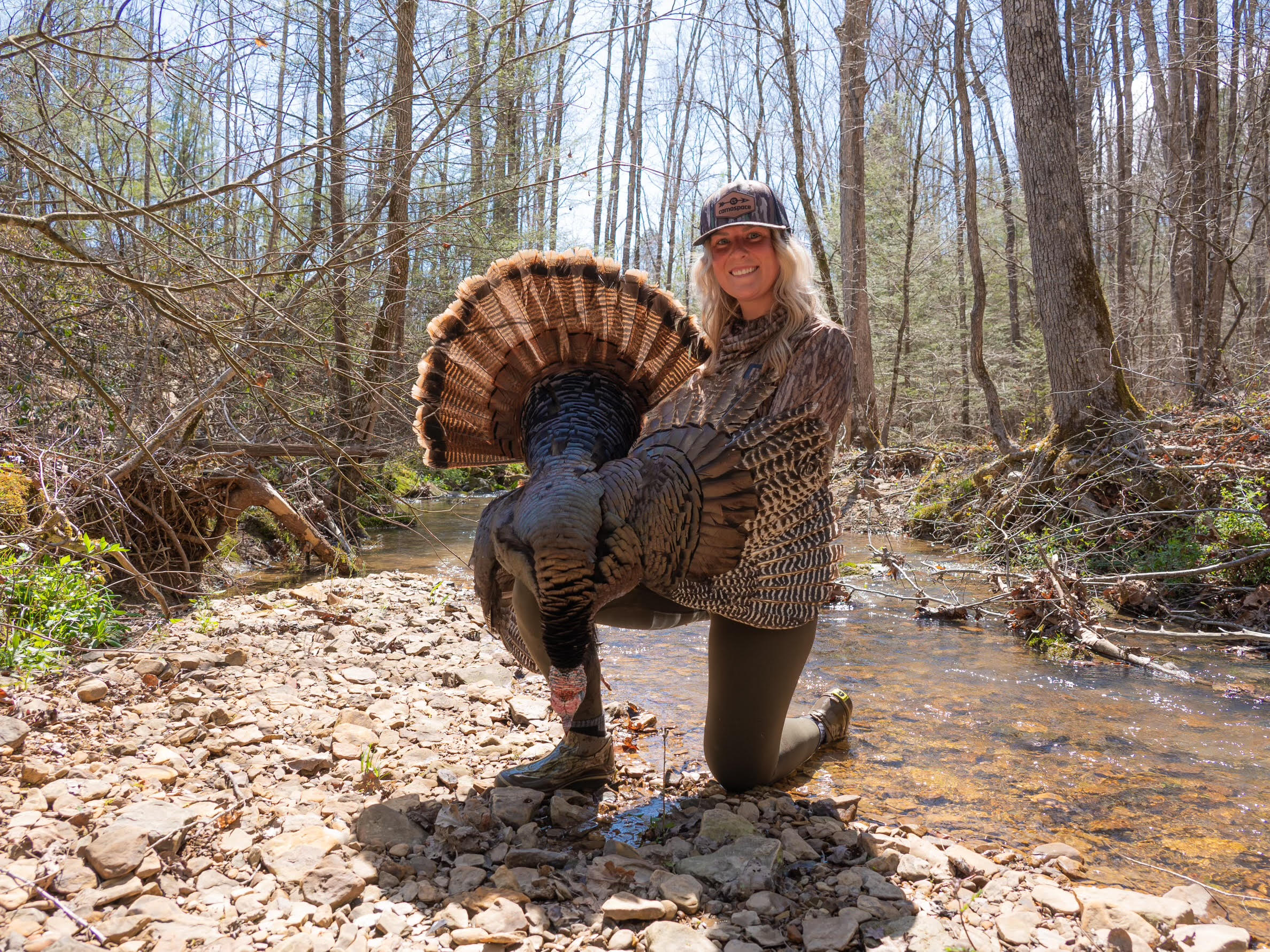
Early spring marks one of the most important—and often misunderstood—periods in turkey hunting. Before breeding activity reaches its peak, gobblers follow predictable patterns shaped by survival, food availability, and flock structure rather than breeding urgency. For hunters who understand how to locate gobblers during this pre-breeding phase, the early season offers some of the most consistent and strategic opportunities of the entire spring turkey season.
Unlike the peak breeding period, when gobblers become more erratic and henned-up, early season gobblers are still operating within winter flock patterns and using reliable travel routes. This predictability allows hunters to locate birds with precision and develop a clear plan for opening day success.
Understanding Early Season Turkey Behavior
Before breeding activity intensifies, gobblers remain focused on two main priorities: food and security. Their behavior during this period is shaped by winter recovery and gradual hormonal changes triggered by increasing daylight.
Key early season characteristics include:
- Gobblers still traveling in small bachelor groups
- Strong reliance on predictable feeding areas
- Regular use of established roost sites
- Limited aggressive breeding competition
- Consistent morning and evening movement patterns
Because breeding pressure hasn’t peaked, gobblers follow routine patterns that repeat daily.
This predictability makes early scouting extremely effective.
Why Early Season Gobblers Are Easier to Locate
During peak breeding, gobblers often follow hens and move unpredictably. But before breeding intensifies, gobblers remain more independent and patternable.
Several factors make early season gobblers easier to locate:
- Less breeding distraction
- More consistent roost locations
- Stronger feeding routines
- Less competition-driven movement
Gobblers are still transitioning from winter survival mode into breeding mode.
This creates a narrow but valuable scouting window.
Focus on Roosting Areas First
Roost sites are the foundation of early season turkey movement. Gobblers typically use the same roost areas repeatedly until breeding pressure or environmental changes force them to shift.
Common roost locations include:
- Large mature hardwood trees
- Ridge tops and ridge edges
- Creek bottoms with tall timber
- Protected slopes sheltered from wind
- Areas near reliable food sources
Roost sites offer safety and visibility.
Gobblers prefer areas where they can detect predators easily and fly down into feeding areas.
Locating roost sites provides predictable starting points for daily movement.
Listen for Morning Gobbling Activity
Early morning is the most reliable time to locate gobblers.
Gobblers naturally vocalize from the roost as daylight approaches. This gobbling helps establish dominance and maintain contact with hens and other gobblers.
To locate birds effectively:
- Arrive before first light
- Stop frequently and listen carefully
- Use elevation for better sound coverage
- Avoid excessive calling during scouting
Even a single gobble can reveal critical location information.
Mark these locations for future hunting setups.
Identify Reliable Feeding Areas
Food availability strongly influences early season gobbler movement. After winter, turkeys actively feed to rebuild energy reserves.
Primary early spring food sources include:
- Fresh green shoots and grasses
- Waste grain in agricultural fields
- Newly emerging insects
- Clover fields and food plots
- Field edges and open hardwood areas
Gobblers often travel between roost sites and feeding areas using predictable routes.
Feeding zones are excellent places to observe gobbler presence.
Look for:
- Tracks
- Droppings
- Feathers
- Scratching areas in leaves
These signs confirm regular turkey activity.
Travel Routes Reveal Daily Patterns
Gobblers rarely move randomly. They prefer terrain features that provide safety and efficiency.
Common turkey travel routes include:
- Ridge lines
- Field edges
- Logging roads
- Transition zones between timber and open ground
- Gentle slopes and benches
These routes allow gobblers to move safely while maintaining visibility.
Travel corridors often remain consistent until breeding behavior disrupts patterns.
Early Season Gobblers Favor Open Visibility Areas
Turkeys rely heavily on eyesight for survival. Gobblers prefer areas where they can see predators approaching.
Look for:
- Open hardwood timber
- Sparse understory areas
- Field edges
- Recently burned or cleared areas
These environments allow gobblers to feed and move confidently.
Dense cover is less attractive during early season unless used for roosting.
Weather Influences Early Season Gobbler Location
Weather conditions play a major role in gobbler movement.
Warm, calm mornings increase gobbling activity.
Cold, windy, or rainy conditions often reduce vocalization and movement.
During poor weather, gobblers may:
- Remain in sheltered areas
- Delay fly-down times
- Feed in protected terrain
Understanding how weather affects movement improves scouting efficiency.
Flock Breakup Signals Changing Behavior
As spring progresses, winter flocks begin to break apart.
Gobblers start separating from larger groups and establish individual territories.
This transition period creates increased gobbling activity.
Hunters may notice:
- Increased vocal competition
- Gobblers traveling alone
- More aggressive behavior
This signals the approach of peak breeding activity.
Locating gobblers during this transition provides excellent hunting opportunities.
Evening Roosting Patterns Are Valuable for Scouting
Evening scouting is one of the safest and most effective ways to locate gobblers without disturbing them.
Gobblers typically move toward roost areas during late afternoon and early evening.
Watch for:
- Birds moving uphill toward roost trees
- Gobblers flying into trees near sunset
- Evening gobbling activity
Once roost locations are confirmed, hunters can plan precise morning setups.
Terrain Features That Concentrate Gobbler Activity
Certain terrain features naturally attract and funnel turkey movement.
These include:
- Ridge saddles
- Creek crossings
- Field corners
- Transition zones between habitat types
These areas provide safe, efficient travel.
Gobblers often use the same terrain features repeatedly.
These locations are ideal for early season hunting setups.
Using Sign to Confirm Gobbler Presence
Turkey sign provides valuable confirmation of gobbler activity.
Look for:
- Large tracks with visible toe spread
- J-shaped droppings (indicating gobblers)
- Wing drag marks
- Strut zone disturbance
Strut zones often occur in:
- Field openings
- Ridge tops
- Flat benches
These areas indicate gobbler dominance and regular presence.
Why Early Season Scouting Creates Long-Term Success
Scouting before breeding activity peaks provides clear insight into turkey habitat usage.
Hunters can identify:
- Core roost areas
- Feeding zones
- Travel routes
- Strut zones
This information allows strategic stand and setup planning.
Once breeding activity intensifies, gobbler movement becomes less predictable.
Early scouting provides a major advantage.
Minimizing Disturbance While Scouting
Avoid pressuring gobblers during scouting.
Turkeys have excellent vision and quickly detect danger.
Best practices include:
- Observing from a distance
- Avoiding repeated disturbance
- Limiting calling during scouting
- Using terrain for concealment
Low-impact scouting keeps gobblers comfortable in the area.
This improves opening day opportunities.
How Early Season Patterns Translate to Hunting Success
Gobblers located early often remain in the same general area throughout the early season.
Understanding their patterns allows hunters to:
- Set up along travel routes
- Position near roost areas
- Intercept gobblers between roost and feeding zones
This increases encounter probability.
Early season success depends on preparation, not luck.
Conclusion: Early Season Scouting Builds the Foundation for Spring Turkey Success
Locating early season gobblers before breeding activity peaks provides one of the greatest advantages in spring turkey hunting. During this period, gobblers follow predictable patterns shaped by food, security, and roost location rather than breeding urgency.
By focusing on roost areas, feeding zones, terrain funnels, and travel routes, hunters can identify reliable gobbler locations and develop effective hunting strategies.
Those who invest time scouting early don’t just find turkeys—they understand them. And that understanding is what turns early mornings in the spring woods into successful, unforgettable hunts.
