
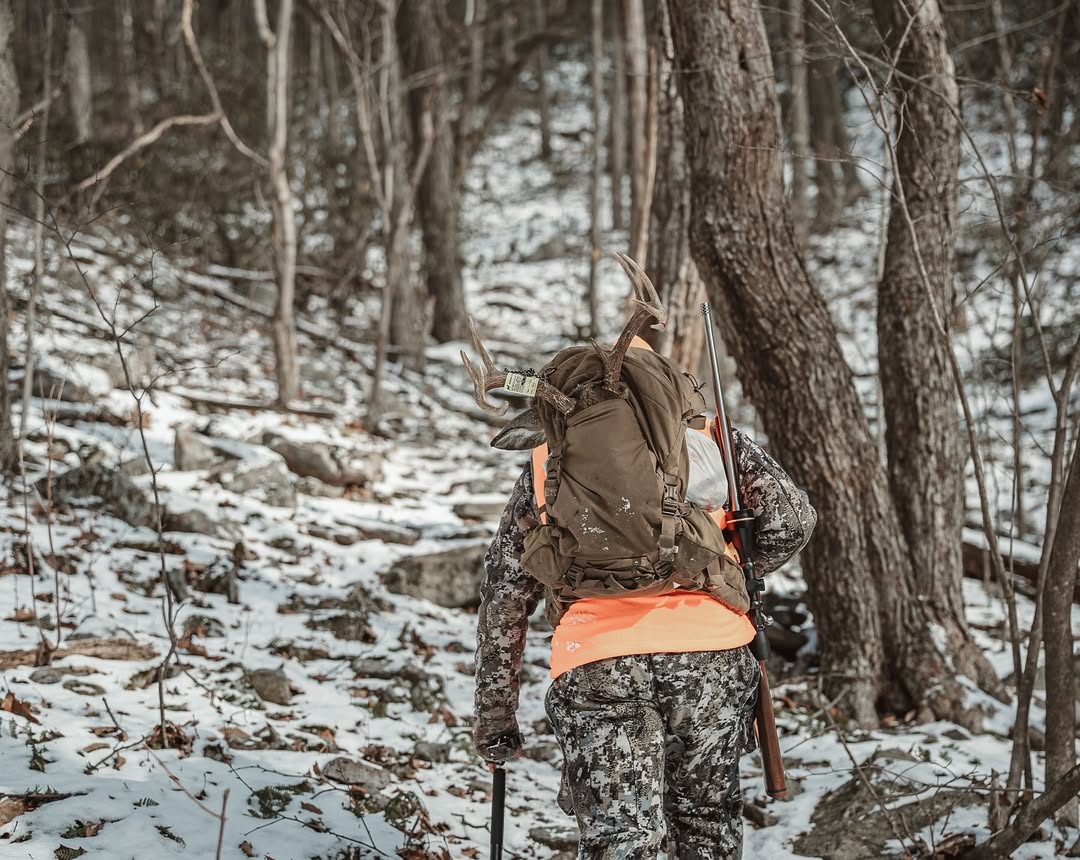
One heavy snowfall can completely rewrite a deer’s daily movement. Trails that were active yesterday may go dead overnight, while brand-new paths suddenly appear where no tracks existed before. For late-season hunters, understanding how snow depth reshapes deer travel corridors isn’t optional—it’s the difference between hunting fresh sign and sitting over abandoned ground.
Snow doesn’t just slow deer down. It forces them to recalculate energy use, safety, footing, and exposure in real time. Here’s how snow depth alters deer movement almost instantly—and how hunters can adapt just as fast.
Snow Depth Forces Immediate Energy Decisions
In winter, every step costs calories. When snow depth increases—even by a few inches—deer reassess where movement is worth the effort.
- Shallow snow (1–3 inches): Deer often continue using established trails and edges.
- Moderate snow (4–8 inches): Movement becomes selective. Deer begin favoring packed routes and sheltered paths.
- Deep snow (8+ inches): Travel corridors shrink dramatically. Deer abandon inefficient routes entirely.
Overnight snowfall compresses deer movement into fewer, more predictable lanes, often closer to bedding areas than hunters expect.
Why Deer Abandon “Perfect” Trails After Snowfall
Many hunters assume deer will keep using traditional trails regardless of conditions. Snow proves otherwise.
Fresh snow hides uneven ground, ice pockets, fallen limbs, and steep sidehills. A trail that worked in bare ground may suddenly become risky or exhausting. Deer quickly shift toward:
- Gradual slopes instead of steep cuts
- Wind-packed ridges instead of soft lowlands
- Open timber instead of brushy tangles that hold snow
What looks like the best path on a map may be unusable after a storm.
Snow Reveals New Travel Corridors—But Only Briefly
One of snow’s biggest advantages for hunters is visibility. Fresh snowfall exposes real movement, not theoretical movement.
Within 12–24 hours after a storm, deer establish:
- New side-hill traverses
- Parallel trails just off ridgelines
- Direct lines between bedding and food that didn’t exist before
However, these corridors can change again quickly as snow crusts, melts, or refreezes. The best late-season corridors are often temporary, lasting only days.
How Snow Depth Pulls Deer Toward Cover
As snow deepens, deer prioritize cover—not just for warmth, but for efficiency.
Dense conifers, south-facing slopes, and timber edges collect less snow and block wind. As a result, deer corridors shift closer to thermal cover, even if it means passing up better food.
Hunters focusing only on food sources often miss this adjustment. In deep snow, deer frequently move from cover to cover, not cover to food.
Packed Snow Becomes the New Highway
Once deer start using a route, it packs down quickly. These packed corridors become energy-saving travel lanes and attract repeated use.
Key places packed trails form:
- Field edges where wind scours snow
- Logging roads and old skid trails
- Fence lines and property borders
- Livestock paths in agricultural areas
These routes may look insignificant on a map but can become primary deer highways overnight.
Snow Changes Timing as Much as Location
Deep snow doesn’t just alter where deer move—it changes when.
Movement becomes:
- Shorter
- Later in the day
- More clustered
Deer often wait for slightly warmer afternoon temperatures when snow softens and walking becomes easier. Morning movement can nearly vanish after heavy snowfall, even in high-density areas.
Reading Snow Correctly: Fresh vs. Functional Tracks
Not all tracks matter equally. In snow, it’s critical to separate:
- Exploratory tracks (single passes, erratic direction)
- Committed travel corridors (multiple passes, consistent direction)
The most valuable trails show:
- Parallel tracks moving both directions
- Repeated entry and exit points
- Minimal wandering
These are the corridors deer are actually relying on—not just testing.
How Hunters Should Adjust Stand Placement
After a snowfall, yesterday’s stand is often obsolete.
Effective late-season adjustments include:
- Moving closer to bedding cover
- Shifting downslope to reduce wind exposure
- Setting up along packed trails rather than intersections
- Prioritizing downwind access to avoid contaminating limited routes
Snow funnels deer movement. Hunters who relocate with it stay in the game.
Why Snow Depth Makes Deer More Predictable—Not Less
While snow reduces movement overall, it also removes options. Fewer trails mean higher odds of intercepting deer—if you’re hunting the right corridor.
Late-season success often comes from accepting reduced movement but capitalizing on compressed patterns.
Snow doesn’t scatter deer. It organizes them.
Final Thoughts
Snow depth is one of the fastest-acting forces in deer behavior. In a single night, it can erase weeks of predictable movement and create entirely new travel corridors. Hunters who cling to pre-snow setups fall behind, while those who read snow correctly gain a rare advantage.
In January, the best sign is the newest sign—and snow tells the truth better than any trail camera ever could.
