
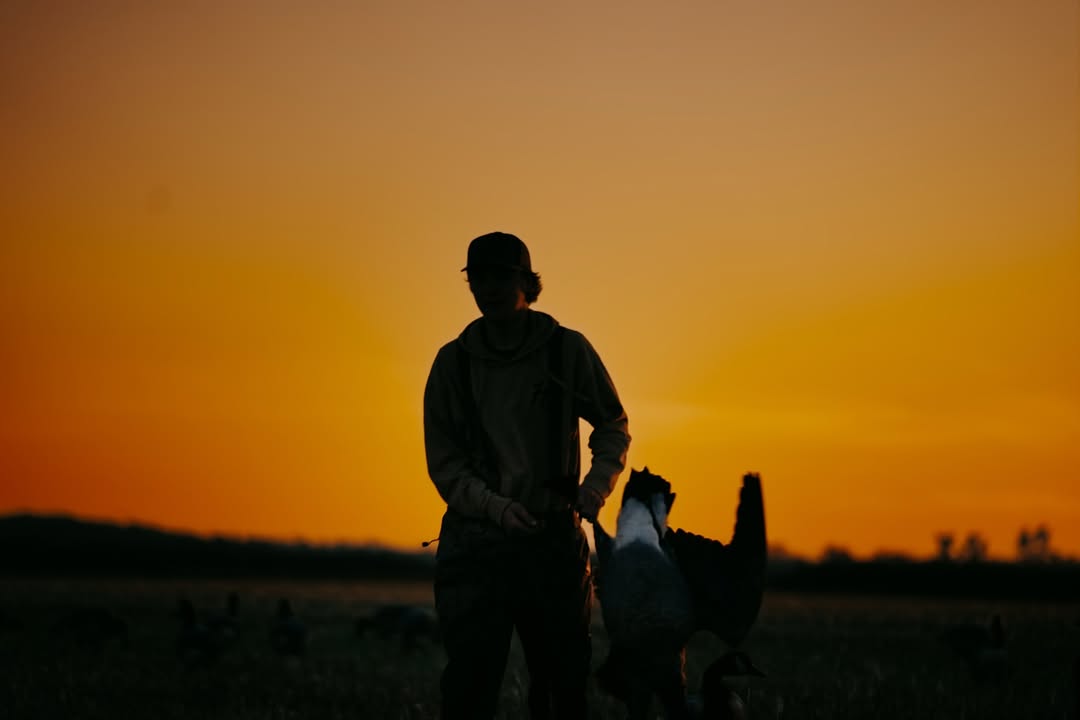
Every year, waterfowl hunters assume the migration follows a predictable schedule: big pushes in November, a slowdown in December, and a trickle of birds as winter settles in. But then it happens—right in the middle of January, after a week of bitter cold or a sudden warm-up, the sky fills with unexpected flocks. Geese trade high across the valley. Mallards move in singles and doubles. Divers show up on lakes you thought were locked for the season.
These midwinter flyovers aren’t random. They’re driven by specific weather triggers that waterfowl respond to long before we notice them on the ground. Understanding these hidden cues gives hunters an edge when others pack up for the season.
1. The “Second Freeze Line” Shift: When Cold Outruns Food
By January, many birds have settled into their wintering areas. But extreme cold snaps often create what biologists call a second freeze line—a deeper push of cold weather that shuts down food sources farther south.
Why It Matters
- Shallow wetlands lock up overnight
- Ag fields become crusted and inaccessible
- Invertebrate activity drops under ice
- Small roosts freeze, forcing birds to find open water
When food disappears, birds move—not by choice, but out of necessity.
The Result for Hunters
A sudden wave of mallards, redheads, geese, or wigeon showing up two to three days into a severe freeze after being absent for weeks.
2. Subtle Thaws Create “Micro-Migrations”
While hard freezes push birds south, midweek warm-ups often trigger the opposite effect.
Even a 10–15°F rise can:
- Open pockets of water
- Soften snowpack in cornfields
- Re-activate insect and mollusk activity in wetlands
These minor thaws don’t create a major full-region migration. Instead, they cause micro-migrations: small movements of birds relocating within a few hundred miles.
Where Hunters Benefit
These new arrivals are:
- Less pressured
- More willing to work spreads
- More vocal and responsive
If you’ve ever had a “random” lights-out hunt in mid-January, you were probably on the receiving end of a micro-migration.
3. Jet Stream Dips Push High-Flying Migrators Off Course
Waterfowl riding high-altitude winds are influenced by jet stream positioning far more than ground-level hunters realize.
In Midwinter
The jet stream often:
- Dips sharply across the Midwest
- Carves low-pressure systems through the Plains
- Produces narrow bands of ideal tailwinds
High-flying geese—especially snows, specks, and high honkers—use these lanes like highways.
What You’ll See
- Birds traveling much higher than typical fall flights
- Sudden flocks appearing over locations with no traditional migration routes
- Midwinter geese pushing through at 20–40 mph on strong tailwinds
These events usually last one to two days, making timing essential.
4. Snow Cover, Not Temperature, Is the Biggest Midwinter Trigger
Hunters often think birds move because it’s cold.
But cold doesn’t push birds out—snow does.
Waterfowl can survive brutal temperatures as long as they can feed. But when snow cover becomes deep enough to bury waste grains or prevent dabbling, birds leave almost immediately.
Key Thresholds
- 2–4 inches: Makes waste grain harder to reach
- 6+ inches: Dabblers can’t access ground forage
- 10+ inches: Fields become completely unusable
When heavy snow hits regions like the Dakotas, Nebraska, Iowa, or the Great Lakes, flocks can shift hundreds of miles within 24 hours.
5. Pressure Swings: The Migratory Green Light
Waterfowl have pressure sensors far more sensitive than humans.
Dramatic shifts in barometric pressure act as a biological “green light” for movement.
Two Critical Scenarios
- Rising Pressure after a snowstorm: Birds move to redistribute across fresh food and open water.
- Falling Pressure before a major system: Birds push ahead of incoming snow and wind.
These shifts often trigger midwinter staging flights, even when temperatures stay consistent.
6. Nighttime Migration Increases in Midwinter
Another hidden factor:
Birds migrate at night far more during midwinter than early season.
Why?
- Clear, cold skies help them conserve heat
- Fewer predators are active
- Wind speeds are steadier after sunset
- Stable thermal layers make long-distance flight easier
This explains why you might go to bed hearing nothing—and wake up to fresh flocks roosting where none were the night before.
7. Human Pressure Forces “Secondary” Migrations
By January, most hunters have either tagged out or simply quit. But in areas with heavy late-season pressure—especially on river systems—birds may shift again.
What Causes Midwinter Pressure Moves
- Late-season goose hunts
- Increased activity around open water
- Boat or ice-breaking pressure
- Public land crowding on warm weekends
These small-scale pressure shifts often send flocks:
- A few counties east or west
- Down smaller river corridors
- Into secluded creeks, cattle ponds, or farm reservoirs
For hunters willing to scout, these pressured birds are often the most vulnerable of the entire season.
8. Wind Direction Overrides All Other Factors
If there’s one universal rule of midwinter migration, it’s this:
Birds move when the wind lets them move.
Even small wind events can dictate how far and how fast birds travel.
Key wind-related triggers include:
- Strong NW winds: Classic migration push behind Arctic fronts
- Sustained tailwinds: Large flocks covering 100–300 miles overnight
- Crosswinds on lakes and reservoirs: redistributes divers into new pockets
- Calm nights: Encourages quieter, stealthy night migration
Wind doesn’t just aid flight—it shapes the entire route.
Final Thoughts: Why Midwinter Is Full of “Surprise” Flights
Late-season hunters often witness some of the most unpredictable and exciting migrations of the year, not because the birds are confused, but because:
- Weather cues become sharper
- Food availability changes faster
- Pressure impacts birds more
- The jet stream becomes more volatile
- Small climate shifts create ripple effects across entire flyways
If you learn to read the weather the way birds do, you’ll stop being surprised by midwinter flyovers—and start planning for them.
