
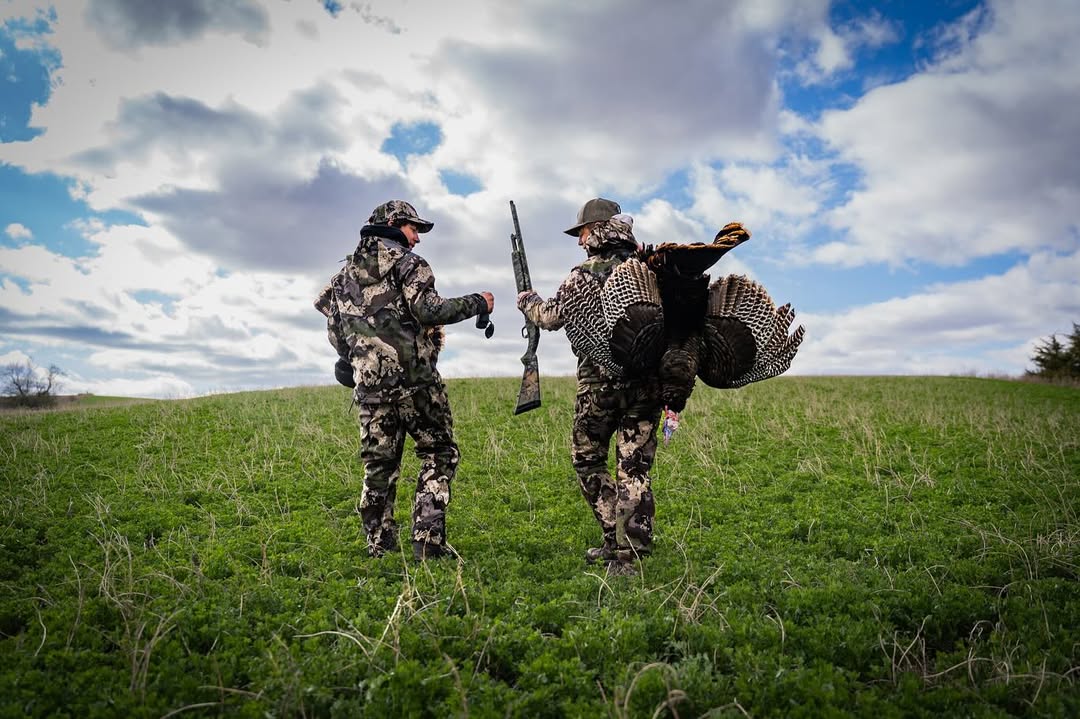
For many hunters across the United States, spring turkey hunting often starts before sunrise. Hunters slip quietly into the woods in the dark, hoping to hear a gobbler thunder from the roost at first light. While early morning hunts can be exciting and productive, many hunters make a critical mistake—they leave the woods too early.
The truth is that mid-morning can be one of the most productive times of the entire day to hunt spring turkeys. As the woods settle down after the early rush of activity, gobblers often become more responsive and easier to work. Hunters who remain patient during these hours frequently discover opportunities that others miss.
Understanding why mid-morning hunting can be so effective requires looking closely at turkey behavior and the daily rhythm of the spring woods.
Early Morning Pressure Changes Turkey Behavior
At daybreak during spring turkey season, gobblers are usually still on the roost and surrounded by hens. When they fly down shortly after sunrise, most gobblers immediately gather with hens and begin moving through the woods.
This creates a common challenge for hunters. A gobbler may answer calls enthusiastically from the roost, but once he reaches the ground, he often follows real hens instead of approaching a hunter’s setup.
Because many hunters focus heavily on the first hour or two after sunrise, gobblers can quickly become pressured. Calling from multiple directions, movement in the woods, and human scent can all make birds cautious.
By mid-morning, much of this early pressure has faded. Many hunters have already left the woods, and the environment becomes quieter again.
Gobblers Often Lose Their Hens by Mid-Morning
One of the biggest reasons mid-morning hunting can be so productive is that gobblers frequently separate from their hens later in the morning.
Hens usually head off to nest sometime after fly-down. Once they leave, gobblers often find themselves alone and looking for new companionship. At this point in the day, a lonely tom may suddenly become far more interested in calling.
A gobbler that ignored calls earlier in the morning may respond aggressively once he realizes the hens have disappeared.
This shift in behavior creates a window of opportunity for patient hunters.
Turkeys Continue Moving Through the Woods
Another advantage of hunting mid-morning is that turkeys often continue moving throughout the morning hours.
After leaving their initial fly-down locations, gobblers frequently travel across ridges, logging roads, field edges, and creek bottoms while searching for hens. These birds may cover significant ground during this period.
Because of this movement, hunters who stay in the woods longer have a better chance of encountering birds that were not present at first light.
In many cases, a gobbler that was completely silent earlier in the morning may suddenly appear in an area hours later.
Less Competition From Other Hunters
Mid-morning also offers a major advantage that many hunters overlook—reduced hunting pressure.
By 9 or 10 a.m., a large percentage of hunters have already left the woods to head to work, grab breakfast, or move to another location. This drop in pressure often allows turkeys to relax and behave more naturally.
Without constant calling from multiple directions, gobblers may become more comfortable responding to a single hen call.
For hunters who stay longer, the woods become quieter, and the odds of working a responsive bird often increase.
Mid-Morning Calling Can Be More Effective
Calling strategies that might not work at sunrise can become extremely effective later in the morning.
When a gobbler is no longer surrounded by hens, he may respond eagerly to a variety of calls. Soft yelps, clucks, and purrs can convince a tom that a lone hen is nearby and ready to meet him.
In some situations, even aggressive cutting or excited yelping can trigger a strong response from a gobbler searching for company.
The key is to remain patient and avoid overcalling. Turkeys have excellent hearing, and subtle calling often works best.
Smart Movement Can Help Locate Birds
Mid-morning is also an excellent time for hunters to cover ground and locate active gobblers.
Since birds are often traveling during this time of day, hunters can slowly move through promising terrain and stop periodically to call or listen.
Good places to check include:
- Ridge tops and saddles
- Logging roads and two-tracks
- Field edges and pasture corners
- Creek crossings
- Oak flats and open hardwoods
Using occasional locator calls such as crow calls or owl hoots can also help trigger shock gobbles from distant birds.
This approach allows hunters to find birds that were not active earlier in the morning.
Weather Conditions Can Improve Later in the Morning
Spring mornings can often start with cold temperatures, fog, or damp conditions. As the sun rises and temperatures increase, the woods become more comfortable for both hunters and turkeys.
Warmer air often increases insect activity and general wildlife movement. Turkeys may begin feeding more actively as the morning progresses.
These improving conditions can encourage gobblers to move more and respond to calls more readily.
Patience Is Often the Key to Success
Many experienced turkey hunters believe that patience is one of the most important qualities for success in the spring woods.
While the excitement of early morning gobbling can be thrilling, the quiet hours that follow are often when careful hunters find their best opportunities.
Staying in the woods longer allows hunters to experience the full rhythm of turkey activity throughout the morning.
Instead of rushing out after sunrise, slowing down and remaining alert can lead to encounters with birds that other hunters never see.
Making the Most of Mid-Morning Opportunities
Hunters who want to take advantage of the mid-morning window should approach the woods with a flexible strategy.
Instead of focusing only on the roost hunt, consider planning for several hours in the field. Bring enough gear to remain comfortable, move slowly through good habitat, and listen carefully for distant gobbles.
Some of the most memorable spring turkey hunts happen long after the sun has risen.
A gobbler that suddenly answers a call in the quiet mid-morning woods can create an unforgettable hunting experience.
The Hidden Window Many Hunters Miss
Spring turkey hunting is often associated with the excitement of dawn, but the hours that follow can be just as productive—if not more so.
Mid-morning offers unique advantages: gobblers may be alone, hunting pressure decreases, and birds often move actively through the landscape searching for hens.
Hunters who recognize this overlooked opportunity and stay patient in the woods frequently discover that the best part of the hunt may still be ahead.
Sometimes, the difference between going home empty-handed and tagging a spring gobbler is simply staying in the woods a little longer.
