
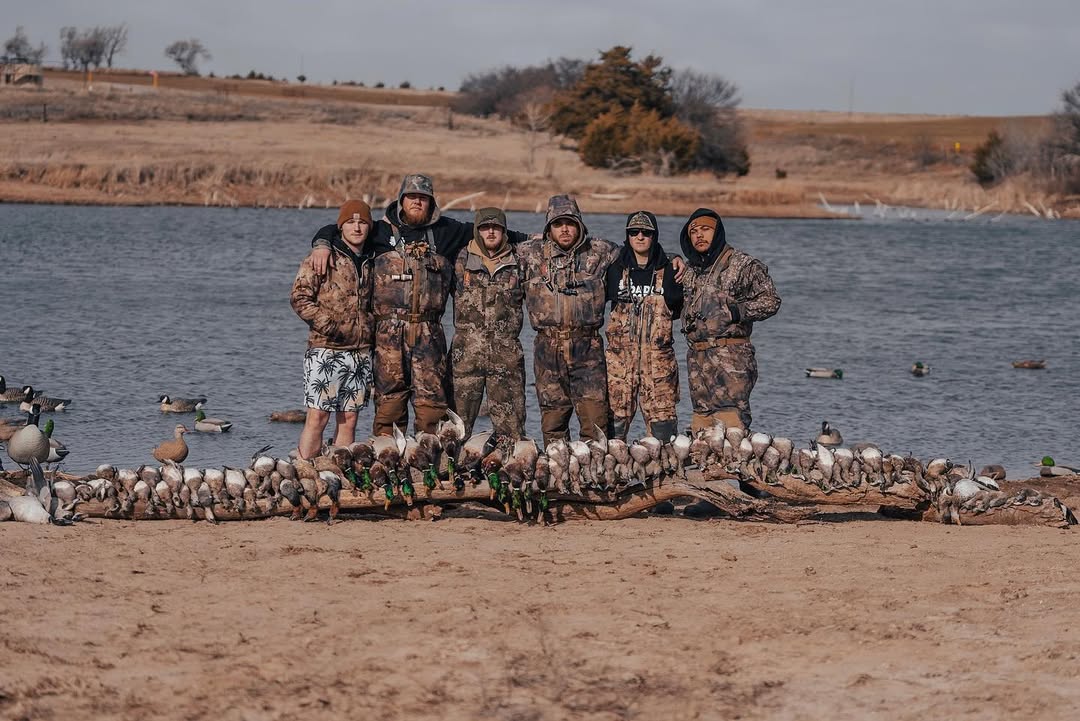
In early spring, as winter loosens its grip across North America, one of the most important but overlooked forces shaping duck movement is the formation of open water corridors. These corridors—ribbons of ice-free rivers, creek systems, drainage channels, and connected wetlands—act as natural highways that guide ducks safely and efficiently through the landscape during migration.
Understanding how open water corridors guide duck travel routes gives hunters, land managers, and waterfowl observers a powerful advantage. Ducks rarely move randomly. Instead, they follow predictable paths defined by safety, energy conservation, visibility, and reliable water access. Open water corridors provide all of these essential conditions.
Learning to identify and interpret these corridors can reveal where ducks are traveling, resting, and staging long before peak migration periods arrive.
What Are Open Water Corridors?
Open water corridors are continuous or connected stretches of ice-free water that allow ducks to move safely across otherwise frozen or inhospitable terrain.
These corridors include:
- Rivers and river systems
- Creeks and tributaries
- Flood control channels
- Drainage ditches connected to larger water bodies
- Marsh systems connected by shallow water
- Reservoir arms and connected backwaters
Even narrow waterways can serve as critical travel routes if they provide reliable open water.
To migrating ducks, these corridors function like highways across a frozen landscape.
Why Ducks Depend on Open Water Corridors During Migration
Ducks rely on open water corridors because they reduce risk and increase travel efficiency. Migration requires careful energy management, and ducks avoid unnecessary exposure or unpredictable terrain.
Open water corridors provide several key advantages:
1. Reliable Landing and Resting Locations
Ducks must land regularly to rest and conserve energy. Open water corridors ensure they always have safe places to land during long flights.
Without accessible water, ducks risk exhaustion, exposure, and increased predation.
2. Safer Navigation Through the Landscape
Water provides a clear, unobstructed path. Ducks can visually follow rivers and waterways across long distances without needing to navigate unfamiliar land features.
Water corridors reduce confusion and allow ducks to maintain consistent migration direction.
3. Immediate Access to Food
Open water corridors often support early insect activity, aquatic vegetation, and food washed in by current flow.
This makes these areas important feeding locations, not just travel routes.
Ducks frequently pause along corridors to refuel before continuing migration.
4. Reduced Predator Risk
Water provides visibility and escape options. Ducks resting on open water can detect predators earlier and escape more easily than birds resting on land.
This safety advantage makes corridors highly attractive during vulnerable migration periods.
Rivers Are the Primary Migration Highways
Large rivers serve as the backbone of waterfowl movement across much of North America. Major river systems provide uninterrupted corridors stretching hundreds or even thousands of miles.
Examples of effective corridor characteristics include:
- Continuous open water
- Adjacent wetlands and backwaters
- Floodplains providing feeding areas
- Gradual northward thaw progression
Ducks often follow rivers northward step by step as thaw conditions expand.
Each newly opened section becomes the next staging point.
Smaller Tributaries Funnel Duck Movement
While major rivers carry large numbers of birds, smaller tributaries play a critical role in guiding ducks into specific regions.
Tributaries act as branching routes that direct ducks toward:
- Agricultural feeding areas
- Seasonal wetlands
- Shallow marsh systems
- Breeding habitats
Ducks frequently move from main rivers into smaller water systems as they search for food and resting areas.
Hunters who identify these branching points often discover consistent waterfowl activity.
Early Thaw Creates Migration Bottlenecks
Not all water opens at the same time. Early open water creates bottlenecks where ducks concentrate because alternative routes remain frozen.
These bottlenecks form in:
- Fast-moving river sections
- Areas with current flow
- Shallow water warmed by sunlight
- Wind-protected channels
Because these areas offer the only available open water, they attract higher concentrations of ducks.
As thaw progresses, ducks spread out again.
Ducks Move Gradually Along Expanding Open Water
Migration rarely occurs in one long uninterrupted flight. Instead, ducks move in stages, following expanding open water northward.
This process includes:
- Resting at open water locations
- Feeding to restore energy
- Waiting for further thaw conditions
- Moving to the next open water section
This pattern continues until ducks reach breeding areas.
Each open water corridor becomes a stepping stone in the migration journey.
Corridor Width Influences Duck Use
Both large and small water corridors serve important roles.
Wide corridors provide:
- Greater feeding opportunities
- Safer resting areas
- Space for large duck concentrations
Narrow corridors provide:
- Travel guidance
- Safe navigation routes
- Connection between larger habitats
Even narrow drainage channels can guide duck movement if they connect larger water bodies.
Weather Changes Corridor Importance Quickly
Weather conditions directly influence corridor effectiveness.
Important factors include:
- Rapid warming increasing open water
- Cold snaps refreezing smaller corridors
- Rainfall expanding connected wetlands
- Snowmelt increasing water flow
Ducks constantly adjust movement based on these changes.
Corridors that are productive one week may become less important the next as new water opens elsewhere.
Visibility Helps Ducks Follow Water Corridors
Ducks rely heavily on visual cues during migration. Water reflects light differently than land, making it highly visible from the air.
This visual contrast helps ducks identify:
- Safe landing zones
- Travel direction
- Feeding areas
- Connected habitat systems
Water corridors are easier to recognize than isolated wetlands surrounded by dry land.
Open Water Corridors Reveal Predictable Flight Paths
Ducks often fly directly along water corridors rather than crossing open terrain randomly.
This creates predictable flight patterns such as:
- Following river bends
- Crossing low terrain near connected water
- Flying along creek systems
- Moving between connected marshes
Understanding these patterns helps predict where ducks will travel.
Habitat Quality Along Corridors Determines Stop Duration
Not all corridors are equal. Ducks stay longer in areas that provide:
- Abundant food
- Safe resting conditions
- Minimal disturbance
- Reliable water stability
Areas lacking food or safety serve only as short-term travel routes.
High-quality corridor habitats often become staging areas where ducks remain for extended periods.
Early Spring Is the Best Time to Identify Travel Corridors
Before vegetation returns and migration disperses birds, corridor use is easier to observe.
Early spring provides:
- Clear visibility of water systems
- Concentrated duck movement
- Predictable staging areas
- Reduced habitat complexity
This makes it the ideal time to identify important travel routes.
Corridor Awareness Improves Long-Term Hunting Strategy
Understanding open water corridors allows hunters to identify:
- Future staging locations
- Reliable travel routes
- High-confidence hunting zones
- Seasonal movement patterns
Ducks often follow similar routes year after year when conditions remain consistent.
Corridors serve as long-term movement foundations.
Final Thoughts: Open Water Defines Duck Movement
Ducks do not migrate randomly across the landscape. They follow open water corridors that provide safety, navigation, and survival efficiency.
These corridors serve as:
- Migration highways
- Feeding zones
- Resting areas
- Navigation guides
By learning to recognize open water corridors and understanding how ducks use them, hunters and observers gain deeper insight into waterfowl movement patterns.
In early spring, open water does more than signal seasonal change—it determines where ducks go, how they travel, and where they stop along the way.
