
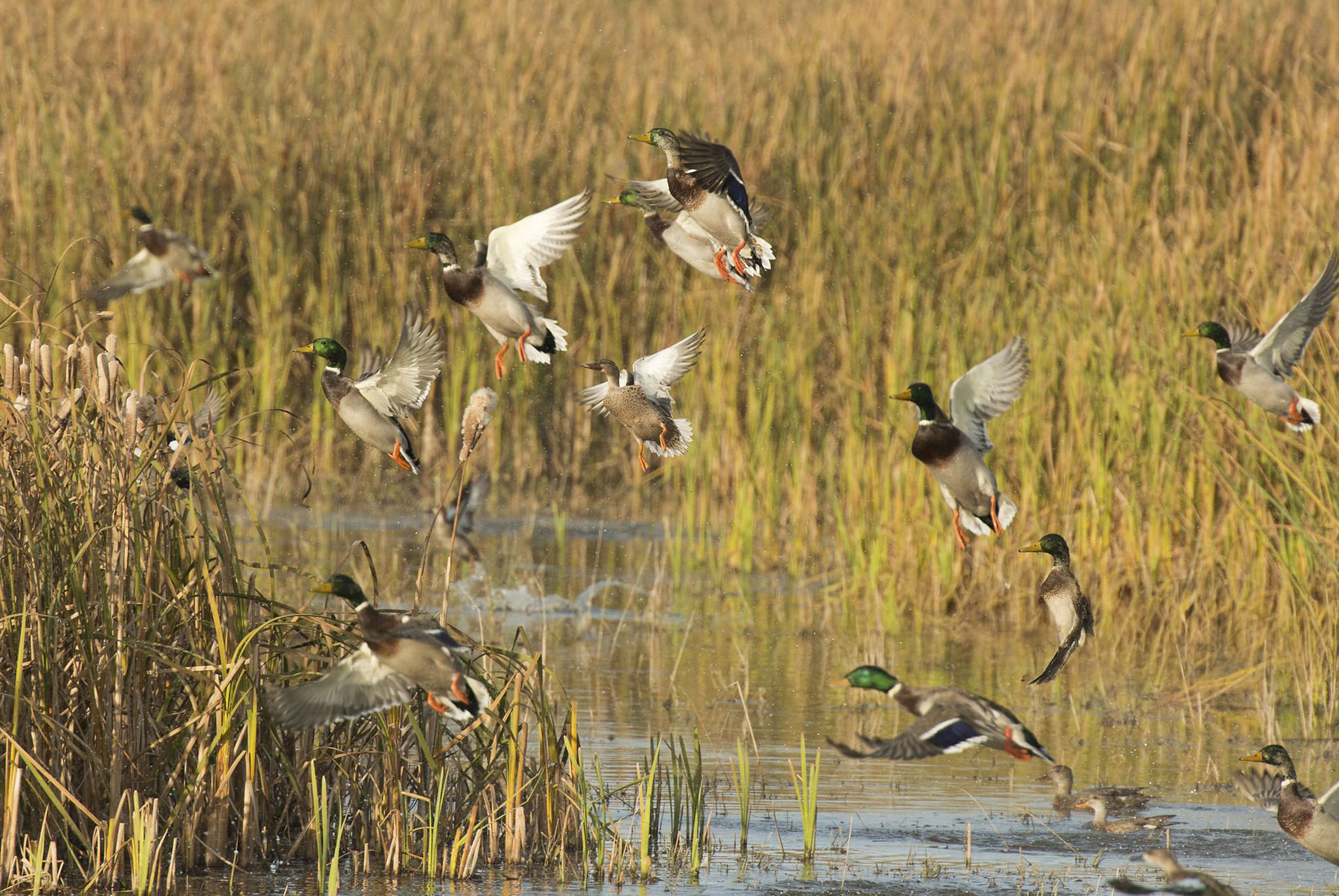
Every year, as winter begins to loosen its grip across North America, something predictable—but often overlooked—happens across marshes, creeks, and agricultural landscapes. While large lakes may still be locked in ice and major wetlands remain partially frozen, ducks begin concentrating heavily in small, isolated water sources. These locations might look insignificant at first glance—farm ponds, shallow ditches, flooded tire ruts, creek bends, or tiny thawed pockets in marshes—but during early thaw, they become magnets for waterfowl.
For hunters, observers, and wildlife managers, understanding why ducks concentrate in small water sources during early thaw reveals critical insights into waterfowl survival behavior, migration timing, and habitat preference. More importantly, these patterns help predict where ducks will appear both now and during future hunting seasons.
Early Thaw Creates Limited Safe Water
The most important reason ducks concentrate in small water sources during early thaw is simple: available open water is extremely limited.
During late winter and early spring transition, most large bodies of water remain partially or fully frozen. Deep lakes take longer to warm because of their volume, while shallow, protected areas warm faster due to sun exposure and ground heat.
Small water sources open first because they:
- Are shallow and warm quickly
- Absorb sunlight efficiently
- Are protected from wind
- Often receive groundwater input
- May be fed by springs or runoff
These early thaw areas provide ducks with something they urgently need: accessible, unfrozen water for survival.
Without open water, ducks cannot:
- Rest safely
- Escape predators efficiently
- Maintain feather condition
- Drink fresh water
- Access nearby food sources
As a result, even a small patch of open water can attract a surprisingly high number of birds.
Energy Conservation Drives Early Spring Concentration
Winter survival is physically demanding for ducks. By the time early thaw begins, most birds are operating with depleted fat reserves and must carefully manage energy.
Flying long distances unnecessarily wastes valuable calories. When ducks find a reliable open water source, they tend to remain there until better options appear.
Small thawed areas allow ducks to:
- Rest safely with minimal movement
- Avoid long flights between feeding and resting areas
- Reduce exposure to predators
- Preserve energy for migration and breeding
Energy efficiency becomes more important than space. Ducks would rather crowd into a small safe area than risk flying long distances searching for larger water that may still be frozen.
Small Water Sources Warm Faster and Attract Food
Temperature plays a critical role in early spring duck behavior. Small water bodies warm faster than large lakes, and warmer water stimulates biological activity.
As temperatures rise slightly, early thaw areas begin producing food such as:
- Aquatic insects
- Larvae and nymphs
- Small crustaceans
- Emerging vegetation
- Seeds from flooded grasses
These food sources provide essential protein and energy, helping ducks recover from winter stress and prepare for migration and breeding.
Because food appears first in these warmer microhabitats, ducks quickly identify and use these areas.
Protection From Wind and Weather
Early spring weather is unstable. Cold fronts, wind, and sudden temperature drops are common. Small water sources often provide better protection from harsh conditions compared to large open lakes.
Protected areas such as:
- Sheltered creek bends
- Timber holes
- Flooded brush
- Small backwater sloughs
- Farm ponds surrounded by trees
offer reduced wind exposure and calmer water. This helps ducks conserve body heat and avoid unnecessary energy loss.
Wind exposure can increase energy demand dramatically, so ducks naturally prefer calm, protected environments during early thaw.
Reduced Competition and Disturbance
Large open water areas, when available, often attract predators, human activity, and other disturbances. Small, isolated water sources frequently provide quieter, safer environments.
Ducks are highly sensitive to pressure. During early thaw, they prioritize safety over convenience.
Small overlooked areas may experience:
- Less human presence
- Fewer predators
- Reduced competition from other birds
- Lower disturbance levels overall
This allows ducks to rest and recover more effectively.
Migration Timing Depends on Water Availability
Migration is not triggered solely by calendar dates. Ducks move north based largely on habitat availability, especially open water and food.
Small thawed water sources act as temporary staging areas, allowing ducks to pause during migration and wait for conditions farther north to improve.
These staging areas serve critical functions:
- Allow ducks to rest during migration
- Provide feeding opportunities
- Help birds rebuild fat reserves
- Enable gradual movement rather than continuous flight
Without these small thaw zones, migration would be far more difficult and risky.
How Ducks Locate These Early Thaw Areas
Ducks rely on a combination of instinct, memory, and observation to locate suitable water.
They identify early thaw areas using:
- Visual detection of open water from the air
- Following other ducks already using the area
- Returning to known safe locations from previous years
- Following drainage patterns and terrain features
- Tracking warming trends and weather changes
Once one group of ducks discovers a reliable small water source, others often follow quickly.
Types of Small Water Sources Ducks Prefer Most
Not all small water sources attract ducks equally. The most attractive locations typically have multiple advantages.
High-value early thaw locations include:
- Spring-fed ponds that resist freezing
- South-facing marsh pockets exposed to sunlight
- Beaver ponds that create shallow flooded zones
- Flooded agricultural fields
- Creek bends protected from wind
- Timber holes surrounded by cover
- Drainage ditches holding standing water
Shallow water combined with protection and nearby food makes these locations especially valuable.
Why These Areas Matter for Future Hunting Success
Even outside of hunting season, observing early thaw duck behavior provides valuable insight for future opportunities.
Locations ducks use during early thaw often indicate:
- Reliable habitat conditions
- Consistent water availability
- Natural travel corridors
- Safe resting areas
- Productive feeding zones
These areas frequently remain important throughout the year and into fall migration.
Understanding these patterns helps hunters identify productive locations long before hunting season begins.
Seasonal Progression: How Duck Distribution Changes
As spring continues and temperatures stabilize, duck distribution gradually changes.
Early thaw phase:
- Ducks heavily concentrated in small water sources
Mid spring:
- Ducks begin spreading into larger wetlands
Late spring:
- Migration accelerates northward
- Fewer birds remain in southern staging areas
But early thaw concentration patterns provide the clearest insight into how ducks respond to environmental conditions.
Final Thoughts: Small Water Means Big Opportunity
Early thaw represents one of the most predictable and revealing periods in the waterfowl calendar. Small water sources become critical survival zones when larger habitats remain unavailable.
Ducks concentrate in these areas because they provide:
- Essential open water
- Early food availability
- Protection from weather
- Energy conservation opportunities
- Safe staging points for migration
For hunters, land managers, and wildlife observers, recognizing the importance of these small thaw zones offers a major advantage. These overlooked locations reveal where ducks feel safest, where resources are most reliable, and where future hunting opportunities are most likely to develop.
In early spring, the smallest water on the landscape often holds the biggest clues.
