
Introduction: When the Marsh Goes Quiet
By late season, the marsh feels different. The air bites sharper, the mornings start slower, and the ducks—those once-reckless early-season birds—have grown cautious. They’ve heard every hail call, seen every decoy spread, and learned every trick hunters can throw at them. In the bitter calm of December mornings, one truth often separates a full strap from an empty sky: sometimes, silence wins.
Late-season ducks are survivors. They’ve flown hundreds of miles, dodged predators, and learned the rhythm of gunfire echoing across the flyway. In cold conditions, overcalling can do more harm than good. Knowing when not to call—and letting your setup, concealment, and realism do the talking—can be your most powerful strategy.
1. Why Late-Season Ducks Don’t Respond Like Early Birds
Early in the season, ducks are curious and uneducated. A few excited quacks and a good decoy spread can pull them from a hundred yards away. But as winter deepens, birds adapt. They become call-shy and learn to associate aggressive calling with danger.
By December, every mallard in the air has likely passed over several decoy spreads—and many have seen hunters pop up from them. When the weather gets cold and hunting pressure rises, ducks stop responding to loud, repetitive calling. They prefer subtlety and realism.
Cold weather also changes duck behavior:
- They feed less frequently, conserving energy.
- They fly lower and later, often only during warm daylight hours.
- They group tighter, relying on familiar roosts and trusted feeding spots.
That means the usual “talk them down” tactics don’t work. Instead, you have to match the mood of the birds and the conditions.
2. The Psychology of Silence
Think about it—how often do you hear ducks constantly calling in freezing weather? Rarely. When temperatures drop, ducks conserve energy, and their vocalizations decrease. A natural marsh on a 20°F morning is quiet except for the soft chatter of content birds.
Late-season calling should reflect that natural silence. Ducks flying over calm water on a still morning expect subtlety, not a shouting contest. A few soft clucks or a distant greeting call can suggest safety far better than a high-volume routine.
In cold conditions, ducks are drawn to what feels safe and real. Overcalling creates doubt; minimalism builds trust.
3. When to Call—and When to Hold Your Breath
Calling less doesn’t mean calling never. It means being intentional. Late-season success depends on reading the birds and reacting with precision.
- When ducks are far and not committed: Use a short, clear greeting call to grab light attention. Think “hey, over here,” not “party’s happening now!”
- When ducks circle or hesitate: Soft quacks or gentle feeding chuckles can reassure them that your spread is natural.
- When ducks are locked in: Stop calling. Let them come. Any unnecessary noise can trigger suspicion.
Many experienced hunters follow a “call only when needed” rule—if the ducks are already turning, silence is golden.
4. Matching Decoy Spreads to Quiet Calling
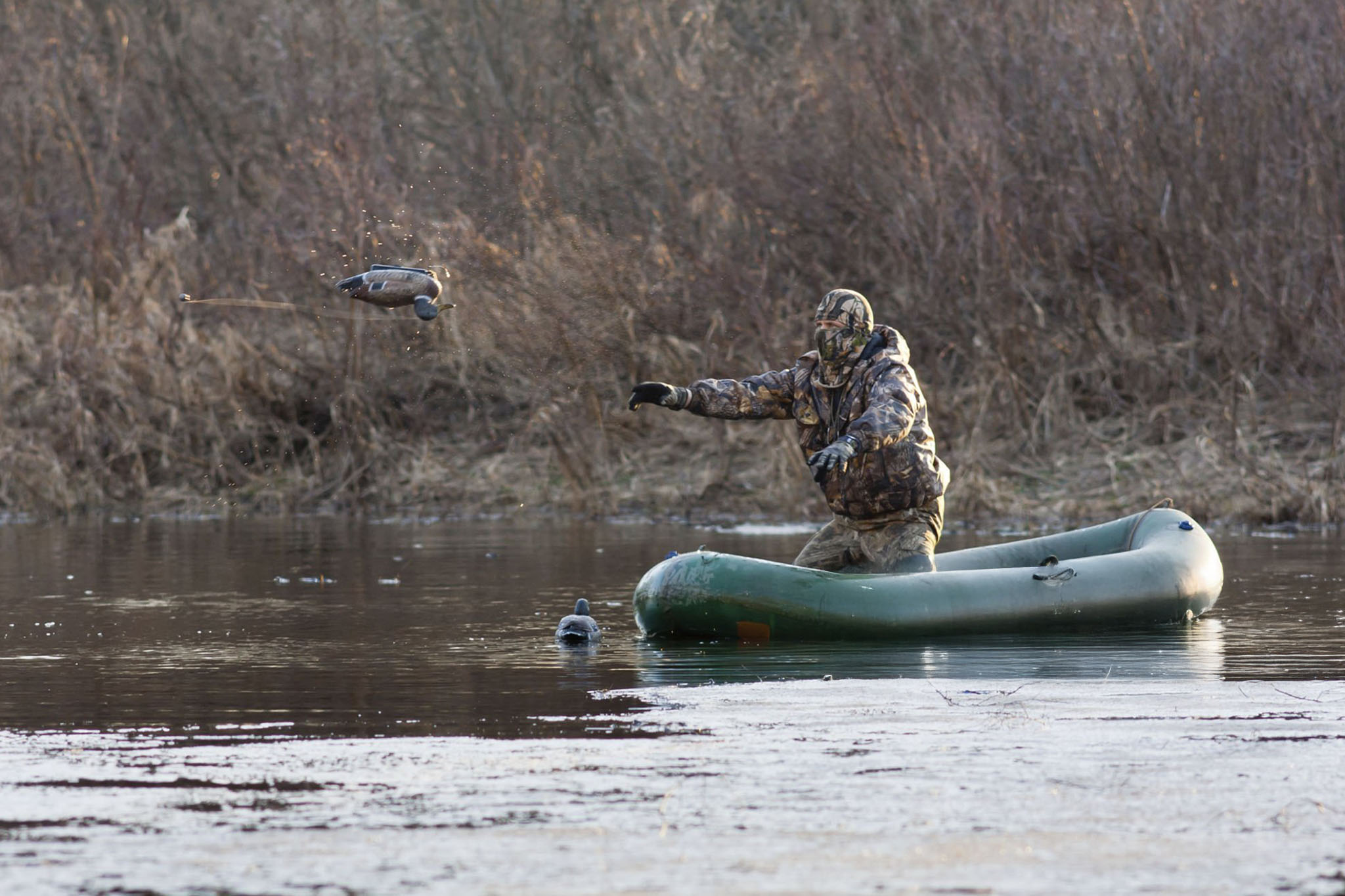
If you’re going to tone down your calling, your decoy spread must carry more of the communication. Visual realism becomes the main language when sound drops out.
Here’s how to make your spread work harder:
- Smaller spreads: Late-season ducks prefer fewer companions, not crowded setups. Use 6–12 decoys rather than 30+.
- Motion over quantity: A single jerk rig or motion decoy mimics life better than dozens of static birds.
- Natural spacing: Avoid perfect formations. Space decoys in small pods, like relaxed birds in open water.
- Confidence decoys: Add a pair of coots or pintails—species that imply safety and calmness.
Remember, your decoy spread is your “call” now—it needs to speak subtly and convincingly.
5. Concealment: Silence Only Works If You’re Invisible
Ducks have incredible eyesight, especially on clear, cold days with reflective snow and ice. If you’re not hidden perfectly, silence won’t save you.
Key concealment tips for cold-weather hunts:
- Fresh brush every hunt: Frost and wind strip cover fast. Always re-brush before shooting light.
- Avoid shiny surfaces: Frosted metal, wet gun barrels, or ice-covered gear can flash sunlight like a warning signal.
- Blend with the environment: Use local vegetation—cattails, reeds, or snow-covered grass—to match the scene.
- Keep movement minimal: Even small head turns or hand motions stand out when birds are circling low.
In late season, your blind should look like it’s been sitting there since the first freeze—not freshly built that morning.
6. The Perfect Cold-Weather Setup
Success in cold conditions often comes down to where and how you hunt, not how much you call.
- Hunt the sun: On frigid days, ducks seek the warmest spots—sunlit corners of ponds, open pockets in frozen marshes, or shallow water with dark mud bottoms that absorb heat.
- Follow the wind: Ducks still land into the wind, so set your decoys and blind accordingly.
- Target open water: When smaller ponds freeze, look for rivers or current-fed holes that stay open longer. Those spots concentrate birds.
Timing is crucial. Mid-morning flights—once ice begins to thaw slightly—often outperform dawn hunts in freezing conditions.
7. The Subtle Art of Realism
Silence isn’t just about holding back—it’s about sounding natural when you do call.
When calling, mimic real duck rhythms:
- Soft, slow cadences—two to three quacks spaced apart, not machine-gun chatter.
- Low-volume feeding sounds near the water’s surface using a gentle airflow.
- Occasional single quacks that suggest contentment rather than excitement.
Pair this with realistic body language from your decoys—slight ripples, occasional motion—and ducks will interpret it as a safe, undisturbed group.
8. Gear That Supports the Silent Hunt
In cold, still weather, gear matters more than ever. You’ll be sitting longer, moving less, and facing harsh conditions that test your endurance.
Essential equipment includes:
- Insulated waders and boots such as Hisea Hunt Boots to keep your feet warm in freezing water.
- Hand muffs and thermal gloves that allow call control without exposing skin.
- Layered clothing systems that regulate body heat without bulk—silence requires stillness.
- Quiet materials: Avoid rustling fabrics that betray movement when birds are near.
Being still and silent requires comfort, warmth, and confidence in your setup.
9. Patience Pays: Trusting the Silence
Cold-weather duck hunting often rewards those who wait. Don’t expect chaos and constant flocks. Late-season birds move in small groups, sometimes hours apart. Staying disciplined—keeping still, quiet, and ready—turns a slow morning into a perfect shot opportunity.
Remember, the marsh’s silence doesn’t mean nothing is happening. Ducks are listening, watching, and waiting for signs of safety. The hunter who mirrors that calm—patient, quiet, and deliberate—becomes part of the landscape, not a disruption of it.
Conclusion: Let the Stillness Do the Talking
There’s beauty in restraint. When the wind dies and frost coats the reeds, calling less isn’t weakness—it’s wisdom. Late-season ducks demand respect for their instincts, and the hunters who adapt by embracing silence often end up outsmarting the sharpest birds in the flyway.
Next time the cold sets in and the marsh goes quiet, don’t reach for your call every minute. Let the stillness work for you. Because when the decoys are convincing, your hide is perfect, and your timing is right—silence says everything.
