
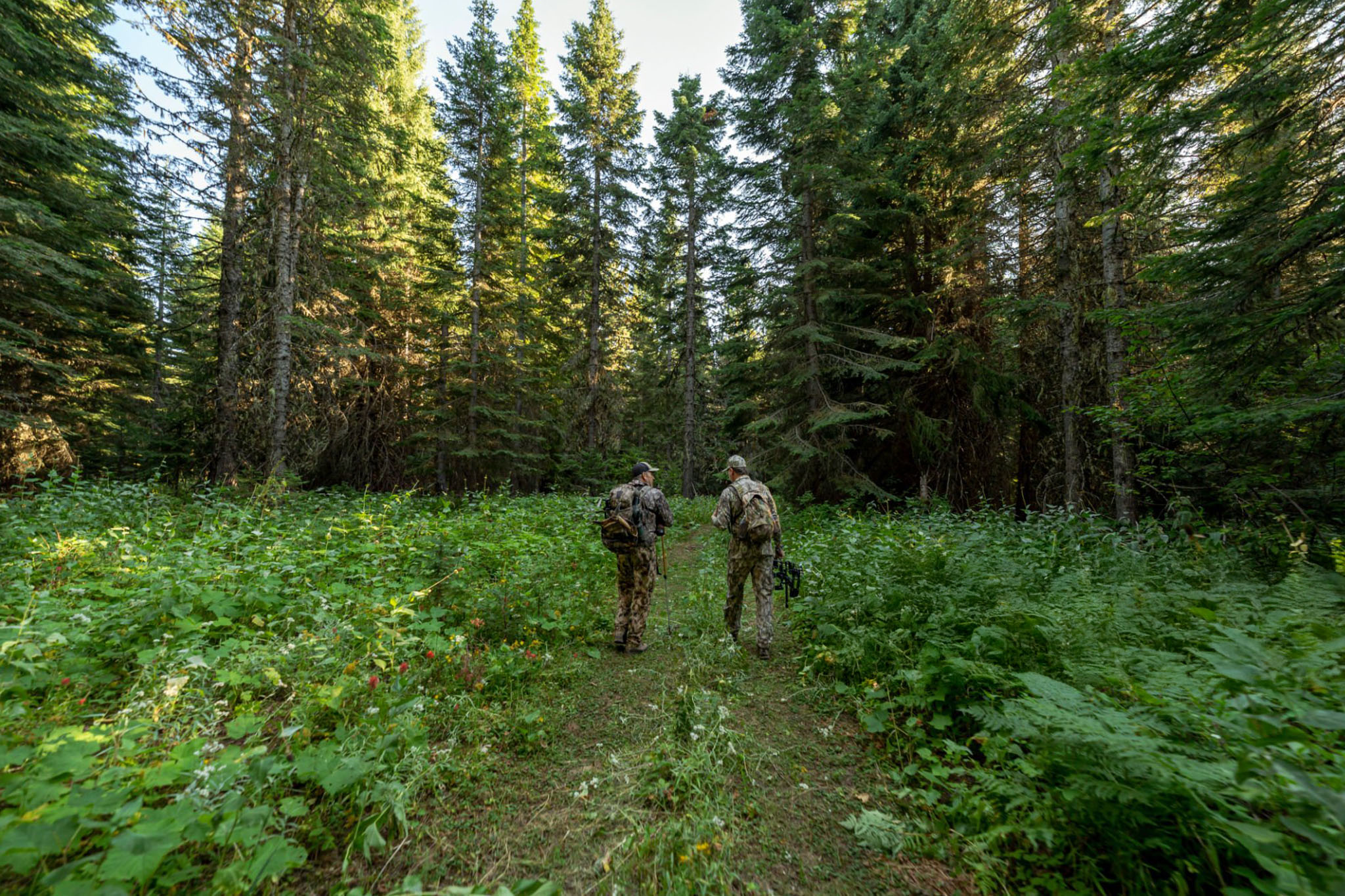
There are few things more challenging — or rewarding — in whitetail hunting than creeping through the still woods on a windless morning. When the forest feels frozen in time, every snapped twig and rustled leaf feels like an alarm bell. Yet, for hunters who can slow their movements, read subtle signs, and become part of the landscape, these silent conditions can lead to close encounters with the season’s most cautious bucks.
Still conditions strip away the hunter’s greatest advantage — sound cover — but they also amplify a buck’s predictability. In quiet timber, mature deer rely on their hearing and scent more than ever, and understanding how to counter that makes the difference between spooking a ghost and tagging one.
1. The Challenge of Still Mornings
When the woods go quiet, everything you do carries weight. There’s no wind to mask your steps or flutter leaves to disguise your movement. Even the soft crunch of frost beneath your boots can alert a buck hundreds of yards away.
But still conditions have a silver lining — they limit deer movement, too. Mature bucks become more deliberate, often sticking to heavy cover and relying on wind thermals for safety. If you know where bedding cover meets a food source, this is the time to sneak into those transition zones. Bucks will often stage there, scent-checking trails from a distance before committing to movement.
2. Timing the Stalk
Late-season timber hunts work best during early mornings or the last two hours of daylight, when deer are naturally more active. The trick is to move when the woods move — take advantage of short windows of ambient noise.
- When birds flush, shift your position.
- When a squirrel rustles, take two steps.
- When distant geese pass overhead, ease your boot forward another inch.
This slow-motion rhythm — pausing more than you move — is the key to stalking in silence. Think in minutes, not steps. If you can cover 100 yards in an hour, you’re moving at the right pace.
3. Using Terrain and Shadows
When the air is still, topography becomes your best friend. Even small terrain breaks — a ditch, a fallen log, or a subtle rise — can help you stay hidden. Move along shaded areas, avoiding open ridges where sunlight highlights your silhouette.
If you’re working downhill, stay just off the crest so your shape doesn’t stand out against the skyline. And when moving through valleys or creek bottoms, stay close to shadowed sides; deer tend to watch open banks for movement.
The best timber stalkers also use backlighting to their advantage — keeping the sun at their back or side so deer are looking toward the glare instead of at your outline.
4. Reading Micro Winds and Thermals
Even when there’s no steady breeze, air is never completely still. In quiet timber, thermals — the slow rise and fall of air as it warms and cools — play a huge role.
- Morning: As the sun rises, cool air drains downhill. Your scent will follow that same pattern — so approach from the top if possible.
- Evening: As temperatures drop, thermals reverse, pulling air and scent uphill.
By watching leaves, grass tips, or even the vapor of your breath, you can sense these subtle shifts. Adjust your angle of approach constantly — sometimes even moving laterally — to stay just outside a buck’s scent cone.
5. Silence Starts with Gear
You can’t stalk quietly if your clothing or gear betrays you. When winds die, the smallest sound — a zipper pull, a buckle tap, or fabric rub — can end your hunt.
Here’s how to build a silent setup:
- Outerwear: Choose soft-shell, brushed fleece, or wool layers that don’t swish or crinkle.
- Boots: Rubber or neoprene boots like Trudave hunting boots help muffle footsteps and insulate against cold ground.
- Accessories: Tape metal buckles and remove unnecessary gear from your pack.
- Weapon Prep: Check your bowstring silencers or rifle sling clips — anything that can rattle, will.
This is also the time to leave your bulky pack behind. Travel light. Everything you carry should serve the purpose of moving quietly and efficiently.
6. Visual Awareness: Seeing Before You’re Seen
In calm woods, the goal isn’t to spot deer first — it’s to notice change. A flick of an ear, a patch of gray among brown trunks, a horizontal line where no branch should be — these subtle details separate successful stalkers from the rest.
Carry binoculars and use them constantly. Scan ahead 30–50 yards at a time before moving. Many hunters make the mistake of focusing only at eye level, but in dense timber, bucks often bed halfway up slopes or along benches — spots that give them both vision and scent advantage.
7. The Final Approach
When you finally close the distance to within 50 yards of a bedded buck, every detail matters. Don’t stare directly at the deer; use peripheral vision to track movement. Sudden eye contact, even from a distance, can trigger alarm.
Crouch low, minimize shoulder movement, and keep your outline broken by trees or brush. If you need to draw a bow or shoulder a rifle, wait until the buck’s head is down or he’s looking away.
And remember: patience kills more deer than speed ever will.
8. Using the Stillness to Listen
When you stop moving, the forest speaks. In calm conditions, you can often hear deer before you see them — the soft pad of hooves on leaves, a branch snap, or the faint crunch of acorns underfoot.
Sit still long enough, and these faint sounds reveal a pattern. You’ll start recognizing direction, pace, and size. A slow, steady rhythm means feeding deer. A single, careful step followed by a pause might mean a cautious buck.
Use that auditory information to plan your next move without relying on sight alone.
9. The Reward of the Silent Hunt
There’s a special satisfaction in success when the woods are silent. It’s not just about the harvest — it’s about connection. You’ve matched your awareness to the environment, becoming part of the natural rhythm instead of fighting it.
Every footstep, every breath, every decision builds toward that single, tense moment when instinct and patience align. Whether you release an arrow or simply watch a mature buck slip through the trees unaware, the experience stays with you.
10. Final Thoughts
Still mornings test every skill a hunter has — patience, stealth, awareness, and discipline. But they also offer the purest form of whitetail hunting. When the forest is hushed and your senses are sharp, you’re no longer chasing deer — you’re participating in the most ancient form of hunting there is.
So the next time the wind dies and the woods go quiet, don’t stay home. Move slow. Listen hard. And trust your instincts. That’s when the timber reveals its secrets.
