
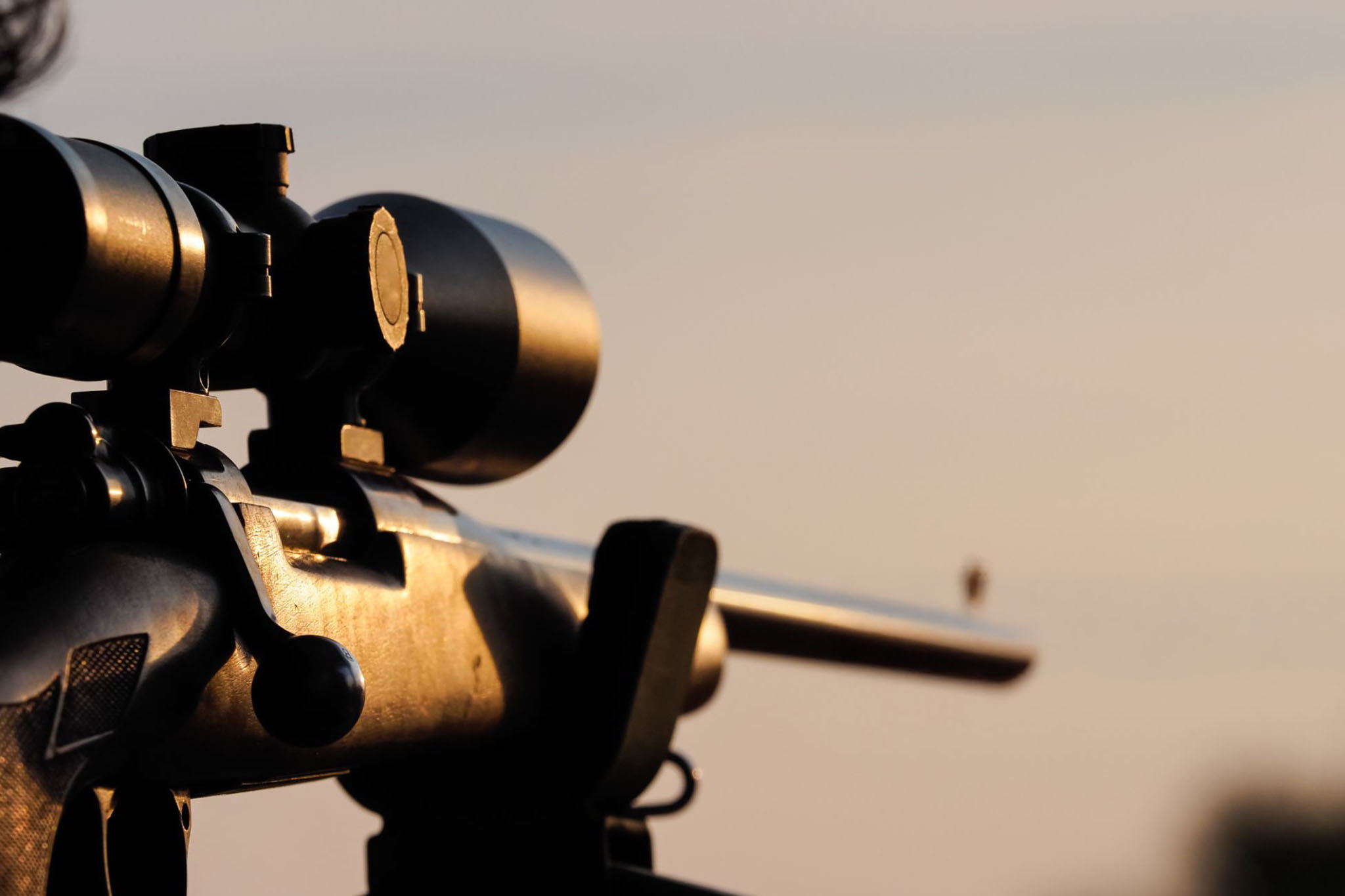
A successful deer hunt starts long before you step foot in the woods. No matter how much you’ve scouted, prepared food plots, or hung tree stands, your hunt can fall apart with one poorly placed shot. That’s why sighting in your rifle before deer season is one of the most important preseason rituals.
Zeroing ensures your bullet hits exactly where you aim at a given distance. Whether you’re shooting a bolt-action .30-06 or a lever-action .308, a properly sighted rifle gives you the confidence to make an ethical, accurate shot when it matters most.
Here’s a step-by-step guide to sighting in your rifle—plus some pro tips that many hunters overlook.
Step 1: Safety First
Before you even head to the range, make sure your rifle and gear are in good working order.
- Check that the barrel is clear of obstructions.
- Inspect your scope mounts and rings to ensure they’re tight.
- Wear proper eye and ear protection.
Remember: a sloppy setup at the bench will only frustrate you later in the woods.
Step 2: Bore-Sighting
Bore-sighting saves time and ammo by aligning your scope with the rifle’s barrel before live firing.
- With bolt-action rifles: Remove the bolt, rest the rifle securely, and look through the barrel at a target about 25 yards away. Then adjust your scope so the reticle lines up with that same spot.
- With bore-sighting tools: Laser bore sighters make this process even quicker and more precise.
This step won’t zero your rifle completely, but it will get you close enough to start grouping shots on paper.
Step 3: Start at 25 Yards
Begin at a short distance to ensure you’re on paper.
- Fire a three-shot group at a steady rest.
- Adjust windage (left/right) and elevation (up/down) on your scope to bring the group closer to center.
- Don’t chase every single shot—adjust based on the group as a whole.
Once your group is centered at 25 yards, you’re ready to move back.
Step 4: Move to 100 Yards
For most deer rifles, 100 yards is the standard zero distance. It’s also a practical range for most whitetail hunting situations.
- Fire another three-shot group.
- Measure how far your shots are from the bullseye.
- Adjust scope turrets accordingly. Most modern scopes adjust in ¼ MOA increments, which equals ¼ inch per click at 100 yards.
Repeat until your group consistently hits dead center.
Step 5: Fine-Tune for Your Hunting Conditions
Different hunters zero differently depending on terrain.
- Dense woods hunters: A 100-yard zero works perfectly for close-range shots.
- Open fields or Western hunters: Many prefer a 200-yard zero, which allows for flatter shooting at longer distances.
- High-powered calibers: Some hunters sight in 1–2 inches high at 100 yards to extend their effective range without holdover.
Match your zero to your environment, not just the textbook standard.
Step 6: Confirm and Repeat
A rifle is only truly sighted in when it consistently groups well.
- Fire multiple three-shot groups to verify your zero.
- Let the barrel cool between groups for accurate results.
- Use the same ammunition you plan to hunt with—switching brands or bullet weights can change your point of impact.
Step 7: Practice Realistic Hunting Scenarios
Once your rifle is zeroed, practice in the ways you’ll actually hunt:
- Shoot from a sitting or kneeling position.
- Practice with shooting sticks or a backpack rest.
- Fire a few rounds in low light, since most deer activity happens at dawn and dusk.
The more your practice mimics real-world hunting conditions, the more confidence you’ll carry into the field.
Common Mistakes to Avoid
- Over-adjusting: Don’t chase every single bullet hole—adjust based on groups.
- Loose mounts: Scope movement will ruin accuracy, no matter how well you shoot.
- Changing ammo brands: Always zero with the ammo you’ll actually hunt with.
- Skipping follow-through: Keep your cheek weld and trigger press steady after the shot.
Final Thoughts
Zeroing your rifle isn’t just about hitting a bullseye at the range—it’s about preparing for the one shot that counts in the field. A well-sighted rifle builds confidence, ensures ethical harvests, and gives you one less thing to worry about when a buck steps into range.
Take the time before deer season to bore-sight, group, adjust, and confirm. The reward will be clean shots, full freezers, and a hunting season you can be proud of.
