
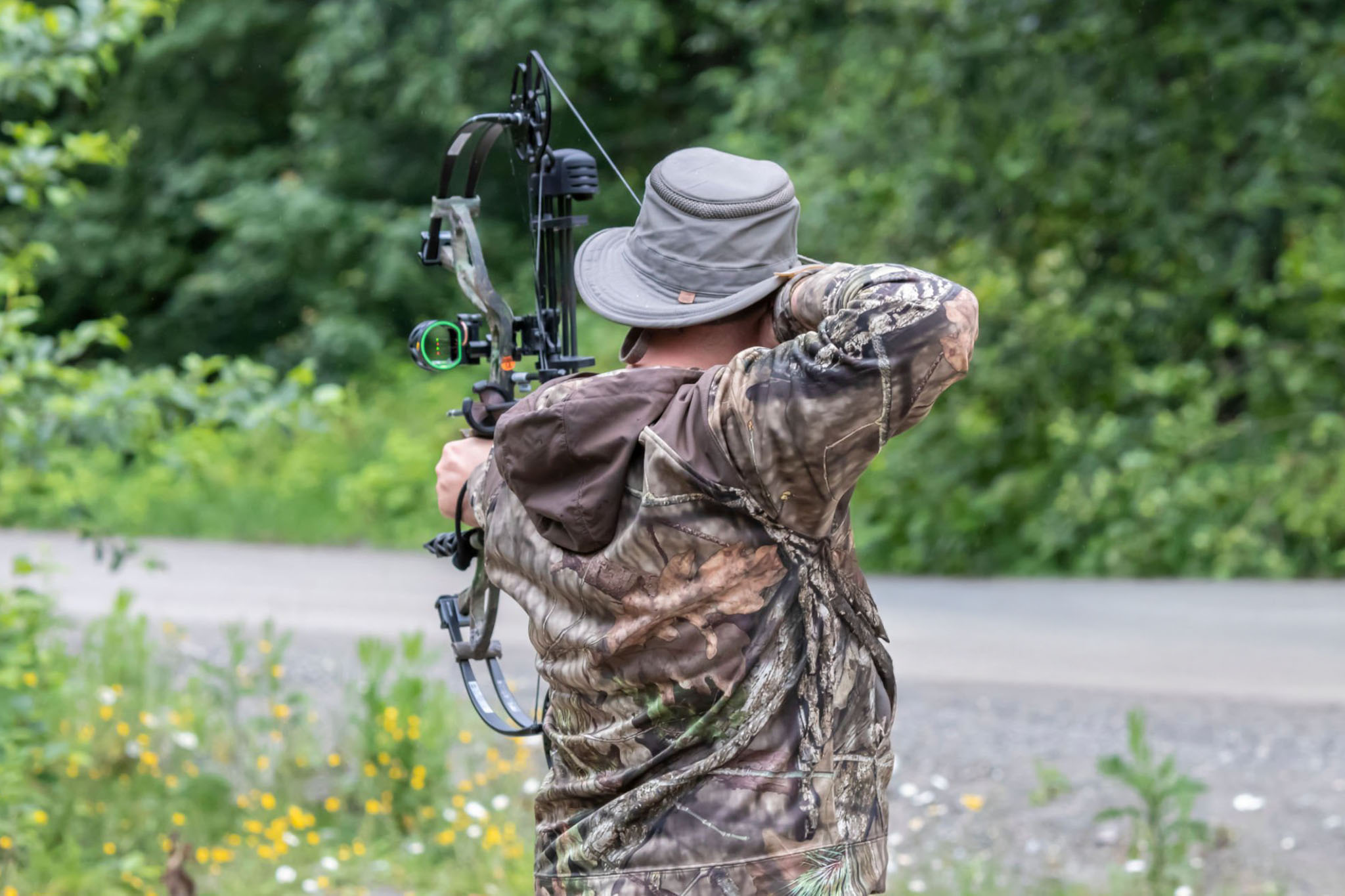
As the days get shorter and the summer heat starts to wane, bowhunters across the country feel that familiar pull—it’s almost go-time. Early season can be one of the best windows to tag a mature buck, but it requires one thing above all: precision.
If you want your arrow to fly true when it counts, your gear has to be dialed in to a razor’s edge. This is the time to sweat the small stuff—because early-season success hinges on fine-tuning every piece of your archery setup. Here’s how to do it right.
1. Start with a Solid Bow Inspection
Don’t assume your bow is hunt-ready just because it’s been hanging in the garage. A lot can change from last season.
- Check your string and cables: Look for fraying, serving separation, or dry spots. If they’re more than two seasons old or showing wear, replace them.
- Tighten every bolt: Limb bolts, sight mounts, rest screws—make sure nothing rattles.
- Inspect your limbs for hairline cracks or splinters. Even one can ruin your hunt—or worse, injure you.
If anything feels even slightly off, take it to a trusted pro shop.
2. Re-Tune for Your Hunting Arrows
Many bowhunters sight in with field tips and only screw on broadheads days before opening morning. Big mistake.
- Paper tune or walk-back tune with your hunting arrows.
- Broadhead tune: Shoot your broadheads side-by-side with field points. If they hit differently, make micro-adjustments to your rest, not your sight.
- If you’re shooting fixed blades, even a slightly un-tuned arrow can lead to flyers. Don’t assume they’ll fly like field tips.
Pro tip: Use the exact arrows, broadheads, and vanes you plan to hunt with. Consistency is everything.
3. Sight Your Bow for Real-World Conditions
Shooting 3D targets in perfect daylight at the range is great—but it’s not hunting.
- Practice from treestands or saddle height if that’s how you hunt.
- Practice with gloves, your hunting jacket, and even a facemask to make sure nothing interferes with your anchor point or release.
- Adjust your pins for low-light conditions. Early-season bucks often step out right at last legal light—your sight better be visible.
Many archers also find they shoot slightly differently when adrenaline hits. Repetition and realism help close that gap.
4. Check Arrow Flight with Broadheads
Fixed-blade broadheads demand perfection in arrow flight. A wobbly arrow won’t forgive.
- Spin-test every broadhead-tipped arrow. A slight wobble can kill accuracy.
- Fletchings should be intact and uniform—any damage can throw your flight off.
- Consider helical fletching for better stabilization if you’re running fixed blades.
Mechanical broadheads are more forgiving, but still demand a perfectly tuned setup. Don’t skimp on testing.
5. Fine-Tune Your Release Aid
Your release is the link between you and the string. It must feel natural and crisp every time.
- Check trigger travel or tension and adjust it to your preference.
- Practice your anchor point with your release aid. Consistency breeds precision.
- If your release has seen a few seasons, check the jaw or hook mechanism for wear.
Many early-season misses are caused by sloppy trigger control or inconsistent anchor points. Don’t overlook this simple but critical component.
6. Quiet Your Setup
Early-season woods are thick, green, and quiet. The last thing you want is a creaky rest or noisy limb pocket alerting your target.
- Add string silencers, limb dampeners, or rubber washers if needed.
- Wax your string to cut down on noise and prolong its life.
- Wear your gear while practicing and listen for any unnatural noises. That backpack strap rubbing on your draw shoulder? Fix it now.
The quieter your draw and shot, the less likely a buck will duck your arrow or bolt before you release.
7. Dial in Your Range Estimation and Use of a Rangefinder
Brush is thick, visibility is limited, and light fades fast. You need to know distances cold.
- Practice ranging targets quickly and shooting from known ranges in varying light.
- If you use a multi-pin sight, make sure each pin is laser-accurate at hunting distances (typically 20 to 40 yards).
- Set up mock hunting scenarios—range a tree, draw slowly, and shoot from a seated position.
Don’t just rely on your rangefinder. Develop your natural range estimation—it’ll save you when the moment gets chaotic.
8. Build Muscle Memory Now
Shooting under pressure isn’t about thinking—it’s about muscle memory. That only comes from reps.
- Shoot short practice sessions daily or every other day.
- Focus on form, breathing, and follow-through, not just hitting the bullseye.
- Dry fire (without releasing) at full draw for strength and control.
The more automatic your shot process becomes, the better your chances when a buck steps into your lane.
Final Thoughts
Early-season archery hunting rewards the prepared. It’s not just about having good gear—it’s about having gear that’s dialed to your body, your setup, and your hunting style.
From rest timing and nock fit to broadhead tuning and anchor-point consistency, every detail counts. Use these final weeks before the opener to eliminate doubt, build confidence, and fine-tune your system for precision under pressure.
When that big-bodied velvet buck walks out at 25 yards, you won’t be hoping—you’ll be ready.
