
There’s something hauntingly beautiful about a duck blind in December. The world has gone quiet — the marsh lies frozen in places, the cattails tipped with frost, and your breath rises in clouds beneath a pale gray sky. The dogs shiver with excitement, not from cold, their eyes locked on the horizon where the first flock of the morning cuts through the white. For those who chase waterfowl, December isn’t just another month — it’s the heart of the season.
This is the time when the birds are wary, the weather unpredictable, and the reward all the sweeter. December duck hunting is a test of patience, grit, and adaptability — but it’s also a celebration of everything that makes the sport timeless: the bond between hunter and retriever, the rhythm of migration, and the quiet poetry of a winter marsh.
The December Shift: When the Northern Birds Arrive
As fall fades into winter, migration enters its final, dramatic phase. The northernmost flocks — hardy mallards, pintails, gadwalls, and late-diving species — make their way south, driven by frozen lakes and diminishing daylight.
For many hunters across the Midwest, Great Plains, and Southern flyways, this is when the best hunting begins. Cold fronts push new birds into the region, and with them comes fresh opportunity.
But it’s not just about the arrival — it’s about the timing. Ducks move differently in December.
- Early mornings can be slow as birds conserve energy during subfreezing temperatures.
- Midday flights often pick up as the sun softens the ice and winds shift.
- Evening hunts can be golden when the air stills and the marsh reflects the white winter sky.
To succeed now, hunters must learn to move with the birds — adjusting setups and calling patterns based on daily weather cycles rather than sunrise expectations.
The White Sky Challenge
Ask any seasoned duck hunter, and they’ll tell you: bright, overcast skies — those uniform white-gray ceilings — are both a blessing and a curse.
On one hand, ducks can’t see shadows or reflections as clearly, making your decoy spread appear more natural. On the other, birds are much better at spotting movement against a pale background. Your outline, even your gun barrel, stands out sharply.
Here’s how to adapt:
- Blend deeper: Use natural materials like snow-covered reeds or frosted grasses. Dull any shine on your shotgun and face mask.
- Stay still: With flat light and reflective snow, movement is your biggest giveaway. Even subtle shifts can flare a flock.
- Use muted decoys: Avoid overly glossy or bright decoys. In white-sky conditions, natural matte colors blend best.
The white sky demands stillness and precision — qualities that define the best late-season hunters.
Wet Dogs, Warm Bonds
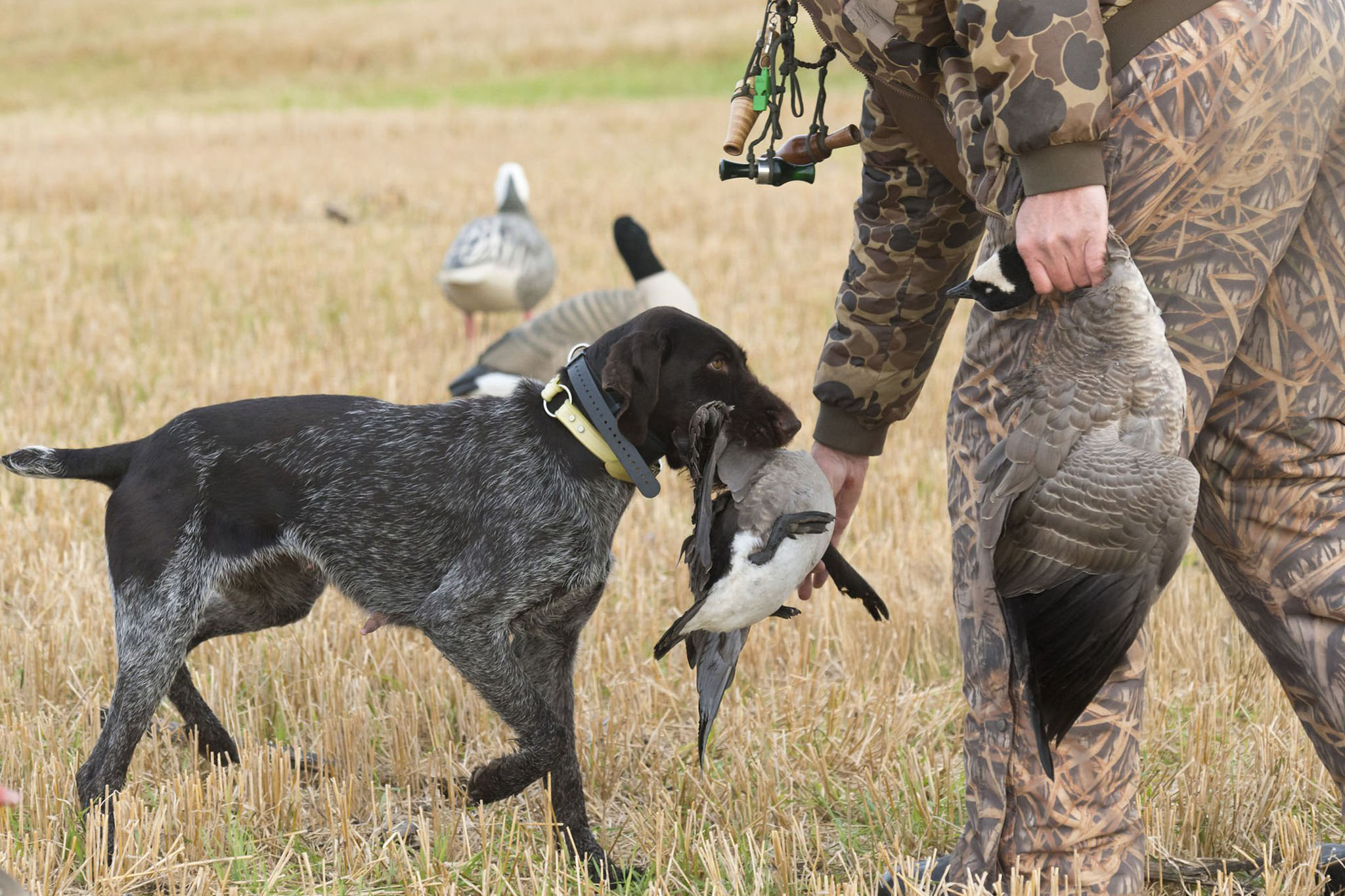
No image captures the spirit of December duck hunting better than a retriever bounding through icy water, a drake mallard held proudly in its mouth.
In these conditions, a dog isn’t just a helper — it’s your most trusted partner. Frozen shallows, unpredictable currents, and biting winds make every retrieve a test of endurance and instinct. Watching your dog work through these challenges is as rewarding as the hunt itself.
Tips for Keeping Your Dog Safe and Comfortable:
- Use neoprene vests to retain body heat.
- Carry a dry towel and blanket to warm your dog between retrieves.
- Limit exposure time in the water; hypothermia can set in faster than you think.
- Reward and hydrate often. Even in cold weather, dogs dehydrate quickly from exertion.
These small acts of care strengthen a bond that only a hunter and retriever can understand — forged in mud, wind, and shared purpose.
Smart Setups for Cold-Weather Birds
By December, ducks have seen every decoy spread and heard every calling pattern imaginable. Success now comes from subtlety, not spectacle.
1. Downsize Your Spread:
Late-season birds key in on realistic setups. Fewer decoys — strategically spaced — suggest confidence and safety.
2. Mix in Movement:
Ice and still water kill realism. Use jerk rigs or motion decoys to ripple the surface, mimicking feeding ducks.
3. Focus on Food:
When temperatures plummet, ducks feed aggressively. Set your spread near open water around grain fields, flooded timber, or river backflows where food remains accessible.
4. Watch the Wind:
In December, wind direction shifts often. Ducks always land into the wind, so reposition blinds and decoys throughout the day to stay in the flight path.
5. Silence Is Golden:
Overcalling can ruin a hunt. Use soft quacks, feeder chuckles, or drake whistles sparingly — especially when birds are already working.
The Beauty in the Hard Days
There’s a special peace in a December marsh that can’t be found in any other month. The chaos of early-season crowds has faded. The calls are fewer, the skies quieter. You’re left with frost on your gear, steam on your breath, and the rhythmic splash of your retriever returning through slush.
Some days you’ll come home empty-handed. Others, you’ll witness a hundred birds drop through the snow like living shadows. But every morning spent in the blind — watching the horizon turn silver — reminds you why you came out in the first place.
Duck hunting in December isn’t about limits; it’s about moments — the slow glide of a mallard through flurries, the camaraderie between hunters, the simple beauty of surviving the cold with purpose.
Gear Up for the Grind
Late-season conditions punish the unprepared. Staying dry, warm, and patient is key.
Essential Cold-Weather Gear for Duck Hunters:
- Insulated chest waders: Prevent ice buildup and retain warmth through standing water.
- Layered base clothing: Moisture-wicking synthetics under fleece and waterproof shells.
- Hand warmers & waterproof gloves: Essential for maintaining dexterity.
- High-quality waterproof boots (like Trudave’s insulated outdoor boots) to handle both mud and ice.
- Thermos and blind heater: A little comfort goes a long way when the wind won’t quit.
The Reward Beyond the Hunt
As the hunt ends and the gear is stowed, the retriever curls up by the truck heater, and steam rises from your wet jacket — you realize the true magic of December hunts isn’t measured in birds bagged. It’s in the sound of wings against a white sky, the trust of your dog, and the solitude of winter’s edge.
In the end, wet dogs and white skies are more than symbols of the season — they’re reminders that beauty lives in the cold, the quiet, and the persistence to keep showing up.
